
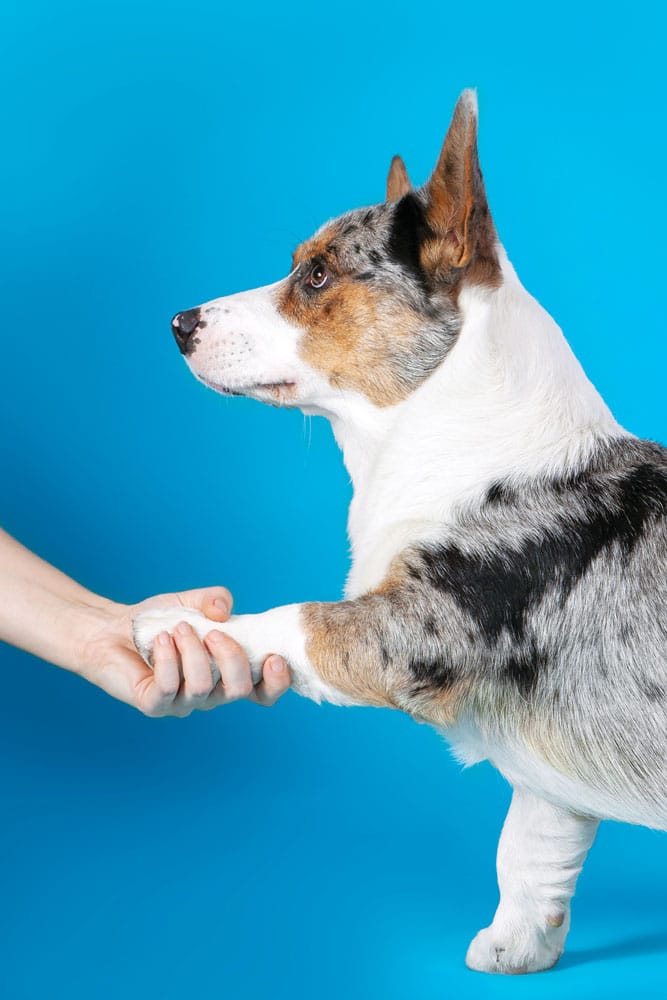
Ever wondered if your dog could actually talk? While they won’t be holding conversations anytime soon, teaching your dog to “speak” on command is a fun and engaging trick that taps into their natural vocalizations. It’s a fantastic way to boost your dog’s confidence, strengthen your bond, and impress your friends. This guide will walk you through the process, breaking down how to train your dog to speak, why it’s beneficial, and what to do if your furry friend is a little too quiet or a little too vocal.
The “Speak” Command: More Than Just a Bark
Teaching your dog to bark on cue, often called the “speak” command, is a relatively straightforward trick. It requires patience, positive reinforcement, and a good understanding of your dog’s natural tendencies. Many dogs bark instinctively when excited, startled, or seeking attention. The goal of this training isn’t to make your dog bark excessively but to teach them to control their vocalizations and perform the action only when asked. This can be particularly useful for dogs who are naturally quiet, helping them express themselves when needed, or for more boisterous dogs, teaching them impulse control.
Why Train Your Dog to “Speak”?
Beyond the sheer amusement factor, training a dog to “speak” offers several benefits:
- Mental Stimulation: Learning new commands keeps your dog’s mind sharp and engaged, preventing boredom and potential behavioral issues.
- Bonding: The training process itself is a wonderful way to deepen the connection between you and your dog. It requires communication, cooperation, and mutual understanding.
- Impulse Control: For dogs that bark excessively, teaching a “speak” command can paradoxically help them learn when to bark and, more importantly, when to be quiet. You can then teach a “quiet” command.
- Foundation for Other Tricks: Mastering the “speak” command can lay the groundwork for more complex tricks that involve vocalization or specific actions.
- Addressing Quiet Dogs: For dogs that are very reserved or rarely bark, this can be a fun way to encourage them to express themselves a little more in a controlled manner.
How to Teach Your Dog to “Speak” on Command: A Step-by-Step Guide
This method uses a process of capturing the behavior and then associating it with a verbal cue.
Step 1: Capture the Bark
The first step is to identify when your dog naturally barks. This often happens during playtime, when someone arrives at the door, or when they’re particularly excited about a treat.
- Be Prepared: Have high-value treats ready – small, tasty morsels that your dog loves.
- Provoke a Bark (Gently): Engage your dog in an activity that you know will elicit a bark. This could be:
- Waving their favorite toy excitedly just out of reach.
- Pretending to be very excited about something outside the window.
- Knocking lightly on a door or wall.
- If your dog tends to bark when you hold a treat, jiggle it enticingly.
- Mark and Reward: The instant your dog barks, say “Yes!” or use a clicker (if you use one), and immediately give them a treat. The timing here is crucial – you want to reward the bark itself.
- Repeat: Do this several times over short training sessions (5-10 minutes). The goal is for your dog to associate barking with a reward.
Step 2: Introduce the Verbal Cue
Once your dog is reliably barking when you prompt them (and you’re rewarding each bark), it’s time to add the word “Speak.”
- Say the Cue: Just as you begin to prompt the bark (e.g., as you wave the toy), say the word “Speak!” clearly.
- Mark and Reward: As soon as they bark, mark the behavior (“Yes!”) and reward them.
- Consistency is Key: Continue this process. Your dog will begin to associate the word “Speak” with the action of barking and the subsequent reward.
Step 3: Fade the Prompt
As your dog starts to understand that “Speak” means bark, you can gradually reduce the exaggerated prompts you were using.
- Less Exaggeration: Instead of waving the toy wildly, perhaps just hold it up. Instead of knocking loudly, just make a small gesture.
- Verbal Cue Focus: Rely more on the word “Speak!” itself. Your dog should start offering a bark with just the verbal cue, or a very subtle gesture.
- Reward Independent Barks: When your dog barks after you say “Speak” with minimal or no prompting from you, reward them enthusiastically! This is a sign they’re getting it.
Step 4: Practice and Generalize
Now that your dog understands the command, practice it in different situations and environments.
- Vary Locations: Practice in different rooms of the house, in the yard, and eventually in public places (if your dog is comfortable).
- Vary Distractions: Start in a quiet environment and gradually introduce mild distractions.
- Randomize Rewards: Not every bark needs a treat. Once the trick is learned, you can phase in intermittent rewards (sometimes a treat, sometimes praise, sometimes a favorite toy) to keep the behavior strong.
Troubleshooting Common Issues
My Dog Doesn’t Bark Much
- Patience: Some dogs are naturally quieter than others. You may need to be more patient and find exactly what motivates them to vocalize.
- High-Value Rewards: Ensure you’re using treats that are incredibly enticing.
- Timing: Be absolutely precise with your timing. Mark and reward the exact moment they make a sound.
- Find Their Trigger: Observe your dog. What situations do make them bark, even a little? A squeaky toy? A specific game? A certain person?
My Dog Barks Too Much / Won’t Stop Barking
- “Quiet” Command is Crucial: If your dog is already a barker, teaching “speak” should always be paired with teaching a “quiet” command. To teach “quiet,” wait for a pause in their barking, say “Quiet,” and reward. Gradually increase the duration of silence before rewarding.
- Don’t Reward Unwanted Barking: Be careful not to accidentally reward barking at inappropriate times (e.g., the mail carrier, other dogs).
- Address Underlying Causes: Excessive barking can be a sign of anxiety, boredom, or territorial issues. Training “speak” won’t solve these deeper problems. Consult a professional trainer or behaviorist if you suspect an underlying issue.
- Short Sessions: Keep “speak” training sessions very short so you don’t inadvertently encourage excessive barking.
My Dog Barks at the Wrong Time
- Practice Generalization: Ensure you’re practicing in various environments and with distractions. If your dog only barks when you ask in the living room but not the kitchen, you need more practice.
- Fade Prompts Slowly: Don’t rush the process of fading prompts. Ensure the dog truly understands the verbal cue before removing your gestures or props.
Beyond the Bark: The “Talk” Command
Some trainers take this a step further and teach dogs to “talk” using buttons that play recorded words. While this is a more advanced form of communication training, the initial “speak” command is a great stepping stone. It helps dogs understand that vocalizations can be controlled and linked to specific outcomes.
Conclusion: A Rewarding Trick for You and Your Dog
Teaching your dog to speak on command is a rewarding experience that offers both fun and practical benefits. It’s a testament to your dog’s intelligence and your ability to communicate effectively. Remember that consistency, patience, and positive reinforcement are your best tools. Whether you’re aiming to impress with a new trick or simply want to deepen your understanding of your canine companion’s communication, the “speak” command is a fantastic place to start. Happy training, and may your dog’s barks be ever on command!
