
Teaching your dog to bark on command, often referred to as the “speak” command, can be a fun and surprisingly useful trick. It’s not just about making noise; it’s a fantastic way to build communication with your canine companion and can even be a stepping stone for more complex training. This skill requires patience and a deep understanding of your dog’s natural behaviors, especially their vocalizations. We’ll explore how to harness this instinct, turning a natural habit into a controlled action.
Understanding Why Dogs Bark
Before we delve into training, it’s essential to understand why dogs bark in the first place. Barking is a primary form of communication for dogs. They bark to alert us to potential dangers, express excitement, seek attention, relieve anxiety, or even out of boredom. Recognizing the nuances of your dog’s barks – the tone, frequency, and context – is the first step in effective communication and training. For instance, a sharp, high-pitched bark might signal excitement, while a low growl-like bark could indicate unease. Understanding these signals is key to building a strong bond.
The “Speak” Command: More Than Just a Trick
Teaching your dog to bark on command can serve several purposes:
- Enhancing Communication: It provides another avenue for you and your dog to interact.
- Building Confidence: Successfully learning a new command boosts a dog’s confidence and strengthens their trust in you.
- Stimulating Mental Activity: Training sessions keep your dog’s mind engaged, preventing boredom and potential behavioral issues.
- Foundation for Other Commands: Mastering “speak” can lay the groundwork for teaching other vocal commands or even complex routines. For example, if you’re looking for the best command to stop dog barking, understanding how to elicit a bark first is crucial.
Step-by-Step Guide: How to Train Your Dog to Bark on Command
This method focuses on capturing your dog’s natural barking behavior and associating it with a cue.
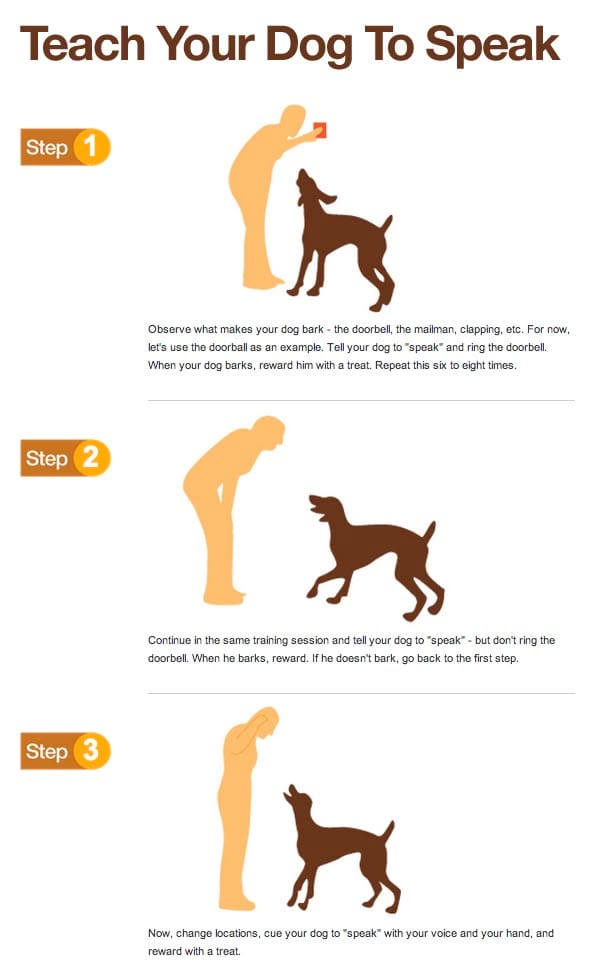
Step 1: Identify a Barking Trigger
Find a situation that reliably makes your dog bark. This could be:
- Someone at the door: Have a friend or family member knock or ring the doorbell.
- A specific toy: Show your dog a favorite toy they get excited about.
- A treat: Wiggle a treat in front of them, just out of reach.
- Excitement: Engage in a playful activity that gets them animated.
Step 2: Capture the Bark
As soon as your dog barks in response to the trigger, immediately say your chosen command, such as “Speak!” or “Bark!”.
Step 3: Reward Immediately
The moment you say the command and they bark, praise them enthusiastically and give them a high-value treat. Timing is critical here; the reward must follow the bark and command instantly to create a clear association.
Step 4: Repeat and Reinforce
Practice this in short, frequent sessions (5-10 minutes) several times a day. Continue to pair the trigger, the bark, the command, and the reward. As your dog starts to understand, you can begin to phase out the trigger.
Step 5: Fade the Trigger
Once your dog reliably barks when they hear “Speak!” in the presence of the trigger, start to reduce the intensity of the trigger. For example, instead of a loud knock, try a light tap. Eventually, try giving the command without any trigger at all. If they bark, reward generously. If they don’t, go back to using a mild trigger and gradually fade it again.
Step 6: Introduce a “Quiet” Command
To avoid your dog barking excessively, it’s highly recommended to also teach a “quiet” command. Once your dog has barked on command and received their reward, wait for a brief pause in their barking and then say “Quiet!” or “Shush!”. Reward them immediately when they stop barking. This is just as important as teaching “speak” to ensure responsible training. You might find resources on how to train a dog to bark helpful for understanding the nuances of vocal training.
Troubleshooting Common Issues
- My dog won’t bark: Ensure you’re using a strong enough trigger. Some dogs are naturally more quiet. If your dog is generally a quiet dog, teaching this command might be more challenging. Consider exploring other breeds if you’re looking for the easiest small dogs to train, as trainability can vary significantly.
- My dog barks too much: This is where the “quiet” command is essential. Practice rewarding silence frequently. Don’t inadvertently reward continuous barking by giving attention or treats.
- My dog only barks when the trigger is present: This means the association between the command and the action isn’t fully formed yet. Continue practicing and gradually fading the trigger as described in Step 5.
Advanced Tips for “Speak” Command Training
- Use High-Value Treats: Employing particularly desirable treats will increase your dog’s motivation.
- Keep Sessions Short and Fun: End each session on a positive note before your dog gets bored or frustrated.
- Be Consistent: Use the same command word and hand signal every time.
- Vary the Rewards: While treats are excellent, occasional praise, a favorite toy, or a good petting session can also serve as rewards.
- Consider Different Triggers: Once mastered, you can try to associate “speak” with different triggers for variety.
When to Seek Professional Help
If you’re struggling to teach the “speak” command, or if your dog exhibits excessive barking that seems rooted in anxiety or aggression, it’s always a good idea to consult a professional dog trainer or a veterinary behaviorist. They can help identify underlying issues and provide tailored strategies. Sometimes, the challenge might not be the command itself but how it interacts with other training tools, like dog collars training shock, which should be used with extreme caution and professional guidance, if at all.
Teaching your dog to bark on command is a rewarding experience that strengthens your bond and enhances communication. Remember to be patient, consistent, and positive throughout the process. Happy training!
