
Bringing a new cat or kitten into your home is an exciting experience. While litter box training is often a natural instinct for cats, some owners aspire to go a step further by toilet training their feline companions. This process, while requiring patience and consistency, can be achieved with a structured approach. This guide will walk you through the 7 easy steps to toilet train your cat, transforming their bathroom habits gently and effectively. Toilet training a cat is achievable with the right method and understanding of your cat’s behavior.
Step One: Relocation is Key
Begin by moving your cat’s current litter box to a location immediately adjacent to the toilet. Ensure your cat feels completely comfortable using this litter box in its new spot. Leave it there for as long as you deem necessary for your cat to acclimate to this change.
Pro-Tip: It’s crucial to proceed slowly. If your cat becomes confused or stressed, they might seek out alternative, less desirable places in your home to relieve themselves. Preventing such accidents early on is vital, as breaking bad habits can be challenging. Allow your pet to set the pace for advancing to the next stage. Remember, how to train a cat to litter box involves understanding their cues.
Step Two: Gradual Elevation
The next phase involves gradually raising the height of your cat’s litter box. Each time you increase the elevation, slightly reduce the amount of litter within the box.
Pro-Tip: To ensure stability, secure the litter box to a stack of phone books or newspapers. This prevents the box from shifting when your cat jumps onto it, maintaining a consistent and safe environment.
Step Three: Proximity to the Throne
Each day, incrementally move the litter box one inch closer to the toilet. Continue this process until the litter box is positioned directly over the toilet seat. Simultaneously, keep reducing the litter until only a thin layer, no more than one inch deep, remains.
Step Four: Introducing the Training Box
Now, it’s time to replace the traditional litter box with a specialized “training box.” This training box must be sturdy enough to support your cat’s weight. You have the option to either purchase a commercial training device or create your own. Here’s a method for constructing a DIY training box:
- Place wax paper over the entire toilet seat, securing it with tape.
- Add flushable litter onto the wax paper.
- Alternatively, tape a bowl or aluminum pan to the edges of the toilet seat. Lower the toilet seat to hold the pan in place and fill it with flushable litter.
Pro-Tip: Clean out the used litter after each use. Adding a pinch of catnip to the clean litter can also create a more inviting scent association for your cat.
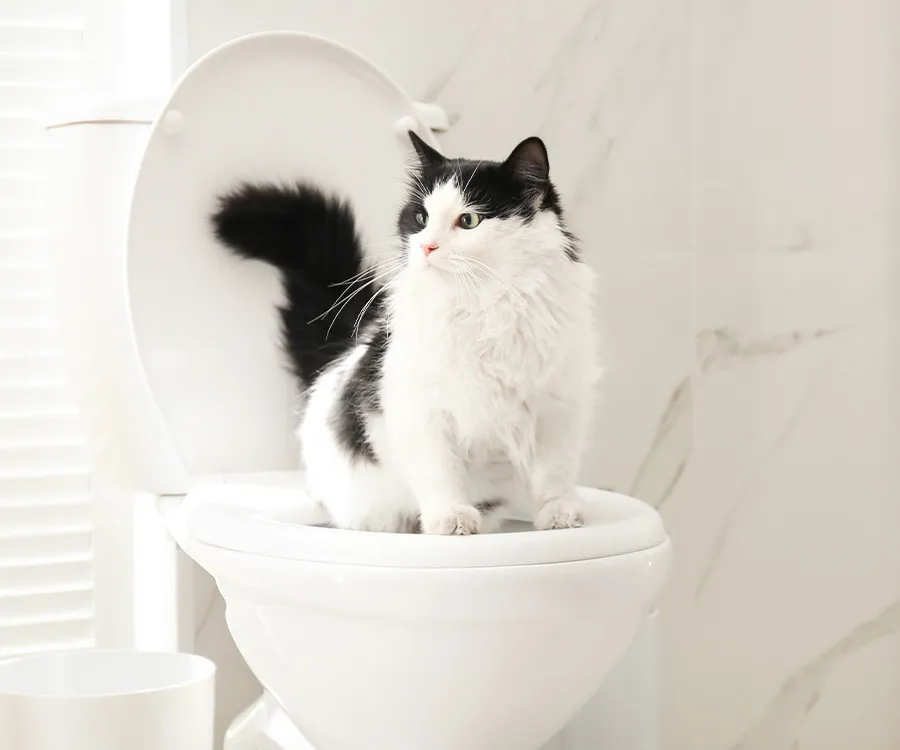 Cat using a toilet training system. Rewarding your cat with treats can significantly aid in the success of toilet training.
Step Five: Transitioning to the Toilet Bowl
Begin the transition for your cat to use the toilet bowl directly. Cut a small hole, approximately one inch in diameter, in the center of the wax paper or aluminum pan. Gradually enlarge this hole over time until the cover is nearly eliminated. As you reduce the cover’s surface area, also decrease the amount of litter, aiming for a point where no litter is present when the paper or bowl is removed. This helps your cat adapt to eliminating directly into the water.
Step Six: The Flush Factor
After each successful toilet use by your cat, remember to flush the toilet. This reinforces the idea that the “task” is completed.
Pro-Tip: It is generally not recommended to teach your cat how to flush the toilet. While cats are intelligent and can learn this action, some may develop a fascination with flushing, leading to excessive water waste. Understanding can cats be trained is one thing, but practical considerations are important.
Step Seven: Positive Reinforcement
Finally, reward your pet with a treat! Positive reinforcement is a cornerstone of successful training. Celebrating your cat’s achievements will encourage them to repeat the desired behavior.
Pro-Tip: If your cat shows apprehension towards the water in the toilet bowl, consider adding a small amount of litter to the water. This can help your cat associate the smell with their familiar litter box, easing their anxiety. For further guidance on training tools, explore options like the best clicker for cat training.
Download the Infographic on How to Train a Cat to Use the Toilet in 7 Steps
Click here to download the PDF of this infographic.
In conclusion, toilet training a cat is a process that hinges on patience, gradual changes, and positive reinforcement. By following these seven steps and being attuned to your cat’s comfort level, you can successfully transition your feline friend to using the toilet. Remember that consistency is key, and celebrating small victories will make the journey smoother for both you and your cat. If you encounter significant challenges, consulting resources on how do you train a cat or seeking advice from a veterinarian or a professional cat behaviorist can provide additional support.
