
It’s a common scenario for cat owners: your feline friend acts as though they haven’t eaten in days, meowing incessantly for food, often at the most inconvenient times. While this behavior can be frustrating, understanding the underlying reasons and implementing the right strategies can help you manage it. This guide will help you address your cat’s persistent begging, ensuring their health and your peace of mind. Dealing with changes in your cat’s eating habits is crucial, especially if your cat is on a weight management plan. This advice is for general information and does not replace professional veterinary guidance. Always consult your veterinarian for personalized advice regarding your cat’s specific needs.
Ensure Adequate Caloric Intake
The first step in addressing your cat’s begging is to verify they are receiving sufficient calories. Consult the feeding guidelines on your cat’s food packaging. Are you feeding them close to the recommended amount? If not, consider a slight increase, but be cautious not to overfeed, as the goal is to reduce hunger, not cause weight gain. It’s essential to discuss any dietary adjustments with your veterinarian.
A comprehensive guide on how much to feed cats can provide approximate guidelines. However, this should serve as a starting point for a conversation with your veterinarian or a certified nutritionist, as individual needs vary.
Implement Gradual Dietary Changes
A common pitfall when managing a cat’s diet, especially for weight loss, is making abrupt or haphazard changes. Be intentional and gradual when reducing your cat’s food intake. Sudden reductions can lead to distress and increased begging. A slow, methodical approach allows your cat to adapt more comfortably to the dietary shifts.
When making adjustments, compare the manufacturer’s feeding recommendations to your current feeding practices. Begin by slightly reducing the amount from the suggested portion for their current weight. If your cat shows signs of distress, slow down the process further. Consistent monitoring of their behavior will ensure a smoother transition. Always follow your vet’s specific recommendations. If your cat struggles with the prescribed weight loss plan, discuss potential adjustments or strategies to improve their tolerance for smaller meals.
Slow Down Feeding Intervals
Naturally, cats are predators that hunt small prey and consume multiple small meals throughout the day. Mimicking this feeding pattern can help manage hunger. Instead of two large meals, consider dividing their daily food allowance into smaller portions spread across at least 3 to 4 meals. This approach can reduce the frequency of hunger pangs and subsequent begging.
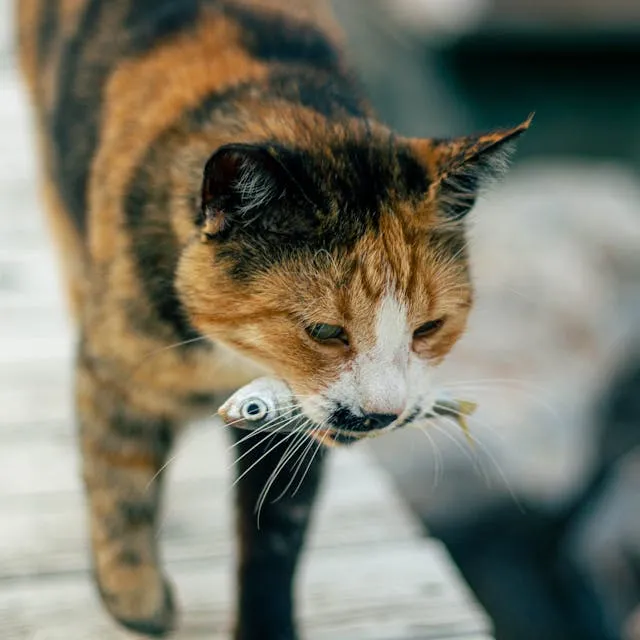 A cat carries a fish in their mouth
A related strategy involves using slow feeder bowls or food puzzles. These tools encourage cats to eat more slowly, making them feel more satisfied with less food. Some puzzles require cats to work around obstacles, while others involve completing tasks to access food. This not only provides mental stimulation but also prolongs the eating experience.
Exercise caution with food puzzles, especially for cats prone to frustration or aggression around food. Start with very easy puzzles and gradually increase the difficulty. Offering a few treats in a puzzle after a regular meal can be a good starting point.
Incorporate Training into Mealtime
Utilizing training can be an effective way to deliver a portion of your cat’s meal. Their natural hunger can serve as motivation, and training provides a controlled, deliberate method of feeding, which can help them feel fuller for longer. This can be an engaging and rewarding activity for both you and your cat. A clicker training kit can be a valuable tool to get started, or consider setting up a training session.
Two crucial considerations apply here: Never intentionally withhold food to incentivize training; conduct training sessions when your cat would naturally be hungry. This method is also not suitable for cats exhibiting food aggression. Ensure your cat receives their basic nutritional needs, even if they are not participating in training. Keep training sessions simple and focus on behaviors your cat already knows. The goal is to slow down food consumption and provide a sense of control, not to increase frustration.
Utilize Automatic Feeders
Automatic feeders are excellent tools for ensuring consistent meal delivery and establishing a predictable feeding routine for your cat. Many models allow you to control portion sizes, enabling small, frequent meals throughout the day, which is particularly beneficial if you are away from home. Feeders from brands like PetLibro are often recommended for their reliability and functionality.
Enhance Meal Volume
Consider adding bulk to your cat’s meals, with veterinary approval, to promote satiety without increasing calorie intake. Similar to how rice cakes can make you feel full with fewer calories, certain additions to your cat’s diet can achieve a similar effect. Discuss options with your veterinarian, who might suggest transitioning to a weight-management food specifically formulated to be bulky yet low in calories.
Growing cat grass can also be a beneficial supplement. It’s relatively easy to grow, even without a green thumb, and provides a safe, fibrous addition to their diet. Planting seeds a few days apart ensures a continuous supply of fresh grass.
Avoid Punitive Measures
It’s vital to remember that your cat’s begging is a communication of hunger or a potential health issue, not a deliberate act of misbehavior. Never resort to punishment, such as squirt bottles or remote devices. These methods do not address the root cause of the begging and can damage your relationship with your cat.
The Key to Reducing Begging
While every cat is unique, the most effective strategies for reducing begging involve collaborating with your veterinarian or a certified nutritionist to ensure proper nutrition and implementing gradual dietary changes. Crucially, avoid reinforcing the begging behavior by giving in. Consistency is key; if you occasionally feed your cat when they beg, you inadvertently train them to continue the behavior.
By making all dietary adjustments intentional and prioritizing your cat’s well-being, you can successfully manage their begging habits. Consider an automatic feeder to help manage meal frequency and portion control, especially if your schedule is demanding.
Cat begging for food and not sure what to do next?
Set Up a Consultation
