
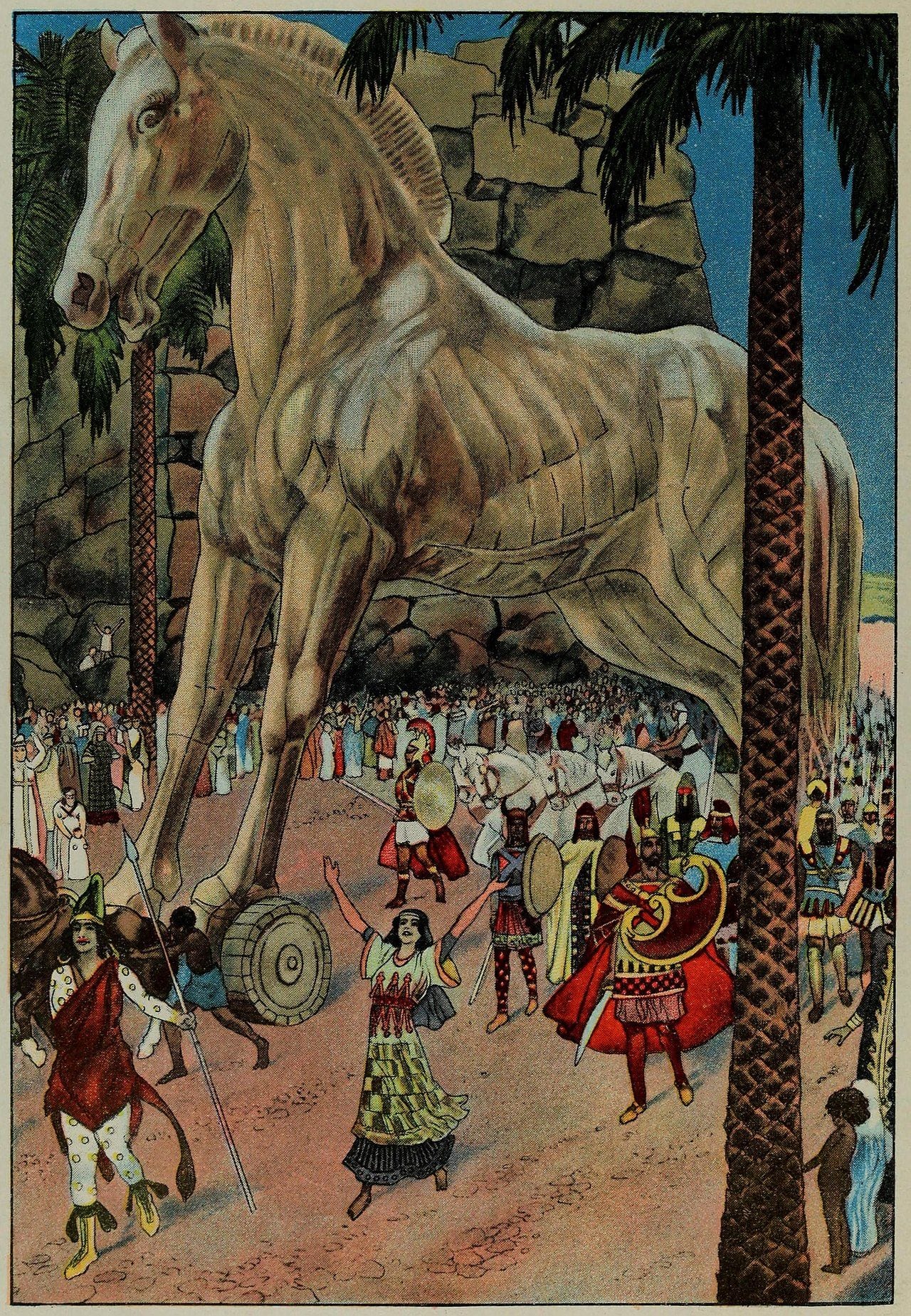
The tale of the Trojan Horse is a cornerstone of ancient Greek mythology, a brilliant stratagem that led to the downfall of the seemingly invincible city of Troy. It’s a narrative woven with threads of cunning, bravery, and the harsh realities of war, immortalized in epic poems and retold through the ages. This story, a pivotal moment in the ten-year Trojan War, showcases how ingenuity and deception can triumph over brute force.
The Genesis of the Stratagem
After a decade of fruitless siege, with neither the Achaeans (Greeks) nor the Trojans able to claim victory, Odysseus, the wise and resourceful king of Ithaca, devised a plan. The Achaean forces were weary, and the morale was low. A direct assault on the heavily fortified walls of Troy had proven futile time and again. Odysseus proposed a bold and unconventional strategy: to trick the Trojans into bringing the Greek army inside their own city walls.
The core of the plan involved the construction of a massive, hollow wooden horse. Skilled craftsmen, under Odysseus’s direction, meticulously built this imposing effigy. It was designed to be large enough to conceal a select group of the Achaean’s finest warriors within its belly.
The Deception Unfolds
With the horse completed, the Achaean army enacted the next phase of Odysseus’s plan. They pretended to abandon their camp, burning their tents and sailing away, leaving behind only the colossal wooden horse on the beach. However, they did not sail far; a significant portion of the fleet hid just out of sight, behind the nearby island of Tenedos, awaiting the opportune moment.
To further sell the ruse, a single Greek soldier named Sinon was left behind. Sinon’s role was crucial: he was to be captured by the Trojans and weave a tale that would convince them to bring the horse into their city. Sinon, a master of deception, played his part flawlessly. He claimed to have been abandoned by the Greeks, persecuted by Odysseus, and that the wooden horse was an offering to the goddess Athena. He told the Trojans that the horse was constructed with such immense size to prevent them from moving it into their city, as it was believed that if the Trojans brought it inside, they would gain Athena’s favor and become invincible. Conversely, if they destroyed it, Athena’s wrath would befall them.
The Trojan’s Fatal Decision
The Trojans, eager for an end to the war and perhaps blinded by their perceived victory, debated the fate of the giant wooden horse. Despite warnings from some, like the priest Laocoön, who famously declared, “I fear the Greeks, even when they bring gifts,” their pleas went unheeded. Laocoön even hurled a spear at the horse, which resonated hollowly, but his warning was tragically cut short when two giant sea serpents emerged and devoured him and his sons, an event the Trojans interpreted as a sign of divine displeasure with his skepticism.
Convinced by Sinon’s lies and perhaps eager to appease the gods, the Trojans rejoiced. They breached their own formidable walls to drag the enormous wooden horse into the heart of their city. They celebrated their supposed victory with feasting and revelry, unaware that the very symbol of their triumph contained the seeds of their destruction.
The Fall of Troy
Under the cover of night, while the Trojans slept soundly after their celebrations, the hidden Greek warriors emerged from the belly of the horse. Sinon, who had been left to open the city gates, fulfilled his final task. The warriors signaled their waiting comrades, who had sailed back under the darkness.
The Achaean army poured into the unsuspecting city. The gates were opened, and the returning Greek soldiers swarmed through. What followed was a brutal and devastating sack of Troy. The city, which had withstood a decade of open warfare, fell swiftly and mercilessly to the enemy within. The Trojan War, which had dragged on for so long, came to a violent and decisive end, all thanks to the cunning strategy of the Trojan Horse.
The story serves as a timeless parable about the dangers of misplaced trust, the effectiveness of psychological warfare, and the tragic consequences of hubris. It highlights how a single, brilliant idea, executed with precision and deception, could overcome even the most fortified defenses and change the course of history.
