
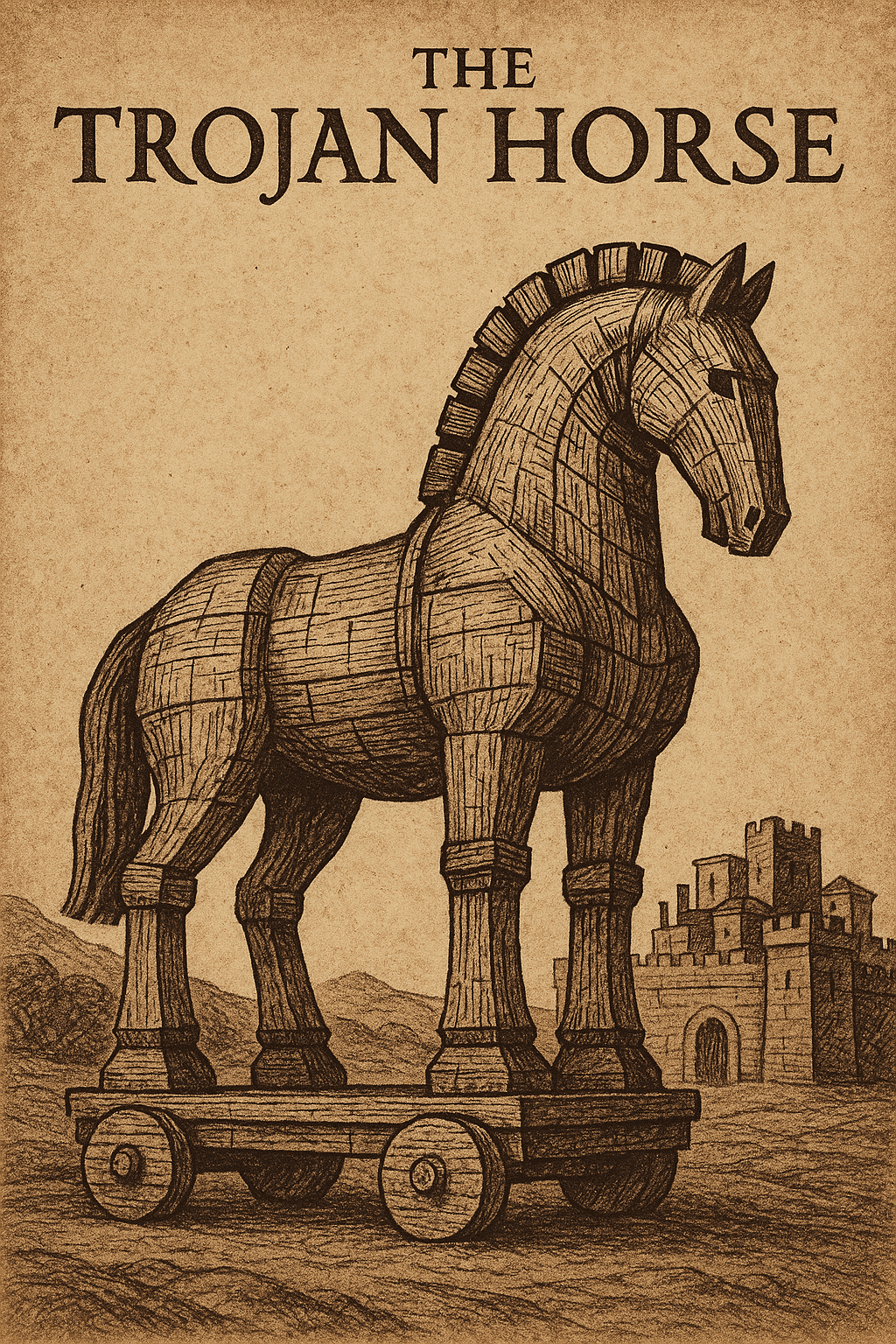
The story of the Trojan Horse is one of history’s most enduring and captivating narratives, a tale of ingenuity, deception, and the dramatic conclusion of a legendary war. It’s a story that has echoed through centuries, inspiring countless retellings in literature, art, and film, and serving as a powerful metaphor for hidden dangers and strategic trickery. At its heart, the Trojan Horse narrative explores themes of warfare, human cleverness, and the ultimate consequences of pride and perseverance.
Origins and the Trojan War
The legend unfolds during the final, arduous years of the Trojan War, a conflict that had raged for a decade between the Achaeans (Greeks) and the city of Troy. Accounts of the war, most famously immortalized in Homer’s Iliad, depict a brutal and attritional struggle with no clear end in sight. The Achaeans, despite their formidable warriors and relentless sieges, had been unable to breach the formidable walls of Troy. Desperation and exhaustion began to set in among the Greek ranks.
The Ingenious Plan of Odysseus
It was during this critical juncture that Odysseus, the wise and cunning king of Ithaca, devised a plan that would change the course of the war. Recognizing that a direct assault on Troy’s impenetrable defenses was futile, Odysseus proposed a stratagem that relied on deception rather than brute force. The core of his plan was to construct a massive, hollow wooden horse, large enough to conceal a select group of Achaean warriors.
The plan was audacious: the main Achaean army would pretend to abandon their siege, sailing away and leaving behind only the colossal wooden horse as a supposed offering to the goddess Athena, a gesture of appeasement for their past transgressions. Inside the horse, however, would be Odysseus himself along with some of the bravest Achaean soldiers.
The Construction and Deception
Under the direction of the master craftsman Epeius, the Greeks meticulously constructed the giant wooden horse. Its exterior was intricately carved, making it appear as a genuine votive offering. Once completed, a chosen contingent of warriors, including Odysseus, Menelaus, and others, climbed inside the hollow belly of the beast. The remaining Achaean fleet then sailed away, hiding just beyond the sight of the Trojan shore, creating the illusion of a complete withdrawal.
The Trojans’ Dilemma
When the Trojans awoke to find the Achaean camp empty and the massive wooden horse standing on the beach, they were filled with a mixture of relief and disbelief. A fierce debate ensued within the city walls: should they bring this strange offering inside, or destroy it as a potential trap?
Several Trojans expressed deep suspicion. Laocoön, a priest of Poseidon, famously warned, “I fear the Greeks, even when they bring gifts,” and even hurled a spear at the horse’s side, eliciting a hollow sound and revealing the hidden soldiers within. However, his warnings were tragically ignored. According to some versions of the myth, the gods, who favored the Greeks, sent sea serpents to attack and kill Laocoön and his sons, which the Trojans interpreted as divine punishment for his disrespect towards the offering.
Another pivotal figure in the deception was Sinon, a Greek soldier left behind. Sinon cunningly presented himself to the Trojans as a deserter, claiming that Odysseus had plotted against him. He spun a convincing tale that the wooden horse was indeed an offering to Athena, meant to ensure a safe voyage home for the Greeks, and that its immense size was deliberate to prevent the Trojans from bringing it into their city, as doing so would supposedly bestow Athena’s favor upon Troy. Swayed by Sinon’s lies and the apparent departure of the Greek army, the Trojans, eager to celebrate their victory and incorporate the supposed divine gift into their city, decided to bring the horse within their walls.
The Fall of Troy
Under the cover of night, after a day of feasting and celebrating their perceived victory, the Trojans fell into a deep sleep. Meanwhile, Sinon signaled the hidden Achaean fleet, which had returned under the darkness. The warriors inside the Trojan Horse emerged, silently killing the city’s guards and opening the gates of Troy.
The main Achaean army, alerted by the signal, poured into the unsuspecting city. What followed was a brutal and devastating sack of Troy. The city was plundered, its temples desecrated, and its inhabitants slaughtered or enslaved. The long and bloody Trojan War finally came to a catastrophic end, with the cunning of Odysseus and the perceived vulnerability of the Trojan Horse proving to be the decisive factors.
Legacy and Modern Interpretations
The Trojan Horse remains a potent symbol in Western culture, representing a deceptive strategy where a seemingly harmless object or offer conceals a malicious intent or a hidden threat. The term “Trojan Horse” is now widely used in various contexts, most notably in cybersecurity, to describe malware that disguises itself as legitimate software to gain access to a user’s system.
The story also serves as a cautionary tale about the dangers of complacency, the importance of critical thinking, and the potential consequences of succumbing to arrogance or overconfidence. It highlights how a single, well-executed plan, born of strategic brilliance, can overcome seemingly insurmountable obstacles. The enduring appeal of the Trojan Horse story lies in its dramatic narrative, its exploration of timeless human traits like courage, deception, and fate, and its profound impact on the course of legendary history.
