
William Saroyan’s “The Summer of the Beautiful White Horse” is a timeless short story that captures the essence of childhood innocence, the complexities of honor, and the unspoken bonds of family. This tale transports us to a simpler time, seen through the eyes of a young boy grappling with a delightful yet morally ambiguous adventure. For anyone seeking The Summer Of The Beautiful White Horse Story Summary, it’s more than just a recap of events; it’s an exploration of a tribe’s legacy, the spirit of youth, and the powerful symbolism of a magnificent white steed. The story delves into the hearts of two boys from the Garoghlanian tribe, a family known for its unwavering honesty, even in the face of deep poverty.
The Heart of the Story: Main Characters
To truly understand the narrative, we must first get to know the characters who drive it. Each one represents a different facet of the story’s central themes.
Aram: The Innocent Narrator
Aram is the nine-year-old narrator, and the story unfolds through his perspective. He is thoughtful, a little naive, and deeply rooted in the traditions and reputation of his tribe. For Aram, the world is divided into clear rights and wrongs, dictated by the Garoghlanian hallmark of honesty. His internal conflict begins the moment he sees the beautiful white horse, forcing him to reconcile his family’s values with his overwhelming desire for adventure. He represents the voice of reason and conscience, constantly weighing the thrill of the ride against the potential shame of their actions.
Mourad: The Wild Spirit
Aram’s cousin, Mourad, is thirteen and considered the “crazy streak” of the family. He is impulsive, passionate, and possesses a deep, almost mystical connection with animals. Mourad is the one who procures the horse, acting on a desire so pure and strong that he doesn’t initially see it as stealing. He lives in the moment, driven by a love for freedom and beauty that defies conventional logic. To Aram, Mourad is the embodiment of a life lived without restraint, a captivating figure who seems to understand the world in a way others do not.
Uncle Khosrove: The Eccentric Patriarch
Uncle Khosrove is a powerful, imposing figure with an enormous mustache and a famously short temper. His catchphrase, “It is no harm; pay no attention to it,” is his response to every crisis, from his own house being on fire to his son’s urgent news. Though he appears comical, he represents the deep-seated pride and perhaps the sorrow of the Garoghlanian tribe. His dismissive attitude is a defense mechanism, a way of asserting control in a world where his people have lost almost everything but their reputation. Mourad is said to have inherited this “crazy streak” from him.
John Byro: The Trusting Farmer
John Byro is an Assyrian farmer and the rightful owner of the white horse. He is a kind, simple man who is more saddened by the loss of his horse than angered. He represents the outside world and its values. His trust in the Garoghlanian family’s honesty is absolute, which creates the ultimate moral test for the two boys. His gentle nature and faith in their integrity play a crucial role in the story’s resolution.
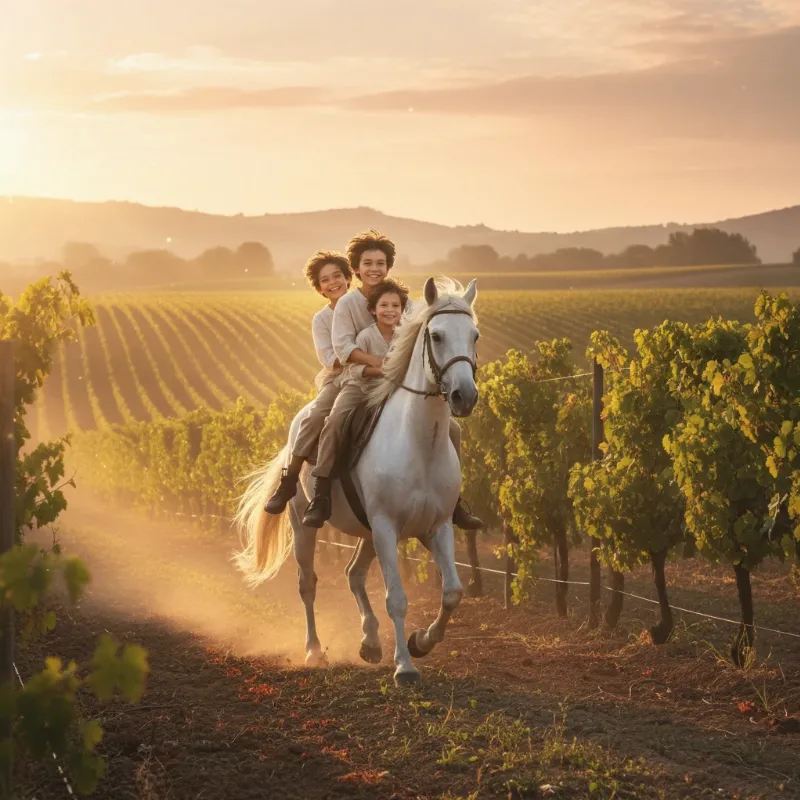 An SEO-optimized alt text describing two young boys riding a beautiful white horse through a field at sunrise, capturing the essence of 'the summer of the beautiful white horse story summary'.
The Summer of the Beautiful White Horse Story Summary
The plot is a simple, linear narrative, focusing on a single, transformative summer. It’s a journey from a dreamlike beginning to a conscience-driven conclusion.
An Unexpected Dawn
The story begins one early summer morning when Aram is awakened by his cousin Mourad, who is sitting outside his window on a magnificent white horse. Aram is stunned. His family is too poor to afford such an animal, so his first thought is that Mourad must have stolen it. This moment is the catalyst for the entire story. The sheer beauty of the horse and the allure of riding it are so powerful that Aram pushes aside his initial suspicions, convincing himself that borrowing a horse for a ride isn’t the same as stealing money. This rationalization allows him to join Mourad’s adventure.
A Season of Secret Rides
For weeks, Aram and Mourad wake before dawn to ride the horse through the countryside, across dry fields and vineyards, before hiding it in the barn of a deserted vineyard. For Aram, learning to ride is a challenge, as the horse only seems to obey Mourad’s unique and intuitive commands. These secret rides represent a perfect, idyllic period of freedom and joy. The horse becomes a symbol of their shared dream, a beautiful secret that belongs only to them. They are living a fantasy, temporarily escaping the reality of their poverty.
The Confrontation with Conscience
The idyllic summer takes a turn when the boys encounter the farmer, John Byro, who is visiting Aram’s home. He complains to Uncle Khosrove about his missing white horse, which he had bought for sixty dollars. He describes the horse in detail, and Aram realizes with a jolt that it is the same one. He runs to tell Mourad, and they both understand the gravity of their situation. While they initially decide to keep the horse a little longer, the reality of their actions has set in. Their secret is no longer just a joyful adventure; it is now a confirmed theft that jeopardizes their family’s name.
The Horse’s Return
The story reaches its climax when the boys, on their way to hide the horse one morning, run into John Byro on a country road. The farmer carefully examines the horse. “I would swear it is my horse if I didn’t know your parents,” he tells them. “The fame of your family for honesty is well known to me.” He remarks that the horse is the twin of his missing one and goes on his way. Shaken by the farmer’s profound trust, the boys are overcome with a sense of guilt. Their tribe’s honor, which they had taken for granted, is now a heavy burden. The very next morning, they quietly return the horse to John Byro’s barn. Later, the farmer visits their house again, overjoyed, reporting that his horse has returned and is now stronger and better-tempered than ever.
Exploring the Core Themes
The story is rich with themes that resonate with readers of all ages. It’s a narrative that explores the moral landscape of youth and the values that define a community.
Honesty and Trust
This is the central theme. The Garoghlanian tribe is defined by its honesty, a trait that has been their hallmark for eleven centuries. The entire conflict revolves around the boys’ deviation from this code. The story beautifully illustrates that true honesty isn’t just about not stealing; it’s about living up to the trust others place in you. John Byro’s decision to trust the boys’ family over his own eyes is what ultimately inspires them to do the right thing.
Innocence Versus Experience
Aram represents innocence. He is guided by a pure, almost romantic view of the world. Mourad, while still a boy, has a touch more experience and a wildness that allows him to bend the rules. Their shared adventure is a journey from the innocent belief that their actions are harmless to the experienced understanding that their choices have real-world consequences.
Pride and Poverty
The Garoghlanians may be poor, but they are rich in pride and honor. They have lost their homeland and live in poverty, but they cling fiercely to their reputation. Uncle Khosrove’s roaring declarations and the family’s unwavering commitment to honesty are manifestations of this pride. The story suggests that what defines a person or a family is not their material wealth but their character.
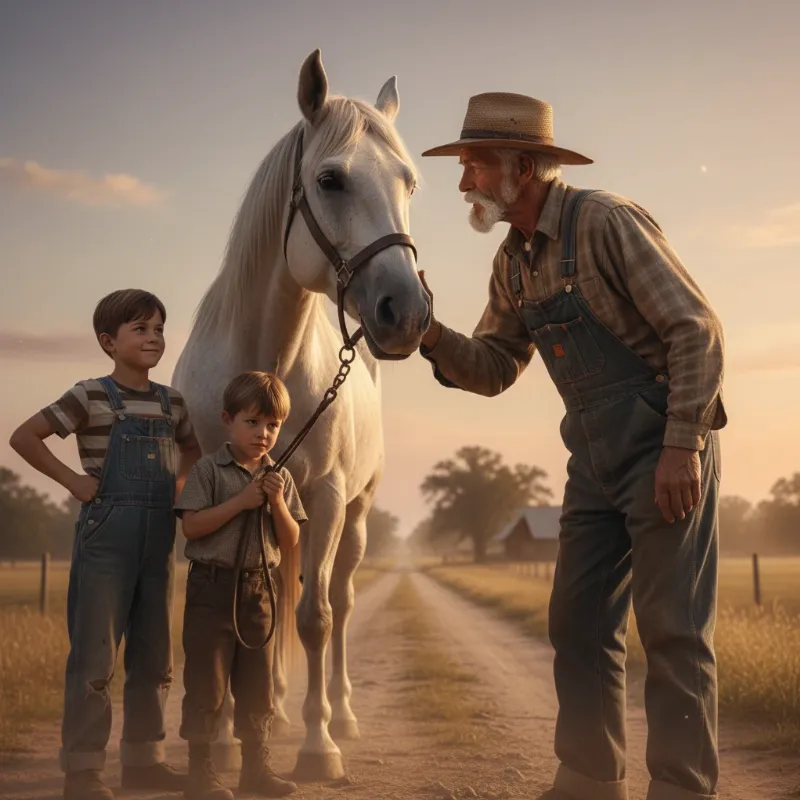 An alt text for an image showing an older Armenian farmer gently inspecting a white horse held by two young boys, relevant to the 'the summer of the beautiful white horse story summary' climax.
The Symbolism of the White Horse
The beautiful white horse is more than just an animal; it’s a powerful symbol.
It represents the boys’ shared dream—a dream of freedom, beauty, and a life beyond their impoverished circumstances. The horse is wild and majestic, embodying the untamed spirit of youth that Mourad possesses and that Aram yearns for. Its whiteness symbolizes the purity and innocence of their initial intentions. When they return the horse, they are not just returning property; they are restoring their own honor and letting go of a beautiful dream in order to uphold their family’s legacy.
About the Author: William Saroyan
William Saroyan (1908-1981) was an Armenian-American novelist, playwright, and short story writer. He was known for his poignant and optimistic stories, many of which were set in the Armenian-American community in Fresno, California, where he grew up. His work often celebrated the innocence of childhood, the resilience of immigrant families, and the beauty found in everyday life. “The Summer of the Beautiful White Horse” is a quintessential Saroyan story, reflecting his own heritage and his belief in the fundamental goodness of people.
Frequently Asked Questions
What is the main message of The Summer of the Beautiful White Horse?
The central message is that honor, trust, and honesty are more valuable than any material possession. It teaches that while desires and dreams are powerful, they should not come at the cost of one’s integrity and family reputation.
Why did the boys return the horse?
The boys returned the horse because their conscience was awakened by the farmer John Byro. When Byro explicitly stated that he believed in their family’s honesty over the evidence of his own eyes, they could no longer continue their deception.
What is the significance of the Garoghlanian tribe?
The Garoghlanian tribe represents a legacy of honor and integrity. Their reputation for honesty, maintained for over a millennium despite their poverty, serves as the moral backbone of the story and the standard against which the boys measure their own actions.
Is The Summer of the Beautiful White Horse a true story?
It is a work of fiction, but it draws heavily on William Saroyan’s own experiences and observations growing up in an Armenian immigrant community. The characters and their values feel authentic and are likely inspired by real people and cultural traditions.
What does the white horse symbolize in the story?
The white horse symbolizes freedom, beauty, and the innocent, wild dreams of youth. It is a manifestation of the boys’ longing for something magnificent in their simple, impoverished lives. Its return signifies their choice to prioritize honor over their personal dream.
A Story for the Ages
In conclusion, the summer of the beautiful white horse story summary reveals a narrative that is simple on the surface but deeply profound in its exploration of human character. William Saroyan masterfully weaves a tale that celebrates the fleeting beauty of childhood and the enduring power of integrity. It reminds us that our true wealth lies not in what we own, but in the honor we uphold and the trust we earn. The story of Aram, Mourad, and the beautiful white horse is a gentle, timeless lesson on growing up and choosing to do the right thing, even when it means letting a beautiful dream go.
