
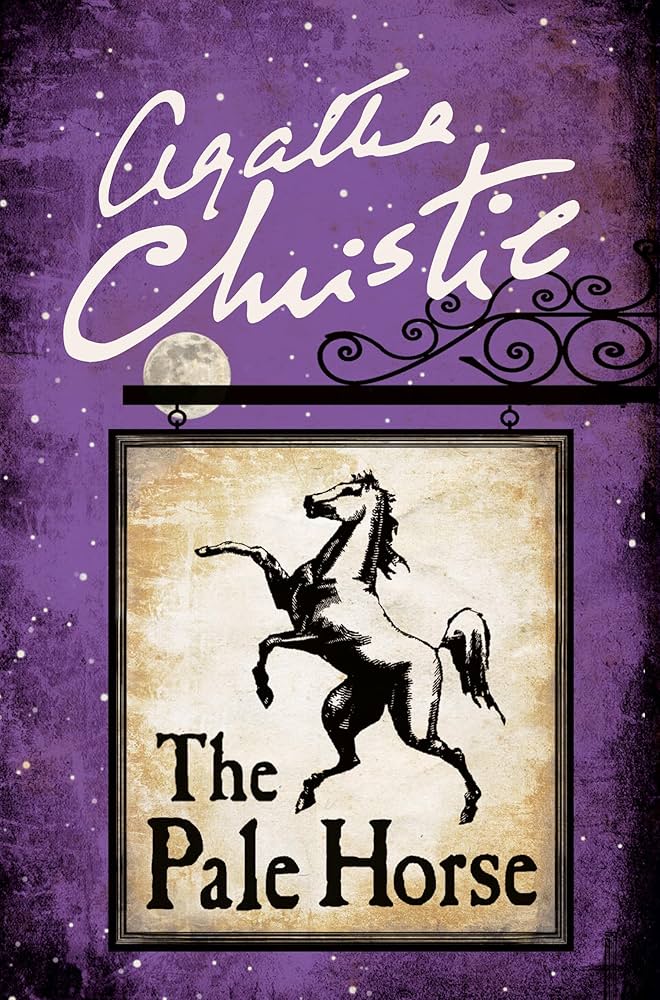
Agatha Christie, the undisputed Queen of Crime, penned numerous mysteries, but few blur the lines between rational deduction and the supernatural quite like her 1961 novel, The Pale Horse. From the very first pages, The Story Of The Pale Horse draws readers into a chilling world where modern murder for hire collides with ancient fears of black magic. It’s a masterful tale that questions the nature of belief and the tangible power of suggestion, all wrapped in a classic whodunnit. If you want to dive deeper into the basics, you can explore what is the story of the pale horse for a foundational overview. This narrative stands as a testament to Christie’s versatility, proving she could craft a terrifying atmosphere as effectively as she could a seemingly impossible puzzle.
The novel grips you from its grim opening. A dying woman, Mrs. Davis, makes a final, desperate confession to a Catholic priest, Father Gorman. She entrusts him with a shocking secret and a list of names before succumbing to her illness. But before Father Gorman can act on this information, he is brutally struck down and killed in a dense London fog. The police, led by the methodical Inspector Lejeune, discover the list of names hidden in the dead priest’s shoe, but with no obvious connection between the individuals, they are left with a baffling puzzle. This cryptic list becomes the catalyst for the entire investigation, a breadcrumb trail leading into the heart of a sinister enterprise.
Unraveling the Plot of The Pale Horse
The mystery deepens when the protagonist, a historian named Mark Easterbrook, stumbles upon the conspiracy. At a dinner party, he overhears the name “The Pale Horse” mentioned in hushed, fearful tones. It’s spoken of as an organization that can arrange for anyone to be killed, seemingly without a trace, making their deaths appear natural. Mark’s casual interest turns to personal horror when he sees the list from Father Gorman’s shoe and recognizes the name of his own godmother, who recently died from what everyone believed were natural causes. He begins to suspect that the names on the list are not random but are, in fact, a roster of past and future victims.
Driven by a mix of curiosity and dread, Mark Easterbrook begins his own investigation, which leads him to the picturesque village of Much Deeping. There, he finds an old inn that has been converted into a private residence, the very same Pale Horse he had heard about. The house is occupied by three eccentric women—Thyrza Grey, Sybil Stamfordis, and Bella Webb—who are widely regarded as modern-day witches. Thyrza, the leader, speaks openly to Mark about her supposed ability to cause death from a distance, framing it as a service available to those willing to pay. This strange blend of occult ritual and cold, calculated business is what makes The Pale Horse so uniquely unsettling. It’s a murder-for-hire scheme cloaked in the supernatural.
Science vs. Supernatural: The Core Conflict
At its heart, the story of The Pale Horse is a brilliant exploration of the timeless battle between science and superstition. Agatha Christie masterfully builds an atmosphere of genuine fear and uncertainty, making both the characters and the reader question if dark forces are truly at play. The three women at The Pale Horse conduct rituals that seem to lend credence to their claims, creating an environment where logic seems to fail. The deaths are real, yet they appear to be from untraceable, natural causes, leaving the police stumped and Mark Easterbrook increasingly desperate.
The genius of the plot is how Christie uses this supernatural overlay as the ultimate form of misdirection. While the characters are looking for curses and demonic influence, the real murder weapon is far more tangible and scientific. The entire black magic setup is a meticulously crafted smokescreen to hide a ruthlessly efficient and logical murder plot. For a detailed breakdown of this central theme, the pale horse story explained offers further insights.
The Telltale Symptom: A Scientific Breakthrough
The turning point in the investigation comes from a crucial physical clue that Mark, with the help of the mystery novelist Ariadne Oliver and a resourceful young woman named Ginger Corrigan, finally pieces together. They discover that multiple victims of The Pale Horse, including Mark’s godmother, experienced a peculiar and alarming symptom before their deaths: their hair began to fall out. Mark witnesses this firsthand when Ginger, acting as bait in a sting operation against the organization, falls genuinely ill and starts losing her hair. This single, shared symptom cuts through the fog of the supernatural, pointing not to a curse, but to a specific type of poison: thallium. This revelation shifts the entire focus of the investigation from the occult to toxicology, proving that the killer was a human being wielding scientific knowledge, not otherworldly powers.
Answering Key Questions About the Novel
Due to its unique plot and place in Christie’s bibliography, several common questions arise among readers. Understanding these points clarifies the novel’s structure and its relationship to the broader Christie universe.
Is The Pale Horse a Miss Marple Story?
A frequent point of confusion is whether this is a case for the beloved amateur detective Miss Marple. The answer is no; The Pale Horse is not a Miss Marple story. The main protagonist and investigator from the public side is Mark Easterbrook. However, the novel does feature another of Christie’s famous recurring characters, the delightfully eccentric mystery writer Ariadne Oliver. She provides moral support and occasional, intuitive insights that help Mark along the way, serving as a sounding board for his increasingly wild theories. The official police investigation is handled by the capable Inspector Lejeune, who, while initially skeptical, eventually collaborates with Mark to uncover the truth. The cleverness of the plot is often discussed, leading many to wonder, is the pale horse a miss marple story, but the credit for solving this particular puzzle belongs to a different set of Christie’s heroes.
The Meaning Behind the Sinister Title
The title itself adds a layer of dread and is far from arbitrary. “The Pale Horse” is a direct biblical allusion to the Book of Revelation, chapter 6, verse 8: “And I looked, and behold a pale horse: and his name that sat on him was Death, and Hell followed with him.” By naming the organization after this apocalyptic figure, Christie immediately establishes the stakes and the sinister nature of the conspiracy. It represents a force that brings death in a seemingly inevitable and inescapable manner, much like the Horseman himself. This deepens the novel’s thematic weight, connecting a modern crime story to ancient, universal fears about mortality. Understanding the story horse meaning is key to appreciating the rich symbolism Christie employed.
The Incredible Real-Life Impact of The Pale Horse
One of the most astonishing facts about The Pale Horse is that its influence extends far beyond the world of fiction. Christie’s meticulous research and startlingly accurate description of thallium poisoning had real-world consequences, saving lives on at least two separate occasions.
In one instance, a woman in Latin America wrote to Christie, explaining that after reading the novel, she recognized the symptoms of thallium poisoning in a woman she knew was being slowly poisoned by her husband, ultimately saving the victim’s life. In another famous case in 1977, a nurse in London who was reading The Pale Horse correctly identified the mysterious illness of an infant from Qatar as thallium poisoning, allowing doctors to administer the correct treatment. The book was even instrumental in helping Scotland Yard identify the method used by serial killer Graham Frederick Young in 1971, whose “Bovingdon bug” was unmasked as thallium poisoning after a doctor recalled the details from Christie’s novel.
Frequently Asked Questions (FAQ)
What is the main plot of The Pale Horse?
The main plot follows historian Mark Easterbrook as he investigates The Pale Horse, a mysterious organization that appears to use black magic to kill people for a fee. He uncovers a list of victims left by a murdered priest and must determine if the deaths are supernatural or the work of a clever human killer.
Who is the real killer in The Pale Horse?
Spoiler Alert: The mastermind behind The Pale Horse organization is Zachariah Osborne, a pharmacist. He used the facade of witchcraft and supernatural curses to hide a scientific murder method, using thallium poison administered to victims by tampering with products they used.
What poison is used in The Pale Horse?
The poison used is thallium, a heavy metal salt. Agatha Christie accurately described its symptoms, most notably gastrointestinal distress, nerve pain, and alopecia (hair loss), which becomes the key clue to solving the mystery.
Does Miss Marple or Hercule Poirot appear in The Pale Horse?
Neither Miss Marple nor Hercule Poirot appears in the novel. The story features another recurring Christie character, the mystery novelist Ariadne Oliver, who assists the main protagonist, Mark Easterbrook.
Why is the book called The Pale Horse?
The title is a biblical reference to the Four Horsemen of the Apocalypse from the Book of Revelation. The fourth horseman, who rides a “pale horse,” is named Death. This evocative name reflects the seemingly unstoppable and mysterious nature of the deaths orchestrated by the novel’s antagonists.
A Story That Endures
In conclusion, The Pale Horse remains one of Agatha Christie’s most inventive and compelling works. It demonstrates her ability to evolve with the times, weaving in elements of folk horror and psychological suspense while still delivering the clockwork plot and brilliant solution her readers expect. The novel is a masterclass in misdirection, proving that the most terrifying evils are often those disguised by our own fears and superstitions. The enduring legacy of the story of the pale horse is not just in its clever mystery, but in its profound and chilling reminder that the most effective poison can be the power of suggestion, and its most remarkable footnote is its incredible leap from fiction to life-saving fact.
