
Have you ever experienced a moment you were sure was a disaster, only to find it led to something wonderful? Or celebrated a victory that later brought unexpected trouble? This dance between good and bad luck is a core part of the human experience, and no tale captures this truth better than The Story Of The Lost Horse. This ancient Chinese parable, often called “Sai Weng Shi Ma,” is a profound reminder that life is unpredictable, and our initial judgments about events are often shortsighted. It teaches a powerful lesson about perspective, resilience, and the complex tapestry of fate. The wisdom it offers is perhaps more relevant today than ever before. Understanding this narrative is similar in some ways to grasping the deeper meanings found in fables like the old man lose horse story, where what seems simple on the surface holds a universe of meaning.
The Ancient Parable Unfolds
The story begins with an old farmer who lived with his son near the northern frontier of China. Their most prized possession was a magnificent, strong horse.
A Stroke of Bad Luck?
One day, the horse simply vanished. It broke free from its enclosure and ran off into the vast, wild lands of the nomads. The farmer’s neighbors quickly came to offer their condolences. “What terrible luck,” they said, shaking their heads. “To lose such a fine horse is a great misfortune.”
The old farmer, however, remained calm. He simply replied, “How do you know this is bad luck?” The neighbors were puzzled by his response and left, muttering about the old man’s strange detachment.
An Unexpected Blessing?
A few months later, the unexpected happened. The lost horse returned, but it was not alone. It brought with it a whole herd of wild, excellent horses from the frontier. The farmer and his son suddenly had a stable full of valuable animals.
Once again, the neighbors gathered, this time to offer congratulations. “What incredible fortune!” they exclaimed. “You are now a wealthy man. This is truly a blessing.”
The old farmer’s expression was unchanged. He quietly responded, “How do you know this is good luck?” Confused but happy for him, his neighbors went home, marveling at his good fortune.
A Turn for the Worse?
The farmer’s son, overjoyed with the new horses, developed a passion for riding. He spent his days training the wild animals. One afternoon, while riding a particularly spirited stallion, he was thrown violently to the ground. The fall was severe, and he broke his leg badly. The injury was so complex that it left him with a permanent limp.
The neighbors rushed over, their faces filled with pity. “Oh, what a tragedy!” they cried. “Your only son, now crippled for life. This is a terrible curse. That horse brought nothing but disaster.”
The old farmer listened patiently before asking his familiar question, “How do you know this is bad luck?”
A Blessing in Disguise
A year later, the emperor’s army swept through the region. They were conscripting every able-bodied young man for a brutal war on the frontier, a conflict from which few were expected to return. The recruiters went from door to door, taking sons from weeping families.
When they arrived at the farmer’s house, they saw his son with his badly broken and healed leg. Deeming him unfit for military service, they passed him by. While the neighbors’ sons marched off to war, the farmer’s son remained safely at home.
The old man had his son, his horses, and his peace, all because of what everyone had once called a great misfortune.
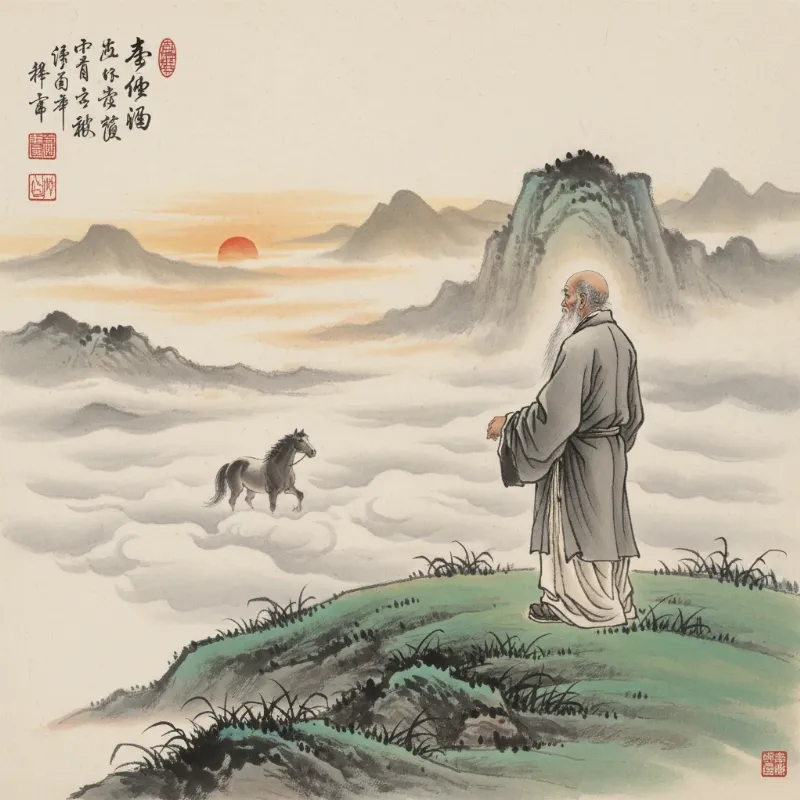 The story of the lost horse depicted with an old farmer in traditional Chinese attire looking at a lone horse on a misty hill, symbolizing perspective and fortune.
What Is the Deeper Meaning of the Lost Horse Story?
This simple tale has endured for centuries because its message resonates deeply with the unpredictable nature of life. It’s not just about horses and farmers; it’s a masterclass in psychological resilience and wisdom.
“The parable of the lost horse teaches us to suspend judgment,” notes Dr. Julian Finch, a philosopher and expert in Eastern traditions. “It suggests that our immediate emotional reaction to an event—labeling it ‘good’ or ‘bad’—is based on an incomplete picture. True wisdom lies in accepting the present moment without attaching a definitive label to it, knowing that the full story has yet to unfold.”
Embracing Uncertainty
At its core, the story of the lost horse is a Taoist teaching about accepting the “Tao,” or the natural flow of the universe. Life is in constant flux, and what seems like a final destination is often just a turn in the road. The farmer embodies this wisdom. He doesn’t get swept up in celebration or despair because he understands that he cannot see the future. He embraces uncertainty, which gives him a profound sense of inner peace.
The Duality of Fortune and Misfortune
The story brilliantly illustrates that fortune and misfortune are two sides of the same coin. They are interconnected and often give birth to one another.
- The loss of the horse (misfortune) led to gaining a herd (fortune).
- Gaining the herd (fortune) led to the son’s injury (misfortune).
- The son’s injury (misfortune) led to him being saved from the war (fortune).
This cycle challenges our black-and-white thinking. It encourages us to look for the hidden opportunities in our setbacks and to remain humble and cautious in our moments of triumph. This theme of unexpected outcomes in animal stories is powerful, much like when exploring the summer of the beautiful white horse story summary, where innocence and morality are seen through a child’s interaction with a horse.
A Lesson in Patience and Perspective
The farmer’s wisdom comes from his broad perspective. While his neighbors see only the immediate event, he sees a single point on a long, winding timeline. He practices patience, allowing the true nature of events to reveal themselves over time. This long-term view prevents him from making rash decisions or being controlled by fleeting emotions. He understands that the full impact of an event can only be judged in hindsight, if at all.
The Story of the Lost Horse in Modern Life
While the setting is an ancient one, the parable’s lessons are incredibly practical for navigating the complexities of the 21st century.
How Can This Parable Help in Your Career?
Imagine being laid off from a job you thought was secure. The immediate reaction is often panic and despair—a “misfortune.” But this event could be the catalyst that pushes you to start your own business, find a more fulfilling career path, or move to a city you’ve always dreamed of. The “lost horse” of your job could return with a “herd” of new opportunities you never would have pursued otherwise.
Understanding Personal Relationships
A painful breakup can feel like a devastating loss. It’s easy to see it as a complete failure. However, looking through the lens of the lost horse, this ending could be the necessary space for personal growth, self-discovery, and eventually, a healthier and more compatible relationship. The “misfortune” of the breakup can lead to the “fortune” of finding yourself.
Navigating Health and Well-being
Receiving a difficult health diagnosis or sustaining an injury is undeniably challenging. The farmer’s perspective doesn’t ask us to deny the pain but to remain open to unforeseen positive outcomes. An injury might force you to adopt a healthier lifestyle, reconnect with loved ones, or re-evaluate your priorities in a way that ultimately leads to greater happiness and fulfillment. Similarly, the dramatic events in fictional tales, such as when the horse on neverending story perishes, teach audiences about loss and resilience in a deeply impactful way.
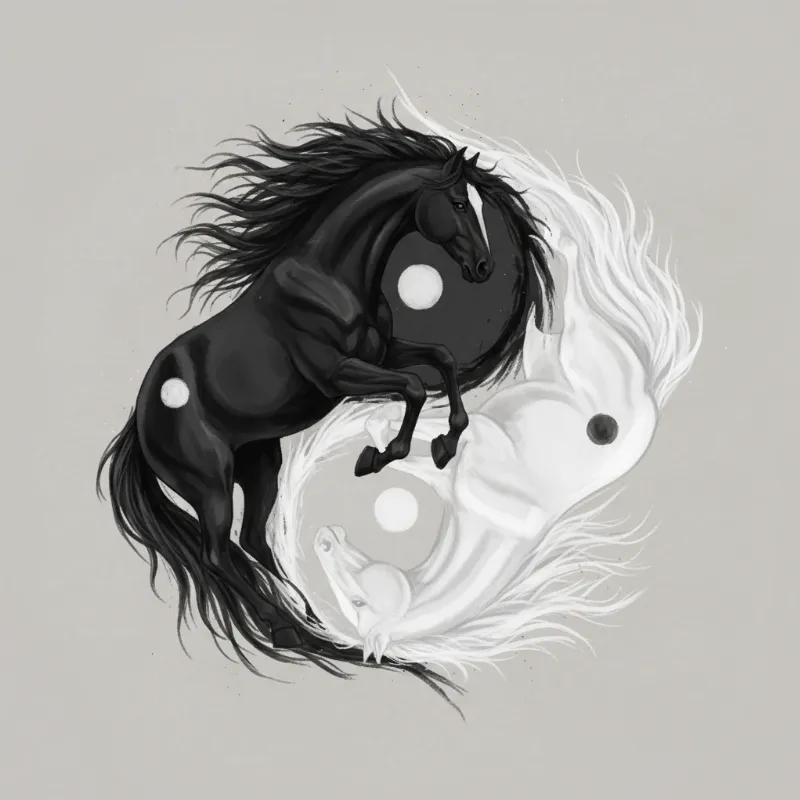 An abstract image showing two horses, one black and one white, circling each other in a yin-yang formation, representing the duality of fortune and misfortune in the story of the lost horse.
Frequently Asked Questions (FAQ)
What is the main moral of the story of the lost horse?
The main moral is that life is unpredictable, and we should not be quick to judge events as purely “good” or “bad.” True wisdom comes from maintaining perspective, embracing uncertainty, and understanding that fortune and misfortune are often intertwined.
Where did the story of the lost horse originate?
The story is an ancient Chinese parable that comes from the Huainanzi, a 2nd-century BCE text that is a collection of essays on Taoism, Confucianism, and Legalism. It is often attributed to the philosopher Liu An.
What does “blessing in disguise” mean?
“Blessing in disguise” is an English idiom that perfectly encapsulates the story’s theme. It refers to something that seems bad or unlucky at first but results in something good happening later. The son breaking his leg was a blessing in disguise because it saved him from the war.
How is the story related to Taoism?
The story is a classic example of Taoist philosophy. The farmer embodies the Taoist ideals of wu wei (effortless action) and acceptance. He doesn’t fight against the natural flow of events but observes them with a calm, non-judgmental mind.
Can this story help with anxiety?
Yes, many people find the story helpful for managing anxiety. It encourages a shift in perspective away from worst-case-scenario thinking. By reminding us that we cannot know the full outcome of a situation, it can help reduce the emotional weight of a perceived setback and foster a sense of trust in the unfolding of life.
Is the farmer being passive or wise?
This is a key question. The farmer might seem passive, but his attitude is rooted in deep wisdom, not apathy. He isn’t helpless; he is simply free from the emotional rollercoaster of reacting to every event. He continues to live his life, care for his son, and manage his farm, all while maintaining his inner equilibrium.
A Final Thought on Fortune
The story of the lost horse is more than just a clever fable; it is a guide to living with greater peace and resilience. It doesn’t promise that bad things won’t happen. Instead, it offers a framework for how to respond when they do. It teaches us to hold our circumstances a little more lightly, to be patient with life’s unfolding plot, and to remember that today’s storm could be the very thing that waters the seeds of tomorrow’s good fortune. The next time you face an unexpected turn of events, remember the old farmer and ask yourself: “How do I know what this truly means?”
