
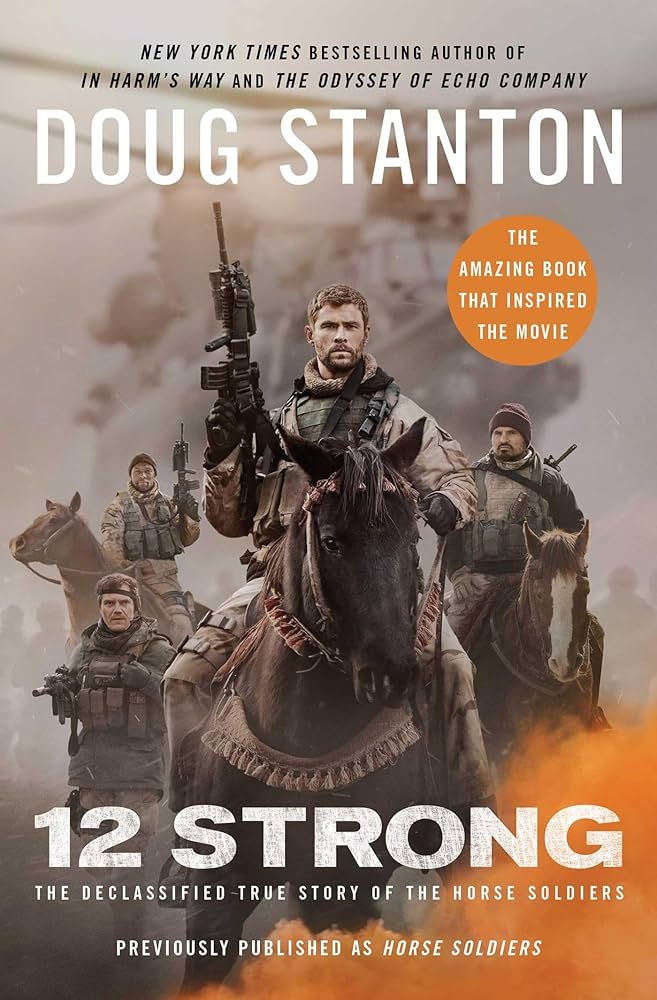
In the immediate, grief-stricken aftermath of September 11, 2001, the United States was thrust into a new kind of war. As the nation grappled with the shock, a small, elite team of Green Berets embarked on a mission so audacious and unconventional it would become the stuff of legend. This is The Story Of The Horse Soldiers, a tale of courage where 21st-century warfare collided with ancient tactics in the rugged mountains of Afghanistan. It’s a narrative that transcends a simple military operation, revealing a powerful account of bravery, partnership, and the relentless pursuit of justice against overwhelming odds.
This mission, officially known as Task Force Dagger, was America’s first retaliatory strike in the War on Terror. A dozen men were sent into an unknown, hostile territory with a monumental objective: to dismantle the Taliban regime and their al-Qaeda allies. To do this, they would have to rely not on tanks and Humvees, but on the very animal that has carried warriors into battle for centuries—the horse. Their journey is a critical chapter in modern history, a testament to the adaptability and sheer will of the American soldier. To fully appreciate this incredible feat, one must understand the context and the characters who shaped this declassified mission, a narrative far more compelling than any Hollywood script. A deeper dive into the true story of the horse soldiers reveals layers of complexity and heroism often overlooked.
America’s First Response After 9/11
The dust had barely settled on Ground Zero when the call for action was answered. President George W. Bush vowed to bring the perpetrators to justice, and the initial phase of Operation Enduring Freedom was set into motion with astonishing speed. The first boots on the ground were not part of a massive invasion force but belonged to a select few from the 5th Special Forces Group. Their task was to infiltrate northern Afghanistan, link up with anti-Taliban warlords of the Northern Alliance, and pave the way for a larger offensive.
This wasn’t just a military plan; it was a high-stakes gamble. The terrain was treacherous, the political landscape was volatile, and the enemy was entrenched. The team, designated Operational Detachment Alpha (ODA) 595, was chosen for its expertise in unconventional warfare, but nothing could have fully prepared them for what lay ahead. They were entering a world where trust was a fragile currency and survival depended on forging alliances with powerful, unpredictable leaders. Their mission was the spearhead of America’s response, a swift and decisive action meant to send a clear message to the world.
Who Exactly Were the Horse Soldiers?
The “Horse Soldiers” moniker belongs to the men of ODA 595. This 12-man team of Green Berets, led by Captain Mark Nutsch, was a mix of seasoned veterans and highly trained specialists. Each member was an expert in fields like communications, weapons, engineering, and medicine. Their core function was to act as force multipliers—to train, advise, and fight alongside indigenous forces. They were the perfect candidates for a mission that required not just combat prowess but also diplomatic skill and cultural sensitivity.
Dropped into the wilderness of Afghanistan on October 19, 2001, they were met by allies of General Abdul Rashid Dostum, a formidable Uzbek warlord and a key leader in the Northern Alliance. The team quickly realized that modern vehicles were useless in the steep, unforgiving terrain. The local fighters moved on horseback, and if the Americans wanted to keep up, they would have to do the same. This incredible adaptation—elite soldiers learning to ride and fight from the saddle—is what earned them their legendary name.
As military historian Dr. Julian Croft notes, “The genius of ODA 595 was their ability to seamlessly integrate. They didn’t impose their methods; they blended advanced technology, like calling in B-52 airstrikes from laptops, with the centuries-old cavalry tactics of their Afghan partners. It was a masterful display of unconventional warfare.”
The Unlikely Alliance with General Dostum
Forging a partnership with General Dostum was central to the mission’s success. Dostum was a powerful and complex figure, a veteran of the Soviet-Afghan War who commanded a loyal but modestly equipped militia. Building trust was paramount. The Green Berets had to prove their worth, not just as allies with access to American airpower, but as warriors willing to share the same risks.
Captain Nutsch and his men ate the same food, slept in the same harsh conditions, and rode alongside Dostum’s fighters. This shared hardship fostered a deep bond between the American commandos and their Afghan counterparts. They were united by a common enemy, and this alliance became the backbone of the campaign to liberate northern Afghanistan. The story of their collaboration is as crucial as the battles they fought, a detail explored in depth within the declassified story of the horse soldiers.
What Was Their Mission on Horseback?
The primary objective for ODA 595 was to capture the strategic city of Mazar-i-Sharif. This Taliban stronghold was vital because its seizure would open up a critical supply line from Uzbekistan, allowing for the flow of humanitarian aid and military equipment. Taking the city would shatter the Taliban’s control over the north and serve as a major psychological victory. To achieve this, the horse soldiers undertook a dual role.
First, they were combat advisors. They trained Dostum’s militia on modern weaponry and tactics. Second, and most critically, they were air controllers. Riding on horseback, often under enemy fire, these Green Berets used sophisticated satellite technology and laser designators to call in devastatingly precise airstrikes from American bombers flying miles overhead. This fusion of old and new was the key to their effectiveness. A handful of soldiers on horseback could direct the immense power of the U.S. Air Force, decimating Taliban positions, tanks, and artillery with pinpoint accuracy.
What Challenges Did the Horse Soldiers Face?
The mission was fraught with peril from the very beginning. The Green Berets were outnumbered by tens of thousands of Taliban and al-Qaeda fighters. Their supply lines were tenuous, and for weeks, they operated with limited ammunition and resources, often relying on what they could purchase in local villages or what their Afghan allies provided.
The physical challenges were immense. Most of the soldiers had little to no experience riding horses, let alone doing so over treacherous mountain passes while carrying heavy gear. They used small, traditional saddles that were uncomfortable and ill-suited for combat, leading to sores and injuries. Furthermore, the communication barrier and cultural differences required constant navigation. Every decision carried life-or-death consequences, not only for the team but for the alliance they had worked so hard to build. The narrative of their struggle is a powerful one, not unlike the perseverance detailed in the story of the horse soldiers.
The Battle for Mazar-i-Sharif
The campaign culminated in a series of fierce battles leading to Mazar-i-Sharif. The final push involved a daring cavalry charge—a scene straight out of a history book, but with a modern twist. As Dostum’s horsemen galloped across the plains toward entrenched Taliban positions, the American Green Berets rode with them, directing B-52s to clear a path. This coordinated assault overwhelmed the Taliban defenders.
On November 10, 2001, just a few weeks after their arrival, Mazar-i-Sharif fell to the Northern Alliance forces supported by ODA 595. This victory was a turning point in the war. It triggered a domino effect, leading to the collapse of the Taliban regime across northern Afghanistan and the eventual fall of Kabul. The success of this small team of 12 men was astonishing, proving the effectiveness of the unconventional warfare model. The complete account of this victory is as compelling as any military fiction, yet the horse soldiers true story is entirely real.
The Enduring Legacy of the Horse Soldiers
The story of the horse soldiers remained largely classified for years. It was author Doug Stanton’s 2009 book, Horse Soldiers, that first brought their incredible tale to the public’s attention, followed by the 2018 film 12 Strong. Today, their legacy is immortalized by the “America’s Response Monument,” a bronze statue at Ground Zero in New York City depicting a Green Beret on horseback.
The mission of ODA 595 reshaped modern special operations. It demonstrated that a small, highly skilled team, when properly integrated with local forces and supported by superior technology, could achieve strategic objectives that would typically require thousands of conventional troops. Their bravery, adaptability, and the powerful bond they forged with their Afghan allies stand as a powerful opening chapter in the long and complex history of the War on Terror. The full impact of their actions is something that continues to be studied, and resources like 12 strong the declassified story of the horse soldiers provide even greater detail.
Frequently Asked Questions (FAQ)
Is the story of the horse soldiers a true story?
Yes, absolutely. The story is based on the real-life, classified mission of U.S. Army Green Berets from ODA 595, who were the first American troops to enter Afghanistan after 9/11. Their experiences were documented in Doug Stanton’s non-fiction book “Horse Soldiers.”
How many soldiers were part of the initial team?
The primary team, ODA 595, consisted of 12 Green Berets. They worked alongside other special operations teams and CIA officers, but these 12 men were the core group that partnered with General Dostum’s forces on horseback.
Why did they have to use horses?
The mountainous and rugged terrain of northern Afghanistan was inaccessible to modern military vehicles. The local Northern Alliance fighters used horses as their primary mode of transportation, so the Green Berets had to adapt and ride horses to keep up and fight alongside their allies.
What was their main accomplishment?
Their main accomplishment was capturing the strategic city of Mazar-i-Sharif from the Taliban. This victory was a critical turning point in the early phase of the war, leading to the swift collapse of Taliban control across much of the country.
Where is the Horse Soldier statue located?
The “America’s Response Monument” is located at Liberty Park, overlooking the 9/11 Memorial and Ground Zero in New York City. It was dedicated to honor all U.S. Special Forces who served in the initial days of Operation Enduring Freedom.
A Story for the Ages
The story of the horse soldiers is more than just a military account; it is a profound human drama. It is a narrative about bridging cultural divides in the face of a common enemy, about adapting ancient methods to achieve modern victories, and about the extraordinary courage of a small group of men who answered their nation’s call without hesitation. Their daring mission, executed in the shadows and against impossible odds, set the stage for the conflict that would define a generation and remains one of the most remarkable tales in the history of the U.S. military.
