
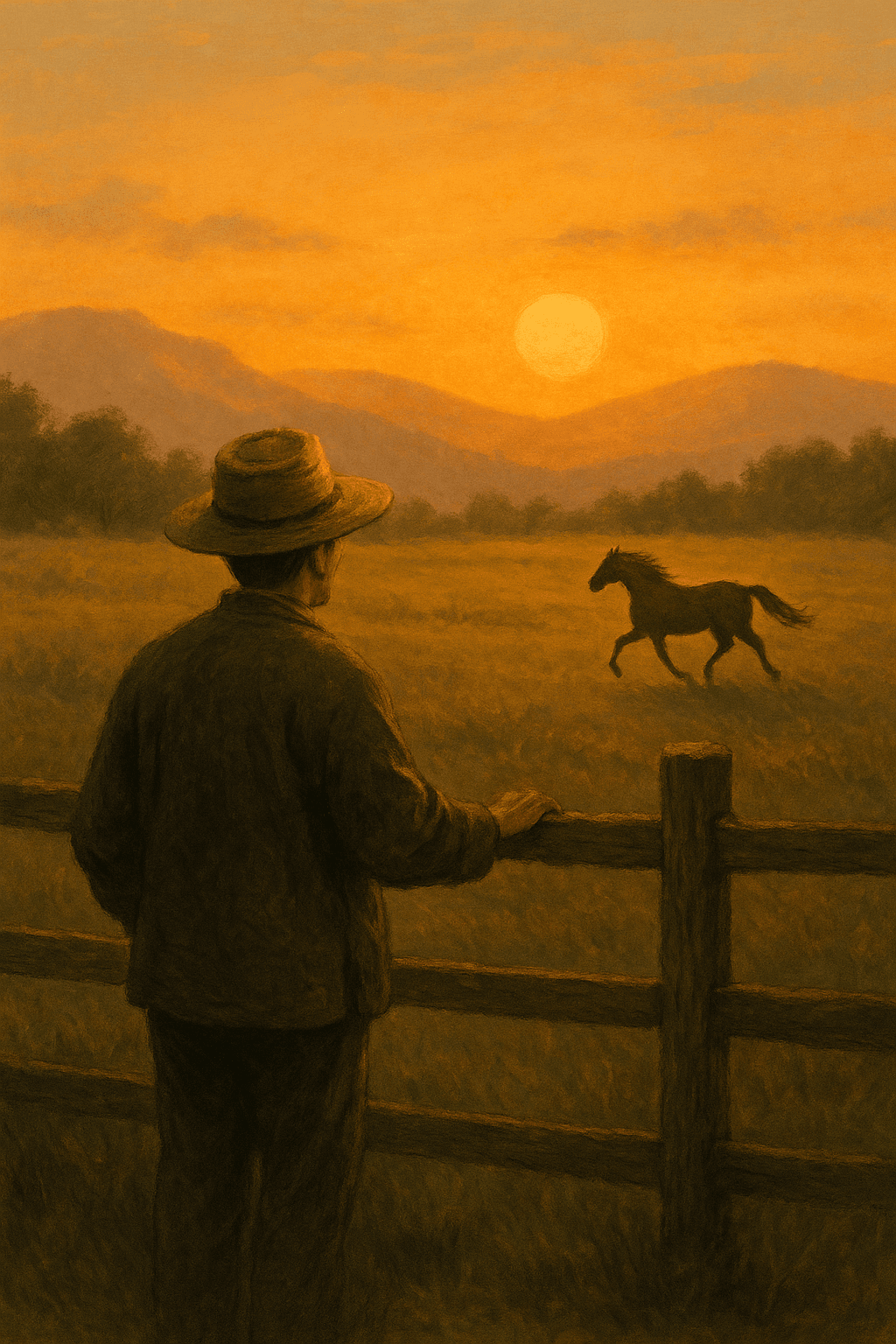
The tale of the farmer and the horse, a seemingly simple anecdote, carries profound wisdom that resonates across cultures and generations. It’s a narrative that gently encourages us to pause, to observe, and to consider the ever-shifting nature of fortune. What appears to be a setback today might, in time, reveal itself as a blessing in disguise, and what seems like good luck could very well pave the way for future hardship. This enduring story, often retold in various forms, serves as a powerful reminder of the interconnectedness of events and the importance of maintaining a balanced perspective, much like how understanding the farmer and the horse story unfolds.
The Farmer’s Initial Misfortune: Losing His Horse
The story typically begins with a farmer who possesses a beloved horse, his most prized possession. This horse is not just an animal; it represents his livelihood, his ability to till his fields, and his general prosperity. Then, one day, the horse disappears. It’s a devastating blow. Neighbors and friends gather to offer their commiserations, lamenting the farmer’s terrible luck. “This is the worst thing that could have happened!” they exclaim, sure that this misfortune spells ruin for the farmer. They see only the immediate loss and the negative implications for his future.
A Twist of Fate: The Horse Returns, Not Alone
But the farmer, in his quiet wisdom, simply shrugs and says, “Perhaps.” He doesn’t celebrate or despair. He accepts the situation as it is, without labeling it as definitively good or bad. Days later, a remarkable thing happens: the lost horse returns. But it doesn’t come back alone. It brings with it a magnificent wild stallion, apparently having found and befriended it. The farmer now has two horses. His neighbors are overjoyed, rushing to congratulate him on his incredible good fortune. “What amazing luck!” they cheer. “Now you are twice as rich!”
The Farmer’s Second Son and a Broken Leg
Again, the farmer offers his characteristic, calm response: “Perhaps.” He understands that circumstances are fluid. His initial loss, which seemed so dire, led to this unexpected gain. However, the story continues to unfold. The farmer’s son, who often helps him with the horses, takes to training the wild stallion. One afternoon, during a riding session, the son falls from the spirited horse and breaks his leg badly. The neighbors, seeing the son injured and incapacitated, once again gather to mourn the farmer’s misfortune. “Your son is injured, and will likely never walk properly again! This is a tragedy!” they cry.
War Arrives, and the Son is Spared
Yet, the farmer, ever stoic, simply replies, “Perhaps.” He has learned not to be swayed by immediate appearances. Not long after, a war breaks out. The country’s army begins conscripting all able-bodied young men to fight on the front lines. The village is devastated as almost every family loses a son to the war. However, the farmer’s son, with his broken leg, is unable to enlist. He is spared the horrors of battle. When the neighbors come to commiserate about the son’s injury, the farmer, looking out at the departing soldiers, calmly states, “Perhaps.” This final turn of events brings the story full circle, illustrating the unpredictable nature of life and fortune.
Lessons from the Farmer’s Tale
The Story Of The Farmer And The Horse is far more than just a quaint fable; it’s a powerful philosophical exploration of acceptance and perspective. Here are some key takeaways that make this narrative so enduring and relevant:
- The Illusion of Good and Bad Fortune: The most prominent lesson is that our immediate judgments of events as “good” or “bad” are often flawed. What seems like a disaster can lead to unforeseen positive outcomes, and what appears to be a stroke of luck can bring about difficulties. This echoes the wisdom found in certain zen story farmer horse narratives, where detachment is key.
- The Importance of Equanimity: The farmer’s consistent “Perhaps” is a masterclass in equanimity. He doesn’t allow himself to be swept away by extreme emotions, whether joy or despair. This balanced emotional state allows him to think clearly and act wisely, unburdened by premature conclusions. It’s a reminder that maintaining composure in the face of life’s ups and downs is a crucial skill.
- Interconnectedness of Events: The story beautifully illustrates how events are rarely isolated. The loss of the horse directly leads to gaining the stallion, which leads to the son’s injury, which in turn saves him from war. This chain reaction highlights that life is a complex tapestry, and pulling one thread can have far-reaching, unexpected consequences. Understanding these connections can help us navigate challenges with greater understanding, much like a story horse farm might reveal interconnected lives.
- Humility and Patience: The farmer’s approach teaches us the value of humility and patience. Instead of reacting impulsively, he waits. He allows events to unfold naturally, trusting that time will reveal the true nature of things. This patience is a virtue often overlooked in our fast-paced world, where immediate gratification and quick judgments are common.
- A Different Perspective on Challenges: For anyone who has ever felt overwhelmed by a setback, the farmer’s story offers a comforting reframe. It suggests that even the most challenging situations might hold hidden opportunities. This perspective can be incredibly empowering, transforming a feeling of helplessness into one of cautious optimism. It’s a narrative that can help us process difficulties, similar to how one might reflect on famous war horses funny stories – finding light even in serious contexts.
Applying the Farmer and Horse Lesson to Our Lives
This timeless tale isn’t just about horses and farming; it’s a universal metaphor for navigating the unpredictable journey of life. We all face moments that feel like the farmer losing his horse – job losses, relationship breakdowns, health scares. And we all experience moments that feel like the horse’s return – unexpected windfalls, fortunate encounters, moments of profound joy.
The farmer’s wisdom lies not in predicting the future, but in accepting the present moment without definitive labels. It’s about understanding that our current circumstances are not permanent and that what happens next is often influenced by what happens now, in ways we cannot always foresee.
Consider how this applies to our own experiences. Have you ever lost a job only to find a more fulfilling career path? Have you ever faced a difficult challenge that ultimately made you stronger and more resilient? These are echoes of the farmer’s story in our own lives. The story reminds us to approach life’s vicissitudes with a measured outlook, avoiding extreme highs and lows, and maintaining a quiet confidence that even in apparent misfortune, there may be a hidden blessing, or that even in apparent good fortune, there may be a lurking challenge, much like the historical accounts in the greek pear tree and horse chariot story hint at complex origins and outcomes.
In essence, the story of the farmer and the horse is a gentle nudge to embrace the uncertainty of life with grace and a steady heart. It encourages us to suspend judgment, cultivate patience, and trust in the unfolding process, finding lessons and acceptance in every turn of fortune. It is a narrative that continues to guide us toward a more mindful and resilient way of living.
