
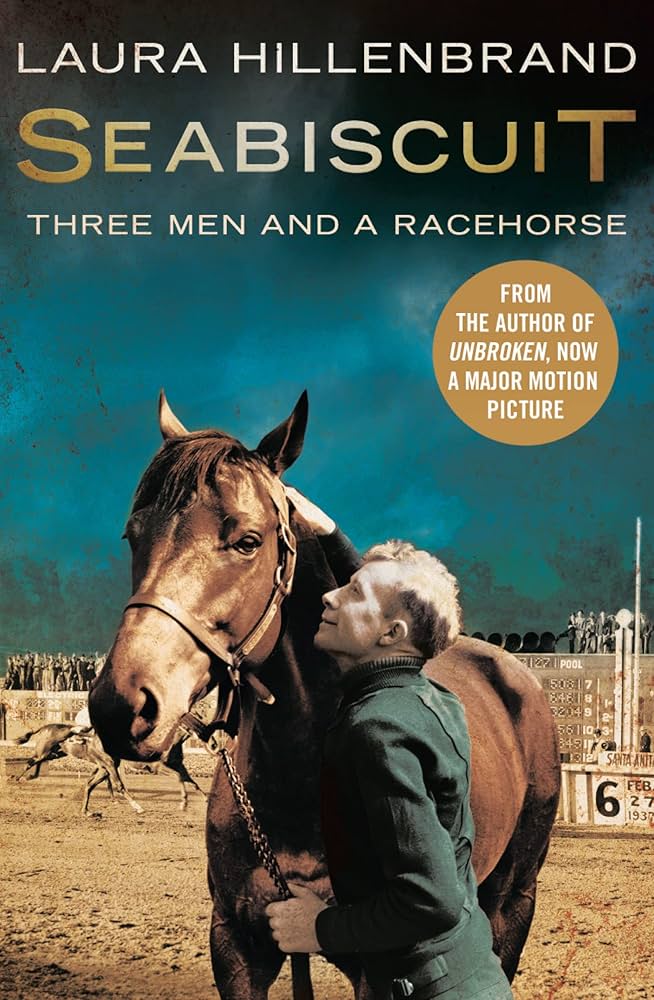
In the heart of the Great Depression, when America was on its knees, a small, crooked-legged, and perpetually underestimated racehorse galloped out of obscurity to become a national symbol of hope. This is The Story Of Seabiscuit The Horse, a narrative not just about horse racing, but about the power of resilience, the magic of a second chance, and the unlikely team that saw greatness where no one else did. His journey captivated a nation, proving that champions can come in the most unexpected packages. Much more than just a story about a horse, his tale became a beacon for millions who felt left behind.
An Unlikely Beginning for a Legend
Seabiscuit’s early life was anything but glorious. Born in 1933, he was a descendant of the mighty Man o’ War, but he inherited none of his grandsire’s majestic stature. He was undersized, with knobby knees and an awkward gait. He spent most of his time eating and sleeping, showing little of the fire needed to become a top-tier racehorse. His first trainer, the legendary Sunny Jim Fitzsimmons, tried to develop him but ultimately saw little potential. Seabiscuit was relegated to a punishing schedule of minor races, often used as a training partner to build the confidence of more promising stablemates. He was taught to lose. After a series of lackluster performances, he was sold for a mere $8,000 to automobile magnate Charles S. Howard. To the racing world, Seabiscuit was a forgotten cause.
The Team That Saw a Champion
What happened next is a testament to the power of belief. Seabiscuit’s fate became intertwined with three men who were just as broken and overlooked as he was. Together, they formed an extraordinary team that would reshape horse racing history.
Charles S. Howard: The Visionary Owner
Charles Howard was a man who had built an automobile empire from scratch, a living embodiment of the American dream. However, his life was marked by tragedy after losing his son in an accident. He channeled his energy into horse racing, seeking a new purpose. In Seabiscuit, Howard saw a flicker of the same defiant spirit that had fueled his own success. He wasn’t just buying a horse; he was investing in a kindred spirit.
Tom Smith: The Silent Trainer
Tom Smith was a quiet, enigmatic horseman from the old school. A man more comfortable with horses than with people, he was known for his unorthodox training methods. He looked past Seabiscuit’s physical flaws and saw a powerful, intelligent animal that had been mistreated and misunderstood. Smith’s philosophy was simple: “You don’t throw a whole life away just ’cause it’s banged up a little.” He gave Seabiscuit the one thing he’d never had: patience. He worked to heal the horse’s body and mind, using special feeds, a companion horse named Pumpkin, and even a pet dog to calm his anxiety.
Red Pollard: The Wounded Jockey
John “Red” Pollard was a talented but down-on-his-luck jockey. Partially blind in one eye—a secret he kept for years—and battered by countless injuries, his career was stalling. He was taller than most jockeys and perpetually struggled with his weight. Like Seabiscuit, Pollard was an outcast. When he met the equally stubborn horse, an immediate and profound bond was formed. Pollard understood Seabiscuit’s temperamental nature because he saw a reflection of himself. This connection became the secret weapon that unlocked the horse’s true potential.
The Rise of a National Hero
Under the care of Smith and the guidance of Pollard, Seabiscuit began to transform. Moved to California, he started winning. And then he kept winning. His races became major events on the West Coast, but the Eastern racing establishment remained skeptical. They saw him as a regional champion, not a true contender. Yet, the public saw something else entirely. In an era of widespread poverty and despair, the story of Seabiscuit the horse became a national obsession. Here was a small, scrappy underdog, discarded by the elite, who was now beating the best. People would huddle around their radios, listening to his races, his victories becoming their own.
“Seabiscuit was more than a horse,” notes Dr. Alistair Finch, a sports historian. “He was a cultural phenomenon. He represented the common man’s ability to triumph over adversity. Every time he won, it felt like a victory for everyone who had ever been told they weren’t good enough.”
The question many people ask is, is horse a true story of this magnitude even possible? Seabiscuit proved that it was, capturing the hearts of a nation with every powerful stride.
The Race of the Century: Seabiscuit vs. War Admiral
To silence the doubters, a match race was arranged. It was the ultimate showdown: Seabiscuit, the people’s champion from the West, against War Admiral, the Triple Crown winner and son of Man o’ War from the East. War Admiral was the very picture of a perfect racehorse—sleek, powerful, and an aristocrat of the sport. The 1938 Pimlico Special was billed as the “Race of the Century.”
War Admiral was known for his blistering early speed, always breaking from the gate first. Tom Smith, in a stroke of genius, secretly re-trained Seabiscuit to burst from the start, using a bell and a whip to change his ingrained habits. When the starting bell rang, Seabiscuit shot into the lead, shocking the crowd and War Admiral himself. Pollard then eased Seabiscuit back, letting the bigger horse catch up. As they rounded the final turn, Pollard looked War Admiral in the eye and shouted, “So long, Charley!” before urging Seabiscuit onward. The little horse who could pulled away, winning by four lengths in a record-breaking performance. He wasn’t just a good horse anymore; he was a legend. His story became one of the most compelling in a long line of horse & pony stories.
A Final, Unbelievable Comeback
Just when Seabiscuit was at his peak, tragedy struck. He ruptured a suspensory ligament in his front leg during a race. The injury was so severe that veterinarians said he would never race again. In a cruel twist of fate, Red Pollard suffered his own devastating injury around the same time, shattering his leg in a riding accident. Both horse and jockey were broken, their careers seemingly over.
But their story wasn’t finished. Over the next year, Charles Howard and Tom Smith patiently nursed them both back to health. Pollard, with a newly designed steel brace on his leg, slowly retaught himself to ride on the recovering Seabiscuit. Their healing became a shared journey. Their target was the one major race that had always eluded them: the Santa Anita Handicap, a race in which they had suffered heartbreaking losses twice before.
In 1940, against all odds, the 7-year-old Seabiscuit and the hobbled Red Pollard entered the Santa Anita Handicap for a third time. In his final race, Seabiscuit powered through the field, weaving through traffic with a stunning burst of speed in the final stretch to win the coveted prize. The crowd erupted in a roar that was heard for miles. It was the perfect ending to an impossible journey, a final triumph that cemented his legacy forever.
What Was Seabiscuit’s Enduring Legacy?
Seabiscuit retired after his Santa Anita victory as the highest-earning racehorse of his time. But his legacy goes far beyond his winnings. He was a symbol of hope and perseverance when America needed one most. His story reminded people that you don’t have to be perfect to be a champion and that even the most battered souls can find greatness with a little help and a lot of heart.
His tale has been immortalized in books and films, most notably in Laura Hillenbrand’s bestselling book, Seabiscuit: An American Legend, ensuring that his spirit continues to inspire. This narrative stands as one of the most compelling and famous horse stories books have ever documented. Seabiscuit wasn’t just a great racehorse; he was an American icon whose story continues to resonate with underdogs everywhere. The final chapter of the story of Seabiscuit the horse is one of enduring inspiration.
Frequently Asked Questions About Seabiscuit
How much money did Seabiscuit win in his career?
Seabiscuit retired with career earnings of $437,730, which was a record for a racehorse at the time. This amount would be equivalent to over $8 million today.
Was Seabiscuit really that small for a racehorse?
Yes, at 15.2 hands high, he was considered small for a Thoroughbred. He also had a somewhat stocky and unconventional build with knobby knees, which contributed to him being overlooked early in his career.
What happened to Red Pollard after his career?
Despite his numerous injuries, Red Pollard continued to ride sporadically for a few years after the famous Santa Anita win. He later worked various jobs, including at the racetrack, and passed away in 1981.
How did Seabiscuit die?
Seabiscuit enjoyed a peaceful retirement at Charles Howard’s Ridgewood Ranch. He died of a heart attack on May 17, 1947, at the young age of 14. He was buried secretly at a private location on the ranch.
Did Seabiscuit and War Admiral ever race again?
No, the 1938 Pimlico Special was the only time the two legendary horses ever faced each other on the track, making their one-on-one showdown a truly singular event in sports history.
