
Step into a world of vibrant Russian folklore, where foolish sons turn into heroes, magical horses offer sage advice, and impossible tasks are just another Tuesday. We’re diving deep into The Little Humpbacked Horse Story, a beloved literary fairy tale that has captivated audiences for generations. Known originally as Konyok-Gorbunok, this enchanting narrative, penned by Pyotr Yershov, is more than just a children’s story; it’s a rich tapestry of adventure, loyalty, and the surprising triumph of the underdog. It’s a classic that showcases the power of a kind heart and the unwavering support of a true friend, even one with a couple of humps on his back.
The Author Behind the Magic: Pyotr Yershov
Before we gallop into the tale itself, it’s essential to meet the mind that created it. Pyotr Pavlovich Yershov was just 19 years old and a student at Saint Petersburg Imperial University when he wrote The Little Humpbacked Horse in 1834. The poem was an instant success, praised for its light, humorous tone and its clever use of traditional Russian folk motifs. Despite this early triumph, Yershov’s literary career didn’t quite reach these heights again. He went on to become a schoolteacher and director in his native Siberia, but his legacy was forever cemented by this single, brilliant work that has become an indispensable part of Russian culture.
A Journey Through the Plot of The Little Humpbacked Horse
The story follows a simple peasant family: an old man and his three sons. The two elder sons are considered clever, while the youngest, Ivan, is dismissed as a fool. Their lives take a turn when a mysterious thief starts trampling their wheat fields at night.
Ivan the Fool and His Magical Steed
The elder brothers’ attempts to catch the culprit fail miserably. When it’s Ivan’s turn, his simple, patient approach succeeds. He discovers the thief is a magnificent mare with a golden mane. As a reward for letting her go, the mare gifts Ivan two beautiful, golden-maned stallions and a small, strange-looking horse with long ears and two humps on his back—the little humpbacked horse. The mare warns him never to sell this little horse, as he will be Ivan’s greatest friend and protector. Ivan, true to his simple nature, follows the advice, hiding the fine stallions and keeping the little horse by his side.
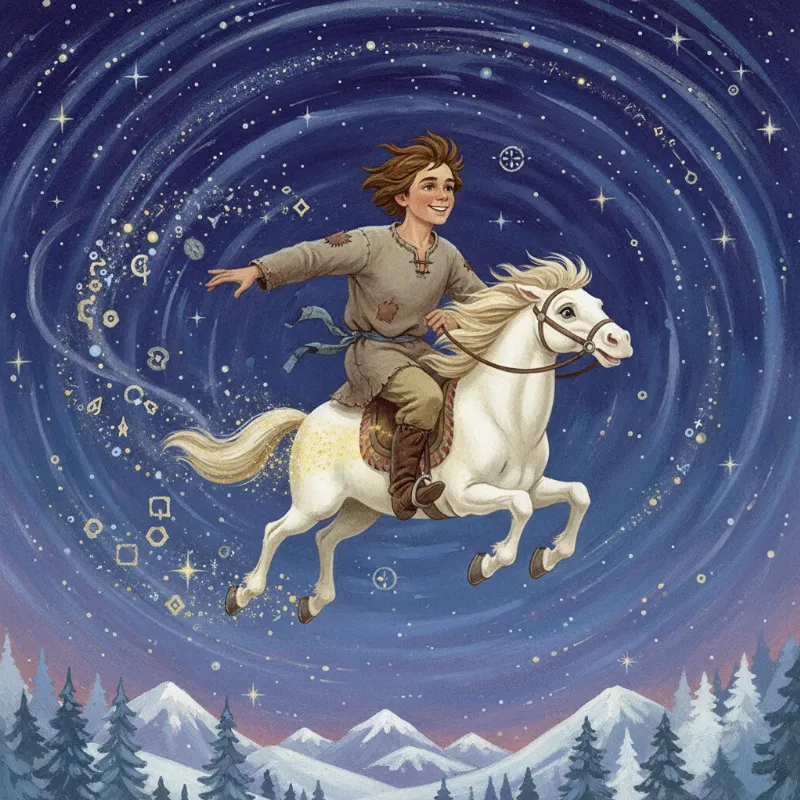 An illustration of Ivan the Fool riding The Little Humpbacked Horse from the famous story.
His greedy brothers, however, steal the stallions and sell them to the Tsar. When the stallions refuse to be tamed by anyone but Ivan, the Tsar summons the “fool” to become his Master of the Stables. This is where Ivan’s adventures, guided by the wisdom of his humpbacked horse, truly begin.
The Firebird’s Feather and the Tsar’s Demands
One day, Ivan finds a glowing feather from a Firebird. Despite the humpbacked horse’s warning that it will bring him great misfortune, Ivan picks it up. The Tsar, upon seeing the feather, becomes obsessed and demands that Ivan bring him the Firebird itself. With the horse’s clever guidance, Ivan succeeds.
But the Tsar’s greed is insatiable. His next demand is for Ivan to capture the beautiful Tsar Maiden so the aging ruler can marry her. Once again, with the little horse’s help, Ivan brings her to the court. However, the Tsar Maiden has her own conditions: she will only marry the Tsar if he retrieves her ring from the bottom of the ocean. The journey to the ocean floor involves encounters with a giant whale and the Sun itself, but the mission is a success.
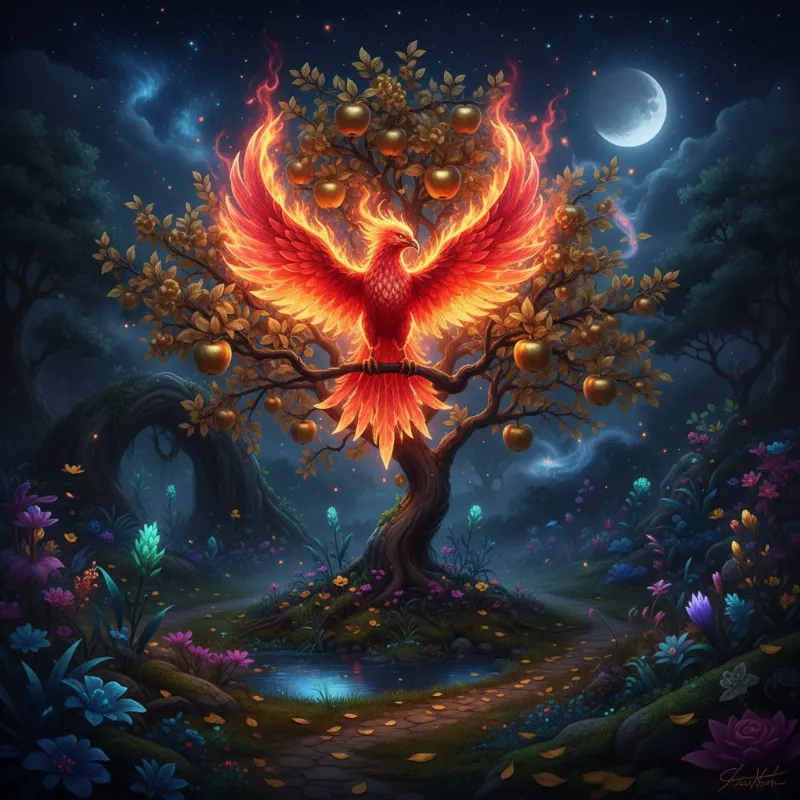 A glowing Firebird, a key element in The Little Humpbacked Horse story.
The Climax in the Cauldrons
As the final test, the Tsar Maiden declares she will only marry the Tsar if he can become young and handsome again. The recipe for this transformation? Bathing in three cauldrons: one with boiling water, one with freezing water, and one with boiling milk. The jealous old courtiers convince the Tsar to test this “rejuvenation” on Ivan first.
Faced with certain death, a terrified Ivan turns to his loyal friend. The little humpbacked horse whispers a magical charm over the cauldrons. Ivan jumps in and emerges as a dashingly handsome young man. The foolish old Tsar, eager for the same result, leaps into the boiling milk without any magic and is instantly cooked. The people, overjoyed to be free of their tyrant, name Ivan their new Tsar. He marries the Tsar Maiden and rules wisely with his faithful humpbacked horse forever by his side.
Characters That Leap Off the Page
The enduring charm of the little humpbacked horse story lies in its unforgettable characters, who embody classic archetypes of folklore.
Ivan the Fool: The Unlikely Hero
Ivan is the classic “unlikely hero.” He isn’t strong, clever, or ambitious in the traditional sense. His greatest strengths are his kindness, his honesty, and his willingness to listen to good advice. While everyone underestimates him, his simple goodness allows him to succeed where others fail. He represents the idea that true worth isn’t about outward appearances or cunning, but about inner character.
The Little Humpbacked Horse: A Loyal Friend
More than just a magical creature, the humpbacked horse is the heart and soul of the story. He is Ivan’s advisor, protector, and most loyal companion. He possesses the wisdom and foresight that Ivan lacks, steering him through every danger.
“Fear not, my Ivan. Just do as I say, and we shall come through this as we always do. Climb upon my back, and hold on tight!”
This relationship is a beautiful depiction of friendship and loyalty, showing that the greatest treasures are the bonds we form.
The Tyrannical Tsar
The Tsar is a caricature of greed, vanity, and incompetence. He is easily manipulated by his jealous courtiers and driven by his insatiable desires. His foolishness serves as a perfect foil to Ivan’s simple wisdom, and his eventual demise is a classic fairy tale punishment for greed and tyranny.
Themes and Morals in the Tale
At its core, the little humpbacked horse story is a morality tale brimming with timeless lessons. It champions the virtues of humility, kindness, and loyalty over greed and arrogance. Ivan’s journey shows that one doesn’t need to be a conventional hero to achieve greatness. The story also explores the theme of fate and fortune, suggesting that kindness is eventually rewarded, often in the most unexpected ways. The unwavering friendship between Ivan and his horse is perhaps the most powerful message, emphasizing the importance of having a trusted companion to navigate life’s challenges.
The Cultural Legacy of a Russian Classic
Since its publication, Konyok-Gorbunok has become a cornerstone of Russian culture. The story has been adapted into numerous films, ballets, and theatrical productions. The most famous is the 1941 animated feature film by the Soyuzmultfilm studio, which brought the tale to life for millions. The characters of Ivan and his little horse are instantly recognizable figures in Russia, and phrases from the poem have entered the common lexicon. It remains a beloved bedtime story, passed down through generations, its magic as potent today as it was in the 19th century. This enduring popularity is a testament to Yershov’s masterful storytelling and the timeless appeal of a good adventure.
Frequently Asked Questions (FAQ)
Who wrote the little humpbacked horse story?
The story was written as a poem in 1834 by Pyotr Pavlovich Yershov, a 19-year-old Russian student at the time. It was his most famous and celebrated work.
What is the original Russian title of the story?
The original Russian title is Konyok-Gorbunok (Конёк-Горбуно́к), which translates directly to “The Little Humpbacked Horse.”
What are the main themes of the story?
The main themes include the triumph of the underdog, the importance of loyalty and friendship, the folly of greed and vanity, and the idea that true wisdom often comes in simple packages.
Is the little humpbacked horse a real myth?
While the story incorporates many elements from traditional Russian folklore, such as the Firebird and Baba Yaga (in some versions), the character of the little humpbacked horse itself was an original creation by Pyotr Yershov. He masterfully blended existing myths with his own imagination.
What is the moral of the story?
The central moral is that kindness, humility, and loyalty are far more valuable than cunning, wealth, or power. It teaches that by being a good person and listening to wise friends, even the simplest “fool” can overcome incredible obstacles and find happiness.
Conclusion
From the golden wheat fields of a peasant farm to the opulent halls of a Tsar’s palace, the little humpbacked horse story takes us on an unforgettable ride. It’s a tale that reminds us that heroes can be found in the most unlikely of places and that the greatest magic of all is the unwavering loyalty of a true friend. Pyotr Yershov’s masterpiece is more than just a fairy tale; it is a celebration of the human spirit, a timeless adventure that continues to inspire and enchant. Whether you are discovering it for the first time or revisiting a childhood favorite, the journey with Ivan and his remarkable little horse is one worth taking again and again.
