
Have you ever heard a tale so simple, yet so profound that it sticks with you for years? The Donkey And The Horse Story is one of those timeless fables, a narrative passed down through generations that teaches a vital lesson about pride, empathy, and the consequences of our choices. It’s a short tale about two traveling companions, a merchant, and a journey that ends in tragedy for one and a heavy burden for the other. This story serves as a powerful reminder that we are all connected and that a little help can make a world of difference. The core message of this narrative shares a thematic thread with other tales of animal companionship and struggle, which you can explore further in the context of the donkey and the horse story.
A Classic Fable Retold
The story begins with a merchant preparing for a long journey. To carry his goods, he employed two animals: a proud, majestic Horse and a humble, hardworking Donkey. The merchant loaded all his merchandise onto the Donkey, leaving the Horse with nothing to carry but its own fine saddle. The Horse, adorned in its polished gear, trotted along with an air of superiority, its head held high.
The Proud Horse and the Burdened Donkey
As they traveled under the hot sun, the Donkey, weighed down by the immense load, began to struggle. Each step was an effort, and its breath came in ragged gasps. The Horse, meanwhile, pranced alongside, unburdened and seemingly unaware of its companion’s suffering. The Donkey, feeling its strength failing, decided to appeal to the Horse for help.
A Humble Plea and a Haughty Refusal
“My friend,” the Donkey said weakly, “this load is too much for me. I fear I will collapse. If you value my life, could you please take even a small portion of this weight? A little help from you would save me.”
The Horse, however, scoffed at the request. “Why should I?” it replied arrogantly. “The master knew what he was doing. He gave you the load to carry, and I am to be free. Carry your own burden and do not bother me with your complaints.”
The Donkey, heartbroken and exhausted, had no choice but to push onward. It stumbled forward for a few more minutes, its legs trembling, until finally, with a groan, it collapsed onto the dusty road and died.
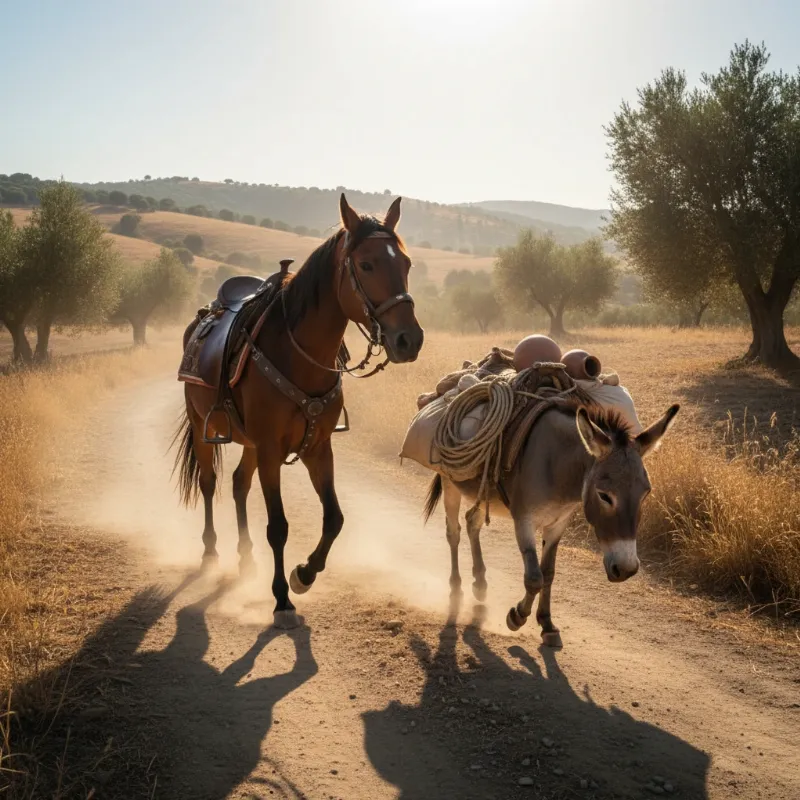 The donkey and the horse story illustrated with a proud horse and a struggling donkey on a sun-drenched path
The Heavy Consequence of Pride
The merchant, seeing what had happened, rushed to the Donkey’s side. But it was too late. Realizing he had to continue his journey, the merchant had to find a way to transport his goods. He untied the entire load from the dead Donkey and piled it all onto the Horse’s back. But that wasn’t all. He also skinned the poor Donkey and added its hide to the top of the pile.
The Horse, now staggering under the colossal weight of the original load plus the skin of its fallen companion, was filled with regret. “How foolish I was!” it lamented to itself. “By refusing to carry a small part of the burden, I must now carry it all, and the skin of my friend as well.” The Horse learned a hard lesson that day, carrying not just a physical load, but the heavy weight of its own selfishness.
Deconstructing the Moral of the Fable
The tale is simple, but its moral is multi-layered and deeply resonant. It’s more than just a story about animals; it’s a reflection of human nature and societal dynamics. Dr. Alistair Finch, a professor of classical literature and folklore, states, “Fables like this one use animal archetypes to strip down complex human interactions to their essential components. The Horse’s pride and the Donkey’s humility are mirrors to our own virtues and vices.” This is a concept that is sometimes explored in historical narratives as well; for instance, many wonder is war horse based on a true story, seeking the real-world parallels in tales of animal courage.
The True Cost of Selfishness
At its core, the donkey and the horse story is a powerful allegory about selfishness. The Horse’s refusal to help was not born of inability, but of pride and a lack of empathy. It saw the Donkey’s struggle as a separate problem, not realizing that their fates were intertwined.
This highlights a fundamental truth: we often exist in an ecosystem of mutual dependence. By refusing to offer a small bit of help, the Horse ultimately inherited the entire problem, magnified. The moral teaches us that selfishness is often short-sighted. It may offer a temporary advantage or a feeling of superiority, but it can lead to far greater burdens in the long run.
A Lesson in Empathy and Community
The fable is a profound call for empathy and cooperation. It urges us to see beyond our own immediate comfort and recognize the struggles of those around us.
- Shared Burdens: When we help others carry their loads, we make the journey easier for everyone. A small effort from one person can prevent a catastrophe for another.
- Community Strength: A community, whether it’s a family, a team, or a society, is strongest when its members support one another. The Horse’s failure was its inability to see itself and the Donkey as a team with a shared goal.
- Consequences of Indifference: The story warns that indifference is not a neutral stance. By choosing not to act, the Horse became directly responsible for the tragic outcome and its own subsequent suffering.
If you’re looking for a downloadable version of this classic tale, you can often find a the horse and the donkey story pdf to share with others.
Aesop’s Wisdom in the Modern World
While the story is ancient, its message has never been more relevant. We can see the dynamic between the Horse and the Donkey play out in various aspects of our modern lives.
In the Workplace
Think of a team project. One team member might be overwhelmed, struggling to meet a deadline. The “Horse” on the team might think, “That’s not my responsibility. I’ve finished my part.” They watch their colleague struggle, offering no assistance. Inevitably, when that person fails, the entire project is jeopardized. The remaining team members, including the unhelpful one, then have to scramble to pick up the pieces, working overtime and dealing with a much larger crisis than if they had simply offered help in the first place.
In Our Personal Relationships
In families and friendships, the principle of sharing burdens is crucial. Whether it’s helping a sibling with chores, supporting a friend through a difficult time, or sharing emotional responsibilities with a partner, the refusal to help can create resentment and ultimately damage the relationship. A small act of kindness and support strengthens bonds, while selfishness creates cracks that can eventually shatter them. The powerful narratives we see in film often explore this very theme, prompting questions like is the movie war horse based on a true story, as we seek to connect fiction with the genuine struggles and triumphs of cooperation.
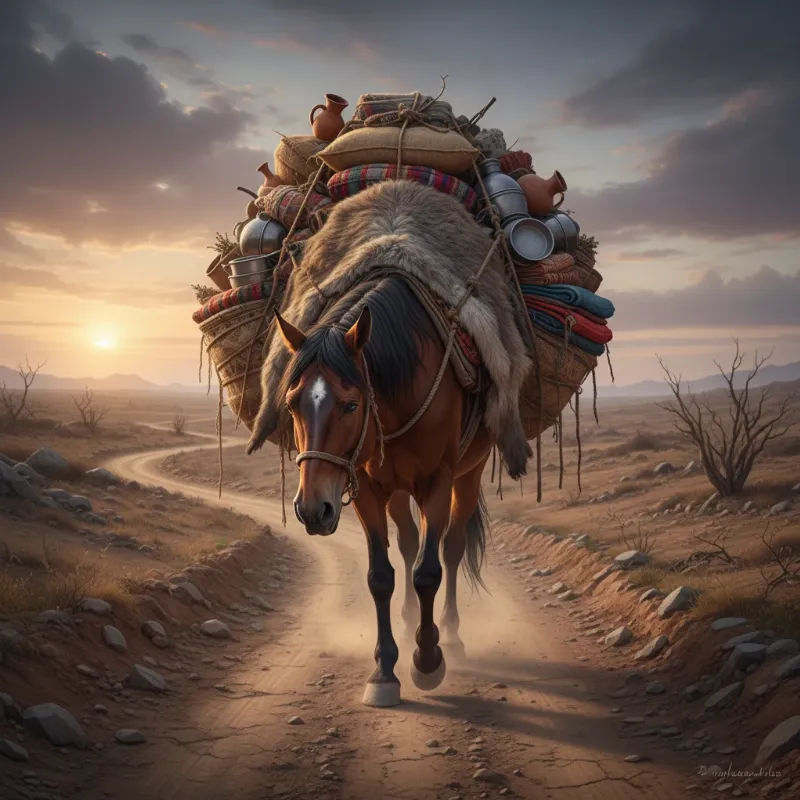 The donkey and the horse story's lesson shown by a regretful horse now carrying the full load
FAQs About The Donkey and the Horse Story
What is the main moral of the story?
The primary moral is that we should help one another and share burdens. A refusal to offer a little help can lead to a much greater burden for oneself in the end. It teaches lessons about empathy, the folly of pride, and the importance of teamwork.
Who wrote the donkey and the horse story?
The story is attributed to Aesop, a storyteller believed to have lived in ancient Greece between 620 and 564 BCE. His tales, known as Aesop’s Fables, are famous worldwide for their moral lessons featuring animals as characters.
What do the characters symbolize?
The Donkey symbolizes the humble, hardworking individual who is overburdened but willing to ask for help. The Horse represents pride, arrogance, and selfishness—an individual who sees themselves as superior and refuses to empathize with the struggles of others.
How is this story relevant today?
The story’s themes are universal and timeless. It applies to workplace dynamics, personal relationships, and broader societal issues, reminding us that cooperation and mutual support are essential for collective success and well-being. Selfishness and lack of empathy often lead to negative consequences for everyone involved.
What is the difference between the horse and the donkey in the story?
The main difference lies in their circumstances and attitudes. The donkey is physically burdened and humble in spirit, while the horse is unburdened and proud. This contrast is used to highlight the moral choice between helping another and acting out of self-interest.
A Lesson That Endures
The donkey and the horse story is more than just a cautionary tale; it’s a piece of wisdom that encourages us to be better. It pushes us to look beyond our own saddle, to notice the weight on others’ backs, and to understand that lightening someone else’s load rarely diminishes our own strength. In fact, it often strengthens the entire caravan for the long journey ahead. The next time you see someone struggling, remember the proud Horse and its regretful end. A small act of kindness isn’t just a gift to them; it’s an investment in a kinder, more resilient world for us all.
