
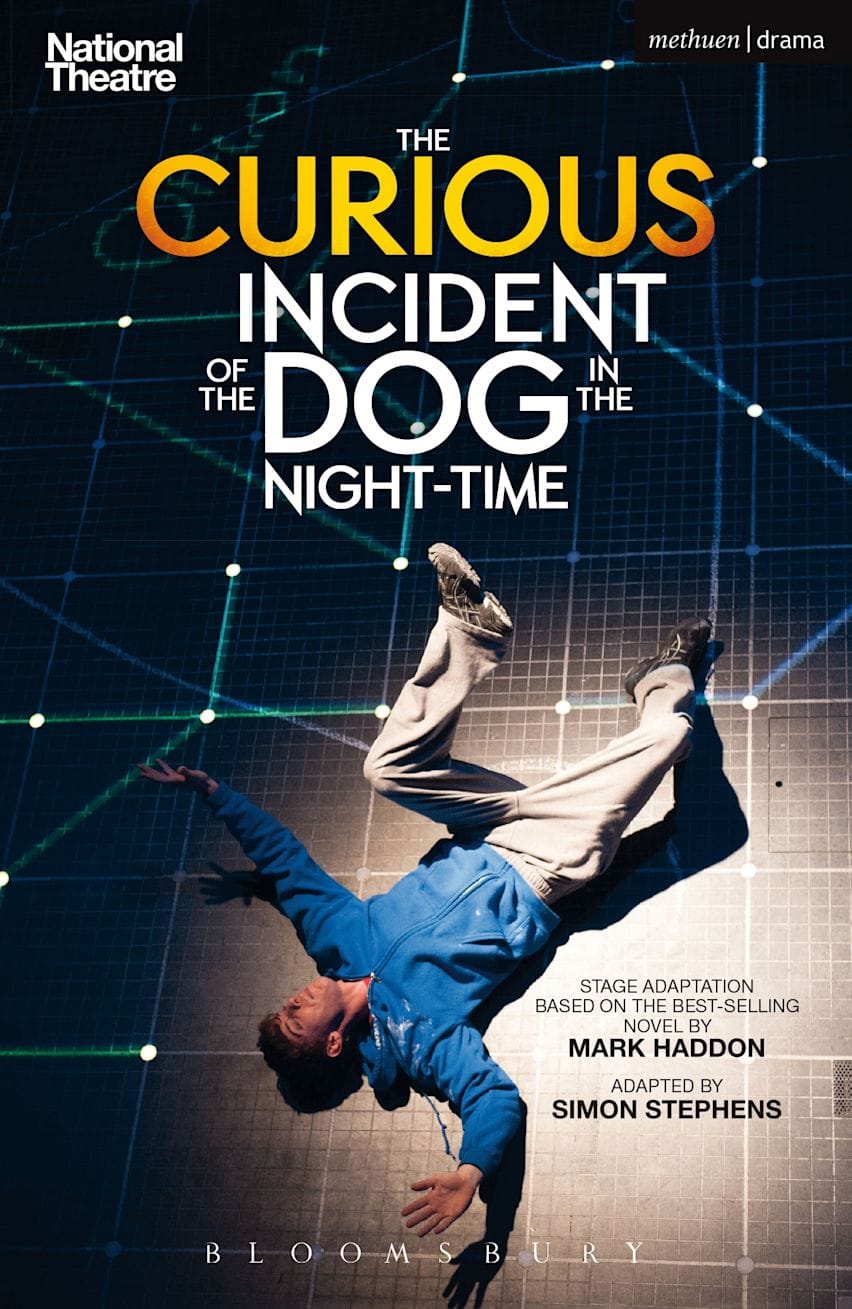
Bryant High School’s theater department consistently delivers productions that captivate audiences, and this year’s rendition of Mark Haddon’s “The Curious Incident of the Dog in the Night-Time” is no exception. The play centers on 15-year-old Christopher Boone, a protagonist on the autism spectrum, as he embarks on a quest to identify the perpetrator behind the death of a neighbor’s dog. The cast navigated the sensitive portrayal of a character with autism, striving for a balance between authenticity and avoiding offense.
The initial impression upon entering the multipurpose room, with its makeshift stage and curtained-off dressing areas, sparked some skepticism. The seating arrangement appeared limited, though attendees had the flexibility to relocate if more suitable spots became available before the show commenced.
The performance opened with a poignant scene: Christopher, portrayed by senior Elijah Paul, discovers the deceased dog, immediately drawing the audience into what initially felt like a straightforward mystery. While the first act seemed to progress at a measured pace, the introduction of projections – digital set designs displayed on a wall – and the presence of Christopher’s father, Ed Boone (junior Stanley Robinson), and his therapist, Siobhan (junior Jewell Regan), signaled an impending emotional journey. The subsequent hour and a half promised to immerse the audience in the complexities and challenges faced by families raising children with autism.
A notable aspect of the production was the innovative use of the entire cast on stage at all times. This approach facilitated seamless set changes and prop management, with items discreetly stored beneath small boxes that served as seating for the actors. This staging choice ensured that the focus remained squarely on the dialogue and the thematic core of each scene.
Further enhancing the theatrical experience, the production incorporated dynamic physical movement. In a scene depicting a day at the beach, other characters physically embodied Christopher’s mother, Judy Boone (junior Meredith Medford), mirroring the wave motions described by Christopher. This imaginative use of movement compensated for the spatial and acoustic limitations of the multipurpose room, adding a vibrant dimension to the performance.
The Stage Management team also astutely included two live animals. A rat, Toby, served as Christopher’s best friend, making brief, carefully managed appearances. The heartwarming conclusion featured an actual puppy, provided by junior Gretchen Bush, as Christopher’s new companion, adding a touching finality to the narrative.
Beyond the commendable overall execution, the relationship between Ed and Judy Boone was particularly compelling. Their performances radiated passion and intense emotion, creating a palpable connection that resonated deeply with the audience.
Elijah Paul delivered a commendable performance as Christopher, skillfully prioritizing the character’s journey and narrative purpose over a mere depiction of autism. His portrayal invited the audience to see Christopher as a complex individual navigating advanced mathematics and the challenges of his condition, rather than solely as a representation of autism.
As an individual with a brother who has high-functioning autism, I harbored concerns that the production might inadvertently minimize the struggles encountered by individuals with autism and their families. I feared that Christopher’s portrayal might lead to the perception that individuals like him are societal misfits, incapable of independent living.
However, I was relieved to witness an honest and accurate depiction of the difficulties associated with autism and the support systems required for those with the condition. The play unflinchingly showcased the raw and uncomfortable aspects of these struggles. Crucially, it also reinforced the message that individuals with autism possess the capacity for independent living, problem-solving, and shaping their own narratives.
In summation, the production’s projections, costuming, and set design demonstrated meticulous attention to detail, successfully overcoming the constraints of the multipurpose room. Under the direction of Jeremy Clay, Stage Management proved their ability to mount a significant and meaningful production, offering a valuable service to families affected by autism. The play serves as a powerful reminder of the resilience and capabilities of individuals on the autism spectrum.
