
For those seeking a feline companion that retains a kitten-like demeanor and size throughout its life, a variety of small cat breeds offer immense personality and affection. These cats, often weighing under 10 pounds, bring big character into compact bodies, making them ideal for various living situations.
Exploring the World of Small Cat Breeds
While “small” in cat breeds typically refers to felines under 10 pounds, this category includes naturally petite cats and those with unique genetic traits like the short-legged Munchkin. The appeal of these smaller companions lies not just in their size but in their often larger-than-life personalities and ability to fit perfectly into apartments and smaller homes. These breeds are a testament to the diverse beauty within the feline world, each offering a unique blend of traits and temperaments.
Featured Small Cat Breeds
Munchkin
The Munchkin cat is instantly recognizable for its short legs, a result of a natural genetic mutation rather than selective breeding. These cats, weighing between 4 and 9 pounds as adults, are surprisingly active and agile, navigating their environment with unique dexterity. Despite their height, they are confident and playful, though owners may need to provide easier access to litter boxes and furniture. While generally healthy, potential concerns include spinal and chest conditions like lordosis and pectus excavatum.
Toybob
Originating from Russia, the Toybob is a rare breed known for remaining kitten-sized, weighing only 3 to 7 pounds. These cats are characterized by their short, kinked bobbed tails and are not miniaturized versions of other breeds but naturally small. Toybobs are affectionate, sociable, and thrive on human companionship, getting along well with other pets. Health-wise, they can be prone to heart murmurs and patellar luxation.
Singapura
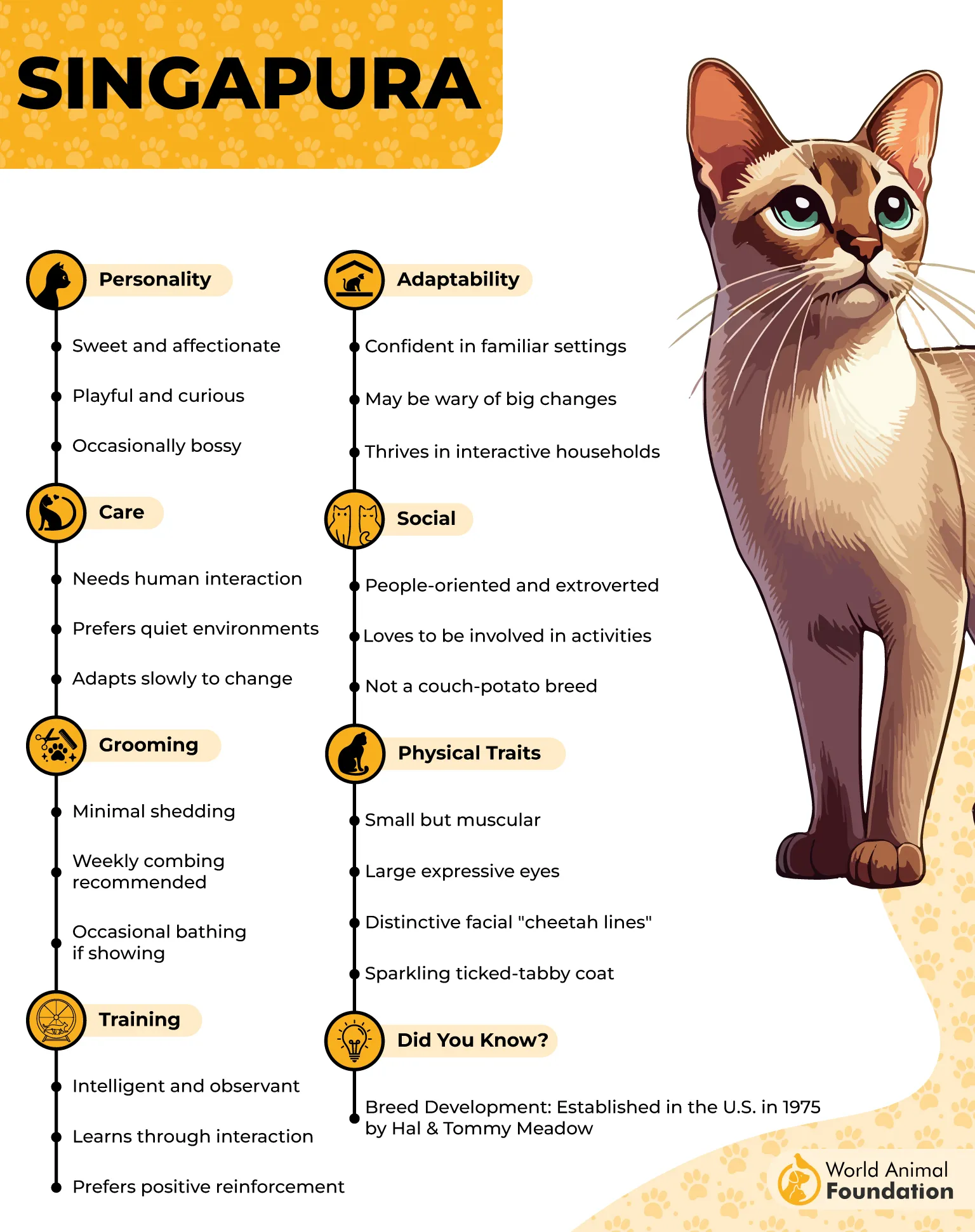
Considered the smallest natural domestic cat breed, the Singapura typically weighs between 4 and 8 pounds. These cats, originating from the streets of Singapore, are known for their ticked tabby coats, sepia or brown colors, and large eyes. They possess big personalities, are clever and mischievous, and love to cuddle. Due to their small stature, owners should focus on portion control and regular exercise to prevent obesity.
Devon Rex
With their distinctive wavy, curly coat and large, elfin ears, the Devon Rex is a striking small breed, weighing between 6 and 9 pounds. Despite their pixie-like appearance, they are affectionate and people-oriented, with a penchant for playful mischief. Potential health issues include hereditary myopathy and patellar luxation.
Japanese Bobtail
Characterized by their short, tufted, bunny-like tails, the Japanese Bobtail is a pint-sized breed with a history dating back to the 1600s in Japan. These intelligent and energetic cats, weighing 5 to 10 pounds, are athletic but also enjoy winding down with their families. Dental issues can arise due to their unique mouth shape, and a balanced diet is crucial to prevent obesity.
American Curl
The American Curl stands out with its ears that naturally curl backward, a unique genetic mutation. Typically weighing between 5 and 10 pounds, these cats are known for their smaller size, curious and friendly personality, and affectionate nature, making them excellent family pets.
Turkish Angora
Despite their luscious white coat, Turkish Angoras are a small breed, usually weighing between 6 and 9 pounds. Originating from Turkey, they are playful, energetic, and enjoy being close to their humans. While generally healthy and long-lived, they can be susceptible to deafness and ataxia.
Cornish Rex
Similar to the Devon Rex, the curly-coated Cornish Rex is small and spry, weighing 6 to 10 pounds. They possess large ears and eyes, giving them an inquisitive look. These active and athletic cats are known for being easy to handle, enjoying cuddles and play. They may be prone to hereditary myopathy and patellar luxation.
Korat
Hailing from Thailand, the Korat cat typically weighs between 6 and 10 pounds. These cats have a sturdy build despite their low body fat and are known for their striking blue coloration with a silvery sheen. Traditionally gifted to brides for good luck, they are lovable companions that thrive on human interaction. A potential health concern is Gangliosidosis, a neuromuscular degenerative disease.
LaPerm
The LaPerm, another Rex breed, is slightly larger, weighing between 6 and 10 pounds. Their defining feature is a naturally curly coat, which can take a couple of years to fully develop. LaPerms are affectionate, adaptable, and energetic, requiring an outlet for their energy. Hypertrophic cardiomyopathy is a potential heart condition they may face.
Smallest Cat Breeds Derived from the Munchkin Cat
The Munchkin’s genetic influence has led to the creation of several other notably small breeds:
Bambino
A cross between the Sphynx and Munchkin, the Bambino, or “baby cat,” typically weighs between 5 and 9 pounds and is known for being short, small, and often hairless.
Dwelf
Combining traits from the Munchkin, Sphynx, and American Curl, the Dwelf has short legs, is hairless, and features distinctive curled ears.
Kinkalow
This breed is a hybrid of the Munchkin and American Curl, featuring both short legs and curled ears, often with elegant tails longer than their bodies.
Minuet
Also known as the Napoleon cat, the Minuet is derived from the Persian and Munchkin breeds, characterized by a dense coat, a flattened face, and tiny legs.
Minskin
Developed from crosses including the Sphynx and Munchkin, as well as Burmese and Devon Rex cats, Minskins are among the smallest breeds, weighing 4 to 6 pounds.
Other Munchkin derivations include the Lambkin cat (crossed with the Selkirk Rex) and the Skookum cat (crossed with the LaPerm).
“Teacup Cat” Phenomenon Explained
The term “teacup cat” does not refer to a specific breed but rather describes cats bred to be exceptionally small. This is achieved through selective breeding over generations. While their miniature size is appealing, it can lead to various health problems, including heart issues, dental complications, and bone fragility, necessitating specialized care and potentially a shorter lifespan. Potential owners should be fully prepared for the commitment and potential veterinary costs. For those considering such a companion, understanding the process of adopting a cat is crucial.
Optimal Litter Box Solutions for Small Cats
Regardless of size, all cats have specific needs, and small breeds can benefit from accommodations that cater to their stature. A self-cleaning litter box, such as the Litter-Robot 4, offers a spacious yet accessible design, making it a suitable choice for petite cats and multi-cat households alike, ensuring a clean and comfortable experience for even the smallest felines.
