
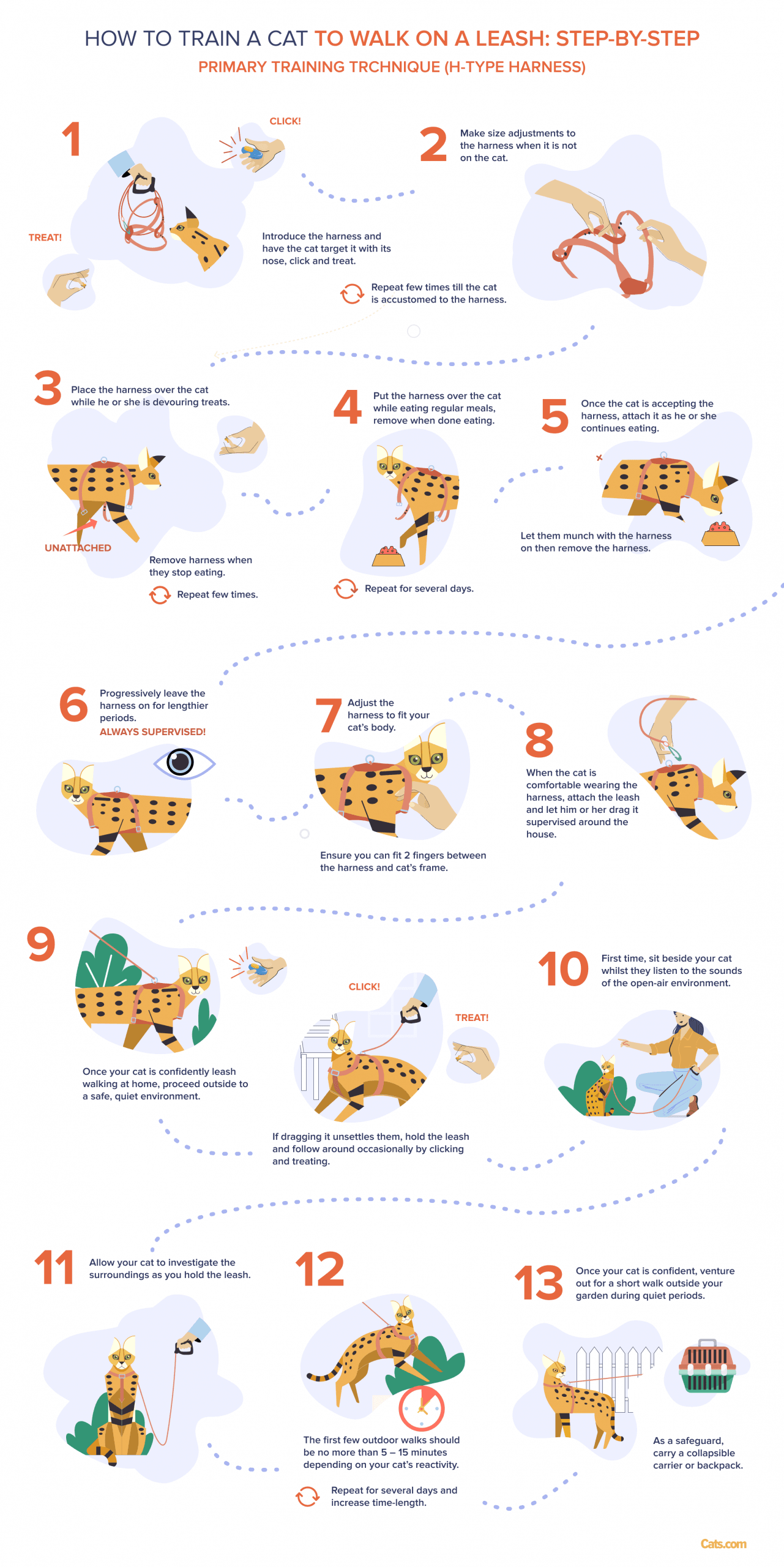
Leash training a cat can seem like a daunting task, but with the right approach and patience, it’s an achievable goal that can open up a world of new experiences for your feline companion. Unlike dogs, cats require specialized equipment and a gentler training method. This guide will walk you through the essential steps to safely and effectively introduce your cat to a harness and leash, ensuring a positive experience for both of you.
Essential Equipment for Cat Leash Training
Before you begin, it’s crucial to use equipment specifically designed for cats. A well-fitted cat harness is paramount, providing security and comfort without restricting movement. Avoid using small dog harnesses, as they may not fit correctly or offer the same level of safety. For leashes, opt for lightweight nylon or cloth options, steering clear of chain or flexi-type leashes which can be uncomfortable and difficult to control.
Step-by-Step Leash Training Process
Step 1: Indoor Harness Acclimation
The first step is to get your cat comfortable wearing the harness indoors. Place the harness on your cat without the leash attached. Offer treats and praise while the harness is on, creating a positive association. Once your cat seems relaxed, remove the harness. Repeat this process, gradually increasing the duration your cat wears the harness. The key is to only reward your cat when the harness is on, reinforcing that the harness means good things.
Step 2: Introducing the Leash Indoors (No Tension)
Once your cat is comfortable with the harness, it’s time to introduce the leash. Attach the leash to the harness but keep it loose. Allow your cat to explore your home at their own pace, with you following behind, holding the leash loosely. This allows them to get used to the feeling of the leash without any pressure. Continue this for a few days until your cat appears relaxed and walks freely with the leash attached.
Step 3: Familiarizing with Leash Tension
The next phase involves getting your cat accustomed to a slight leash tension. Under your supervision, let your cat drag the leash behind them as they move around your home. This helps them understand the sensation of a taut leash and how to move with it. It is critical to never leave a cat unsupervised while wearing a harness or leash, as they could get entangled or injured.
Step 4: Indoor Walks and Guidance
Now, you can begin practicing indoor walks. Put on the harness and leash and follow your cat as you did in Step 2. After a short while, gently try to guide your cat in a different direction. You can use treats, either by dropping them on the floor or holding them to lure your cat, rewarding them for following your lead. Remember to also praise and reward your cat when they walk on their own.
Step 5: Venturing Outside
On a dry, temperate day, it’s time to introduce your cat to the outdoors. Start by walking your cat to the door and encouraging them to go outside. Tossing a treat a short distance outside the door can be a great incentive. If your cat shows fear or hesitation, do not force them. It’s better to end the session on a positive note and try again another day. Always bring treats and keep initial outdoor excursions brief, aiming for a few pleasant minutes. Ending on a positive experience is far more effective for training than pushing your cat beyond their comfort zone.
Important Considerations and Resources
When embarking on leash training, patience and positive reinforcement are your most valuable tools. Always prioritize your cat’s comfort and safety. If you encounter persistent behavioral challenges or have concerns about your cat’s well-being during the training process, don’t hesitate to seek professional guidance.
For expert advice on feline behavior and training, you can reach out to an Anti-Cruelty Behavior Specialist. Contact them at 312-645-8253 or email [email protected]. They can provide tailored strategies and support to help you and your cat succeed. Remember, a well-trained cat can enjoy the stimulating experience of exploring the outdoors safely by your side.
