
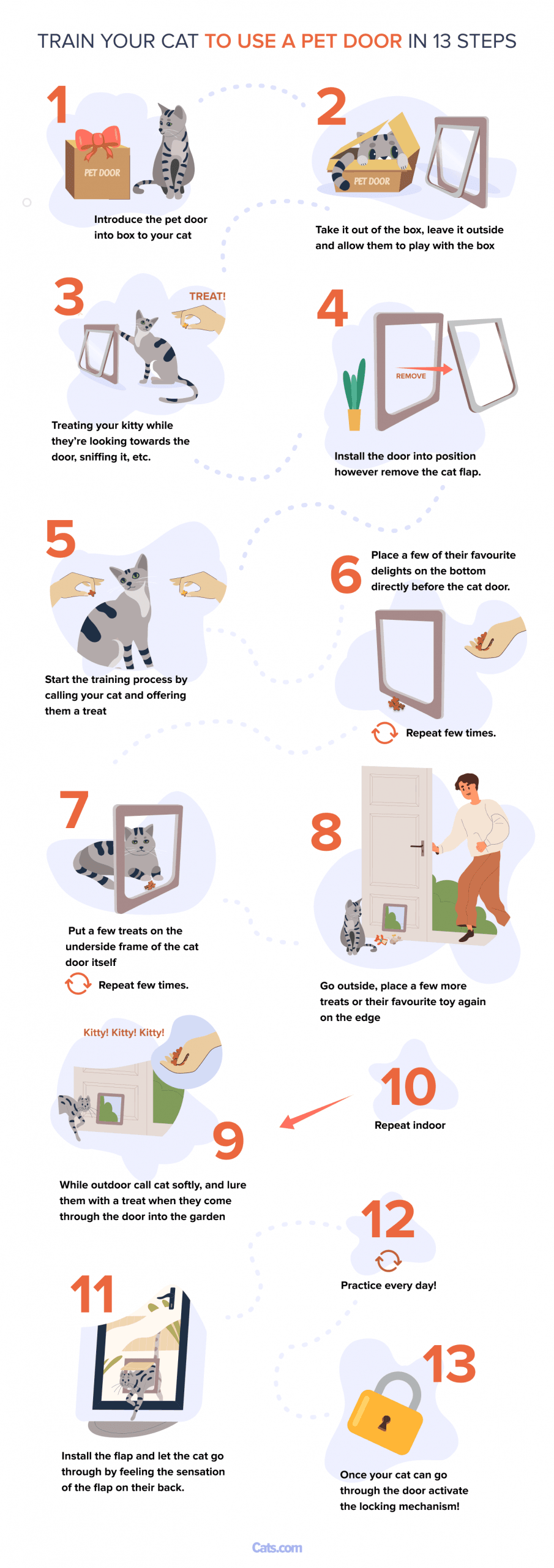
Allowing your feline friend the freedom to explore outdoors while maintaining household convenience can be achieved with a cat door. While some cats instinctively take to these new portals, others require a gentle introduction. This guide provides essential tips and strategies to help your cat confidently use a cat door, ensuring a seamless transition for both pet and owner.
Introducing Your Cat to a Cat Door
Before installation, select a cat door that is appropriately sized for your cat to pass through comfortably. When beginning the training process, it’s advisable to temporarily prop the door open or remove the flap entirely. This allows your cat to familiarize themselves with the opening without the added complication of the moving flap. Some cats, particularly younger and more playful ones, may readily adapt and pass through. However, avoid forcing your cat through the opening, as this can create fear or apprehension towards the door. Patience is key; don’t expect immediate results.
Give your cat ample opportunity to investigate the opening and become accustomed to slipping through it. Ensure they are comfortable navigating in and out before reintroducing the flap. A helpful technique for hesitant cats involves partially blocking the entrance with a hanging cloth. This allows them to push through an obstruction, demonstrating that it’s safe and nothing alarming will occur. Gradually increase the size of the cloth until it fully covers the doorway, allowing your cat time to adjust. Once they are comfortable with this setup, you can then introduce the actual cat door.
Encouraging Your Cat Through the Cat Door
The primary goal is to ensure your cat feels secure and experiences the cat door as an easy and rewarding passage. Surprises or startling noises associated with the door mechanism should be avoided. High-value treats, such as Greenies® Feline SmartBites or Life Essentials® freeze-dried chicken treats, can be effective motivators. However, moderation is important, especially for cats with dietary sensitivities.
Treats can significantly aid in the training process. Alternatively, some cats respond better to cuddling or engaging with their favorite toys. Identify what your cat cherishes most and use it as a reward to reinforce positive associations with the cat door. Positive reinforcement, centered around rewards, is crucial in helping your cat feel secure about using the door.
Addressing Hesitation with Cat Door Usage
While very timid or skittish cats might initially be anxious about a covered entryway, most felines can be successfully trained to use cat doors. During training, it’s important not to lock the cat door, as this can diminish your cat’s willingness to use it when it is unlocked. Once your cat understands that the door provides a reliable and predictable means of passage, you can then implement locking it during times when you do not wish for them to go outside.
Most cats are adaptable and will learn to use the cat door with sufficient time, provided they are physically capable of navigating the flap. Older cats, in particular, may experience difficulties due to mobility issues.
Safety Considerations for Cat Door Installation
Ideally, the cat door should provide access to a secure and escape-proof area. If the door leads directly outdoors, ensure the exit point is in a relatively safe location, away from busy streets or driveways. Always assess the area on the other side of the door for potential dangers, such as aggressive animals, predators, or environmental hazards like falling ice or snow.
Installing a lockable cat door, such as the Cat Mate® lockable cat flap or PetSafe® 4-way locking cat door, is highly recommended. This prevents your cat from exiting when you don’t want them to and deters other animals, like raccoons or neighborhood cats, from entering your home unsupervised.
For enhanced security, electronic cat doors that operate with a special collar key, like the PetSafe® Electronic SmartDoor, are a preferred option. Additionally, microchip-activated cat doors, such as the Cat Mate® Elite Microchip Cat Flap, can be programmed to only allow access for your specific pets, effectively preventing unwanted animal entry. These advanced options provide greater peace of mind by ensuring only your cat can utilize the door.
Featured Image: iStock.com/w-ings
