
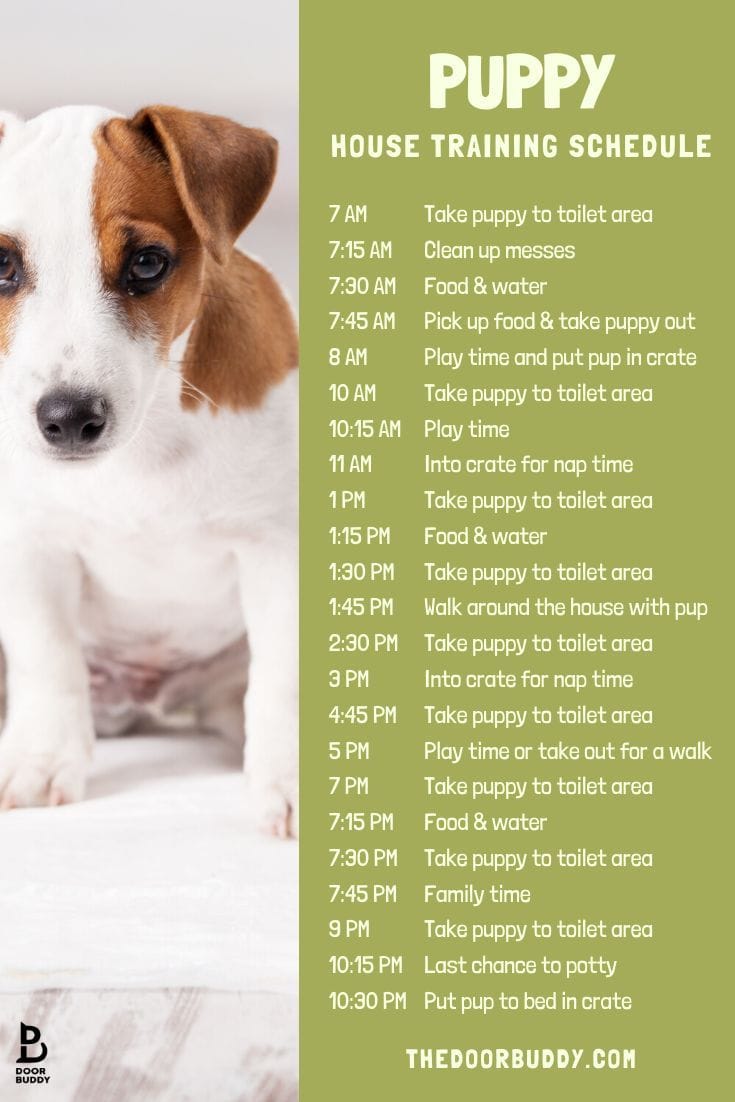
Bringing a new puppy home is an exciting time, but it also comes with the significant responsibility of house training. This process requires patience, consistency, and understanding of your puppy’s needs. By establishing a routine, supervising closely, and managing accidents effectively, you can guide your puppy towards successful and stress-free potty habits.
Establish a Consistent Feeding Schedule
A cornerstone of effective house training is adhering to a strict feeding schedule. Puppies have predictable elimination patterns, often needing to relieve themselves shortly after meals. Feeding your puppy at the same times each day creates a routine that facilitates predictable potty breaks.
To further aid overnight training, it’s advisable to remove your puppy’s water approximately two and a half hours before bedtime. This measure helps minimize the chances of nighttime accidents, as most puppies can comfortably sleep for around seven hours without needing to go outside. If your puppy does wake you during the night, it’s crucial to remain calm. Quietly take them to their designated potty spot and then return them to bed without engaging in playtime, which can inadvertently reinforce nighttime awakenings.
Close Supervision Indoors
During the initial stages of house training, constant supervision indoors is paramount. When your puppy is not actively engaged in training or play, keep them close by using a 6-foot leash, either tethered to you or a nearby piece of furniture. This proximity allows you to quickly identify signs that your puppy needs to go outside.
Be observant for common signals such as barking or scratching at the door, circling or sniffing the floor intently, or exhibiting restlessness and a sudden squatting posture. Upon noticing any of these indicators, it’s imperative to immediately escort your puppy to their designated potty spot. If they successfully eliminate, offer immediate praise and reward.
Maintaining this supervision extends to the yard. During the housebreaking process, keep your puppy on a leash while in the yard, treating it with the same level of attention and management as any other room inside the house.
Utilize Confinement When Supervision Isn’t Possible
When your schedule prevents you from actively supervising your puppy, confinement to a small, designated area is a highly effective strategy. Choose a space, such as a section of a bathroom or laundry room, that is securely blocked off with baby gates. This type of environment discourages puppies from eliminating where they sleep or eat.
An alternative, and often preferred, confinement method is crate training. This approach is recognized as both reliable and humane for managing a puppy’s space. If your puppy has been confined for an extended period, such as several hours, the first action upon their release should be to take them directly to their designated potty spot.
Managing Potty Training Accidents
It’s important to acknowledge that accidents are an inevitable part of the house training journey. When they occur, handling them calmly and correctly is key to continued progress. Your response should involve taking your puppy to their outdoor potty spot and offering praise and rewards if they finish there.
Crucially, never punish your puppy for accidents. Scolding them or rubbing their nose in the mess can induce fear and anxiety, ultimately hindering the training process and potentially leading to long-term behavioral issues.
To prevent future mishaps, it is vital to clean soiled areas thoroughly using appropriate enzymatic cleaners that eliminate residual odors. These scents can inadvertently attract your puppy back to the same spot, encouraging repeat accidents.
Prepare for Your Absence
Before welcoming a puppy into your home, carefully consider your daily schedule. If you anticipate being away for more than four to five hours consistently, it might be worth reassessing whether this is the right time for a puppy, or perhaps consider adopting an older, already house-trained dog.
If leaving your puppy alone is unavoidable, there are several strategies to ensure their needs are met. You can arrange for a neighbor or a professional pet sitter to visit your home for scheduled bathroom breaks.
Alternatively, you can train your puppy to use indoor potty options such as pee pads, newspapers, or a designated sod box. However, it’s important to note that while convenient, indoor potty training can sometimes prolong the process of establishing outdoor housebreaking habits. To assist with this, when cleaning up accidents indoors, place soiled paper towels or rags in the designated outdoor potty area to help your puppy associate the scent with the correct location for elimination.
Final Thoughts
Successful potty training hinges on three fundamental pillars: patience, consistency, and positive reinforcement. By diligently adhering to a regular schedule, maintaining vigilant supervision, and responding appropriately to accidents, you are laying a solid foundation for your new canine companion to thrive within your home. The journey requires dedication, but the rewards of a well-behaved dog are immeasurable.
