
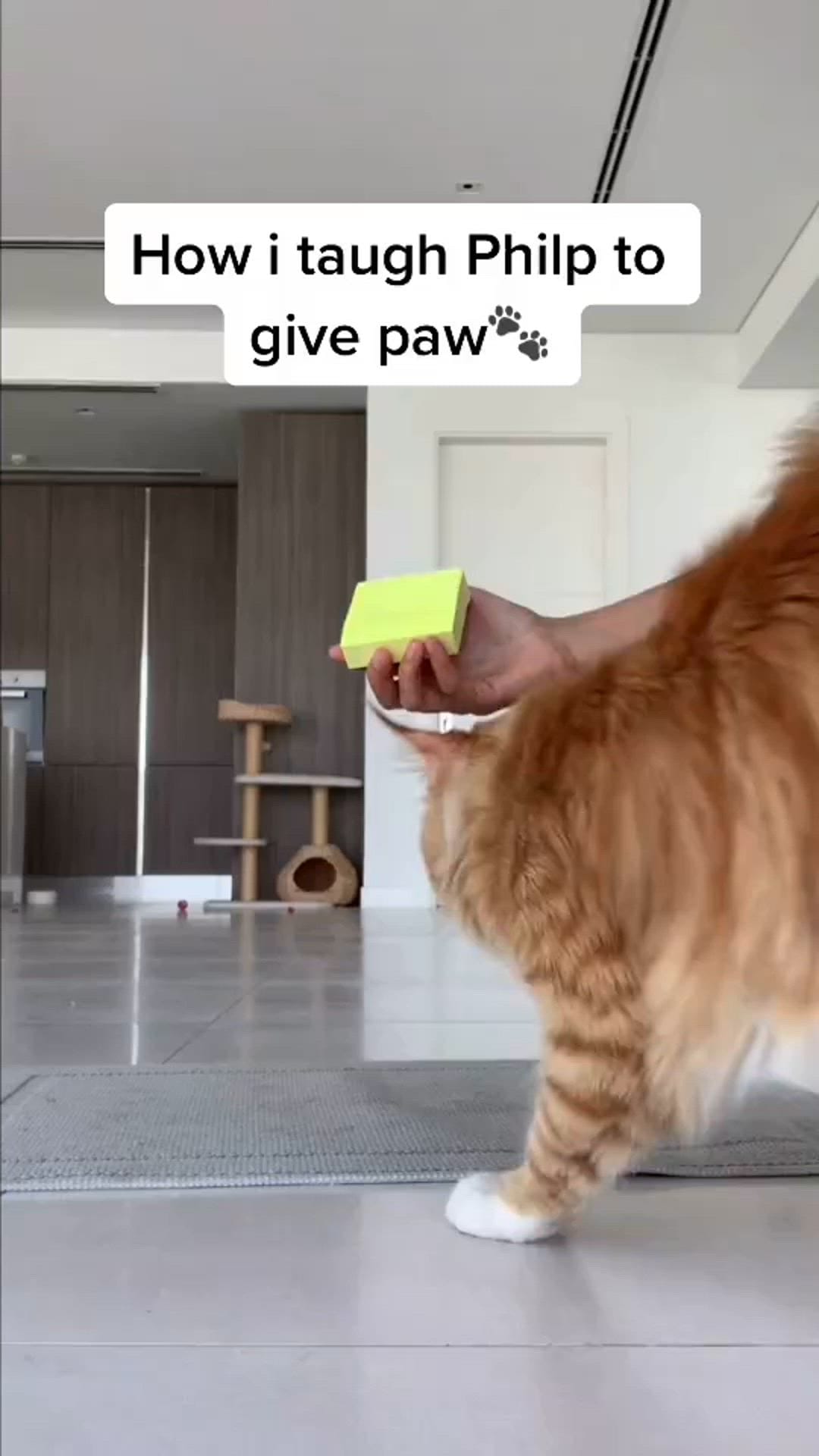
Many cat owners underestimate their feline companions’ capacity for learning, believing them to be untrainable. However, cats are intelligent and curious creatures capable of learning commands, much like dogs. With the right approach, which emphasizes positive reinforcement and patience, teaching your cat to “give paw” is an achievable and rewarding experience. This guide will walk you through the process, offering tips for stress-free training and insights into maintaining your cat’s overall well-being.
The foundation of teaching cats tricks lies in positive reinforcement. When your cat performs a desired behavior and is immediately rewarded, they will associate that action with a positive outcome, increasing the likelihood of repetition. Rewards can include favorite treats, gentle caresses, words of praise, or playtime with a beloved toy. Remember that patience is key, as each cat learns at its own pace. Some cats are naturally more outgoing and grasp new skills quickly, while others may require more time and consistent practice. However, with a positive attitude and dedication, you can successfully teach your cat to respond to commands and perform tricks like “give paw,” thereby strengthening your bond. This process not only provides mental stimulation for your cat but also serves as a valuable bonding opportunity.
Preparation: Setting the Stage for Success
Effective preparation is paramount when embarking on the journey of teaching your cat to “give paw.” It’s essential to establish a quiet and familiar training environment to help your cat focus without external distractions. Select a location where you and your feline friend can train undisturbed, a place where your cat feels secure.
The choice of rewards is also a significant factor in the training process. These should be appealing and highly motivating for your cat. Consider offering:
- Highly palatable treats.
- Small portions of cooked chicken or fish.
- A few pieces of their regular dry food.
Integrating training into your cat’s daily routine can also enhance learning. Short, consistent training sessions are generally more effective than infrequent, lengthy ones. Schedule these sessions during times when your cat is naturally most active and receptive, such as before meal times. This approach helps to make training a regular part of their day, accelerating their learning process.
Step-by-Step Guide to Teaching “Give Paw”
Let’s begin the process of teaching your cat to “give paw.” Start by sitting on the floor comfortably beside your cat and extending your hand, palm flat, in front of them. Patience is crucial during this initial stage; allow your cat to show interest in its own time. The moment your cat sniffs your hand, immediately offer a reward accompanied by a verbal cue or a clicker sound.
The subsequent step involves rewarding your cat every time it touches your hand with its paw. Precise timing is essential here: click your clicker or offer praise at the exact moment of contact. This helps your cat clearly understand the desired action. Repeat this step consistently until your cat reliably touches your hand with its paw.
Once your cat is consistently touching your hand, you can gradually begin to hold your hand slightly higher. This subtle change encourages your cat to lift its paw a little to reach your hand. At this stage, you can:
- Slightly delay the reward to encourage a longer paw hold.
- Incrementally increase the height at which you hold your hand.
- Continue to reward every successful paw touch.
When your cat reliably lifts its paw to touch your hand, start rewarding only when the paw remains in contact for a brief moment. This teaches your cat that simply touching isn’t enough; holding the paw for a short duration is also required to earn the reward. Gradually extend this duration until your cat is holding its paw for a few seconds.
After your cat has mastered holding its paw, you can introduce a verbal command, such as “paw.” Utter the command just as you anticipate your cat will perform the action. Ensure you use the same tone of voice each time to aid your cat’s recognition. With consistent practice, your cat will begin to offer its paw upon hearing the command. You can explore resources on how to teach your cat for additional training strategies.
Mastering Training: Overcoming Challenges and Embracing Consistency
Encountering challenges during your cat’s training is a normal part of the process. There may be days when your cat seems less motivated or doesn’t respond as expected. In such moments, maintaining a calm and patient demeanor is vital. Avoid frustration and remember that each animal progresses at its own pace. Taking short breaks and resuming training later can be beneficial.
Consistency stands as a cornerstone of successful cat training. This means:
- Practicing regularly, ideally in short daily sessions.
- Consistently using the same verbal cues and rewards.
- Ensuring your expectations are clear and comprehensible.
This consistent approach helps your cat understand your requests and reinforces the desired behavior more effectively. Patience is equally important; do not expect your cat to master new tricks overnight. It often requires numerous repetitions for a behavior to become ingrained. Acknowledge and celebrate small victories and persist even if progress seems slow. Over time, you will witness your cat’s improvement, making the training experience mutually beneficial. Consider exploring how to teach cat to play fetch for more engaging training ideas.
Expanding Horizons: Variations on “Give Paw”
Once your cat has confidently learned to “give paw” on command, you can introduce variations of the trick. For instance, you can teach your cat to place its paw into your hand when it’s positioned differently. Experiment with holding your palm up, down, or to the side. This process enhances your cat’s dexterity and cognitive flexibility.
To maintain training novelty and engagement, consider introducing new commands. Assign distinct verbal cues for each variation of the paw-giving trick. Here are some suggestions:
- “High five” for a paw given to your downward-facing palm.
- “Wave” for a gentle lift of the paw without direct contact.
- “Boxing” for a soft tap on your closed fist with their paw.
Furthermore, you can combine “give paw” with other learned tricks. For example, your cat could learn to “give paw” followed by a “beg” command, where they stand on their hind legs. This type of sequential trick keeps training dynamic and challenges your cat to remember and execute multiple behavioral sequences. For more advanced training, check out cat scratcher box train.
Ensuring Well-being: Stress-Free Training for Your Feline Friend
Prioritizing your cat’s well-being throughout the training process is crucial. The key is to avoid inducing stress. Achieve this by gradually acclimatizing your cat to new situations and routines. Begin with short training sessions and incrementally increase their duration. It’s vital to ensure your cat remains relaxed at all times and does not feel overwhelmed. Key considerations include:
- Initiating training with brief sessions, lasting only a few minutes.
- Observing your cat’s body language for early signs of stress or discomfort.
- Immediately halting training if you detect any signs of stress in your cat.
Beyond gradual acclimatization, fostering a positive training atmosphere is essential. Employ rewards to reinforce desired behaviors, creating a positive association with training. Avoid any form of pressure or coercion, allowing your cat to dictate the pace. Here are some tips to make training enjoyable:
- Utilize rewards your cat absolutely adores, such as their favorite treats or toys.
- Refrain from using loud noises or sudden movements that might startle your cat.
- Conclude each training session on a positive note to maintain motivation. You might also find information on how to get cats to stop scratching doors helpful for managing common feline behaviors.
Flappie: Enhancing Cat Well-being and Home Hygiene
Flappie offers an innovative smart cat flap designed to elevate your cat’s well-being and maintain a cleaner home environment. Key features that distinguish Flappie include:
- Selective Access Control: This feature effectively prevents your cat from bringing prey into the house.
- Prey Detection: Equipped with AI technology, a built-in camera identifies potential prey before it enters your home.
- Flappie App: The user-friendly app allows you to receive notifications and remotely manage the cat flap’s functions. Discover how Flappie can enrich your life with your cat by visiting flappie.ch to learn more and explore current offers.
Frequently Asked Questions
How do I teach a cat to give paw?
To teach your cat to give paw, begin by sitting with them on the floor and holding out a flat hand. Wait for them to show interest, and as soon as they sniff your hand, reward them with a treat and a verbal cue or clicker. Subsequently, reward every instance they touch your hand with their paw. Gradually increase the difficulty by holding your hand higher and prolonging the paw hold duration. Once your cat reliably gives its paw, introduce a consistent verbal command.
Can cats be taught tricks?
Absolutely, cats are capable of learning tricks. They are intelligent and curious animals that respond well to positive reinforcement, patience, and consistent training methods. Cats can learn to follow commands and perform various tricks, including “give paw.” It’s important to tailor the training to each cat’s individual abilities and pace, while ensuring a positive and encouraging training environment.
