
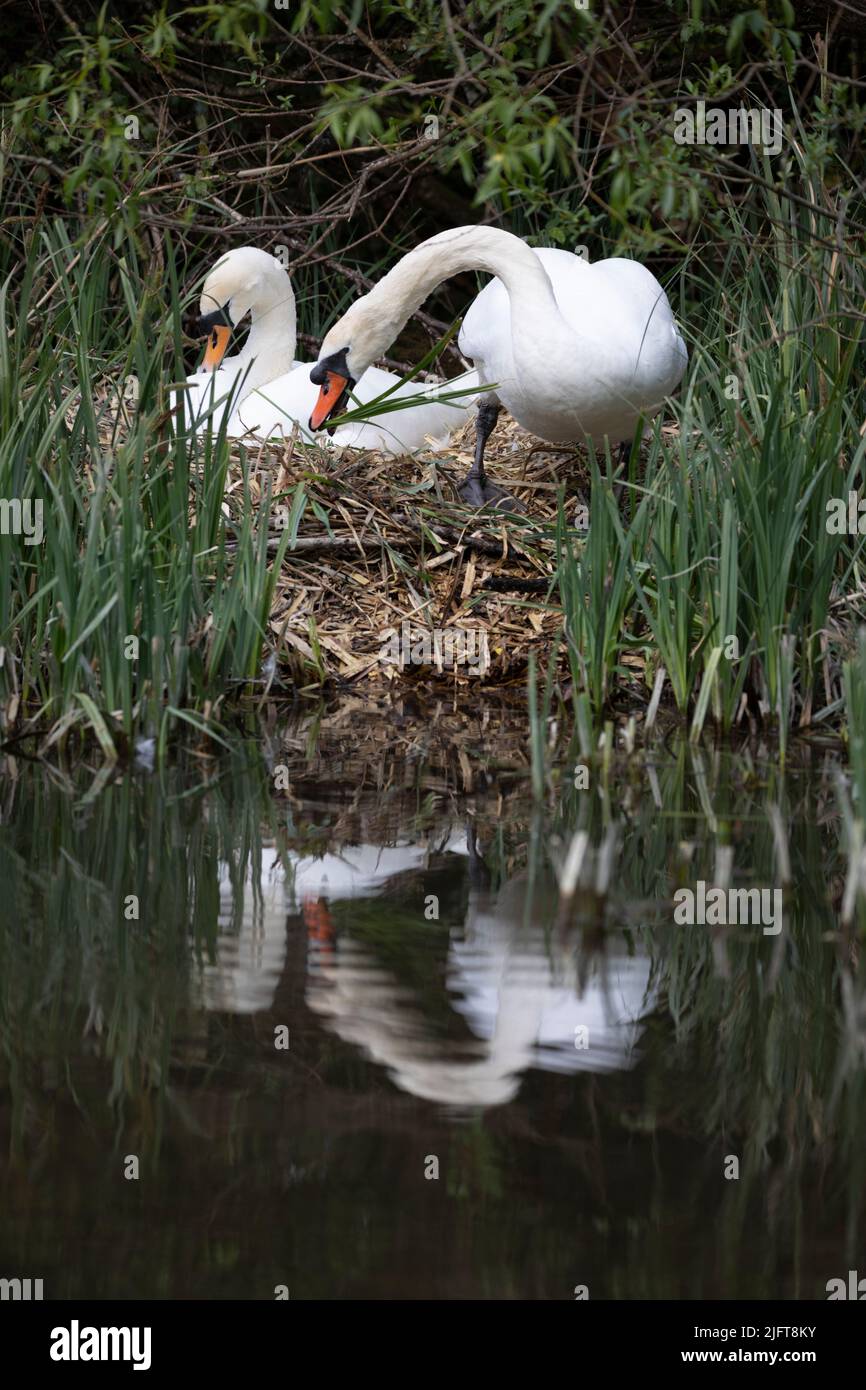
Swans are magnificent birds known for constructing large, intricate nests. Unlike many other bird species, their nests are measured in feet, reflecting the substantial size of these birds and their commitment to their offspring. A Mute Swan nest can easily span two to three meters in diameter. The primary function of this elaborate structure is to provide a secure and stable environment for incubating eggs, ensuring the safety of both the eggs and the breeding pair, known as the pen (female) and the cob (male). This article delves into the specific locations and methods swans employ to build their nests and lay the foundation for future generations of cygnets.
Nesting Habits and Location Choices
Mute Swans are predominantly freshwater birds, with approximately half of all nests situated in or around still water bodies like lakes and ponds. The remaining nests are found along rivers and streams, with a small percentage, less than 5%, located in coastal regions. Nests near lakes and ponds can be built on land, either on the bank or on small islands. In contrast, swans nesting by flowing water typically construct their nests on dry land. This preference is likely due to the fluctuating water levels in rivers and canals, necessitating a higher nest to prevent flooding.
The selection of a nesting site is a collaborative effort between the pen and the cob. The cob usually initiates the process by choosing a location and beginning construction. The pen then inspects the site, and if it doesn’t meet her approval, the cob will seek a new spot and try again. It’s not uncommon for the pair to build several trial nests before settling on a final location.
Several factors influence the choice of a nesting spot:
- Proximity to Shallow Water: The nest must be close to shallow water, ideally three feet or less in depth, allowing easy access to food sources. While nests are often just a few feet from the water’s edge, some have been found up to seventy-five meters away from a river. In rare instances, swans might nest in a location requiring them to cross a road to reach water, though this is unusual.
- Abundant Food Supply: A plentiful availability of natural food is crucial for both the adult swans and their developing cygnets.
- Undisturbed Environment: Swans seek relatively undisturbed areas, both from human activity and potential predators. They tend to avoid locations near otter holts or busy boat launch sites, unless no other suitable options exist. There are exceptions, however, with some swans nesting in highly unusual spots, such as the middle of a canal towpath.
- Availability of Nesting Materials: A sufficient supply of nesting materials must be readily accessible near the chosen site.
- Distance from Other Swans: Swans are territorial and generally prefer to nest away from other pairs. Territories along running water typically span two to three kilometers. Larger stillwaters can accommodate multiple pairs, but only if the body of water is extensive enough for the swans to remain out of sight of each other most of the time.
The Exception: Abbotsbury Swannery
A notable exception to typical Swan Nesting Behavior occurs at Abbotsbury Swannery in Dorset, England. For at least six hundred years, a colony of Mute Swans has thrived in close proximity within a saltwater fleet. These swans are fully managed, receiving food, shelter, nesting materials, and even immunizations. Here, swans nest within meters of each other, a situation that would be unfeasible in most natural settings. Despite the close proximity, territorial disputes still occur, although the concept of “territory” is adapted to the high-density environment, with each pair likely claiming only a few meters around their nest. The ability of these swans to tolerate such close living conditions may be attributed to the extraordinary resources available and potentially to genetic predisposition, as many swans at Abbotsbury are descendants of parents who also hatched there.
Nest Construction Process
Once a nesting site is agreed upon, the construction phase begins. If the site is suitable and the breeding season is successful, established pairs often return to the same location in subsequent years. Swans new to a territory, however, must first locate an ideal site, which can delay nesting by several weeks. It’s also common for new pairs, unfamiliar with each other and the territory, to forgo breeding in their first year.
The pen often begins laying eggs even when the nest is in its early stages of construction. Initially, it might appear as a mound of vegetation, approximately three feet in diameter and six inches deep, with a central depression for the eggs. From this point, both the pen and the cob actively contribute to building the nest.
The materials used are gathered from the immediate vicinity. Unlike some birds that carry nesting material in their bills, swans utilize large, heavy vegetation like twigs, branches, bulrushes, and reed mace. They may even incorporate bits of litter found nearby. Typically, the cob will pull strands of plant material with his neck and pass them to the pen, who then carefully arranges them on the nest. While this division of labor is common, the roles can sometimes be reversed, even within the same pair.
A well-constructed swan nest usually features:
- A Central Cup/Depression: Lined with softer materials such as grass and moss, and down from the pen, this area cushions and supports the eggs.
- Gently Sloping Sides: These facilitate easy access for newly hatched cygnets and help in returning any eggs that may roll out of the central cup.
- Sufficient Height: The nest is built high enough to avoid flooding in case of moderate water level increases. Swans have been observed to sense rising water levels and work quickly to raise the nest height to protect their eggs.
The final size of the nest is influenced by the quantity and type of available materials. Nests built with larger twigs and branches tend to be wider and taller than those made primarily from grass and moss. Swans also continue to add material to the nest throughout the incubation period, constantly shuffling and adjusting the reeds and twigs to optimize their placement.
Incubating the Eggs
Back to Swan Information page
