
Hummingbirds, with their dazzling speed, cheerful chirps, and often amusing antics, have long captured the admiration of bird enthusiasts. These tiny creatures offer a constant source of wonder, prompting us to question their daily behaviors. Delve into the intriguing world of hummingbirds with these ten facts you might not know.
Why Do Hummingbirds Hum?
The distinctive “hum” associated with hummingbirds isn’t vocal; it’s the sound produced by their incredibly rapid wingbeats. While most birds create a “whoosh” sound during the downstroke of their wings, hummingbirds generate lift and drag on both the downstroke and upstroke. Beating their wings at an astonishing rate of up to 40 times per second, the force and volume of these wing movements create the characteristic hum that gives them their name.
The Ingenious Feeding Mechanism of Hummingbirds
A hummingbird’s tongue is a marvel of natural engineering, capable of extending twice the length of its beak. This forked tongue is adorned with tiny, hair-like barbs called lamellae. When a hummingbird extends its tongue into a flower or feeder, the lamellae spread out. Upon retraction, these barbs rapidly curl inward, trapping nectar as the tongue coils back into the beak. This intricate mechanism allows hummingbirds to efficiently drink, flicking their tongues in and out of nectar sources as many as 20 times per second. The average hummingbird’s tongue can extend up to 1.6 inches, a remarkable length given their beak size.
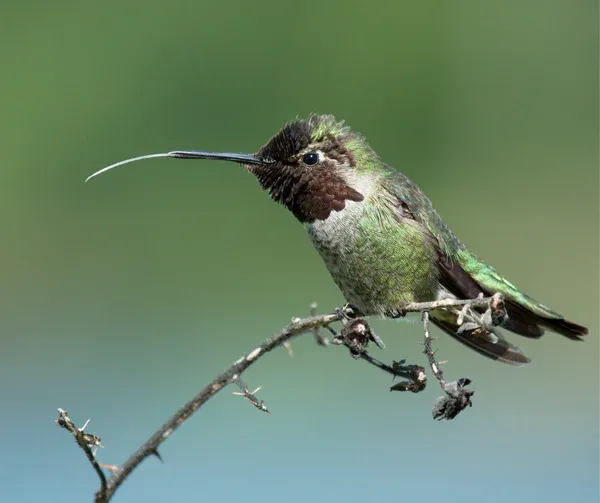 A hummingbird with its tongue extended, showing the lamellae.
Pictured: Male Ruby-throated Hummingbird.
The Necessity of Hummingbird Migration
With a metabolism that demands near-constant refueling—requiring them to eat every 10-15 minutes to sustain their energy levels—hummingbirds consume the caloric equivalent of 150,000 calories per day relative to their size. During colder months, many regions experience a scarcity of the flowering plants and adequate shelter that hummingbirds need to survive. Consequently, as fall approaches, hummingbirds embark on journeys to find areas offering better resources throughout the winter.
The Allure of Red for Hummingbirds
The vibrant red color is a common sight on hummingbird feeders, and for good reason. While scientists continue to study this attraction, research suggests that hummingbirds possess a heightened sensitivity to the red and yellow portions of the color spectrum. However, their visual perception extends beyond these colors, as they are also drawn to a spectrum of hues that are imperceptible to the human eye. Therefore, while red is a strong attractant, don’t limit your feeder choices solely based on this color.
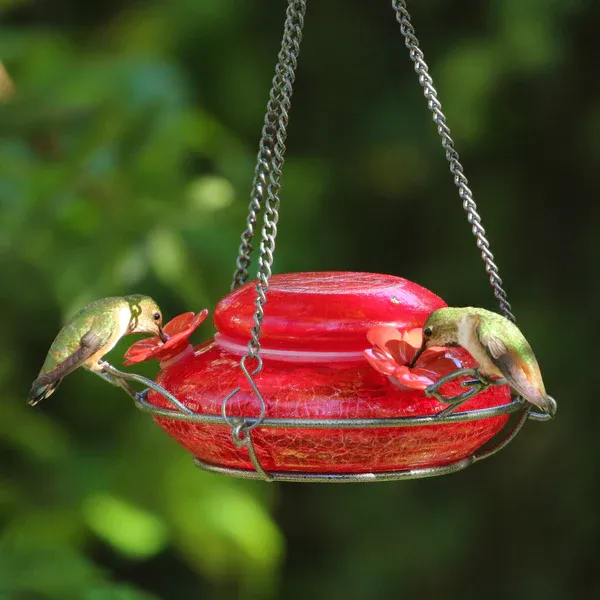 A red hummingbird feeder attracting hummingbirds.
Pictured: Female Allen’s Hummingbirds on Modern Hummingbird Feeder – Solid Red.
Understanding Hummingbird Torpor: Why They Hang Upside-Down
Observing a hummingbird hanging upside-down might seem alarming, but it’s often a sign of torpor. Torpor is a state of lowered body temperature and metabolic activity that allows hummingbirds to conserve energy, particularly during cold conditions, though it can also occur as a response to heat. This state can last from 20 minutes to an hour. If you encounter a hummingbird in torpor, it’s best to leave it undisturbed; it will eventually awaken to seek nectar and regain its energy.
The Reasons Behind Hummingbird Aggression
Despite their small size, hummingbirds can display surprising aggression. Territorial disputes are a primary reason for chasing and fighting among hummingbirds, as they vigorously defend feeding areas and flowers from intruders. This territorial behavior also plays a role in courtship, with males often chasing and diving at females as part of their mating rituals. This impressive display, accompanied by chirps, serves to attract potential mates.
Hummingbird Communication Beyond Song
While hummingbirds may not possess the complex songs of other bird species, they communicate through a variety of chirps, calls, and squeals. However, much of their communication is conveyed through physical displays. Chasing, diving, and charging behaviors are common during courtship and territorial defense, offering a rich visual language among these birds.
Optimal Feeding Times for Hummingbirds
Similar to many wild birds, hummingbirds are most active and visible at their feeders during dawn and dusk. However, due to their exceptionally high metabolic rates, they require near-constant feeding to maintain their energy levels. This means hummingbirds can be observed feeding at various times throughout the day.
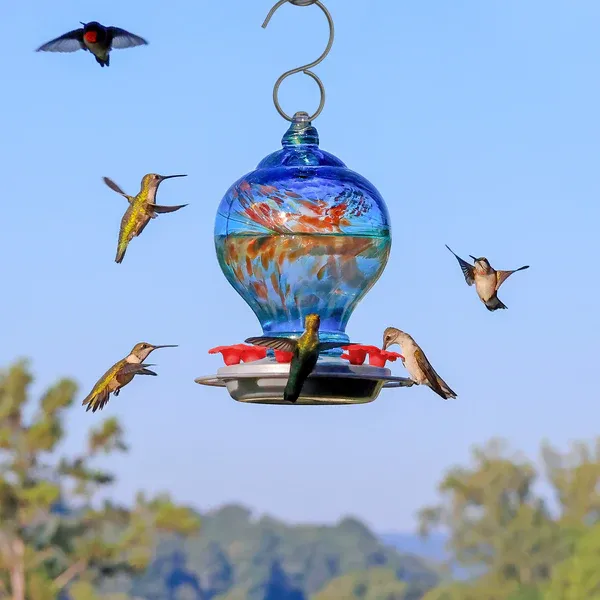 A hummingbird feeder in a natural setting.
Pictured: Ruby-throated Hummingbirds on Artisan Gravity Hummingbird Feeder – Sunny Day.
Winter Survival Strategies of Hummingbirds
While most hummingbirds in the United States and Canada migrate south for warmer weather and abundant food sources, not all species migrate. The Anna’s Hummingbird, for instance, has adapted to surviving winters in the milder Pacific Northwest. These hummingbirds rely on year-round blooming flowers and the consistent provision of nectar from feeders to generate the energy needed to stay warm during colder temperatures and occasional light snowfall.
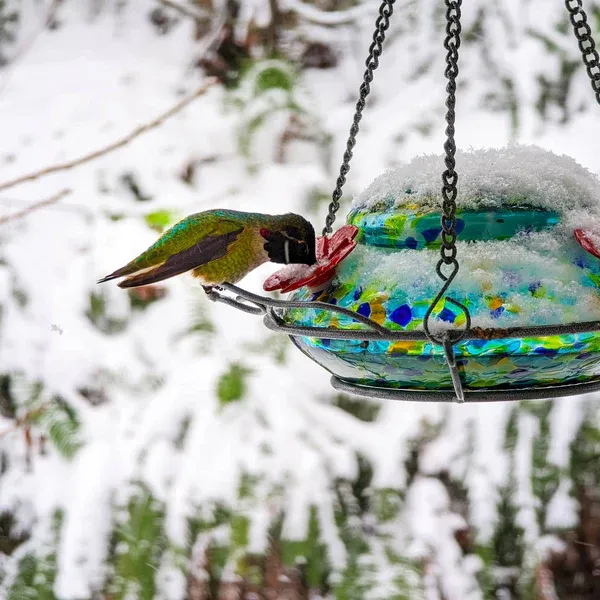 A hummingbird feeder in the snow.
Pictured: Male Anna’s Hummingbird on Illuminated Hummingbird Feeder.
How Hummingbirds Locate and Remember Feeders
Hummingbirds possess remarkable memories, enabling them to recall the locations of food sources. As migratory birds, they often return to the same feeders and flowers year after year. To maximize the chances of attracting hummingbirds to your feeders, it is recommended to have them set up and ready approximately two weeks before their typical return from migration.
To learn more about attracting these fascinating birds, explore our related articles on hummingbird attraction and common species.
