
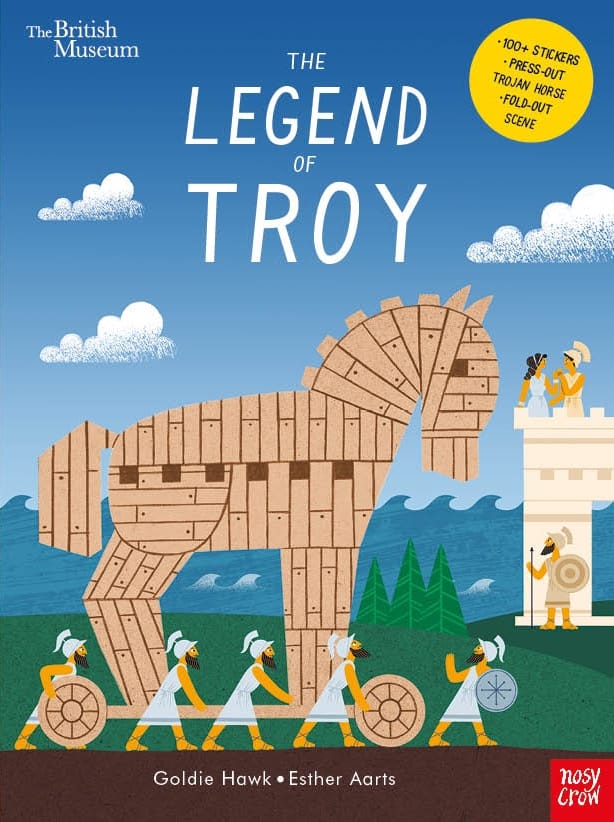
The enduring Story Of Troy And The Trojan Horse is one of history’s most epic tales, a masterful blend of heroism, tragedy, and cunning that has captivated audiences for millennia. It’s a narrative filled with gods and warriors, love and betrayal, and a decade-long war decided not by brute strength, but by a single, audacious act of deception. This is the story of a great city brought to its knees by a wooden horse, a testament to the idea that ingenuity can be the most potent weapon of all. Long before recorded history was a common practice, this saga was passed down through oral tradition, a campfire tale of monumental proportions that explores the very essence of human conflict and ambition. To understand this legend, we must travel back to an age of myth, where the line between the divine and the mortal was beautifully, and often violently, blurred. To truly appreciate the scale of this conflict, it is essential to explore the trojan war horse story in all its dramatic detail.
The Spark That Ignited a Decade of War
Every great fire starts with a single spark, and the Trojan War’s catalyst was a bitter rivalry born from vanity and a golden apple. The conflict didn’t begin on a battlefield, but at a wedding feast for the hero Peleus and the sea-nymph Thetis. All the gods and goddesses were invited except for Eris, the goddess of discord. Insulted, Eris tossed a golden apple inscribed “For the Fairest” among the goddesses Hera, Athena, and Aphrodite.
The dispute over who deserved the apple fell to Paris, a prince of Troy, to resolve. Each goddess offered him a bribe: Hera promised power, Athena offered wisdom and victory in battle, and Aphrodite tempted him with the most beautiful mortal woman in the world—Helen, Queen of Sparta. Paris, guided by desire, chose Aphrodite and sailed to Sparta to claim his prize. There, he was welcomed by King Menelaus, but he betrayed this hospitality by abducting Helen and taking her back to the fortified city of Troy.
Menelaus’s rage was immense. He invoked a sacred oath sworn by all of Helen’s former suitors to protect her marriage. His brother, Agamemnon, King of Mycenae, rallied a massive Greek army. A thousand ships were launched, sailing across the Aegean Sea to bring Helen back and, more importantly, to raze the mighty city of Troy to the ground for its prince’s transgression. This act of betrayal set the stage for a brutal, ten-year siege.
The Ten-Year Stalemate Before the Walls of Troy
For a decade, the Greeks camped on the plains before the impenetrable walls of Troy. The war became a grinding, bloody stalemate, marked by moments of extraordinary heroism and devastating loss. It was a conflict of legendary champions. On the Greek side stood Achilles, the near-invincible warrior, swift-footed and deadly, yet doomed by a fatal prophecy. He was joined by Odysseus, the clever and resourceful king of Ithaca, and the mighty Ajax.
Defending Troy were their own formidable heroes. Prince Hector, the noble and courageous son of King Priam, led the Trojan forces with unmatched valor. He was the city’s greatest protector, a devoted family man fighting not for glory, but for the survival of his home. Alongside him fought his brother Paris, whose actions started the war, and Aeneas, a warrior destined for a greater fate.
The gods themselves took sides, manipulating events from Mount Olympus. Hera and Athena sided with the Greeks, while Aphrodite and Apollo favored the Trojans. Their interference turned the tide of battle multiple times, prolonging the conflict and intensifying the suffering of the mortals below. Despite countless skirmishes and duels, neither side could gain a decisive advantage. The Greeks could not breach Troy’s walls, and the Trojans could not drive the Greek army back into the sea. The war claimed many lives, including the Trojan champion Hector, slain by Achilles in a climactic duel, and later Achilles himself, felled by an arrow to his heel—his only vulnerability—shot by Paris. After ten long years, morale was low, and a victory for either side seemed impossible.
The Masterstroke: Who Devised the Trojan Horse?
With the war at a standstill and both armies exhausted, it became clear that force alone would not conquer Troy. A new strategy was needed—one based on cunning rather than combat. The mastermind behind this legendary stratagem was Odysseus, the cleverest of the Greek leaders. Known for his sharp intellect and silver tongue, Odysseus proposed a plan so audacious it bordered on madness.
The idea was to build a colossal wooden horse, hollow on the inside, and present it as a sacred offering to the goddess Athena. The Greeks would pretend to abandon the siege, sailing their ships away as if in defeat. However, they would leave behind the giant horse as a supposed tribute to appease the goddess for the desecration of her temples during the war. A select group of their finest warriors, led by Odysseus himself, would hide inside the horse’s hollow belly.
Dr. Eleanor Vance, a classical studies scholar, explains, “The Trojan Horse is a powerful symbol of psychological warfare. It exploited the Trojans’ piety and their desperation for the war to be over. After a decade of fighting, the sight of the Greek fleet departing would have been an overwhelming relief, potentially clouding their judgment.” The rest of the Greek army would sail only as far as the nearby island of Tenedos, where they would wait under the cover of darkness for a signal to return. The success of the plan depended entirely on the Trojans’ willingness to accept the deceptive gift and bring it inside their impregnable walls. It was a gamble of epic proportions, relying on deception, patience, and the enemy’s own hubris. The trojan horse full story reveals the intricate layers of this brilliant deception.
Constructing the Legendary Beast
The task of building the giant horse fell to Epeius, a master carpenter and artisan in the Greek army. Using fir planks from the sacred grove of Apollo, he constructed a magnificent structure, a horse so large it would inspire awe and be difficult to move. It was a masterpiece of engineering and deception, built to be both a convincing offering and a functional vessel for the hidden soldiers.
Inside, the cramped, dark space held Odysseus and a handpicked unit of elite soldiers. The conditions were tense and claustrophobic. They had to remain perfectly silent for hours, their lives depending on the Trojans falling for the ruse. The fate of the entire Greek army rested on the shoulders of these men, hidden within the belly of the beast they had created. The question of where does the story of the trojan horse come from often points back to epic poems that detail these very moments of tension and creation.
The Deception and the Fall of a Great City
As dawn broke, the Trojans awoke to an astonishing sight: the Greek camp was empty, the shores were deserted, and their enemies were gone. In their place stood the colossal wooden horse. A single Greek soldier, Sinon, was left behind to execute the final part of the deception. He pretended to be a deserter, bitter and abandoned by his comrades.
When captured by the Trojans, Sinon spun a masterful tale of lies. He claimed that the horse was an offering to Athena, made enormous to prevent the Trojans from taking it into their city. If the Trojans were to destroy it, he warned, they would incur Athena’s wrath. But if they brought it inside their walls and dedicated it to her, the city would be granted her divine protection and become unconquerable.
The Trojans were divided. Some, like the priest Laocoön, were deeply suspicious. He famously warned, “I fear the Greeks, even when they bear gifts,” and hurled a spear at the horse’s side, which produced a hollow sound. But at that moment, two giant sea serpents emerged from the water and devoured Laocoön and his two sons. The Trojans interpreted this horrific event as a sign of Athena’s anger at the desecration of her sacred offering. Their doubts vanished, replaced by zealous conviction.
They tore down a section of their own mighty walls to accommodate the horse’s size and triumphantly wheeled it into the city center. That night, Troy celebrated its apparent victory with feasting and revelry, believing the long, brutal war was finally over. The city, which had never been breached by force, had been conquered by a trick.
A City Awakens to its Nightmare
Under the cover of darkness, as the Trojans slept in a drunken stupor, the final act began. Sinon lit a signal fire, and the hidden soldiers emerged from the horse. They crept through the silent streets, killing the sentries and opening the city gates for the returning Greek army, which had sailed back from Tenedos.
The city awoke not to a morning of peace, but to a nightmare of fire and death. The Greeks poured into Troy, slaughtering, looting, and burning everything in their path. The Trojan warriors, caught completely by surprise, were cut down before they could mount an effective defense. King Priam was killed at his own altar. The women and children were taken as slaves. The great city of Troy, which had stood defiant for a decade, was utterly destroyed in a single night of horrific violence. The victory was total, but it was a victory born from deceit, marking a brutal end to an epic war. The legend has been questioned over the centuries, with many asking, is the trojan horse a real story, a debate that continues among historians and archaeologists.
Frequently Asked Questions (FAQ)
What was the main reason for the Trojan War?
The Trojan War was sparked by the abduction of Helen, Queen of Sparta, by Paris, a prince of Troy. This act violated the sacred laws of hospitality and triggered a pact among Greek leaders to attack Troy, leading to a decade-long siege.
Who were the most important warriors in the Trojan War?
On the Greek side, the most famous warrior was Achilles, known for his near-invincibility. Other key figures included Agamemnon, the leader of the Greek forces, and Odysseus, the clever king of Ithaca. For the Trojans, the primary hero was Prince Hector, the city’s greatest defender.
How many Greek soldiers hid inside the Trojan Horse?
Ancient sources vary on the exact number. The most common accounts suggest there were between 30 and 50 elite Greek warriors hidden inside the Trojan Horse, including their leader, Odysseus.
Did anyone in Troy suspect the horse was a trick?
Yes, two people famously warned against it. The priest Laocoön warned the Trojans to “fear the Greeks, even when they bear gifts” and was killed by sea serpents shortly after. Cassandra, a prophetess princess of Troy cursed by Apollo so that her prophecies were never believed, also foresaw the city’s destruction but was ignored.
What is the primary source for the story of Troy and the Trojan Horse?
The most famous accounts come from ancient Greek epic poetry. While Homer’s Iliad covers the final year of the war, it ends before the Trojan Horse incident. The story of the horse is most famously detailed in Virgil’s Roman epic, the Aeneid, and is also mentioned in Homer’s Odyssey.
The Enduring Legacy of a Cunning Plan
The story of Troy and the Trojan horse has echoed through the ages, becoming a cornerstone of Western literature and a universal metaphor for deception. The phrase “Trojan horse” is now a common term for any trick or strategy that causes a target to invite a foe into a securely protected bastion or place. It serves as a timeless cautionary tale about the dangers of accepting gifts from enemies and the importance of looking beyond surface appearances.
The saga is more than just a war story; it’s a profound exploration of human nature, touching on themes of pride, honor, fate, and the devastating consequences of conflict. It reminds us that even the mightiest walls can be brought down not by force, but by a clever idea. The legend of the wooden horse ensures that the fall of Troy remains an unforgettable chapter in the grand narrative of human history, a powerful testament to the victory of mind over matter.
