
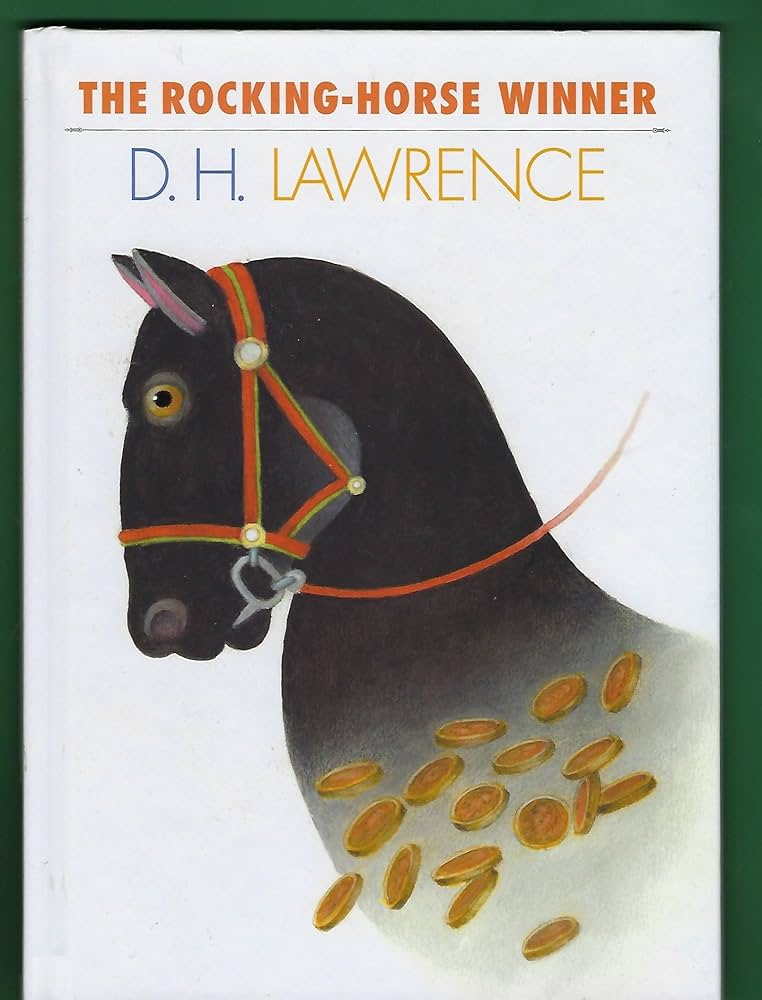
D.H. Lawrence’s masterful and unsettling tale, the Story Of The Rocking Horse Winner, plunges readers into the heart of a family corroded by materialism and the desperate pursuit of luck. At its center is a young boy named Paul, who tragically internalizes his mother’s anxieties about money and her cold, unloving nature. He discovers a strange and disturbing ability: by riding his wooden rocking horse with frantic, obsessive energy, he can predict the winners of horse races. This dark gift, however, comes at a terrible price, leading him down a path of self-destruction in a heartbreaking attempt to win his mother’s affection and silence the house that whispers incessantly, “There must be more money!” This is more than just a ghost story; it is a profound psychological drama that explores the devastating consequences of replacing love with greed. For a deeper dive into the narrative, consider exploring the rocking horse winner story and its complex layers.
A Summary of the Unsettling Plot
The story unfolds in a seemingly ordinary, middle-class home that is plagued by a silent, gnawing tension. Hester, the mother, believes she is “unlucky” because she married a man who, despite his good looks and prospects, fails to earn enough money to support their lavish tastes. This deep-seated dissatisfaction creates an emotional void in the home, which her children, especially young Paul, feel acutely. The house itself seems to absorb this anxiety, producing a constant, eerie whisper that only the children can hear: “There must be more money!”
Determined to prove he is lucky and thereby earn his mother’s love, Paul begins a secret quest. He confides in the family gardener, Bassett, who is an avid horse racing enthusiast. Paul’s method is bizarre and unnerving: he rides his toy rocking horse in a wild, almost trance-like state until he “knows” the name of the winning horse. Bassett, initially skeptical, places bets for Paul, and they begin to win substantial amounts of money. They soon bring Paul’s Uncle Oscar into their secret syndicate. While Oscar is amused and intrigued, he is also complicit in exploiting his nephew’s strange and draining talent.
As Paul’s winnings grow, he arranges to have a significant sum anonymously gifted to his mother over five years. Instead of being grateful or relieved, Hester’s greed only intensifies. She arranges to receive the full amount at once, and the whispers of the house grow louder and more demanding than ever before. The pressure on Paul mounts. With the biggest race of the year, the Derby, approaching, he becomes increasingly desperate and frail. He locks himself in his room and rides his rocking horse with a terrifying ferocity, seeking the name of the winner. His mother, feeling a surge of anxiety, finds him in a state of collapse, his eyes blazing with a strange fire. He cries out the name of the winning horse, “Malabar!”, before falling into a brain fever from which he never recovers. Paul dies, but not before learning that his final prediction won them over eighty thousand pounds. His uncle’s final, chilling words summarize the tragedy: “My God, Hester, you’re eighty-odd thousand to the good, and a poor devil of a son to the bad. But, poor devil, he’s best gone out of a life where he rides his rocking-horse to find a winner.”
The Characters: A Study in Dysfunction
The power of the rocking horse winner short story lies in its deeply flawed and psychologically complex characters. Each one contributes to the story’s tragic momentum.
Paul: The Sacrificial Son
Paul is the tragic hero of the story. He is not motivated by greed for himself but by a desperate, childlike need for his mother’s love and approval. He intuits that her affection is conditional upon wealth and “luck,” so he sets out to provide it in the only way he can. His rocking horse, a symbol of childhood innocence, becomes a tool for a very adult and corrupting pursuit. His “gift” is a curse, physically and mentally draining him, ultimately leading to his death. He represents the innocent victim of parental neglect and the corrupting influence of materialism.
Hester: The Unloving Mother
Hester is the story’s central antagonist, though she is perhaps more pathetic than purely evil. She is incapable of genuine love, a fact she herself admits: “I don’t know why it is, but I can’t feel love for my children.” Her heart has “gone hard,” replaced by a voracious hunger for money and status. She views her children as burdens and her husband as a failure. It is her constant, unspoken dissatisfaction that creates the “whispering” anxiety in the house and sets her son on his fatal course. Even when presented with the money she craves, it only fuels her desire for more, highlighting the insatiable nature of greed.
Uncle Oscar and Bassett: The Enablers
Uncle Oscar and Bassett represent the complicit adult world that fails to protect Paul. Bassett, the gardener, is a simple man who shares Paul’s belief in luck and sees nothing wrong with using the boy’s supernatural ability for financial gain. Uncle Oscar, a more worldly character, is initially amused by his nephew’s “game” but quickly becomes a willing partner in the scheme. Neither man intervenes or shows concern for Paul’s deteriorating health. They see him not as a child to be nurtured but as a means to an end—a golden goose. Their encouragement and exploitation are crucial elements that seal Paul’s fate, making them key figures in the rocking horse short story.
Core Themes in the Story of the Rocking Horse Winner
D.H. Lawrence masterfully weaves several profound themes into this compact narrative, making it a subject of endless literary analysis.
The Destructive Nature of Materialism
This is the story’s most prominent theme. The family’s obsession with wealth poisons every relationship and aspect of their lives. Love, affection, and genuine human connection are all subordinated to the relentless pursuit of money. The house’s whisper, “There must be more money!”, is the external manifestation of the family’s internal corruption. Lawrence critiques a society where a person’s worth is measured by their financial success rather than their character or capacity for love. Paul’s tragedy is that he accepts this corrupt value system and sacrifices his life for it.
Luck Versus Love
Hester explicitly tells Paul that luck is what matters most, as it is what brings money. “It’s what causes you to have money. If you’re lucky you have money. That’s why it’s better to be born lucky than rich. If you’re rich, you may lose your money. But if you’re lucky, you will always get more money.” Paul internalizes this twisted lesson, believing that if he can prove he is “lucky,” he will finally be worthy of his mother’s love. The story tragically demonstrates the folly of this belief. He becomes incredibly “lucky” in the financial sense, but it does not bring him the love he craves; it only destroys him. Lawrence suggests that a life built on the cold, impersonal concept of luck is empty and ultimately unsustainable.
Oedipal Complex and Family Dysfunction
Many critics interpret the story through a Freudian lens, seeing a clear Oedipal dynamic between Paul and his mother. Paul’s frantic riding of his horse is seen as a substitute for the affection and intimacy he desires from Hester. He seeks to replace his “unlucky” father as the provider for his mother, hoping to win her exclusively. His quest is not just for money, but to prove his worth to her above all others. This psychological tension adds a deeply disturbing layer to the narrative, highlighting the profound dysfunction at the heart of the family. The complete narrative of the rocking horse winner story serves as a powerful illustration of these psychological undercurrents.
Symbolism in the Narrative
Lawrence uses powerful symbols to enrich the story’s meaning and emotional impact.
The Rocking Horse: The central symbol of the story, the rocking horse represents the clash between childhood innocence and the corrupt adult world. It is a toy, yet Paul uses it for a grimly serious purpose. Its motion—frantic, energetic, yet ultimately going nowhere—symbolizes the nature of Paul’s quest. He expends a tremendous amount of life force but remains trapped, his efforts only leading him closer to death, not to the genuine connection he seeks.
The Whispering House: The house is not just a setting but an active character in the story. The whispers are a physical manifestation of the family’s unspoken greed and anxiety. The fact that only the children can hear them suggests that they are more attuned to the emotional poison in their environment, a poison created by the adults. The whispers grow louder as Hester’s greed intensifies, showing how materialism can overwhelm and dominate a physical space.
Paul’s Blazing Eyes: Throughout the story, Paul’s eyes are described as glowing with a strange, supernatural light, especially when he is riding his horse or knows a winner. His eyes symbolize his unnatural, almost demonic gift. They are the windows to a soul consumed by an obsessive quest that is draining his life away. In his final moments, they blaze with a “strange fire,” representing the final, fatal burst of his life force.
Frequently Asked Questions (FAQ)
What is the main conflict in The Story of the Rocking Horse Winner?
The main conflict is Paul’s desperate internal struggle to win his mother’s love by proving he is “lucky.” This puts him in conflict with his own physical and mental limits, as well as the toxic, materialistic values of his family that equate luck and money with love and worth.
Why is Paul’s mother so obsessed with money?
Hester, Paul’s mother, feels she has married an “unlucky” man who cannot provide the wealthy lifestyle she desires. Her obsession stems from a deep-seated dissatisfaction with her life and a belief that money and social status are the ultimate measures of success and happiness, leading her to be incapable of genuine love.
What does the ending of the story mean?
The ending is deeply tragic and ironic. Paul successfully predicts the Derby winner, securing a massive fortune for his family, but the effort costs him his life. His uncle’s final lines underscore the story’s moral: the family has gained immense wealth but lost a son, revealing the ultimate emptiness and destructive cost of their materialistic values.
Is The Rocking-Horse Winner a supernatural story?
Yes, it contains clear supernatural elements. Paul’s ability to predict horse race winners through his trance-like riding is not explained by logic or reason. The whispering house also acts as a supernatural force, externalizing the family’s corrosive greed. These elements elevate the story from a simple family drama to a modern fable.
What is the moral of D.H. Lawrence’s story?
The central moral is a powerful warning against the dangers of materialism and the tragedy of confusing wealth with love. Lawrence argues that a life dedicated to the pursuit of money is spiritually empty and destructive, ultimately consuming the very things that make life worth living, such as family, innocence, and love. The story of the rocking horse winner is a timeless cautionary tale about these misplaced values.
