
Cats communicate their needs and feelings through a variety of subtle body language cues. However, for many cat owners, understanding these signals can be challenging. Biting, a behavior often perceived as negative, is actually a form of communication for cats. By understanding the underlying reasons for a cat’s bite, owners can better manage and redirect this instinctual behavior. As Samantha Bell, a cat expert from Best Friends Animal Society, explains, “Cats aren’t exhibiting bad behavior when they bite. It’s instinct.”
This guide delves into the common reasons why cats bite and offers practical strategies for pet parents to address and redirect this natural feline behavior.
Why Do Cats Bite?
Biting is not an act of malice but rather an expression of a cat’s current state or need. Recognizing these underlying causes is the first step to effectively managing the behavior.
Love Bites and Overstimulation
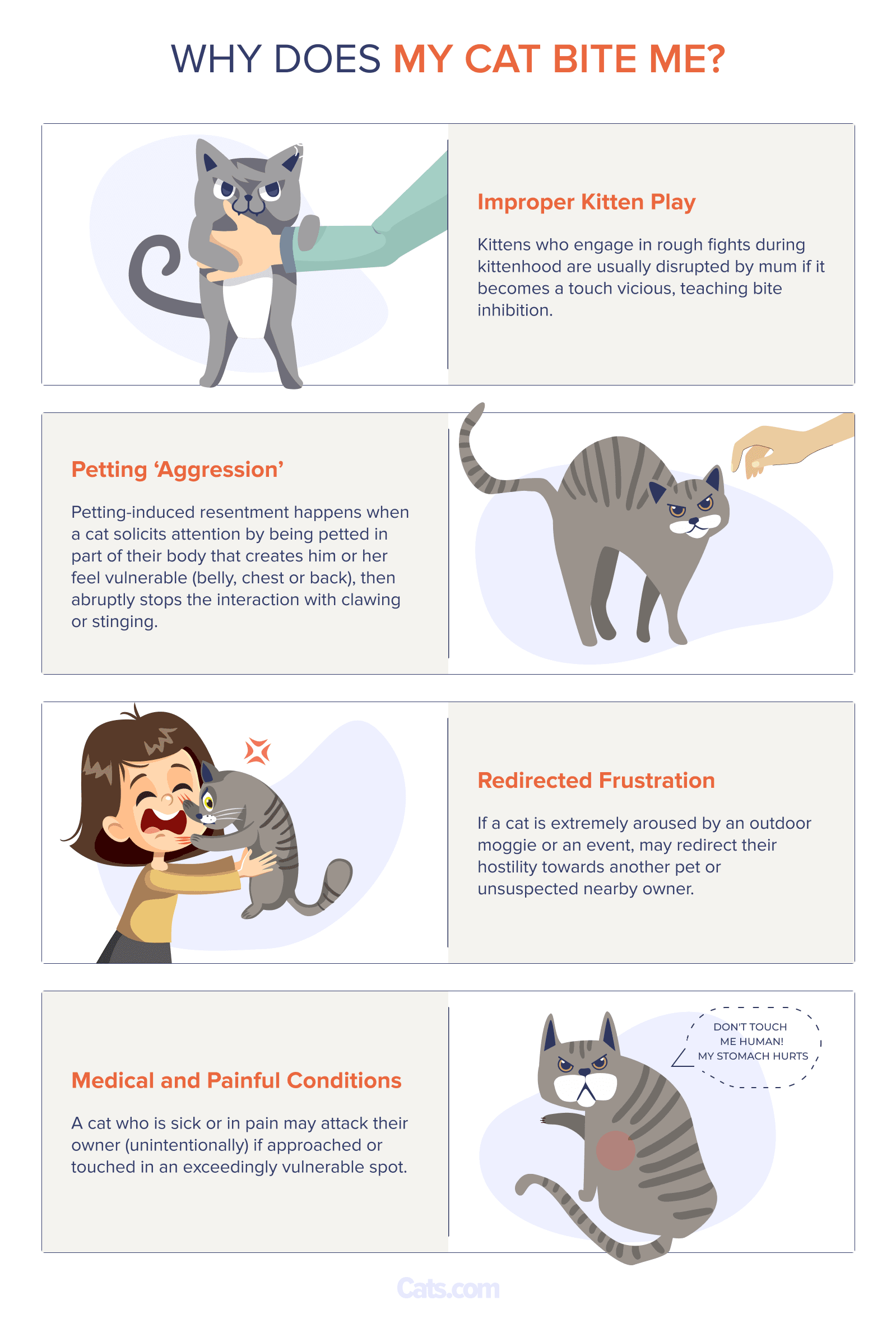
A “love bite” can be a peculiar sign of affection, often accompanied by gentle licking that progresses to soft nibbling. This behavior typically indicates that a cat is feeling overstimulated during an interaction, such as petting. It’s their way of politely signaling that they’re nearing their limit and wish for the interaction to conclude. “They may be saying, ‘I’m enjoying this interaction but it’s becoming too much for me. I’m nearing my limit,'” Bell elaborates. Interpreting these love bites can be tricky, and owners should be observant of their cat’s cues.
Overstimulation, also known as petting reactivity, can occur when a cat becomes overly excited, whether from a petting session or due to unwanted touching. Cats often display warning signs before resorting to a bite, such as ears turned outwards, tail flicking, rippling skin, and quick head turns. These signals indicate the cat’s discomfort and that a swat or bite may follow if their boundaries are not respected.
Pain and Discomfort
If your cat’s biting behavior is out of character, it could be a sign that they are experiencing pain. Look for other indicators of discomfort, such as sensitivity when a particular area is touched, a hunched posture, hiding, loss of appetite, or a decline in grooming habits.
Fear and Aggression
Fear is a significant driver of biting behavior in cats, often stemming from a feeling of being threatened or cornered. This can manifest at home if a cat feels trapped or forced into a situation. Allowing a cat the option to disengage from a scenario can help prevent them from feeling like prey. Due to their size difference, unfamiliar or unsocialized cats may feel intimidated by humans. Prior to biting out of fear, cats typically exhibit clear warning signs such as flattened ears, dilated pupils, raised fur, hissing, spitting, or snarling, indicating they feel threatened and require space.
Seeking Attention and Playfulness
Cats learn that biting can effectively grab human attention. A cat might playfully “attack” your feet if they are bored and seeking interaction or play. Boredom can lead to misbehavior, including scratching furniture or bothering other pets. Providing appropriate outlets like scratching posts can help redirect this energy.
During play, a cat might nip. In such instances, redirecting their attention to a toy is advisable. Playful biting between cats is often characterized by relatively quiet engagement, with both cats actively participating. In contrast, non-playful biting usually involves yowling and an attempt by one cat to escape.
How to Manage and Redirect Cat Biting
While cats will likely always retain their instinct to bite, owners can foster a harmonious relationship by implementing several strategies:
- Redirect Biting: When your cat bites, immediately offer an appropriate toy, such as a catnip toy, and praise them when they engage with it.
- Engage in Play: Regular interactive play sessions using toys like cat teasers and wand toys can satisfy a cat’s natural hunting and biting instincts.
- Respect Touch Preferences: Learn your cat’s individual preferences for petting. Pay attention to their signals and stop petting before signs of overstimulation appear. Most cats enjoy being petted under the chin and near their ears, while their belly and legs might elicit a bite or swat.
- Heed Body Language: Be attentive to your cat’s subtle cues that indicate they want to be left alone or are feeling overstimulated.
- Offer Choices: Allow your cat the autonomy to choose their activities and to leave situations when they feel uncomfortable.
- Consider a Companion: Adopting two kittens can be beneficial, as they learn from a young age to engage in playful biting with each other rather than with their human companions.
It is crucial to avoid punishing your cat for biting, as this is ineffective, detrimental to your bond, and can escalate fear-induced reactivity.
What to Do If You Are Bitten by a Cat
If a cat bite breaks the skin, prompt action is necessary. Wash the wound thoroughly with water, apply pressure to control any bleeding, and seek medical attention immediately. Cat bites carry a significant risk of infection and disease, and your doctor may prescribe preventative antibiotics.
