
The term “tabby” is often used casually when referring to cats, but it’s a common misconception to associate it with a specific breed. In reality, “tabby” describes a coat pattern, not a breed. This pattern is incredibly prevalent, and understanding its variations can be fascinating for any cat enthusiast. This guide delves into the defining characteristics of tabby cats, exploring the distinct markings and genetic underpinnings that make them so recognizable and beloved.
What Exactly is a Tabby Cat?
Genetically, all domestic cats possess the gene for tabby markings. However, in some cats, other genes can mask these inherent patterns, making them appear as solid-colored. Nevertheless, the tabby pattern remains the most widespread among both purebred and mixed-breed domestic cats.
Identifying Tabby Markings
The most iconic feature of a tabby cat is the distinctive “M” marking on its forehead. While the origin of this “M” is debated, with legends attributing it to Egyptian mythology or religious figures, its presence is a key identifier. Beyond the forehead, tabbies also exhibit thin facial stripes and markings around their eyes.
Certain coat colors inherently display tabby patterns. For instance, orange or cream-colored cats will always have visible tabby markings, although these can sometimes be so faint that the cat appears to be a solid color. In other cases, tabby markings might only be apparent when light strikes the fur at a specific angle, requiring a closer look to discern the subtle stripes or swirls beneath the surface.
The Five Distinct Tabby Patterns
The classification of tabby cats is primarily based on their unique coat patterns. There are five recognized types, each distinguished by the arrangement of stripes, swirls, and spots:
1. Classic Tabby
Also known as the “blotched tabby,” this pattern is characterized by dramatic swirling markings that resemble the intricate design of a marble cake. Instead of distinct stripes or spots, the classic tabby features coiling and curling patterns along its sides, back, and neck. These markings often form bullseye or target-like shapes, making them easily distinguishable.
2. Mackerel Tabby
This pattern, often referred to as “tiger stripes,” is considered the original and most common tabby coat pattern. It is believed to be the natural coat of the African wildcat, an ancestor of domestic cats. The mackerel tabby features evenly spaced, vertical stripes running down its sides, accompanied by a thicker stripe along its spine. Due to the dominance of its gene, if selective breeding were to cease, many cat populations would revert to this pattern over generations.
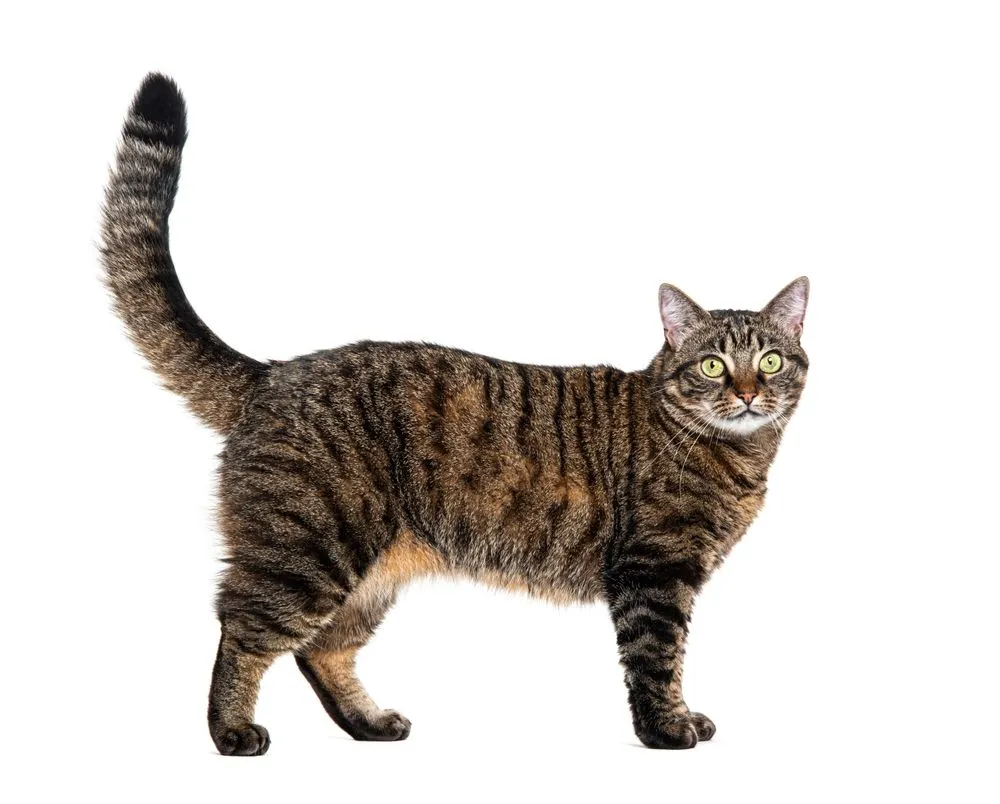 Side view of a tabby crossbreed cat standingThe mackerel tabby pattern resembles tiger stripes. Eric Isselee / Shutterstock.com
3. Spotted Tabby
Cats with spots instead of stripes fall into the Spotted Tabby Category. These spots can vary in size and are distributed across the cat’s back, neck, and sides. Unlike the random spots of a Dalmatian, a spotted tabby’s markings are typically organized in a discernible pattern or line. They can sometimes appear as broken stripes, merging characteristics of mackerel tabbies.
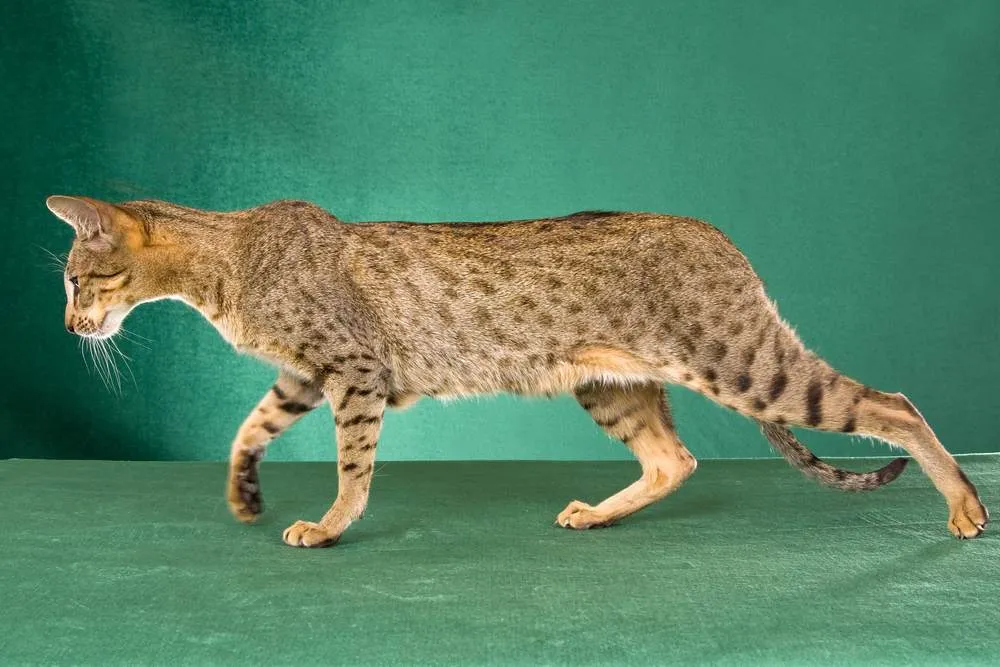 Beautiful Oriental silver spotted tabby catSpotted tabby cats display spots rather than stripes or swirls. Linn Currie / Shutterstock.com
4. Patched Tabby
A patched tabby cat exhibits patches of color interspersed with the typical tabby markings. These cats are often referred to as “torbies,” a combination of tortoiseshell and tabby. It’s also possible to have a “caliby,” which is a calico cat with tabby markings. The size and distribution of these color patches can vary widely, but the underlying tabby pattern of swirls, stripes, or spots remains consistent.
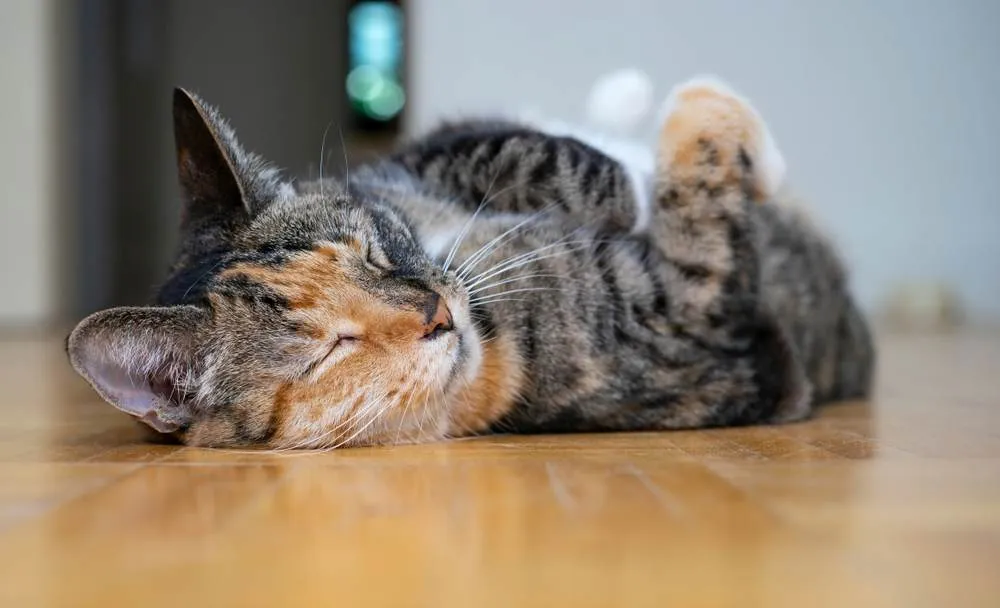 Torbie cat lying on its back and sleeping on the floor.Patched tabby cats have a mix of patches of brown tabby and patches of orange tabby. IvayloKG / Shutterstock.com
5. Ticked Tabby
The ticked tabby is the most challenging pattern to identify visually. These cats typically lack prominent stripes, swirls, or spots on their body. However, they still possess the characteristic “M” on their forehead. The defining feature of a ticked tabby lies in its individual hairs, which are banded with alternating dark and light colors, known as agouti hairs. The Abyssinian cat breed is a prime example of a ticked tabby.
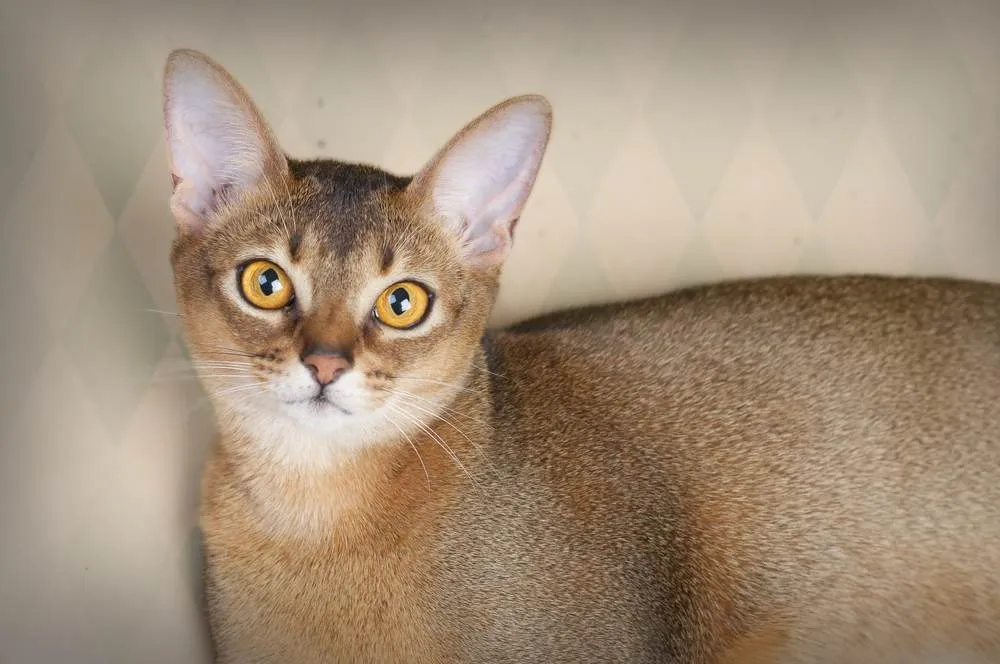 Beautiful female Ruddy Abyssinian cat.Ticked tabby cats such as this Abyssinian have the tabby M on the forehead and banded hairs of alternating darker and lighter colors (called agouti). Parris Blue Productions / Shutterstock.com
The Enduring Appeal of Tabby Cats
The tabby pattern is a hallmark of domestic cat ancestry, appearing across numerous breeds, including the Maine Coon, British Shorthair, Persian, Egyptian Mau, and American Bobtail. Mixed-breed tabby cats are also commonly found in shelters, offering a diverse range of personalities and appearances. Their striking and varied coat patterns have solidified their status as a favorite among cat lovers worldwide.
The tabby pattern is the most common pattern seen in domestic cats. The Maine Coon, British Shorthair, Persian, Egyptian Mau, and American Bobtail are all examples of cat breeds that can be called tabby cats. You also have a good chance of finding a mixed breed tabby cat at a local shelter.
Tabby cats come with all different kinds of personalities, and their striking coat patterns continue to be a favorite among pet people.
