
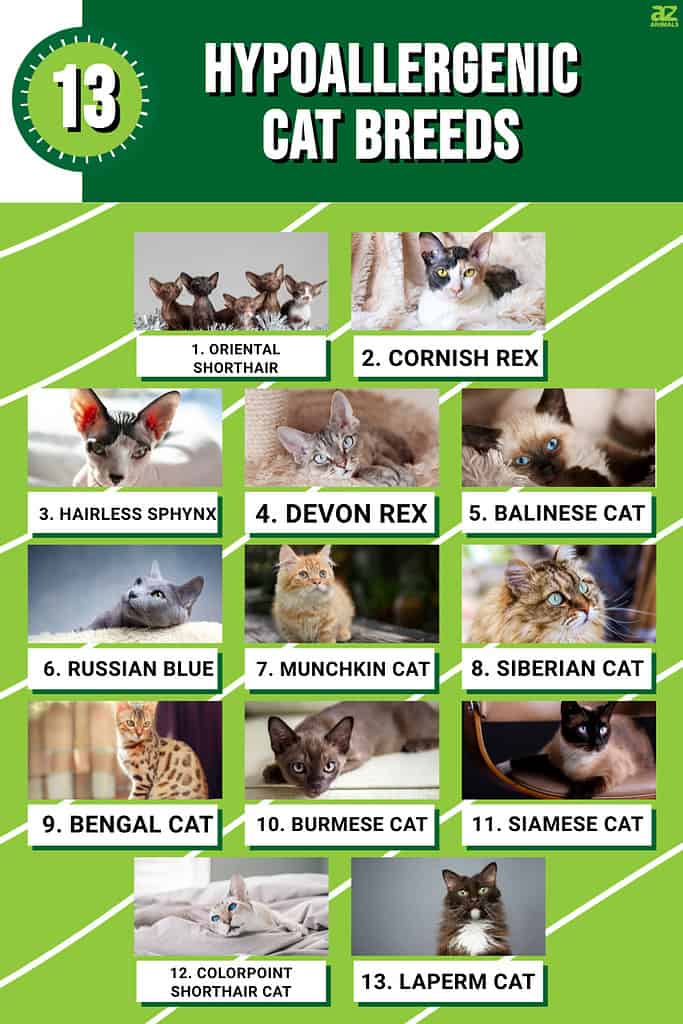
For many, the joy of owning a cat is unparalleled, but for those suffering from allergies, it can seem like an impossible dream. Cat allergies affect approximately 1 in 10 people in the U.S., with allergies to cats being twice as common as those to dogs. It’s a common misconception that a cat’s fur is the primary allergen. In reality, the main culprit is a protein called Fel d 1, found in a cat’s saliva, urine, and dander. While no cat breed is entirely allergen-free, several breeds are known to produce lower levels of Fel d 1 or have coat types that minimize shedding and dander, making them potentially better choices for allergy sufferers.
There are numerous strategies to mitigate cat allergies within your home. These can range from establishing cat-free zones to investing in advanced solutions like a self-cleaning litter box. However, the breed of your feline friend can also play a significant role. Read on to explore eight cat breeds that may be a more suitable option if you’re prone to allergies.
Understanding Cat Allergens: Beyond the Fur
It’s crucial to understand that the term “hypoallergenic cat breed” is somewhat of a misnomer. All cats produce Fel d 1, the protein responsible for allergic reactions. However, certain breeds may be less likely to trigger symptoms due to a variety of factors. For instance, non-neutered male cats tend to produce higher quantities of Fel d 1 compared to female or neutered male cats. Kittens also produce fewer allergens than adult cats. While a hairless cat might shed less dander, they are still capable of producing Fel d 1 through their saliva and urine, just like their furry counterparts.
Innovations in Allergy Management
Recent advancements offer new hope for cat owners with allergies. Purina has developed Pro Plan LiveClear Allergen Reducing Cat Food, a dietary solution designed to reduce the primary allergen found in cat hair and dander by an average of 47% after consistent daily feeding for three weeks. Furthermore, a promising vaccine is in development that aims to reduce allergen levels in cats, thereby alleviating symptoms in their human companions. While not yet available on the market, these innovations highlight a hopeful future where allergies no longer stand between humans and their beloved pets.
Top 8 Cat Breeds for Allergy Sufferers
While “hypoallergenic” might be an overstatement, these eight breeds are often considered better choices for individuals with cat allergies due to their lower allergen production or minimized shedding.
Siberian
The Siberian cat, with its luxurious triple coat, might surprise you as a potential candidate for allergy sufferers. Despite their dense fur, Siberians are known to produce less Fel d 1. Originating from Russia, these cats are affectionate, playful, and robust. During warmer months, they shed more significantly, requiring increased grooming to manage hairballs.
Balinese
Often referred to as the “long-haired Siamese,” Balinese cats boast a silky, single-layered coat that sheds less than many other breeds. Like Siberians, they are known to produce lower levels of Fel d 1. These intelligent and vocal cats are also known for their loving nature and energetic personalities, living an average of 15-20 years.
Devon Rex
The Devon Rex is distinguished by its unique, short, wavy coat, which is a result of a rare genetic mutation. This fine, soft coat hardly sheds, making it a favorable choice for allergy-prone individuals. Devon Rex cats are known for their affectionate and people-oriented personalities, coupled with a playful and mischievous streak. Regular gentle wiping of their coat is typically sufficient for their grooming needs.
Cornish Rex
Similar to the Devon Rex, the Cornish Rex possesses a soft, curly coat that results in minimal shedding. Their unique coat gives them a distinctive, almost lamb-like appearance. These energetic and playful felines are easy to entertain and require relatively low maintenance in terms of grooming due to their unique coat type.
Sphynx
The most well-known hairless breed, the Sphynx, often prompts the question of whether they are truly hypoallergenic. While their lack of fur might seem beneficial, they still produce Fel d 1 in their saliva and urine. Despite not needing regular brushing, Sphynx cats require weekly baths or wipes to manage oil buildup on their skin.
Russian Blue
With their striking blue-grey coat and vibrant green eyes, Russian Blues are elegant cats known for their minimal shedding and overall low maintenance. This breed is loyal and affectionate with their families, though they can be reserved around strangers. Their gentle and playful nature makes them a wonderful companion.
Bengal
The visually stunning Bengal cat, with its distinctive spotted or marbled coat, is a result of crossbreeding domestic cats with Asian leopard cats. While they produce a typical amount of Fel d 1, their short, sleek coat simplifies grooming. Bengals are known for their adventurous spirit, friendliness, and love for activities like playing in water.
Oriental Shorthair
Oriental Shorthair cats are known for their unique appearance, including large ears, expressive eyes, and slender frames, alongside a vast array of color and pattern combinations. They are vocal, entertaining, and thrive on interaction with their families, making them a lively and engaging companion. Their short, sleek coat also contributes to easier grooming.
Addressing Common Questions About Hypoallergenic Cats
What cats are hypoallergenic?
No cat breed is entirely hypoallergenic. However, Siberian and Balinese cats are often recommended as they produce less Fel d 1 and may be better suited for individuals with cat allergies.
Are Ragdoll cats hypoallergenic?
Ragdoll cats, known for their gentle nature and long coats, are not considered hypoallergenic. They require regular brushing to manage shedding.
Are Siamese cats hypoallergenic?
While Siamese cats do not shed excessively, they are not classified as hypoallergenic. Their affectionate and vocal nature is a hallmark of the breed.
