
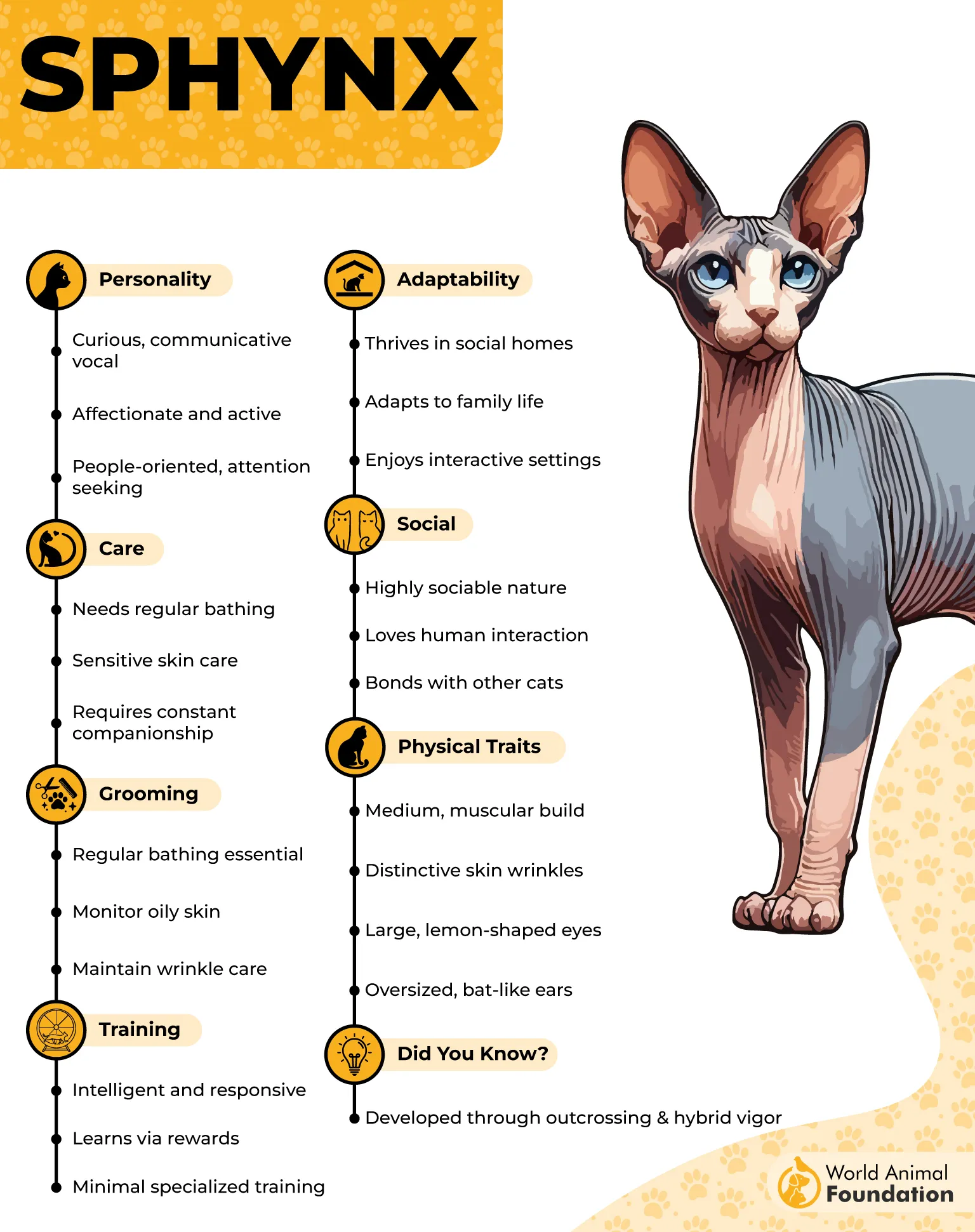
The first encounter with a Sphynx Cat can be a surprising one. Their unique, hairless appearance might evoke comparisons to mythical creatures or beloved fictional characters, but beneath that unusual exterior lies a personality that quickly wins over even the most hesitant admirer. This distinctive breed, known for its warm skin and surprisingly soft texture, defies initial perceptions and transforms initial apprehension into fascination. If you’re considering welcoming one of these extraordinary felines into your home, understanding their specific needs is key to ensuring a happy and healthy life for your captivating companion.
Origins and the Mystery of Hairlessness
Despite their name, which evokes ancient Egypt, the modern Sphynx cat’s journey began in Canada. The breed’s signature hairlessness is the result of a natural genetic mutation that first appeared in a litter of kittens in Ontario in the 1960s. These early hairless cats were selectively bred to develop the lineage we recognize today. While the breed’s name and appearance might suggest an Egyptian heritage, this is purely a fanciful association with the iconic Sphinx statue, and the breed has no historical ties to Egypt.
The Sphynx Lifestyle: High Maintenance, High Reward
Contrary to what one might assume, a hairless cat is not necessarily low maintenance. The Sphynx requires a dedicated care routine, primarily centered around their unique skin needs. Unlike their furred counterparts, Sphynx cats lack a coat to naturally manage skin oils. This means they require regular bathing, typically weekly, to prevent oil buildup, which can attract dirt and lead to skin issues. This bathing routine is crucial, and it’s best to accustom kittens to water from a young age to ease the process.
Essential Care for Your Sphynx
Beyond bathing, several other aspects of care are vital for a Sphynx’s well-being. Their oily skin can be prone to blackheads, particularly on their chin. Gentle scrubbing with a mild antibacterial soap, followed by a witch-hazel cleanse and rinse, can help manage this. Your veterinarian can also recommend specific treatments like benzoyl-peroxide pads for more persistent cases. Ear cleaning is another important weekly task, as the lack of ear hair means dirt can accumulate quickly. Nail trimming, ideally after a bath, is also a necessary part of their grooming regimen.
Protection from the Elements: Clothing and Sun Safety
A Sphynx cat’s lack of fur makes them particularly vulnerable to environmental factors. They should not be left outdoors for extended periods due to their sensitivity to the sun, which can lead to sunburn and increase the risk of skin cancer. Always consult your veterinarian about safe sunscreen options if your cat will be exposed to the sun. Conversely, Sphynx cats can also get cold easily, making clothing a practical necessity in cooler temperatures or even drafty indoor environments. Sweaters, shirts, and soft blankets provide essential warmth and comfort. Heated cat beds can also be a wonderful addition to their environment. Given their oily skin, any clothing or bedding used by a Sphynx should be washed regularly to maintain hygiene.
Nutritional Needs
Sphynx cats have a notably higher metabolism than their furry counterparts, which helps them regulate their body temperature. This means they require more food and should ideally be fed several small meals throughout the day. Unlike some other breeds, Sphynx cats are generally not finicky eaters and will readily consume a variety of foods. Providing high-quality food is paramount to supporting their energetic lifestyle and overall health.
A Social Butterfly with a Dog-Like Demeanor
Often lauded as one of the friendliest cat breeds, Sphynx cats are renowned for their affectionate and social nature. They often greet their owners with the same enthusiasm as a dog, exhibiting a strong desire for companionship. Due to their highly social disposition, it is often recommended to have more than one Sphynx cat, especially if owners are away from home for significant periods, allowing them to keep each other entertained. They tend to form strong bonds with other pets, including dogs. Their intelligence and curiosity make them trainable, and their playful antics provide endless entertainment. Many famous Sphynx cats have even graced the silver screen, often cast in roles that play on their unique appearance.
Frequently Asked Questions About Sphynx Cats
How long do Sphynx cats live?
The average lifespan for a Sphynx cat is between 8 and 14 years. Some genetic predispositions within the breed can sometimes affect this average.
What is the cost of a Sphynx cat?
Purchasing a Sphynx cat from a reputable breeder can range from $1,500 to $4,500, with prices for champion lines potentially reaching $10,000 or more. The higher cost is attributed to the recessive nature of the hairless gene, requiring more effort in breeding, and the breed’s relatively newer status, leading to fewer breeders.
Are Sphynx cats friendly?
Absolutely. Sphynx cats are widely considered one of the friendliest cat breeds. Their need to seek warmth often leads them to cuddle with people, making them exceptionally affectionate companions who readily seek out human interaction.
