
The humble house sparrow, often overlooked amidst more colorful or melodious avian species, possesses a fascinating life worthy of closer observation. These common birds, prevalent in many British landscapes, offer a unique window into the intricate behaviors of urban wildlife. This exploration delves into their social dynamics, mating rituals, nesting habits, and daily routines, revealing a world far from dull for those willing to look closely.
A Communal Nesting Haven
In Aberystwyth, a small bramble patch nestled beside a high seawall serves as a bustling communal nesting site for a flock of house sparrows during the summer months. This thorny sanctuary, also shared with a nesting mallard, provides a protected environment for parents and chicks alike. The dense branches offer a natural defense against predators, while the surrounding mudflats and banks supply essential food, water, and nesting materials.
 The nest site – see arrow*The nest site – notice the arrow indicating the bramble patch.*
The sparrows’ vigilance is evident, with individuals seemingly aware of their observer.
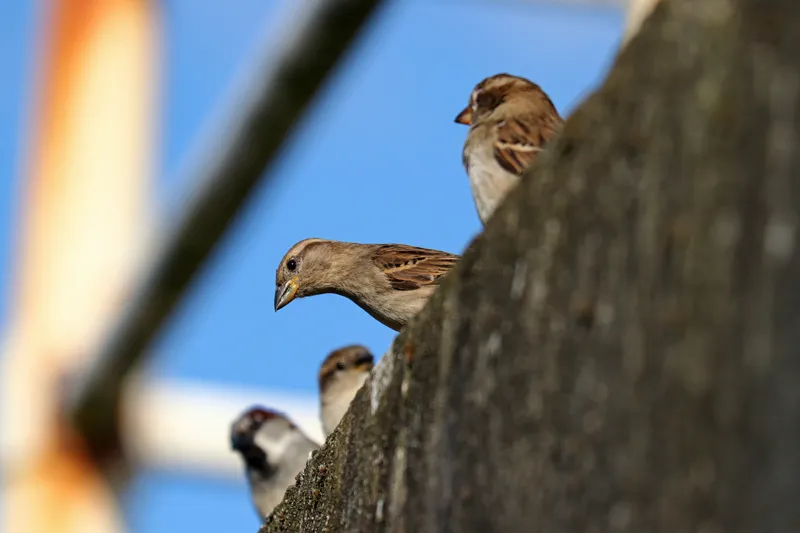 ‘Is that lady with the camera still watching us?…’*A house sparrow appears to be observing the photographer.*
Foraging and Feeding Habits
The sparrows’ proximity to food sources is crucial for their survival and the rearing of their young. They are frequently observed foraging for grubs and other insects in the nearby areas.
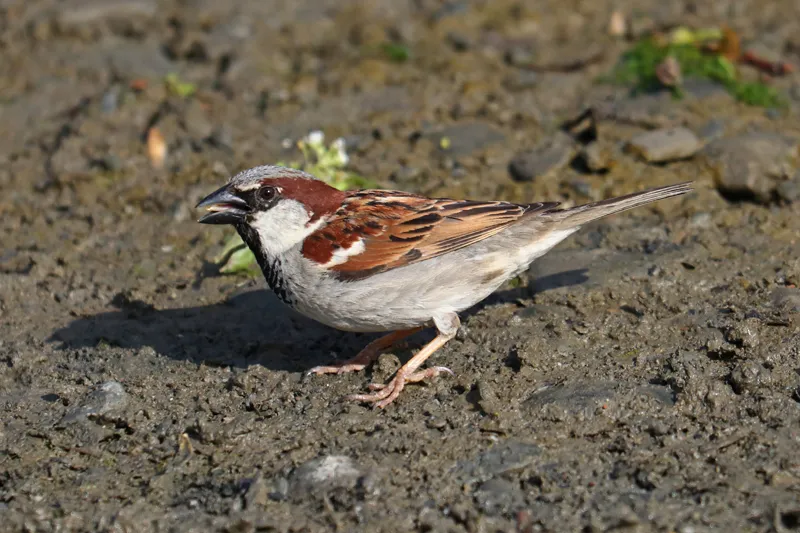 Foraging for grubs*A house sparrow diligently searches for food.*Foraging for grubs*Another sparrow engaged in foraging.*Foraging for grubs*The abundance of food sources in the area.*
Social Hierarchy and Mating Displays
House sparrows exhibit a distinct social hierarchy, largely determined by the size and darkness of the “bib” – the black patch of feathers on the male’s throat and chest. A larger, darker bib signifies a dominant individual within the flock.
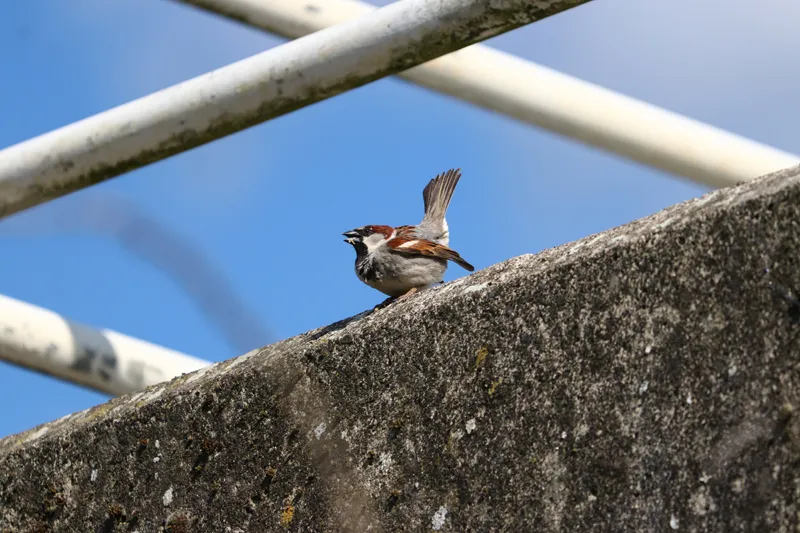
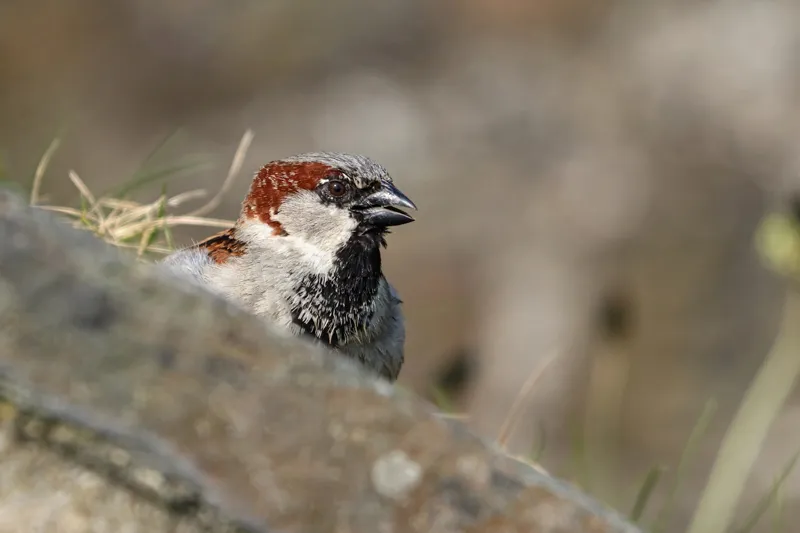 Singing male house sparrow*A male house sparrow sings from a stone wall, unperturbed by the photographer’s presence.*
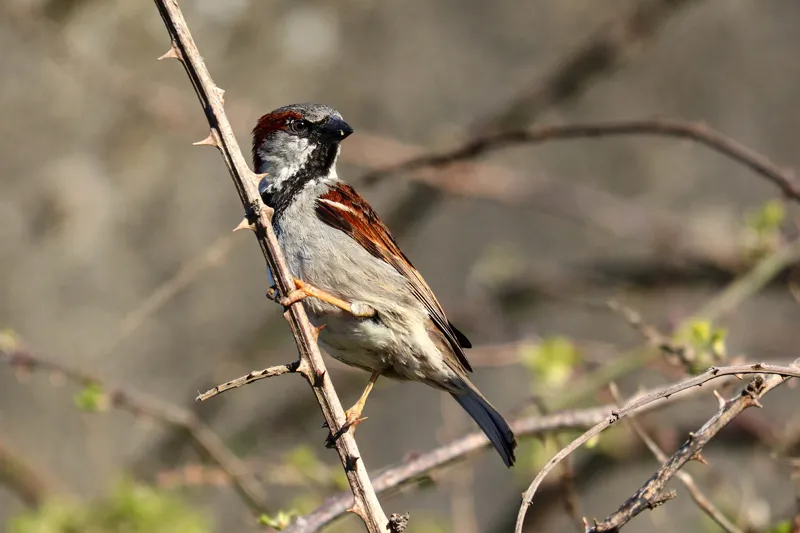 Male sparrow's bib*The prominent black bib on a male house sparrow, indicative of his status.*
The visual cues of dominance are clear: males with smaller bibs are typically lower in the social order.
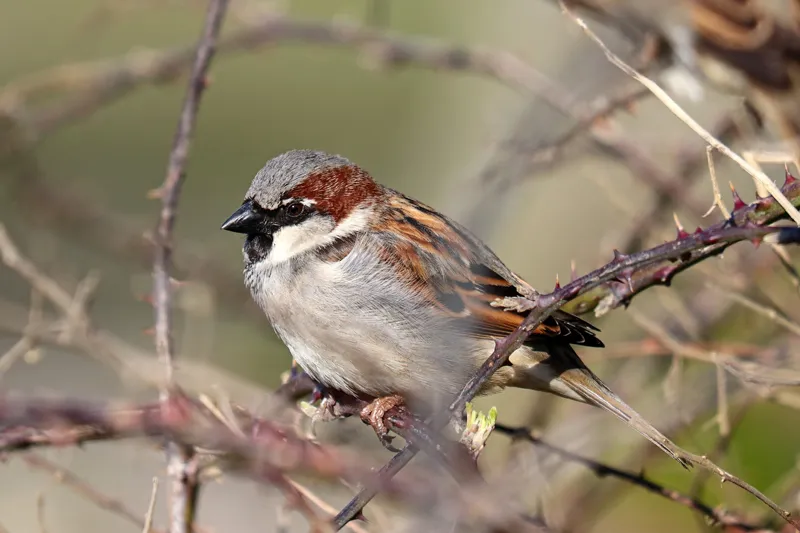 Lower ranking male sparrow*A male sparrow with a smaller throat patch, suggesting a lower social standing.*
While generally social, squabbles are not uncommon within the flock. Aggression is often displayed through a crouching posture with the tail raised and fanned, accompanied by an open beak.
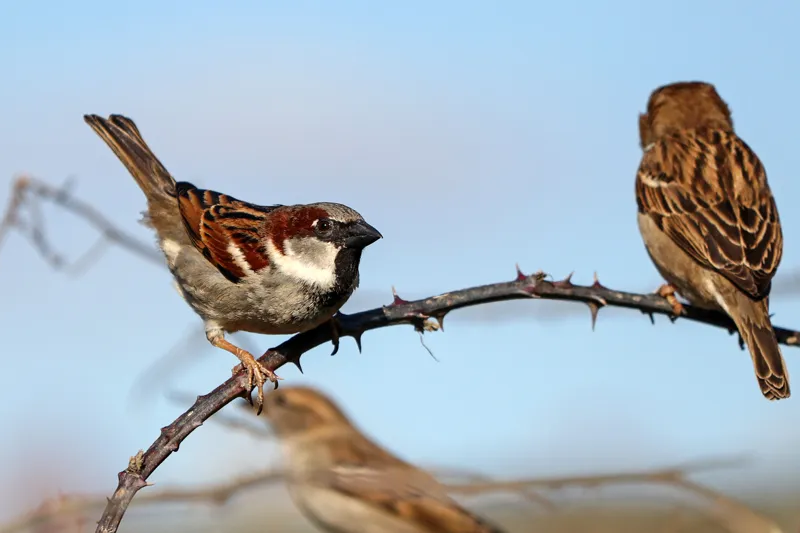 House sparrow aggression*A male house sparrow displaying aggression.*House sparrow aggression*Another instance of an aggressive display.*House sparrow aggression*The characteristic crouch and fanned tail during an aggressive encounter.*
Courtship involves elaborate displays. Males may engage in a comical “dance,” hopping around a chosen female while flicking their wings and tail. These displays can sometimes attract the attention of other males, leading to group performances.
 House sparrow courtship dance*A male house sparrow performing a courtship dance.*
A male might also sing near his preferred nest site, occasionally carrying nesting material in his beak to demonstrate his suitability as a provider.
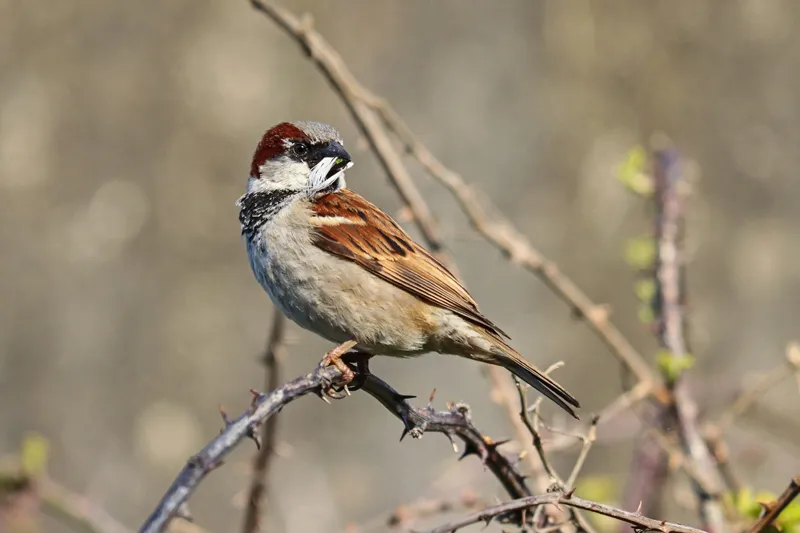 Male with nesting material*A male sparrow carrying a feather, likely to present to a potential mate.*Male with nesting material*The male continues his courtship efforts with nesting material.*
When a female approaches, the male will quiver his wings and puff out his chest feathers, emphasizing his dark bib to appear more impressive.
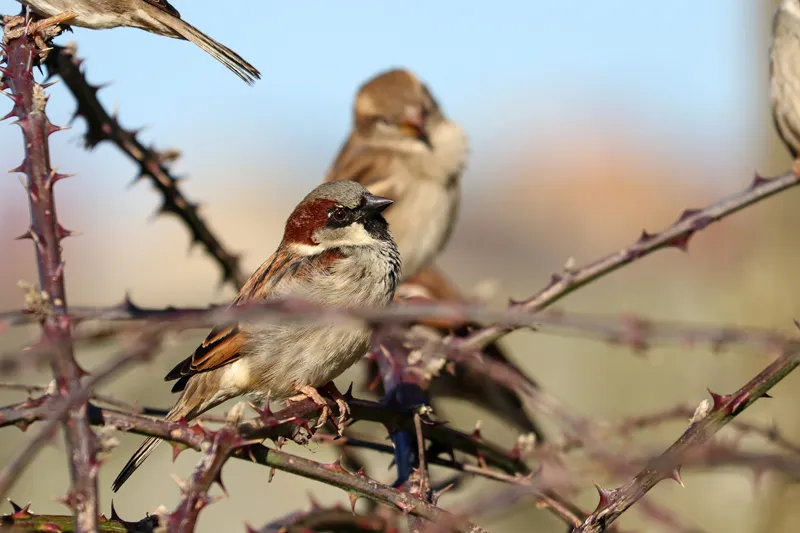 Puffed chest display*A male sparrow puffs his chest, showcasing his bib to attract a female.*
Nest Construction
The nests themselves are primarily constructed from dried vegetation, with diverse materials like fur, feathers, string, and paper used for lining, creating a warm and secure environment.
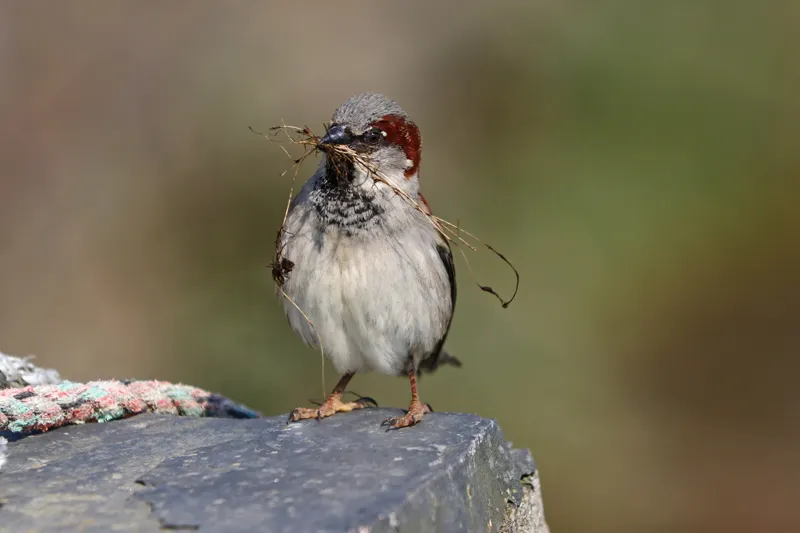 Male sparrows carrying vegetation*Male sparrows actively gathering nesting materials.*Male sparrows carrying vegetation*Continued efforts in nest construction.*
Bathing and Preening
Access to water is vital for hygiene and comfort. The sparrows utilize the high tide’s proximity for refreshing drinks and baths, always remaining close to the safety of their bramble patch.
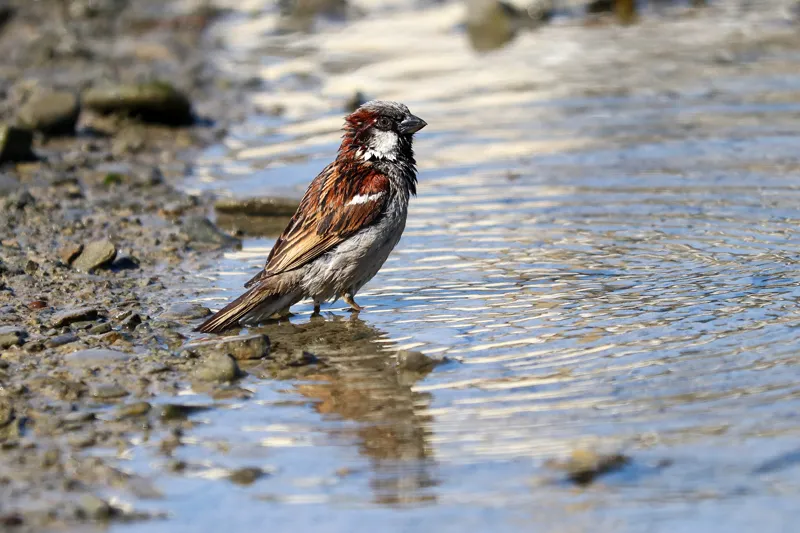 Sparrow bathing area*The water’s edge provides a convenient spot for bathing.*
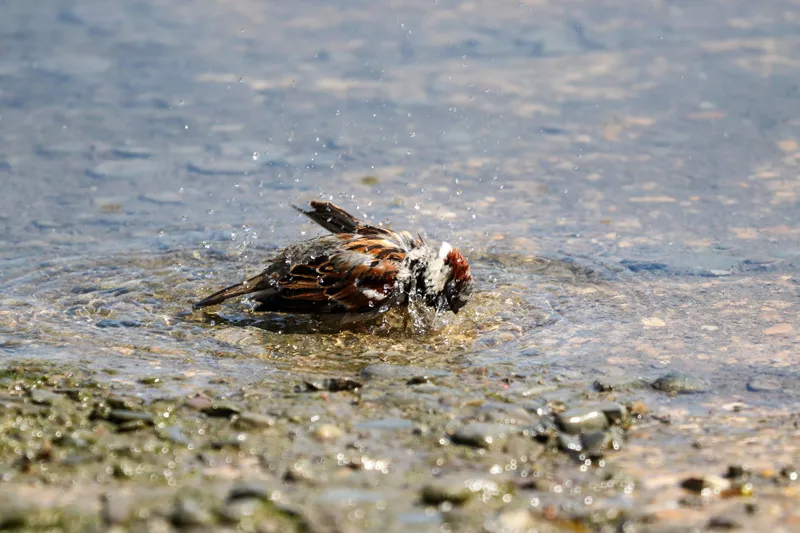 Male sparrow bathing*A male house sparrow enjoying a bath.*Male sparrow bathing*Splashing and cleaning in the water.*Male sparrow bathing*The bathing ritual continues.*
Health Observations
Some observations revealed females with bald patches around their eyes. This is often attributed to the strenuous nature of breeding and chick-rearing, which can make these small birds susceptible to external parasites like mites, leading to feather loss, particularly on the head. Despite this, the birds generally appeared to be in good health.
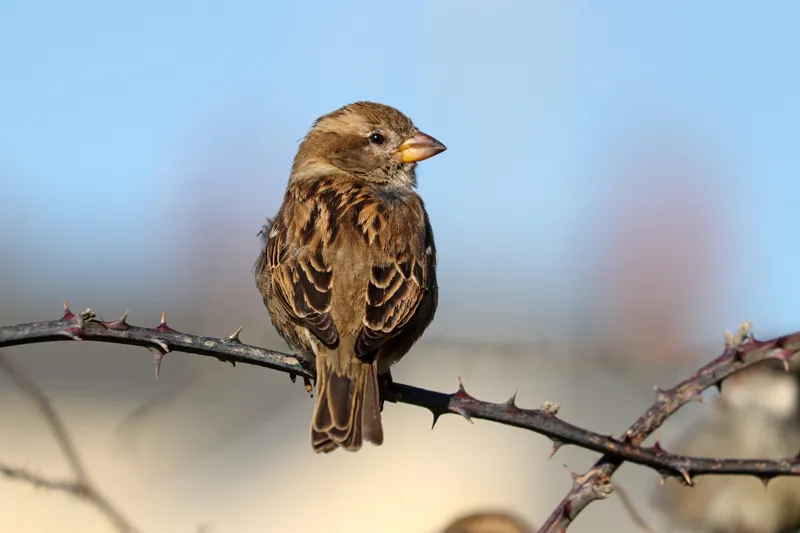 Female with bald patches*A female house sparrow showing bald patches around her eyes.*Female with bald patches*Another view of the bald patches on a female sparrow.*
Photography Challenges and Rewards
Photographing house sparrows within dense brambles presents a unique challenge, requiring patience to spot the birds and precision to focus amidst the tangled branches.
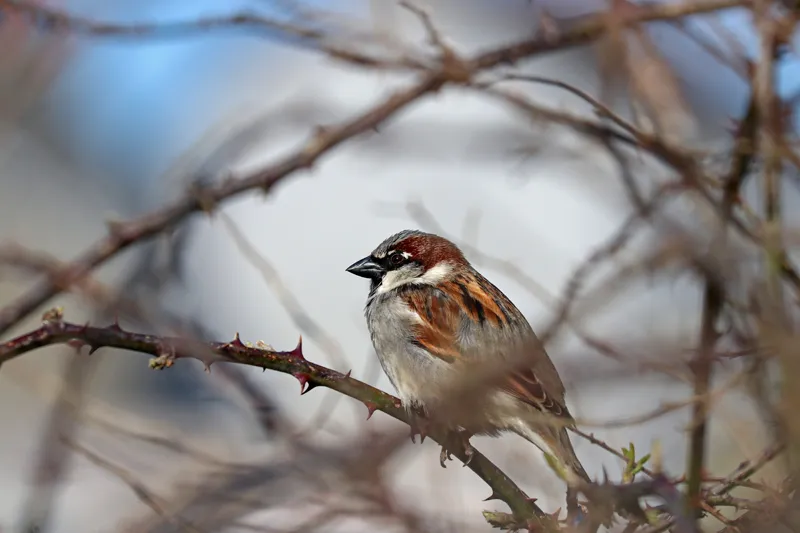 Navigating the brambles*The dense brambles make spotting and photographing sparrows difficult.*Navigating the brambles*Focusing amidst the complex network of branches.*
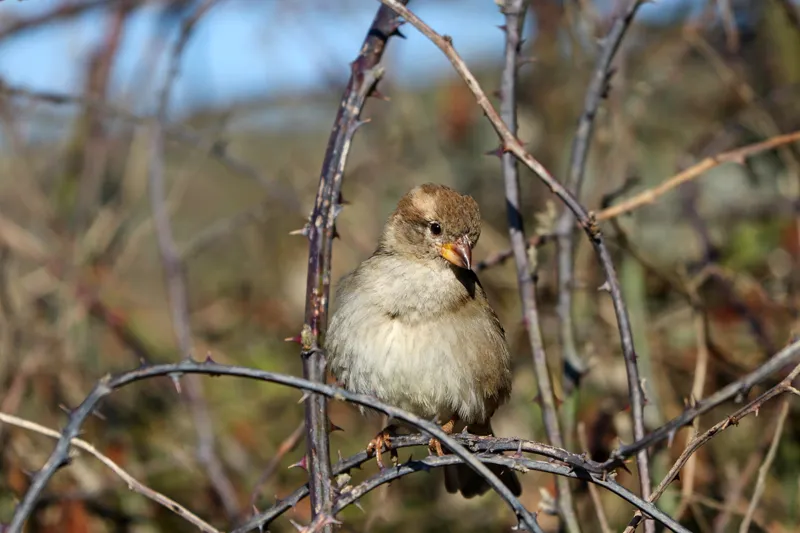 Hide and seek?*The sparrows skillfully use the foliage for cover.*Hide and seek?*A game of hide-and-seek between photographer and subject.*
Despite the challenges, the effort yields rewarding results, especially when combined with the soft light of early evening.
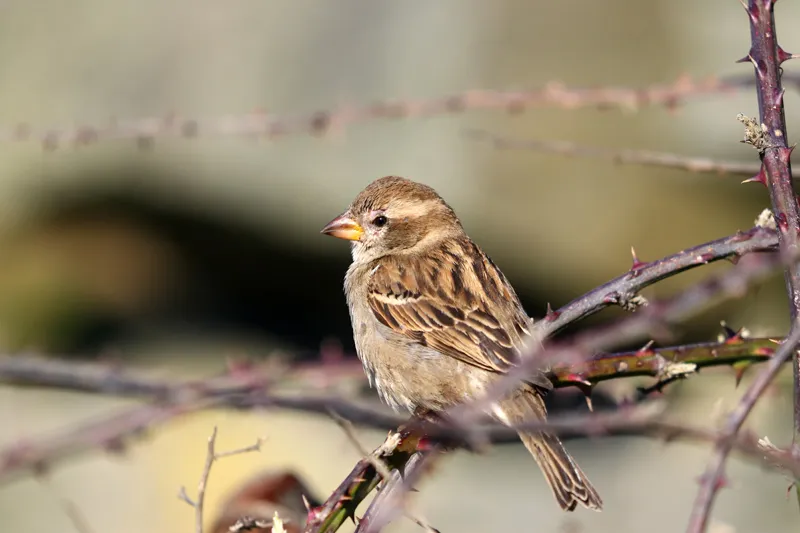 Evening light on sparrows*The warm glow of the evening light enhances the scene.*Evening light on sparrows*Capturing the sparrows in the serene evening light.*Evening light on sparrows*Beautiful shots are possible with patience and the right lighting.*Evening light on sparrows*The interplay of light and shadow.*
Occasionally, a sparrow might be found resting deep within the vegetation, appearing relaxed and perhaps enjoying a nap.
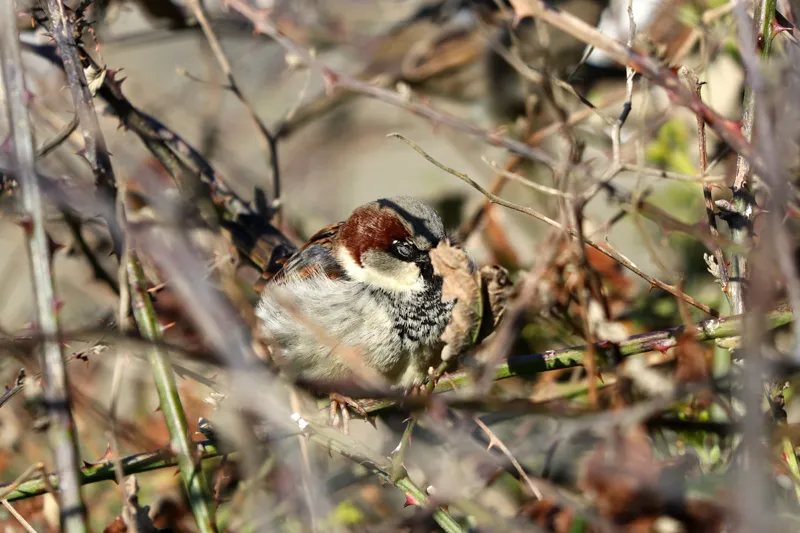 Sleeping sparrow*A house sparrow appears to be sleeping amongst the branches.*
The observation of these small birds highlights the vibrant life that exists even in commonly encountered species. Their complex social interactions, dedicated parenting, and adaptation to their environment make them a subject of enduring fascination. Understanding the secret lives of sparrows offers a valuable connection to nature, particularly during times when appreciating the natural world can significantly benefit mental well-being.
Share your own nature observations using #naturetherapy, #mentalhealth, and #neednaturenow.
All photographs copyright of Claire Stott/Grey Feather Photography © 2020.
Related
- The Secret Lives of Sparrows
