
Africa, a continent steeped in history and diverse cultures, is also the proud home to a remarkable array of unique horse breeds. For millennia, horses have played an integral role in the fabric of African life, contributing to transportation, sport, and cultural traditions. While many recognize the continent’s magnificent wildlife, fewer are aware of its distinctive equine populations, each possessing a fascinating blend of characteristics. From the endurance of the Barb to the hardiness of the Namib Desert Horse, these breeds showcase incredible speed, agility, strength, and stamina, adapted to various roles and environments across Africa. Exploring these breeds offers a glimpse into the deep connection between humans and horses on the continent. If you’re keen to learn more about horse breeds in Africa and globally, resources like amnh.org provide extensive information on the origins of the equus caballus, the single species encompassing all horses.
The Majestic Barb
The Barb, a prominent North African breed, boasts a history stretching back to the second century and achieving significant prevalence by the eighth century. While closely related to Arabians, Barbs present a less refined, more muscular physique. Discussions continue regarding their shared ancestry or if the Arabian is a descendant of the Barb. Typically standing between 14.2 and 15.2 hands, Barbs possess a muscular build, an arched neck, and elegant legs. Common coat colors include grey, black, brown, and chestnut. Their exceptional endurance makes them well-suited for endurance riding, dressage, jumping, and pleasure riding.
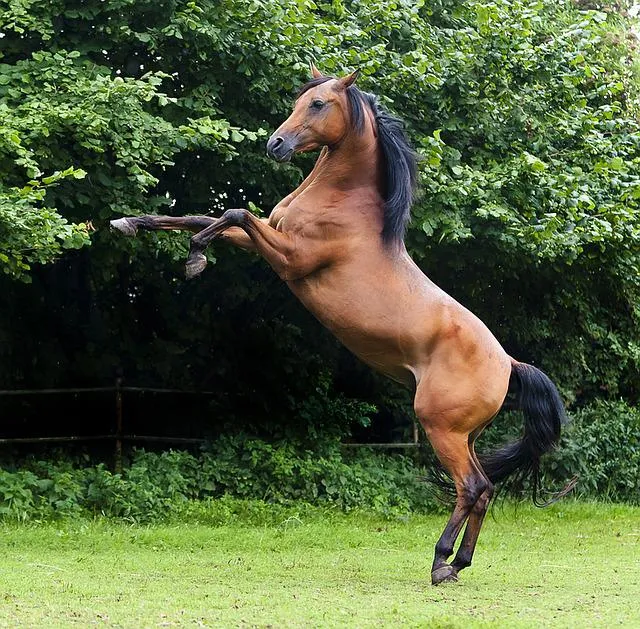 African Barb horse rearing
The Rare Nooitgedachter
Originating in South Africa, the Nooitgedachter is a product of the Cape Horse and Basuto pony cross. Established in 1951 as part of the Basuto Pony Project, this breed required meticulous attention due to prior inbreeding. With a population of only around 400, the Nooitgedachter is an uncommon and treasured breed. These horses are known for their robust, compact build, exceptional durability, and rideability. Predominantly bay, chestnut, or blue roan, they stand 13.2 to 15 hands tall and demonstrate remarkable athleticism, excelling in jumping and racing disciplines.
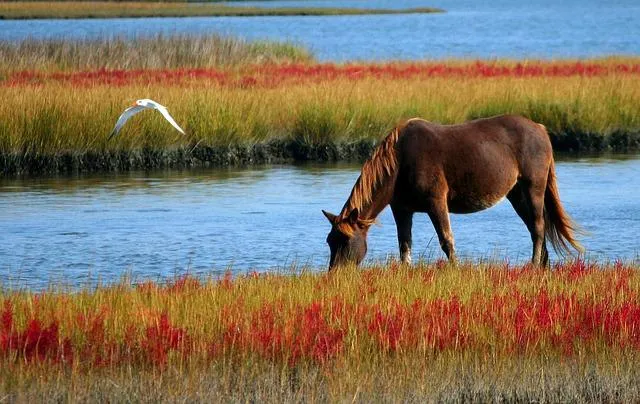 South African horse breed horse drinking water
The Historic Boerperd
Many believe the Boerperd descends from the Cape or historic Boer horse. This breed’s lineage traces back to Barb-Arabian hybrids introduced from Java, along with Andalusian and Persian Arabian influences, from 1652 to 1836. Later, from 1836 to 1899, the Cape Horse was bred with Flemish stallions. Boerperd horses are admired for their appealing, athletic physique, featuring strong, arched necks and muscular legs. They typically range from 14 to 16 hands in height and come in various colors. Their spirited nature makes them excel in fast-paced and upbeat equestrian activities.
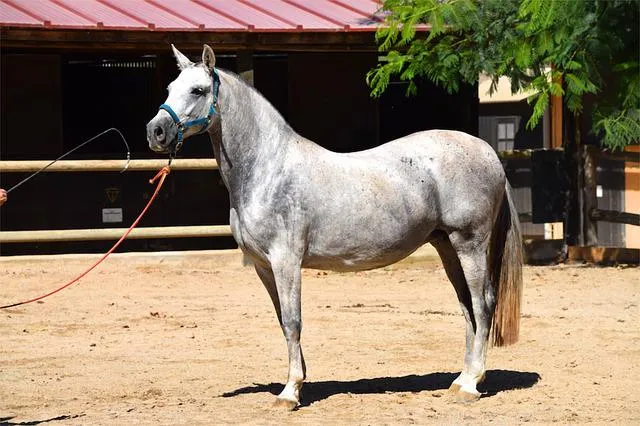 White horse stallion
The Elegant Vlaamperd
Another notable South African breed, the Vlaamperd, translates to “Flemish horse,” reflecting its significant Friesian heritage. Emerging from the now-extinct Hantam horse in the nineteenth century, these horses are a unique breed, with only a few hundred in existence. Vlaamperd horses exude a strong yet graceful presence, characterized by a well-arched neck and a refined head. Due to their Friesian background, they are predominantly black and stand between 14.2 and 15.2 hands tall. Their adaptability makes them excellent mounts for saddle seat, dressage, hunt seat, and racing.
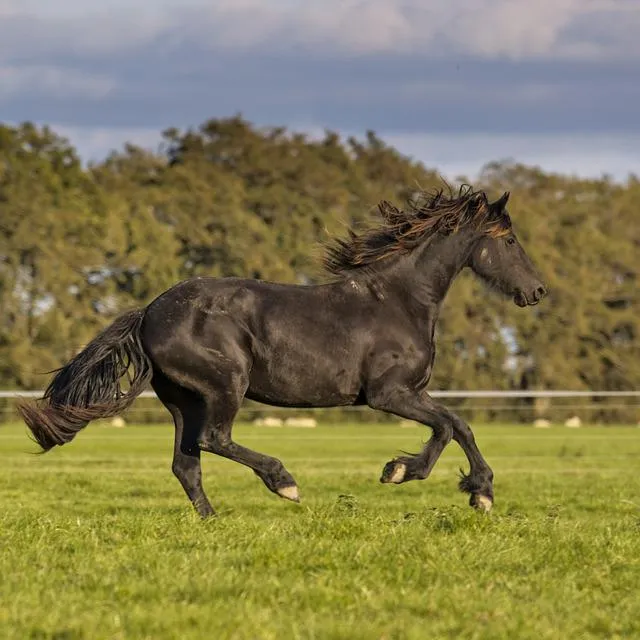 Vlaamperd horse breed galloping through green field
The Versatile Fleuve
The Fleuve, a Senegalese horse breed whose name means “big river” in French, is thought to be descended from Barb horses and local pony types. Though their precise origins are not extensively documented, Fleuve horses are highly valued in Senegal for racing, polo, dressage, and jumping, forming an integral part of the local culture. These athletic horses possess athletic builds and slender frames. Typically bay, grey, or chestnut, Fleuve horses stand between 14 and 15 hands tall.
The Resilient Dongola
Known also as the Dongolawi, the Dongola is a horse breed found in Sudan, Cameroon, and Eritrea. Their ancestry includes Iberian horses, as well as Barb and Arabian horses that were brought to Egypt in the 13th century. Once a widespread breed, even introduced to Ireland and Germany, the Dongola is less prevalent today. They are characterized by a convex profile, a light yet sturdy build, and are solid riding mounts. Usually bay, chestnut, or black, Dongola horses stand approximately 15 hands tall.
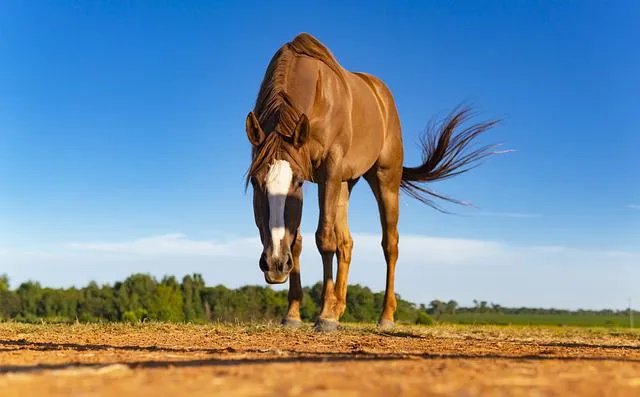 Chestnut horse grazing
The Hardy Poney du Logone
Found near the Logone River in Chad and Cameroon, the Poney du Logone is a breed highly favored by the Moussey people for both transportation and casual riding. These ponies stand around 12 hands tall and come in bay, roan, chestnut, or grey colors. They possess robust legs and a muscular neck, with a slightly convex appearance, embodying a compact and sturdy build.
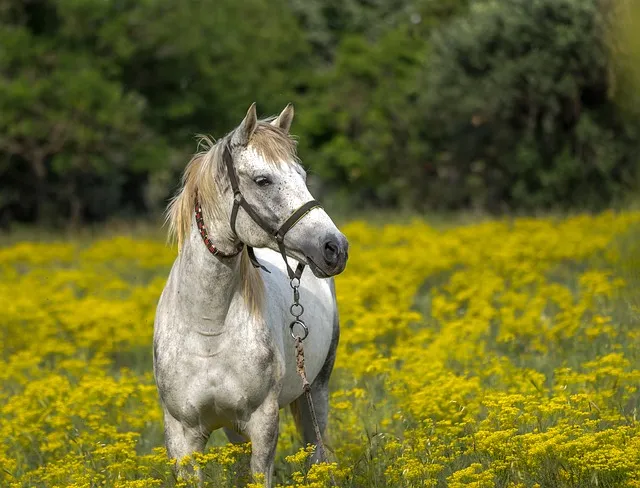 White pony grazing in the african fields
The Enigmatic Western Sudan Pony
The Western Sudan pony inhabits the southern Darfur and southwestern Kordofan regions. The exact origins of this breed are not well-documented. They often exhibit striking white markings and are typically found in bay, chestnut, or grey coat colors.
The Adaptable Abyssinian
Originating from the northern highlands of Ethiopia, the Abyssinian horse is a prevalent breed across Ethiopia and other African nations, utilized extensively for agriculture and transport. These horses were first introduced to the United Kingdom in 1861 and subsequently to America. This resilient breed thrives in hot, arid climates. As a light breed with a characteristic swayback, they stand 13 to 14 hands tall and are available in a variety of colors.
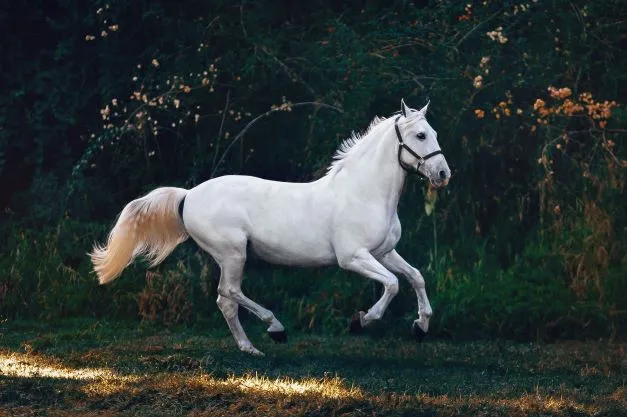 White African horse galloping
The Wild Namib Desert Horse
Namibia’s Namib Desert is home to the Namib Desert Horse, Africa’s only remaining wild horse breed. While their precise origins remain a mystery, it is widely believed they are descendants of German army and riding horses that survived World War I. These horses have adapted remarkably to the harsh desert environment, proving to be strong and hardy. The wild population numbers between 90 and 150 individuals.
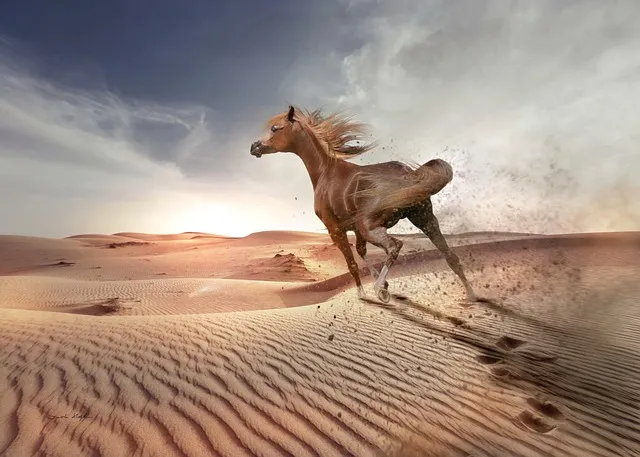 African Namib Desert horse galloping through dunes
The Namib Desert Horse is a light, athletic breed, often compared to European sport horses. Some individuals display dorsal stripes and are typically bay or chestnut in color. Known for their agility, intelligence, and spirited nature, these horses require a rider who is confident and ready for adventure, as they are exceptionally quick. For those interested in learning more about miniature horse breeding age, understanding the factors that contribute to a horse’s development is key.
Questra’s African Horse Breeds Verdict
Africa boasts a diverse tapestry of horse breeds, each distinguished by unique traits and capabilities. Whether destined for riding or agricultural work, these equine partners are exceptionally well-suited to life on the continent, making significant contributions to local communities. If your travels ever take you through Africa and you consider embarking on a horseback adventure, recall this guide to some of the most iconic African breeds and seek them out in person. The Questra team hopes you found this exploration enlightening and enjoyable. Should you own an African horse, we encourage you to send us some photos or share your magnificent steed using the hashtag #questraadventure on your next Instagram post!
