
Welcoming a small breed dog into your home brings immense joy, but it also comes with a unique set of dietary considerations, especially when it comes to maintaining a healthy weight. Small dog breeds, due to their faster metabolisms and often less active lifestyles compared to their larger counterparts, can be prone to weight gain if their diet isn’t precisely managed. This guide delves into why specialized Small Breed Healthy Weight Dog Food is crucial, highlighting the essential ingredients and nutritional approaches that can help your pint-sized companion thrive and maintain an ideal body condition. Understanding these specific needs is the first step in ensuring a long, energetic, and healthy life for your beloved pet.
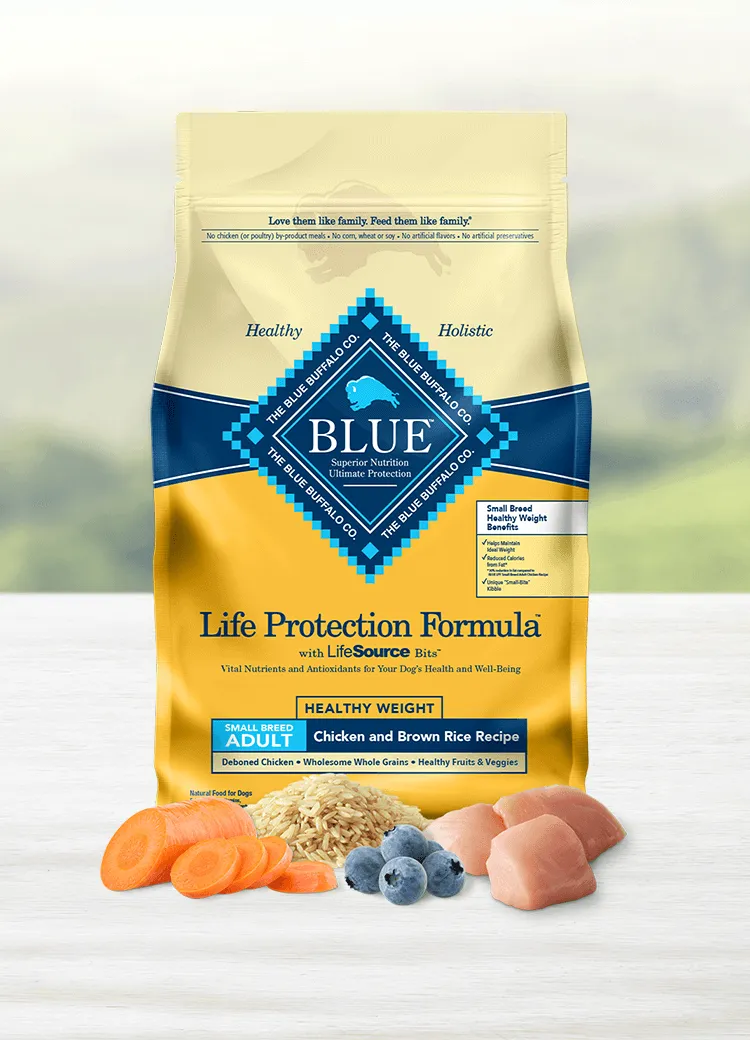 Blue Buffalo Life Protection Formula small breed healthy weight chicken and brown rice dog food bag
Understanding Small Breed Nutritional Needs
Small breed dogs often have higher energy needs per pound of body weight but consume less food overall. This means their diet must be nutrient-dense without being calorie-dense. They can also be more susceptible to issues like canine obesity, which can lead to further health complications, including joint problems and heart issues. A diet specifically formulated for healthy weight management helps address these concerns by providing balanced nutrition that supports their active metabolism, maintains muscle mass, and keeps them feeling full and satisfied, thereby preventing overeating. Ensuring they receive proper nutrition is as vital as considering generic heartworm prevention for dogs for their overall well-being.
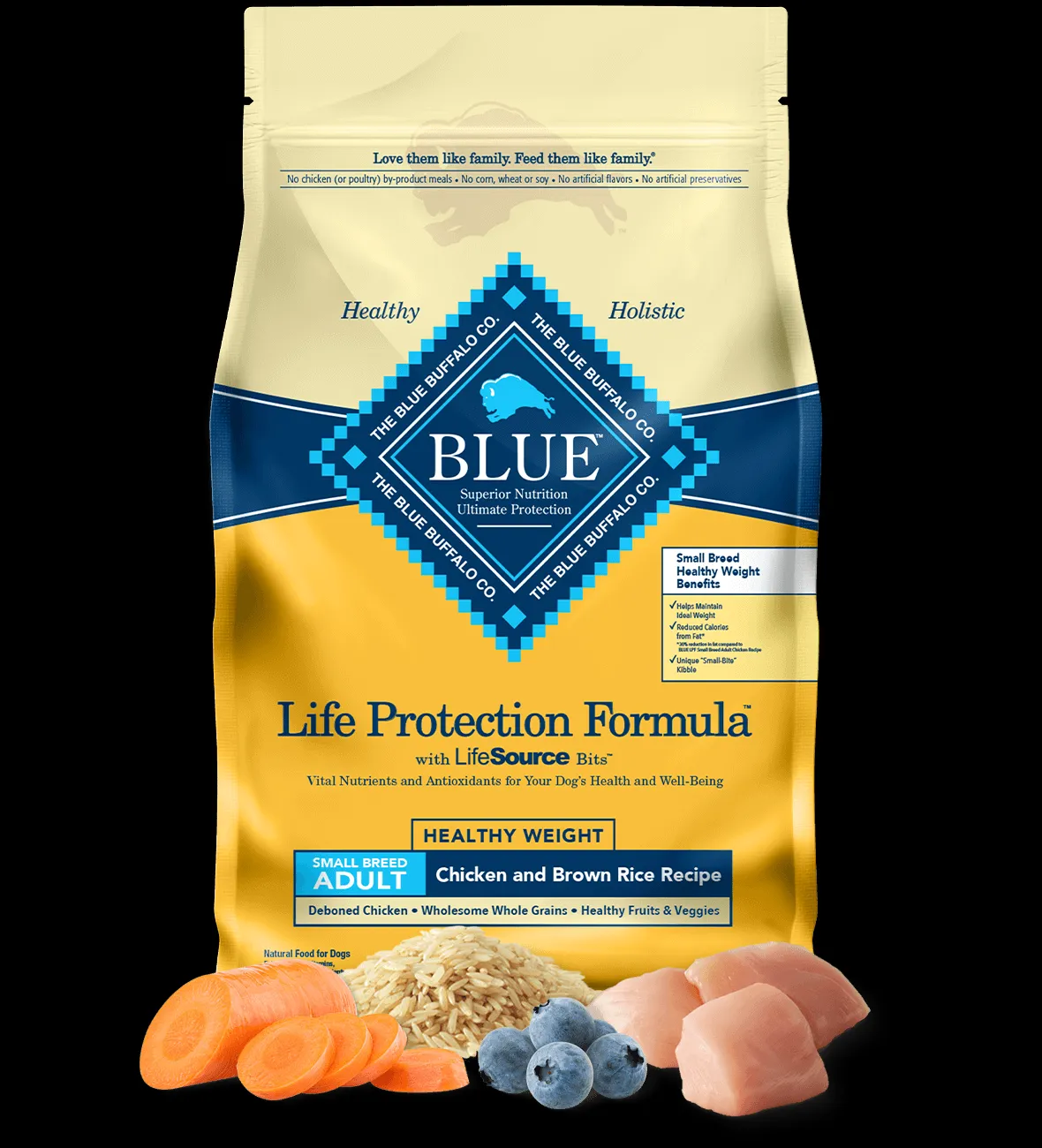 Large bag of Blue Buffalo small breed adult healthy weight dog food with chicken and brown rice
Key Ingredients for Healthy Weight Management in Small Breeds
The foundation of a high-quality small breed healthy weight dog food lies in its ingredients. Look for formulations that prioritize natural, wholesome components designed to support optimal health and weight.
Quality Proteins for Lean Muscle
Deboned chicken and chicken meal are excellent sources of protein that support muscle development and provide sustained energy. For small dogs managing their weight, maintaining lean muscle mass is crucial as muscle burns more calories than fat. Protein also contributes to satiety, helping your dog feel full longer.
 Close-up of cooked chicken, a primary protein source in small breed healthy weight dog food
Wholesome Complex Carbohydrates
Ingredients like brown rice offer natural whole grains, essential B vitamins, minerals, and complex carbohydrates. These provide a steady release of energy and are a good source of fiber, aiding digestion and promoting a feeling of fullness without excess calories.
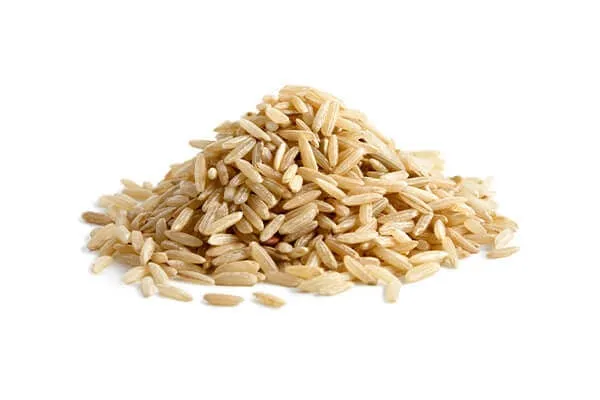 Pile of brown rice grains, a source of complex carbohydrates for dog weight management
Healthy Fats and Omega Fatty Acids
Flaxseed is a prime example of an ingredient rich in essential omega-3 fatty acids. These are vital for promoting healthy skin and a shiny coat, and they also contribute to overall cellular health. A balanced intake of healthy fats is essential, even in weight management formulas, as it supports nutrient absorption and palatability. For dogs with specific dietary needs, exploring options like natural food diet for dogs can also be beneficial.
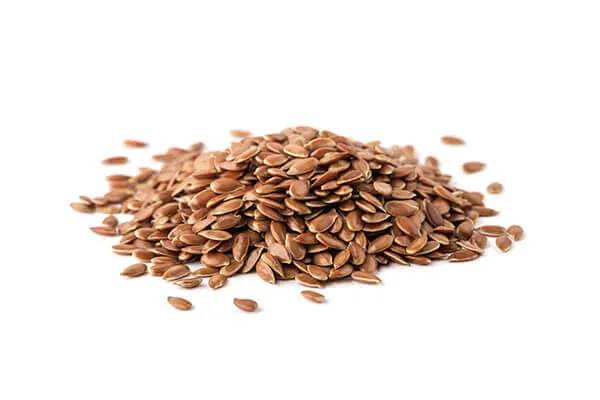 Golden flaxseeds, providing essential omega-3 fatty acids for a healthy dog coat
Fiber-Rich Vegetables
Carrots are an excellent source of beta carotene, fiber, vitamin K1, potassium, and antioxidants. Fiber is crucial for digestive health and helps dogs feel satisfied with less food, which is key for weight management.
 Freshly chopped carrots, rich in fiber and beta carotene for small dog health
L-Carnitine for Metabolic Support
L-carnitine is an important amino acid that plays a vital role in fat metabolism, helping the body convert fat into energy. Its inclusion in a healthy weight dog food formula can significantly support weight management efforts in small breeds.
 L-Carnitine icon, crucial for healthy weight management in small dog breeds
Joint Support for Small Breeds
While often associated with large breeds, glucosamine can also benefit small dogs, especially as they age or if they are carrying extra weight, which can put stress on their joints. It’s a natural compound supporting connective tissue and joint health. In addition to diet, some dogs may benefit from supplements like probiotic dog chews for allergies for holistic well-being.
 Glucosamine icon representing joint support for active and aging small breed dogs
The Importance of Antioxidant-Rich LifeSource Bits™
Some premium dog foods include exclusive blends of antioxidants, vitamins, and minerals, often referred to as “LifeSource Bits” or similar concepts. These carefully selected nutrients, often chosen by veterinarians and animal nutritionists, support:
- Immune system health
- Specific life stage requirements
- Healthy oxidative balance
To preserve their potency, these nutrient-rich components are often cold-formed. This manufacturing process minimizes exposure to high heat, much like cooking vegetables at lower temperatures helps retain more heat-sensitive nutrients, ensuring your small dog receives the full benefit of these vital ingredients.
 LifeSource Bits kibble mixed with regular kibble, illustrating antioxidant-rich dog food
What to Look for: A “True BLUE” Standard for Quality
When selecting small breed healthy weight dog food, look for a commitment to natural, wholesome ingredients and the exclusion of potentially harmful additives. A reputable brand often adheres to standards such as:
- Real deboned meat as the first ingredient.
- NO chicken (or poultry) by-product meals.
- NO corn, wheat, or soy, which can be common allergens or fillers.
- NO artificial flavors or preservatives.
These commitments ensure that the food provides superior nutrition tailored for your dog’s needs, focusing on purity and quality.
 True Blue Promise shield graphic, emphasizing natural and wholesome ingredients for dog food
Practical Feeding Guidelines for Small Breeds
Accurate portion control is paramount for weight management. Always refer to the specific feeding guidelines provided on the dog food packaging, as requirements vary based on your dog’s weight, age, activity level, and whether they are aiming for weight reduction or maintenance.
Example Feeding Chart (General Guidance):
| Weight (lbs.) | Weight Reduction (Cups per day) | Weight Maintenance (Cups per day) |
|---|---|---|
| Up to 5 | ¼ – ½ | ¼ – ½ |
| 6 to 10 | ½ – ¾ | ½ – 1 |
| 11 to 15 | ¾ – 1 | 1 – 1 ¼ |
| 16 to 20 | 1 – 1 ¼ | 1 ¼ – 1 ¾ |
| 21 to 25 | 1 ¼ – 1 ½ | 1 ¾ – 2 |
| 26 to 30 | 1 ½ – 1 ¾ | 2 – 2 ¼ |
(Use a standard 8-oz. measuring cup. Individual dog’s requirements may vary. Consult your veterinarian for precise recommendations.)
Calorie Content: Pay attention to the calorie content (kcal/kg or kcal/cup) listed on the packaging. For example, 3,334 kcal/kg, 347 kcal/cup indicates the energy density of the food.
Meal Frequency: Many small adult dogs do well with one meal per day, though some prefer two smaller meals. Consistency is key.
Transitioning to New Food: Introduce new food gradually over 7-14 days. Start by mixing 25% new food with 75% old food, slowly increasing the proportion of the new food each day to prevent digestive upset.
Preparation Options: Dry kibble can be served as is or moistened with warm water to enhance flavors and aroma, which can be appealing to picky eaters.
Fresh Water: Always ensure a clean bowl of cool, fresh water is available at all times. Hydration is crucial for all bodily functions, especially when managing weight. While selecting a good diet, also consider healthy dog treats for puppies that align with weight management goals.
Guaranteed Analysis: What the Numbers Mean
A small breed healthy weight dog food should also provide a transparent guaranteed analysis, which outlines the minimum or maximum percentages of key nutrients. For adult dogs, the nutritional levels established by the AAFCO Dog Food Nutrient Profiles for maintenance are a good benchmark.
Example Guaranteed Analysis:
| Ingredient | Percentage |
|---|---|
| Crude Protein | 25.0% min |
| Crude Fat | 10.0% min |
| Crude Fat | 13.0% max |
| Crude Fiber | 8.0% max |
| Moisture | 10.0% max |
| Calcium | 1.1% min |
| Phosphorus | 0.8% min |
| Omega 3 Fatty Acids* | 0.3% min |
| Omega 6 Fatty Acids* | 2.0% min |
| L-Carnitine* | 100 mg/kg min |
| Glucosamine* | 400 mg/kg min |
| Chondroitin Sulfate* | 300 mg/kg min |
(Note: Ingredients marked with * are not recognized as essential nutrients by the AAFCO Dog Food Nutrient Profiles, but are often added for specific health benefits.)
Understanding these metrics allows you to confirm that the food meets the necessary nutritional standards for your small breed’s health, even for specific conditions like those requiring blue buffalo kidney support dog food.
Conclusion
Choosing the right small breed healthy weight dog food is a proactive step towards ensuring your cherished companion lives a full, vibrant life. By focusing on formulations with high-quality protein, balanced carbohydrates, essential fatty acids, and key supplements like L-carnitine and glucosamine, you provide a strong nutritional foundation. Always pay attention to feeding guidelines, understand the guaranteed analysis, and consult your veterinarian for personalized dietary advice. With careful attention to their unique needs, your small breed dog can maintain an optimal weight, enjoy robust health, and bring boundless joy to your family for years to come.
