
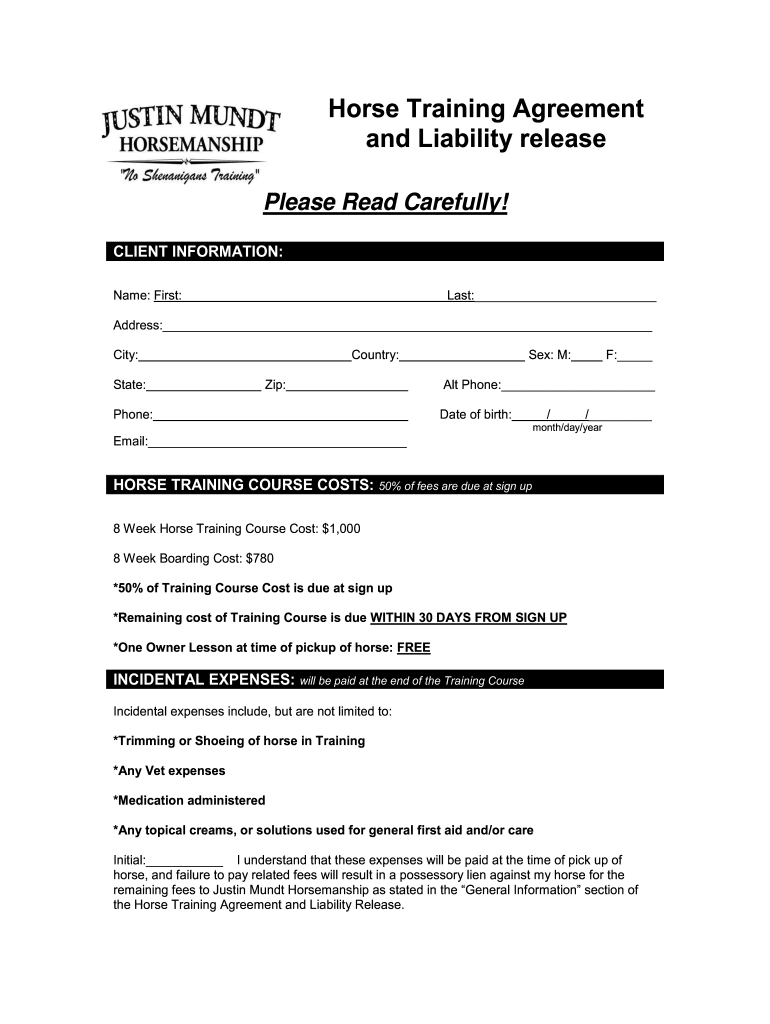
A horse training contract is an essential document that outlines the terms and conditions between a horse owner and a trainer. It serves as a legal framework, ensuring that both parties understand their responsibilities and expectations throughout the training process. Utilizing a well-drafted contract can prevent misunderstandings and disputes, fostering a clear and professional relationship.
Why You Need a Written Horse Training Contract
While verbal agreements might seem sufficient for those who know each other well, a written contract provides crucial clarity and protection for both the owner and the trainer. It documents the agreed-upon services, fees, and timelines, minimizing the risk of future disagreements. For instance, a contract can specify the exact training services to be provided, the frequency of sessions, and who will be conducting the training. This detail is important, as some trainers may delegate much of the work to assistants, while others prefer to handle all training personally.
Moreover, a contract can detail all associated costs beyond the basic training fee, such as charges for extra hay, holding the horse for veterinary or farrier appointments, blanketing, or grooming. Clearly defining these “side charges” upfront prevents surprises when invoices are issued. It also establishes payment schedules and methods, ensuring timely payments and avoiding potential interest charges on overdue balances, which may be legally enforceable if stipulated in the contract.
Key Elements of a Horse Training Contract
A comprehensive horse training contract should include several critical components to ensure all aspects of the agreement are covered:
1. Identification of Parties and Horse
- Parties Involved: Clearly state the full legal names and contact information of both the horse owner(s) and the trainer(s). If the owner is a minor, include the parent or legal guardian’s information.
- Horse Description: Provide a detailed description of the horse, including its name, breed, age, sex, color, registration number, and any unique identifying features. It’s also beneficial to include approximate value and insurance details if applicable.
2. Scope of Services and Training Objectives
- Training Services: Define the specific training services to be provided. This can range from basic groundwork and riding lessons to advanced discipline-specific training or behavioral correction.
- Training Goals: Clearly articulate the desired outcomes of the training program. This could involve improving performance in a specific discipline, addressing behavioral issues, or preparing the horse for sale or competition. Ideally, the achievement of a specific training goal should be explicitly agreed upon.
- Daily Routine: Specify the expected daily training schedule, including the duration and methods to be used. This clarifies how many hours of training the horse will receive and the approach the trainer will take.
3. Fees, Payment Terms, and Billing
- Training Fees: Outline the total training fee, which can be structured as a daily, weekly, monthly, or per-session rate. The contract should specify whether payment is due in advance for each training period.
- Payment Schedule: Detail the payment schedule, including due dates and acceptable payment methods (e.g., check, credit card, bank transfer).
- Late Payment Penalties: Specify any charges or penalties for late payments.
- Additional Expenses: Clearly list any additional expenses the owner is responsible for, such as feed, supplements, medications, veterinary care, shoeing, and transportation. The contract should clarify who is responsible for arranging and authorizing these services.
- Billing Procedures: Explain how and when invoices will be issued and the expected timeframe for payment.
4. Duration and Termination
- Contract Term: Specify the start and end dates of the training agreement. This can be a fixed period or ongoing until terminated by either party.
- Termination Clause: Outline the conditions under which either the owner or the trainer can terminate the agreement. This typically includes a requirement for written notice and may specify grounds for immediate termination, such as a breach of contract.
5. Liability, Insurance, and Risk of Loss
- Liability Release: This is a critical section addressing liability in case of injuries or accidents involving the horse, trainer, owner, or any other party. It clarifies who will bear the costs associated with damages and may include a hold harmless agreement.
- Veterinary and Farrier Care: The contract should specify how veterinary and farrier services will be handled. This includes who is authorized to arrange for routine and emergency care, any spending limits for emergency treatments without owner consent, and who is responsible for the associated costs.
- Insurance: The owner may be required to maintain specific insurance coverage for the horse and provide proof of insurance to the trainer.
- Risk of Loss: The agreement can address the risk of loss or injury to the horse while in the trainer’s care, often stating that the trainer is not liable for sickness, death, or injury unless it arises from willful negligence.
6. Trainer’s Responsibilities and Facilities
- Care of the Horse: The trainer agrees to provide reasonable care for the horse’s health and well-being, including managing feeding schedules and maintaining facilities.
- Facilities: The owner typically acknowledges inspecting the trainer’s facilities and finding them safe and adequate.
- Use of Assistants: If it matters to the owner, the contract can specify whether the trainer will personally conduct the training or if assistants may be used.
7. Owner’s Responsibilities
- Health and Vaccinations: The owner is responsible for ensuring the horse is in good health, up-to-date on vaccinations, and has received necessary veterinary and farrier care. Proof of these may be required.
- Equipment: The owner may be responsible for providing specific equipment or ensuring it is in good condition.
8. Governing Law and Dispute Resolution
- Governing Law: Specify the state laws that will govern the agreement.
- Dispute Resolution: Outline the process for resolving any disputes that may arise, such as mediation or arbitration.
Best Practices for Drafting and Using a Horse Training Contract
- Be Specific: Vague language can lead to misunderstandings. Clearly define all terms, services, and responsibilities.
- Use Clear Language: Avoid jargon where possible, or explain technical terms.
- Consult an Attorney: For complex agreements or high-value horses, it’s advisable to have an attorney specializing in equine law review or draft the contract.
- Keep Records: Maintain copies of the signed contract, all invoices, payment records, and any correspondence related to the training.
- Review Regularly: Periodically review the contract, especially if the training situation changes or extends beyond the initial term.
By implementing a simple yet thorough horse training contract, both horse owners and trainers can establish a solid foundation for a successful and mutually beneficial training relationship.
