
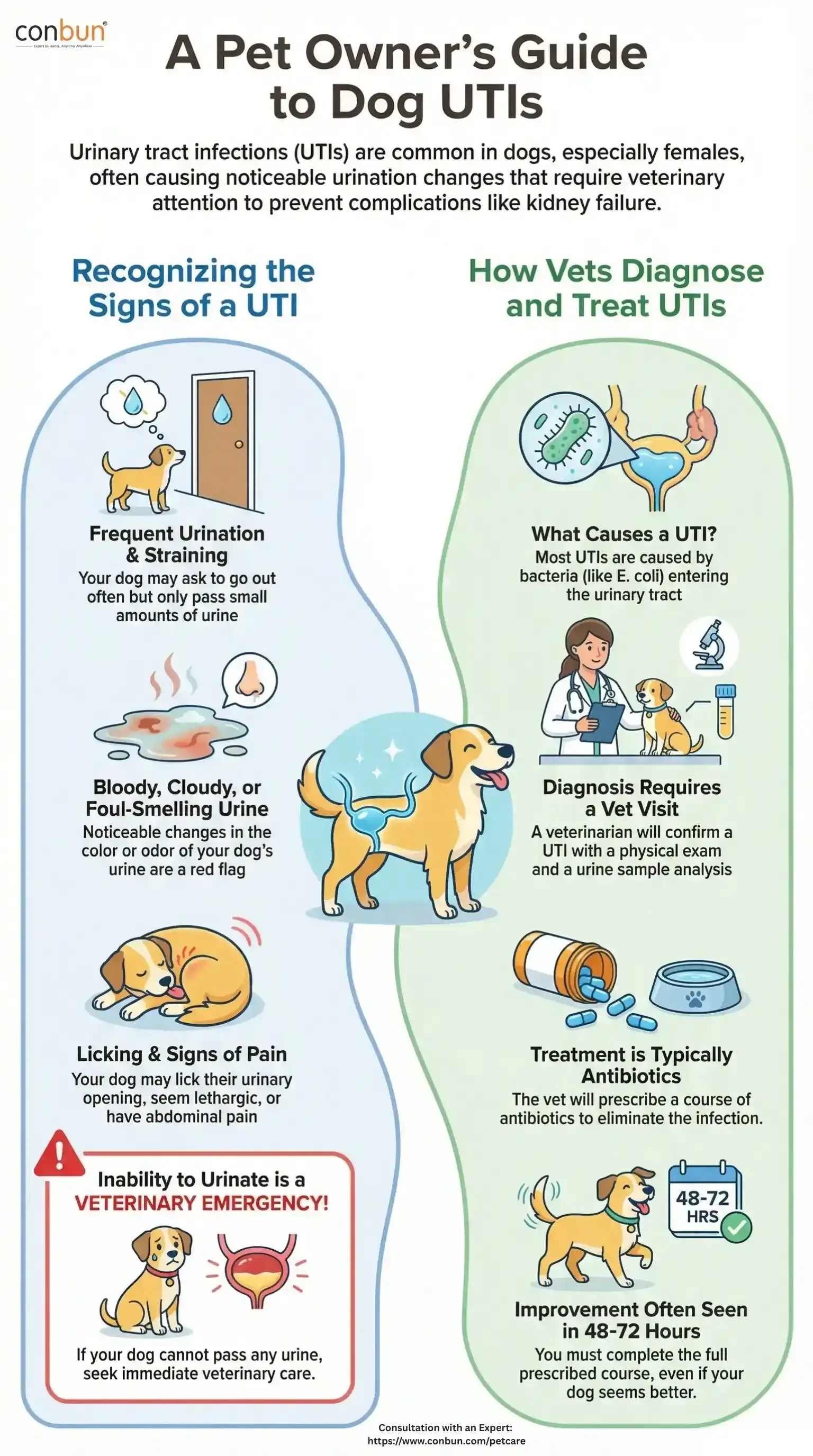
Urinary tract infections (UTIs) are a common concern for dog owners, often manifesting as a dog repeatedly squatting to urinate with little success. These infections, while frequent, especially in senior dogs or those with specific physical traits, can be effectively managed with prompt veterinary attention. Recognizing the signs and understanding the causes are crucial for ensuring your canine companion receives the care they need to avoid more serious health complications. This article aims to provide comprehensive information on UTIs in dogs, covering their symptoms, causes, diagnosis, treatment, and prevention strategies.
Key Takeaways
- Urinary tract infections (UTIs) in dogs are frequently caused by bacteria migrating from the external environment into the urinary tract, primarily affecting the bladder.
- Key symptoms include increased urinary frequency, straining or discomfort during urination, producing only small amounts of urine, and sometimes the presence of blood or an unusual odor in the urine.
- Early veterinary diagnosis and treatment are paramount. UTIs can lead to severe health issues if left unaddressed, and effective management typically involves antibiotics and ongoing monitoring.
What Are Urinary Tract Infections (UTIs) in Dogs?
A urinary tract infection (UTI) in dogs is a prevalent condition encountered in veterinary practice, affecting approximately 14% of the canine population. These infections typically arise when bacteria, commonly found on the skin or near the rectal area, ascend through the urethra and into the bladder. While less common, viral and fungal infections can also lead to UTIs in dogs. The inflammation and swelling of the bladder caused by a UTI result in noticeable symptoms, such as painful or bloody urination.
Types of UTIs in Dogs
UTIs in dogs can be categorized into two main types:
- Simple or Uncomplicated (Sporadic Cystitis): This occurs when there are no underlying predisposing factors or other health conditions, and the dog has experienced fewer than three UTIs in the preceding 12 months.
- Complicated or Recurrent: This type is observed in dogs with underlying medical conditions, predisposing causes, recent antibiotic use, or those experiencing more than three UTIs within a 12-month period.
It is important to note that a UTI in a dog can escalate into a veterinary emergency. If left untreated, these infections can result in severe complications, including pyelonephritis (a kidney infection), sepsis, and ultimately, kidney failure.
Symptoms of UTIs in Dogs
The signs of a UTI in dogs can vary, but common indicators include:
- Painful urination (dysuria): Your dog may whine, yelp, or show reluctance when urinating.
- Passage of small amounts of urine: You might notice dribbling or only very small amounts of urine being passed.
- Urinary accidents: Dogs that are typically house-trained may suddenly start having accidents indoors.
- Licking the genital region: Excessive licking of the vulva or genital area, sometimes leading to salivary staining (a copper color on the fur).
- Inflammation: Swelling of the genital region may be observed.
- Bloody urination: Blood may be visible in the urine.
- Increased odor of urine: The urine may have a stronger or more unpleasant smell than usual.
In more severe or untreated cases, additional symptoms may emerge, such as a fever.
Causes of UTIs in Dogs
The primary culprits behind most UTIs in dogs are bacteria that normally reside on the skin or in the rectal area, which then travel up the urethra. Viral and fungal infections are less common causes. Some of the most frequently identified bacteria include Staphylococcus, Enterococcus, Enterobacter, and Proteus spp.
Risk Factors That Increase UTI Likelihood
While any dog can develop a UTI, certain factors increase the risk:
- Sex: Female dogs are more prone to UTIs than male dogs due to their shorter urethras.
- Age: Middle-aged to older dogs are at higher risk.
- Immune Status: Immunocompromised dogs are more susceptible.
- Comorbidities: Dogs with underlying health conditions such as Cushing’s disease, diabetes mellitus, or kidney disease have an increased risk.
- Breed Predisposition: Certain breeds are more prone to developing crystals and bladder stones, which can predispose them to UTIs. These include Dalmatians and Shih Tzus.
Health Conditions That Can Cause UTIs
Specific health issues can contribute to the development of UTIs in dogs:
- Urinary incontinence: Involuntary loss of urine can create an environment where bacteria can thrive.
- Vulvar conformation: Conditions like hooded or recessed vulvas in female dogs can trap moisture and bacteria, increasing infection risk.
- Tumors: Polyps or other growths within the urinary tract can interfere with normal function and predispose to infection.
How Veterinarians Diagnose UTIs in Dogs
Veterinary diagnosis of a UTI typically involves a multi-faceted approach:
- Physical Examination: The veterinarian will examine the dog’s urinary tract and genitalia for any signs of disease or inflammation.
- Abdominal Palpation: Gently feeling the abdomen can help determine if the bladder is enlarged or painful.
- Urinalysis and Culture: This is a critical step. Urine is collected and sent to a laboratory to identify the specific bacteria present and determine which antibiotics will be most effective.
- Rectal Examination (Males): In male dogs, a rectal exam may be performed to palpate the lower urinary tract and prostate.
- Blood Work: Blood tests can provide information about the dog’s overall health and kidney function.
For complex or persistent cases, further diagnostics like a bladder biopsy, prostatic wash, or prostate cytology might be recommended.
Treatment of UTIs in Dogs
The cornerstone of UTI treatment in dogs is antibiotics. Your veterinarian will prescribe a broad-spectrum antibiotic for a specific duration, usually several days.
For complicated UTIs, antibiotic treatment may be extended for several weeks, and importantly, the underlying or predisposing cause must also be addressed. If bladder stones or crystals are present, treatment might involve surgery or a special dissolution diet, such as Royal Canin® S/O or Hill’s s/d, designed to break down certain types of stones or crystals.
In cases involving polyps or cancerous masses, surgical removal or chemotherapy might be necessary. Similarly, conditions like ectopic ureters may require surgical correction. If underlying health issues like diabetes or Cushing’s disease are contributing factors, managing these conditions more effectively is also crucial.
To alleviate discomfort and inflammation associated with a UTI, your veterinarian may also prescribe pain medications, such as Non-Steroidal Anti-Inflammatory Drugs (NSAIDs) like Rimadyl (carprofen).
Recovery and Management of UTIs in Dogs
Many dogs begin to show improvement within a few days of starting the appropriate antibiotic. However, it is critically important to complete the entire course of antibiotics as prescribed, even if your dog seems to have recovered. Stopping treatment early can lead to the infection returning or developing resistance to antibiotics.
Your veterinarian may recommend a follow-up urine test a few weeks after completing the antibiotic course to ensure the infection has been fully eradicated. Hospitalization is rarely necessary for uncomplicated UTIs.
For dogs with complicated UTIs, repeated urine cultures during and after treatment may be advised. If a diet change was recommended to manage stones or crystals, adhering to this new diet is essential after a gradual transition period. Encouraging increased water intake can also help by promoting more frequent urination, which reduces the chance of crystals forming into stones. Canned veterinary diets, such as Hill’s c/d urinary care, are beneficial as they have a higher moisture content.
Prevention of UTIs in Dogs
While not all UTIs can be prevented, certain measures can help reduce the risk:
- Hygiene for Females with Recessed Vulvas: For female dogs prone to UTIs due to hooded or recessed vulvas, regular cleaning with pet wipes (such as unscented Earth Rated Thick Hypoallergenic Dog Grooming Wipes) after urination can help prevent bacterial buildup. Medicated wipes, like Douxo S3 Pyo Antiseptic Antifungal Wipes, may be recommended by your vet for dogs with recessed vulvas that tend to trap bacteria and yeast.
- Surgical Correction: Discuss with your veterinarian the potential benefits of surgery to correct hooded vulvas, which can significantly decrease a dog’s UTI risk.
- Encourage Hydration: Ensure your dog has constant access to fresh water. Consider a pet water fountain, as some dogs are encouraged to drink more from them. Frequent potty breaks also help flush the urinary system.
UTIs in Dogs FAQs
How can you tell if your dog has a UTI?
Common signs include increased frequency of urination, straining or appearing to be in pain while urinating, experiencing urinary accidents, or noticing blood in the urine.
Can a dog’s UTI resolve on its own?
Symptomatic UTIs in dogs require veterinary treatment, including prescription antibiotics and potentially other medications like pain relievers, probiotics, or dietary changes. Left untreated, a UTI can progress to life-threatening conditions such as pyelonephritis (kidney infection), sepsis, or kidney failure.
How can I treat my dog’s urine infection at home?
While probiotics and cranberry extract (like Nutramax Crananidin) are sometimes suggested for dogs with UTIs, scientific evidence for their effectiveness is limited, and they may not always succeed. It is best to consult your veterinarian for diagnosis and treatment. UTIs are most effectively managed under veterinary supervision.
References
Byron JK. Urinary Tract Infection. The Veterinary Clinics of North America. Small Animal Practice. 2019;49(2), 211–221.
Seguin MA, et al. Persistent Urinary Tract Infections and Reinfections in 100 Dogs (1989–1999). Journal of Veterinary Internal Medicine. 2003;17, 622–631.
Yogeshpriya S, Pillai UN, Ajithkumar S, Unny M. Clinico-Haemato-Biochemical Profile of Dogs with Urinary Tract Infection: A retrospective study of 32 cases (2010–2012). International Journal of Current Microbiology and Applied Sciences. 2018;7(9), 2797–2802.
