
Caring for a budgie involves more than just providing food, water, and a clean cage. Recognizing the subtle signs that your feathered friend might be unwell is crucial for their well-being. Early detection and prompt care can make a significant difference in their recovery. This guide outlines common indicators of illness in budgies and provides essential steps for caring for a sick bird.
Recognizing the Signs of an Unwell Budgie
Budgies, being small prey animals, often try to hide signs of illness. However, by being observant, you can spot these subtle indicators:
- Increased Lethargy: A healthy budgie is typically active and curious. If your bird appears unusually tired, motionless, and shows a lack of interest in their usual activities or surroundings, it could be a sign of illness.
- Sleeping During the Day: While occasional daytime naps can occur due to external disturbances, prolonged sleepiness during the day, especially if you can rule out nighttime disruptions, is a cause for concern. This can sometimes be linked to parasites like feather mites.
- Fluffed-Up Feathers: A bird that is consistently fluffed up, often accompanied by shivering, indicates that they are too cold. This can be due to a chilly environment or an underlying health issue that is affecting their body temperature.
- Excessive Squawking: Constant alarm calls without any apparent external threat can indicate that your budgie is in distress or experiencing pain.
- Changes in Perching Behavior: If a budgie that normally perches on one leg suddenly starts using both legs, or worse, begins resting on the cage floor, it might suggest an injury to a wing or leg, or general weakness.
- Dirty Vent: A persistently dirty vent, often due to wet or sticky droppings, is a strong indicator of gastrointestinal health problems.
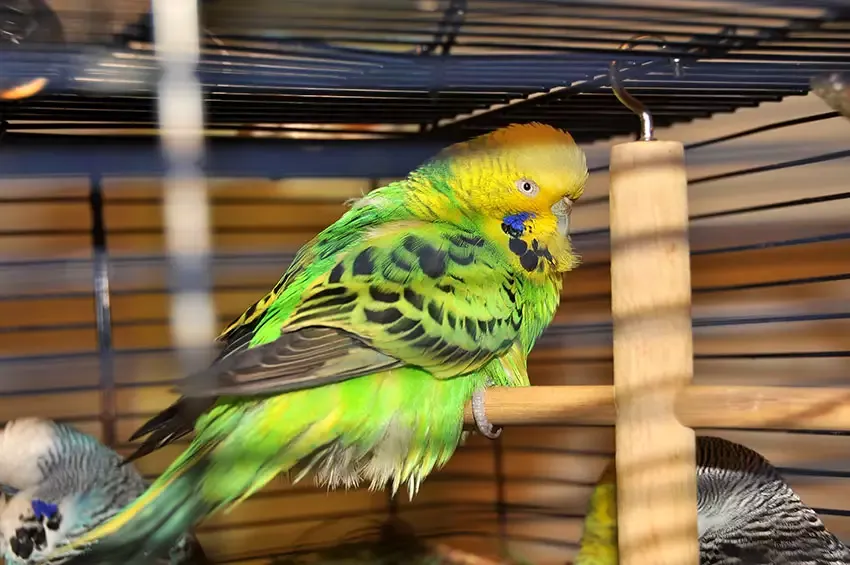 Green budgie fluffed up###### A fluffed-up appearance can be a sign of illness.
Understanding Droppings and Vomiting
A budgie’s droppings can offer valuable insights into their health:
- Normal Droppings: Healthy budgie droppings typically have a “burnt popcorn” appearance. Any deviation from this norm warrants attention. Note that certain colored budgie pellet foods can alter droppings’ appearance, making diagnosis trickier.
- Loose or Wet Droppings: While sometimes caused by dietary indiscretions, consistently loose or wet droppings, especially with excess liquid (urine), can signal disease or parasites.
- Discolored Droppings:
- Green: Often indicates the bird is not eating enough, is stressed, malnourished, or has a crop infection.
- Grey: Suggests a problem with the pancreas.
- Red: May indicate blood from an intestinal issue, but first rule out consumption of red fruits or vegetables like cherries or beetroots.
- Green and Yellow: A symptom of liver disease, with the green color often due to bile.
- Undigested Food in Droppings: This can point to intestinal parasites. If the bird has recently been treated, it might be a natural system clearance; otherwise, veterinary intervention is necessary.
- Vomiting: This is distinct from the common budgie behavior of regurgitating food for a mate or chicks. Vomit from an ill bird is typically wet and can make a mess on their chin and breast. Vomiting requires prompt professional diagnosis.
Other Physical Signs to Monitor
- Gummed-Up Nostrils or Nasal Discharge: A healthy budgie’s cere should be free from dry or liquid matter.
- Hot Feet: While some warmth is normal, excessively hot feet can indicate illness, often related to kidney problems. Obesity can also cause hotter feet, requiring a dietary adjustment.
- Cold Feet: If accompanied by listlessness, ruffled feathers, and shivering, cold feet can be a sign of illness.
- Swollen or Sore Eyes: Swelling or discharge around the eyes necessitates veterinary attention, as it could be due to various infections.
- Sticky Feathers on Head or Face: This can signal a crop infection, which prevents the bird from eating and can be rapidly fatal without treatment.
- Blood on Feathers: Indicates an injury and that the bird is feeling weak, potentially requiring antibiotics.
- Limping: Suggests a leg or foot injury that needs to be checked for fractures.
- Overgrown Beak or Toenails: Often a sign of underlying disease, frequently linked to liver issues.
- Deformed Beak: Can be caused by burrowing mites and requires treatment to save the beak and the bird’s life.
- Rapid Breathing: While overheating can cause rapid breathing, it can also be a symptom of illness. Open-mouth breathing, rasping or clicking sounds during respiration, or tail-bobbing with each breath are all cause for concern.
 Budgie feet###### Observe your budgie’s feet for any unusual temperature changes.
Caring for a Sick Budgie
If you suspect your budgie is ill, the most important step is to consult a veterinarian specializing in avian care. To aid in their recovery and prevent the spread of disease:
- Isolate the Sick Bird: Move the unwell budgie to a separate “recovery cage” to prevent contagion to other birds.
- Maintain a Warm Environment: Most illnesses cause a drop in a budgie’s body temperature. Ensure the recovery cage is warm, but avoid overheating. If using an infrared lamp, seek expert advice on its safe and effective placement and use.
- Provide Familiar Surroundings: Place the recovery cage in a familiar, quiet environment to minimize stress from acclimatization.
- Offer Plenty of Water and Favorite Foods: Ensure easy access to fresh water and offer foods your budgie particularly enjoys.
- Minimize Stress: Keep children and other pets away from the sick bird. Limit handling and ensure the bird remains in its cage to reduce stress.
- Clean Thoroughly: Disinfect the main cage and any accessories the sick bird may have used with a pet-safe disinfectant or a mixture of one part vinegar to two parts water.
By being vigilant and acting quickly when you notice changes in your budgie’s behavior or appearance, you can provide the best possible care and support their return to health.
