
The Neva Masquerade, also known as the Siberian Colorpoint, is a captivating variant of the Siberian cat. While recognized by the LOOF (Livre Officiel des Origines Félines) as a full Siberian, some breeders distinguish them due to unique genetic and coat characteristics. This gentle feline, renowned for its striking blue eyes and endearing, often comical, sleeping positions, offers a unique companionship.
Neva Masquerade at a Glance
- Alternative Names: Siberian Colorpoint, Siberian Colourpoint
- Lifespan: Approximately 15 years
- Weight: 4-7 kg (females), 5-8 kg (males)
- Height: 25-35 cm at the shoulder
- Build: Semi-cobby, characterized by a strong, muscular, and powerful physique.
- Coat: Medium-long and dense.
- Coloration: Colorpoint (Siamese pattern).
- Temperament: Sociable, intelligent, gentle, and playful.
- Origin: Russia.
- LOOF Recognition: Yes.
- Key Trait: Hypoallergenic qualities.
Historical Background
The Siberian cat is a natural breed originating from Russia, specifically Siberia, known for its remarkable resilience to harsh climates, evident in its dense fur and robust health. A unique genetic trait of the Siberian is its low production of the FelD1 protein, a common allergen in cats, making them a popular choice for individuals with allergies. It’s important to note that “hypoallergenic” does not mean “non-allergenic,” as some individuals may still experience sensitivity.
The Neva Masquerade emerged from intentional breeding programs, likely involving crosses between traditional Siberians and Siamese cats or their derivatives. While a small percentage might occur naturally, the vast majority are a result of deliberate efforts to introduce new color patterns, particularly the distinctive colorpoint, into the Siberian breed. The name “Neva” is derived from the Neva River flowing through Saint Petersburg, Russia, where the first cats of this type were reportedly found. Like their traditional counterparts, Neva Masquerades have adapted exceptionally well to family life.
Siberian cats were introduced to Germany in the 1980s, followed by France and the United States a decade later. The Neva began gaining recognition as a distinct variant in the 1990s, quickly endearing itself to cat enthusiasts with its graceful coat and piercing blue eyes.
Physical Characteristics
Siberians, including the Neva Masquerade, are celebrated for their hypoallergenic qualities, which can significantly reduce allergic reactions like rhinitis and asthma. However, individual reactions can vary, so it’s always advisable to spend time with a specific cat before adoption.
Head: The head is a reversed trapezoid shape with rounded contours, appearing short and broad. The nose is moderately short and flat, and the muzzle is rounded, often more pronounced in males.
Body: The body is medium to large, robust, muscular, and powerful. Its “barrel” shape, characterized by a rounded midsection, can sometimes give the impression of an overweight cat, though this is a standard characteristic and not indicative of obesity. This unique build sets them apart from other breeds.
Legs: The legs are moderately high and quite broad, contributing to a sturdy appearance, especially when the cat is sitting and its “barrel” profile is emphasized. The feet are well-rounded, adding to their overall gentle impression.
Coat: The Neva Masquerade boasts a medium-long, shiny, dense, and waterproof coat, perfectly adapted for cold climates. The coat density varies significantly between seasons; the winter coat is exceptionally thick and dense, while the summer coat is much shorter, making the cat appear almost like a different breed. The dense undercoat in winter is nearly absent in summer.
Eyes: Eyes are large, round, and set wide apart.
Ears: Ears are medium-sized, broad at the base, and well-spaced. They may feature “lynx tips,” which are tufts of fur giving the appearance of small paintbrushes at the ear tips.
Tail: The tail is thick at the base, tapering to a rounded tip, and is notably well-furred.
Neva Masquerade Colors
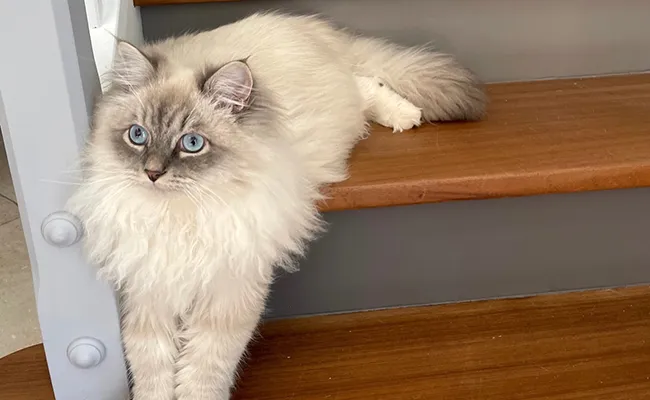
The Neva Masquerade exhibits the Siamese “colorpoint” pattern, meaning their body is lighter in color, with darker points on the face (mask), paws, tail, and ears. Temperature fluctuations can sometimes influence the darkening of certain body areas.
While online sources may mention chocolate, lilac, cinnamon, and fawn points, the LOOF prohibits these colors for this breed. Accepted point colors are similar to those found in Siamese, including seal point, blue point, and red point, with or without tabby, white, silver/smoke, golden (a mutation specific to Siberians), and occasionally tortie.
Crucially, all Neva Masquerades possess blue eyes. The intensity of the blue color is highly prized, contributing to their pure, graceful, and angelic gaze.
Temperament
Neva Masquerades are affectionate and form strong bonds with their human families. While not overly demanding, they are always present, respecting both their own needs and those of their owners.
It’s believed that their Siberian ancestors, accustomed to seeking warmth, trained their kittens to charm humans for shelter. This may explain their tendency to sleep on their backs with all four paws in the air, relishing the comfort of their homes. They are known for striking improbable and comical poses, making a camera readily available essential.
Generally tranquil, Neva Masquerades do have bursts of playful energy, chasing imaginary prey or leaping agilely onto furniture. They are excellent playmates for children, displaying flexibility during interactive sessions, though children should be mindful not to overstep their patience.
These cats are typically adept at navigating their environment, often avoiding knocking things over, though caution with fragile items is still advised. They coexist well with other cats, including traditional Siberians, and are generally sociable with dogs. Successful introductions to other pets require patience and a gradual approach, typically spanning several days.
Neva Masquerades are highly communicative, expressing their needs with soft, melodious vocalizations. Their “meows” are often musical, especially when seeking attention. They enjoy nuzzling their owners and express contentment with enthusiastic purrs.
Interestingly, in 2021, the Siberian breed (including both traditional and Neva types) was the sixth most preferred cat breed in France, surpassing breeds like the Chartreux, Norwegian Forest Cat, and Sphynx.
It’s important to remember that each cat is an individual, and while breed characteristics are common, personal temperament, upbringing, and owner interaction play significant roles in a cat’s unique personality.
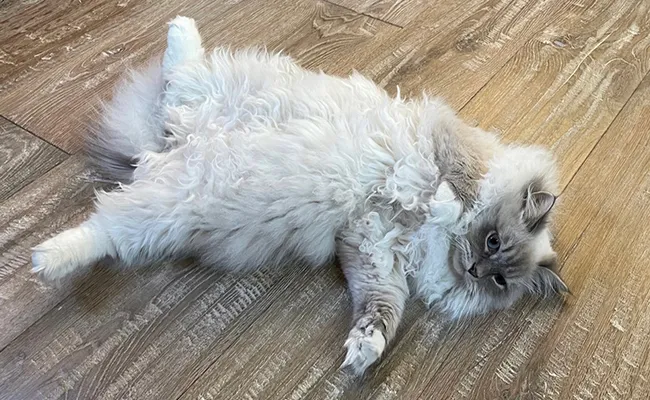 Ideal Living Conditions for the Neva Masquerade
Ideal Living Conditions
Neva Masquerades require regular exercise due to their hearty appetites. Their “barrel” build should be considered to avoid unnecessary dieting, but it also means their weight should be monitored to prevent excess fat. Approximately 15 minutes of daily play is recommended, utilizing toys such as feather wands, fishing rod toys, rolling, sliding, or squeaking toys. Some enjoy aluminum foil balls, though caution is advised to prevent ingestion. A tall cat tree for climbing and scratching is also highly beneficial.
As with any purebred cat, outdoor access carries risks, including traffic accidents, especially given their trusting nature. Securing gardens and supervising outdoor time is ideal. Alternatively, “catios” or enclosed outdoor patios offer a safe way for cats to experience the outdoors.
For apartment dwellers, providing multiple scratching posts (horizontal and vertical) and possibly additional cat trees will offer enrichment and varied vantage points.
Neva Masquerades thrive in both family environments and with single owners, provided they receive sufficient attention, grooming, play, and affection. They do not cope well with prolonged solitude.
Grooming and Maintenance
Grooming needs can vary depending on the lineage. Regardless, the Neva’s winter coat demands rigorous maintenance, especially during seasonal molts, which are quite dramatic as the cat transitions between its thick winter and lighter summer coats. In summer, except for the ruff and tail, they may appear almost like short-haired cats, while in winter, their coat length can nearly double their volume.
During molting periods, daily brushing is essential to prevent matting, which could necessitate shaving – an unpleasant experience for the cat and one that can alter coat color. The colorpoint coat is temperature-sensitive; shaving can lead to the regrowth of darker fur due to increased skin coolness. Regular brushing also minimizes hairball ingestion and potential intestinal blockages, while improving circulation and fostering a bond between owner and cat, provided it’s done gently.
Outside of molting seasons, brush approximately twice a week if matting is not an issue, or three times a week if the coat tangles easily. Introducing the brush early in kittenhood, using positive reinforcement, helps them associate grooming with pleasant experiences. Patience and consistency are key to establishing a routine.
Regularly clean the cat’s eyes with a specialized cat wipe and its ears with an appropriate veterinary lotion.
Common Health Concerns
The Neva Masquerade is generally a robust breed, naturally adapted to challenging conditions. However, the introduction of Siamese genetics in some lines may predispose them to certain conditions.
A concern across many breeds, including Siberians, is Hypertrophic Cardiomyopathy (HCM), a condition where the heart walls thicken, potentially leading to fatal outcomes. While there is no definitive genetic test, breeders can perform regular cardiac ultrasounds on breeding cats. This helps identify affected individuals but doesn’t offer a 100% guarantee, as HCM can develop at any age.
Occasionally, joint issues, such as hip dysplasia, may arise due to their sturdy build.
Diet
Whether traditional or Neva, Siberian cats can be discerning eaters, though they are often greedy when they find something they like. Some refuse wet food, despite its hydration benefits, while others quickly grow tired of their food, signaling a desire for change. It’s crucial not to give in to demands for highly palatable, additive-laden foods, as this can lead to health problems later.
They require high-quality, premium food rich in animal protein and low in grains (which are high in carbohydrates unsuitable for carnivores), especially given their tendency towards being overweight. A combination of wet food (for hydration and kidney health) and carefully selected dry kibble is often ideal and practical.
Some owners opt for raw feeding (BARF), which involves feeding natural raw meats. However, this requires detailed knowledge of nutritional balance and careful preparation.
Siberians often experience a slow growth period, extending up to three years. Therefore, special diets before this age are generally not recommended unless prescribed by a veterinarian. It is important that veterinarians are familiar with the breed’s “barrel” physique, as it can be mistaken for obesity by those unfamiliar with the standard.
Like all cats, Nevas need constant access to fresh, clean water, ideally from a water fountain.
If opting for home-cooked meals (ration ménagère), be aware of common pitfalls and ensure the diet is nutritionally complete.
 Price of the Neva Masquerade
Price of the Neva Masquerade
The price for a Neva Masquerade kitten typically ranges from €1300 to €2000, depending on the lineage and specific qualities. This seemingly high cost reflects the diligent work of responsible breeders, including extensive and expensive genetic testing of breeding cats to prevent disease transmission. The price encompasses the breeder’s investment in infrastructure, selection processes, socialization of kittens, ongoing health monitoring of the feline family, vaccinations, deworming, food, and general care.
Responsible breeders often rehome retired breeding cats at a reduced price, usually between €500 and €800. These cats may be retired due to incompatibility with other cats, not meeting breeding standards, or simply due to age. Adopting a retired adult offers the advantage of knowing their established personality.
It’s also important to remember that many wonderful cats await adoption in shelters, eager for loving homes.
Neva Masquerades and Celebrities
Former Russian President Dmitry Medvedev was known to share his residence at the Kremlin with Dorotheus (Dorofei), a Neva Masquerade. Legend has it that Dorofei once engaged in a scuffle with Mikhail Gorbachev’s cat and emerged the loser. The cat reportedly met the Obama couple in 2009 and even appeared on a Russian banknote, highlighting its extraordinary life.
Anecdotes
Lova, a Swedish Neva Masquerade female born in 2014, has garnered a significant following on Instagram (@00lova00), where she shares her life with thousands of followers, often alongside other Neva cats.
Choosing Your Neva Masquerade
Siberians, including the Neva Masquerade, have surged in popularity, offering a chance for allergic individuals to enjoy feline companionship. While many breeders are dedicated and ethical, some exploit the breed’s popularity without proper care. Therefore, discerning a reputable breeder is crucial.
Key precautions include:
- Visiting the Cattery: This allows you to assess the living conditions, check for potential allergies (as reactions can be lineage-specific), and ensure the cats are housed freely rather than in cages. It also helps gauge the number of cats to ensure viral load isn’t excessively high.
- LOOF Declaration of Mating and Birth (DSN): This official declaration guarantees the cat’s Siberian lineage. The number can be verified online and provides breeder, litter size, and essential details. Breeders claiming “purebred” status without this formality may face legal repercussions.
- Veterinary Testing: Verify that breeding cats have been tested for FIV and Felv viruses. Heart and kidney ultrasounds of the parents are also important. While low to moderate levels of feline coronavirus might be acceptable, high levels should be avoided. Testing for calicivirus is also advisable to prevent future stomatitis and other issues.
The Neva Masquerade Controversy
Some breeders of traditional Siberians (“Sib tradi”) refuse to mate their cats with Neva Masquerades, sometimes including this restriction in their sales contracts for breeding cats. They argue that the Neva is not a “true Siberian” but a hybrid resulting from crosses with Siamese-type cats. Since the colorpoint gene originated in Asia, they believe introducing Neva cats into traditional Siberian lines dilutes the breed’s natural Russian genetic heritage.
A primary concern is the potential loss of the Siberian’s hypoallergenic trait. Breeders advocating for this stance often participate in the international “Clean Genealogy” project, aiming to preserve a purely Siberian genetic pool.
Conversely, other breeders integrate both types, producing mixed litters due to the recessive nature of the colorpoint gene. The LOOF recognizes the Neva Masquerade as a true Siberian, as do The International Cat Association (TICA) and the Cat Fanciers’ Association (CFA). However, organizations like the FIFé (Fédération Internationale Féline), World Cat Federation (WCF), and Australian Cat Federation (ACF) consider the Neva Masquerade a separate breed.
Ultimately, adopting a Neva Masquerade means welcoming a graceful, elegant, and affectionate companion into your home. Their striking blue eyes and deep connection with their owners promise a unique and enriching relationship.
