
When you hear “Pomsky,” what comes to mind? Likely an adorable, fluffy dog with striking Husky-like features, but in a more compact package. The Pomsky, a designer breed, has captured hearts globally, often leaving potential owners wondering: “Exactly how big do they get?” If you’re thinking, “Show Me A Picture Of A Pomsky to understand their size,” you’ve come to the right place. This guide dives deep into the fascinating world of Pomsky sizes and weights, offering insights from a breeder’s perspective to help you understand what to expect from these captivating canine companions. We’ll explore the various sizes, discuss the pros and cons of different dog dimensions, and provide practical advice on raising a well-adjusted Pomsky, regardless of their eventual stature.
What Does a Pomsky Look Like? Understanding Their Diverse Sizes
The Pomsky is a hybrid cross between a Siberian Husky and a Pomeranian, aiming to blend the Husky’s striking appearance and intelligence with the Pomeranian’s smaller size and affectionate nature. Because they are a mixed breed, Pomsky sizes can vary significantly, depending on the generation (F1, F1B, F2, etc.) and the size of the parent dogs used in the breeding. This diversity is part of their unique charm, but it also means there isn’t a single “standard” size for all Pomskies.
To help visualize this range, breeders often refer to size charts. The American Pomsky Kennel Club has developed visual aids to represent the common size differences you might encounter. These charts, often featuring a full-sized Husky alongside various Pomsky dimensions, clearly illustrate how a Pomsky can range from a miniature companion to a substantial medium-sized dog.
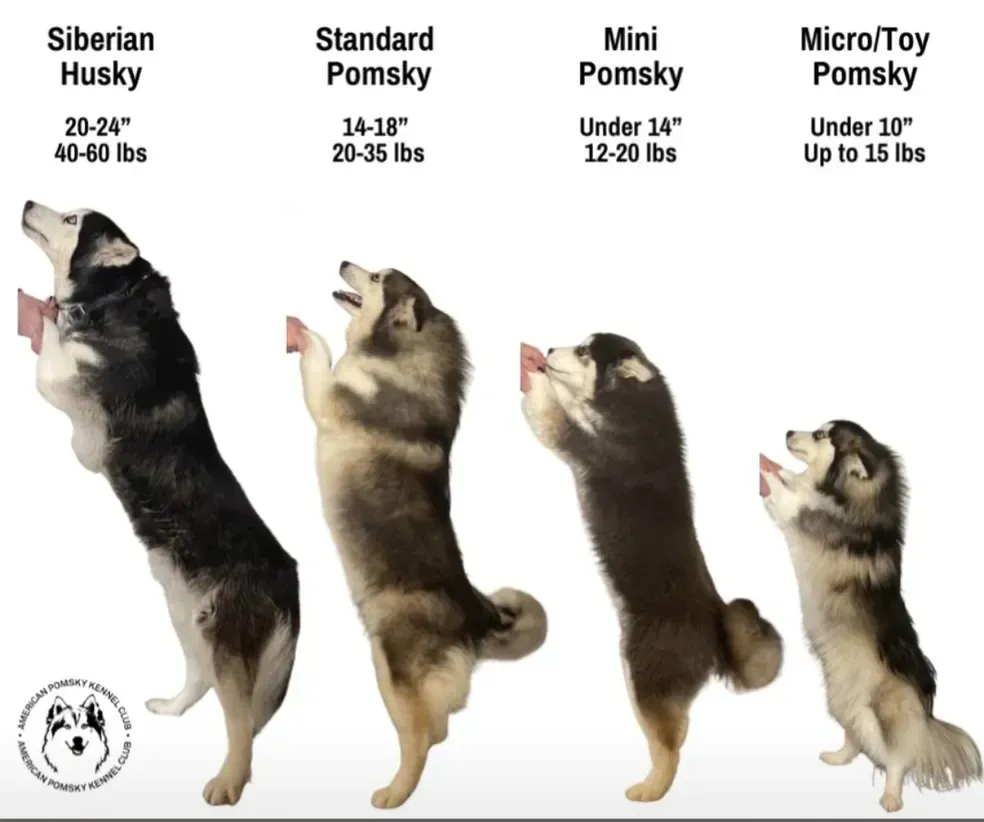 Official American Pomsky Kennel Club size chart comparing the size of an adult Husky with various Pomsky sizes, illustrating the breed's diverse range.
Generally, Pomskies are categorized into three main size groups:
- Toy Pomsky: Typically weighing less than 10 pounds (approx. 4.5 kg) and standing under 10 inches tall. These are quite rare and require very specific breeding.
- Miniature Pomsky: Usually weighing between 10-20 pounds (approx. 4.5-9 kg) and standing 10-15 inches tall. This is a very common and popular size.
- Standard Pomsky: The largest of the three, typically weighing 20-35 pounds (approx. 9-16 kg) and standing 13-18 inches tall. Some can even exceed this, especially if they have a larger Husky parent or more Husky genes.
The key to predicting a Pomsky’s adult size lies in understanding the genetics of their parents. A first-generation (F1) Pomsky, for instance, is a 50/50 mix of Husky and Pomeranian. Their size can be harder to predict as they inherit genes from both distinctly different-sized breeds. Later generations (F1B, F2) often have more predictable sizes as breeders select for specific traits and dimensions. While many factors go into selecting the right dog, like temperament and size, some owners prioritize specific traits like coat type. If you’re exploring different breeds, you might be interested in a dog breed that doesn t shed.
Real-World Pomsky Sizes: Our Canine Family’s Weights
As a breeder and owner, I’ve had the privilege of observing a wide spectrum of Pomsky sizes firsthand within my own pack. This personal experience provides valuable insight beyond just charts and averages, offering a tangible perspective on the diverse adult weights these dogs can achieve.
For example, our pack includes:
- Astra (mostly Husky): 19kg
- Emma: 12kg
- Raven: 9.5kg
- Drake: 9kg
- Alaska: 8.5kg
- Willow: 7.6kg
- Hendrix: 4kg
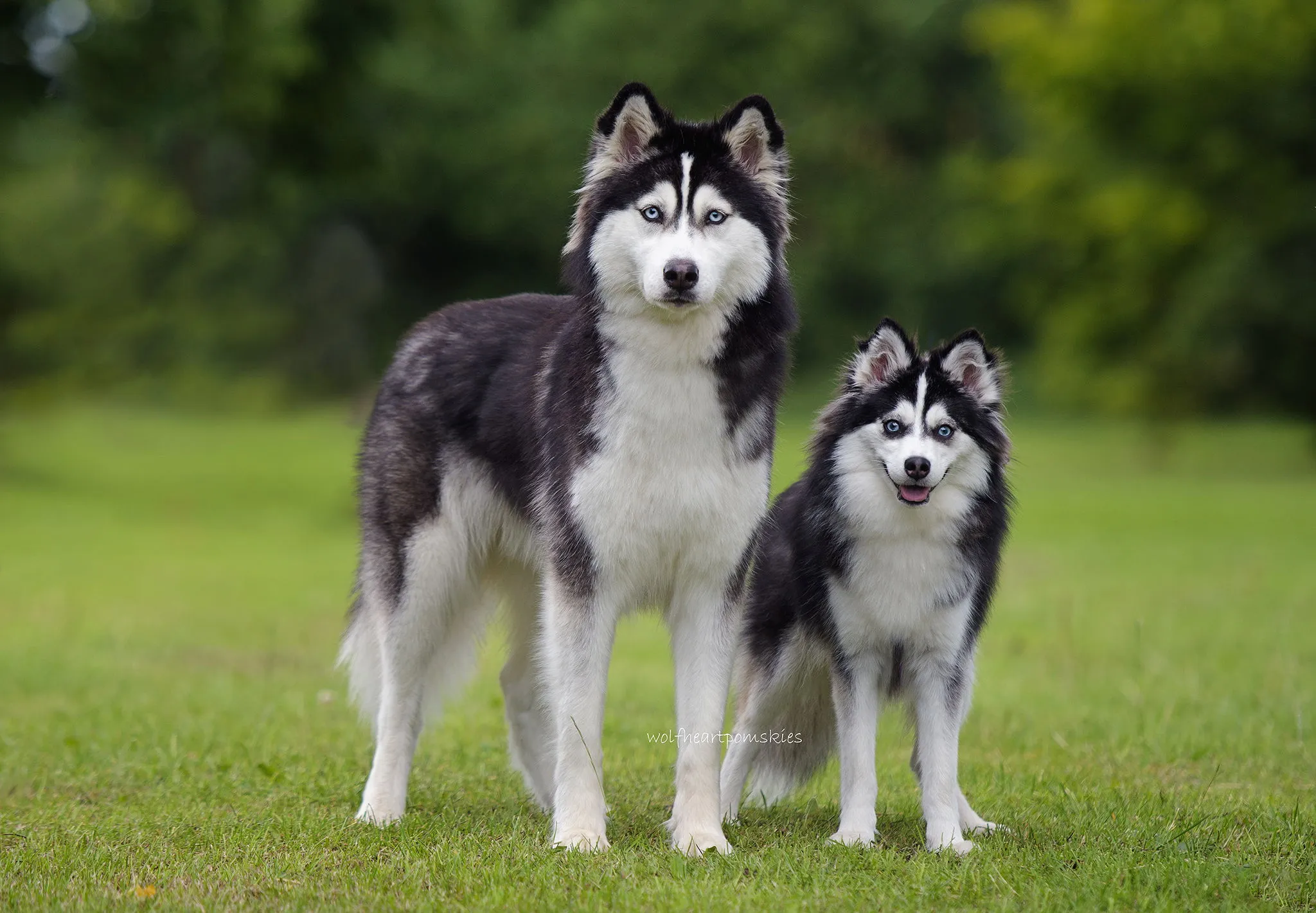 Astra, a larger Husky, and Alaska, an 8.5kg Pomsky, standing side-by-side to visibly demonstrate the size difference between a Husky and a standard Pomsky.
Most of our Pomskies are around knee height when standing on all fours, offering a manageable size for most households. Astra, our mostly Husky, however, is a different story; standing on her back legs, she reaches my shoulders (I am 5 ft 4 inches tall). This illustrates the potential variability even when considering the Husky lineage.
In my breeding program, while I cannot guarantee exact adult weights, I strive to provide an estimated size range based on previous litters and the puppies’ growth patterns during their first eight weeks. The adult sizes of puppies from our pairings typically fall within a range, with average weights clustering around 9kg.
One particularly interesting case involved Raven and Drake’s first litter. I initially estimated an average of 9kg, predicting that the smaller puppies would mature to about 6 to 8kg. Out of that litter, five puppies did indeed grow to be in the 6 to 7kg range. Alaska matured to 8.5kg, fitting well within expectations. However, Meeko, who was born the last and was jointly the smallest at birth, experienced exponential weight growth. I quickly revised my estimate for him to be around Emma’s weight or a little more, and he eventually reached 13.5kg. This highlights that while genetics provide a strong baseline, individual growth can sometimes surprise us, making early monitoring crucial for accurate estimations.
Choosing the Right Pomsky Size: Weighing the Pros and Cons
Discussions about the “perfect” dog size are frequent among pet owners, and I find it fascinating to hear diverse experiences. However, I truly believe there’s no single perfect size. Each size category – large, small, or medium – comes with its own set of positives and negatives. Ultimately, a dog’s temperament, more than its size, is the primary factor to consider when determining if it’s the right fit for your lifestyle. A large, boisterous dog can be a handful, just as a small, snappy one can be hard work. Conversely, a laid-back large dog or a calm, confident small dog can be an absolute joy.
The Joys and Challenges of Large Pomskies (or “Bigger Dogs”)
Larger Pomskies, those closer to the Husky parent’s size range, bring a distinct set of considerations for potential owners.
- Higher Feeding Costs: Bigger dogs eat more. Astra, for instance, consumes up to five times more food daily than Hendrix, our smallest. This translates directly to a higher budget for food and treats. They also chew through toys and treats more quickly, adding to recurring expenses.
- Increased Strength and Training Needs: Larger dogs are naturally stronger. They can use their weight to their advantage during walks, and their stride is quicker. This necessitates quality lead training, impulse control, and confidence-building exercises. A strong, high-prey-drive Pomsky spotting a squirrel or rabbit requires quick and appropriate handling to prevent accidents.
- More Space Required: They need more living space, including a larger dog bed or crate, and ample room to run and play. Gardens should be of a decent size to allow them to stretch their legs.
- Greater Exercise Requirements: Generally, larger dogs have higher exercise needs, combining both physical and mental stimulation. Astra, despite her size, is settled and doesn’t require hours of walking daily, largely because she plays extensively with the other dogs. Enclosed fields are excellent for letting them run freely and expend energy.
- Car Space: They demand a decent amount of space in the car. While smaller Pomskies might fit comfortably in a seat with a harness, a dog like Astra is too large for a single car seat.
- Grooming Equipment: If you use a grooming table, a larger, sturdier table with a strong top bar is essential.
- Physical Handling: Owners need to be physically strong. This isn’t just for handling them on walks, but also for picking them up for grooming, baths, vet visits, or assisting them as they age. Astra enjoys being picked up, but due to her size, it’s a challenge to get her into a comfortable position.
- Intimidation Factor: Their size can be intimidating, especially to young children who could easily be knocked over. While Astra is gentle and careful around children, an excited large dog might not always understand appropriate behavior. I’ve observed people crossing the street to avoid Astra, perceiving her as “wolf-like” due to her markings. However, her relaxed body posture, wagging tail, and friendly demeanor quickly show she’s safe to approach. For those considering a larger dog, understanding all aspects of care is crucial, including grooming and shedding. If you’re weighing options, you might also look into family dogs that don t shed much.
- Reach and Escape Risk: A large dog can reach more things on counters or tables. When Astra was younger, she would stand up and take items from the kitchen side. Their size also means they might fit through or jump over barriers that would contain smaller dogs.
- Space Occupation: Big dogs often enjoy lounging in awkward places. Astra frequently blocks the bottom step of the stairs or sleeps across the hallway, requiring us to step over her.
- Higher Vet Bills: Their size directly impacts vet costs, as they often require more anesthesia and medical supplies for treatments or operations.
- Benefits of Big Dogs: Despite the challenges, I adore big dogs. They offer great hugs (if they’re comfortable with it), grooming can sometimes be easier due to larger, more accessible areas, and I often find them to be more chilled out once their needs are met. Watching a large dog run joyfully is incredibly uplifting.
Navigating Life with Small or Toy-Sized Pomskies
My experience with Hendrix, our tiny Pomsky, taught me just how easy it is to “baby” a small dog. His size, combined with his Pomeranian-inherited need for closeness, required careful consideration of my reactions and behaviors to avoid fostering undesirable traits.
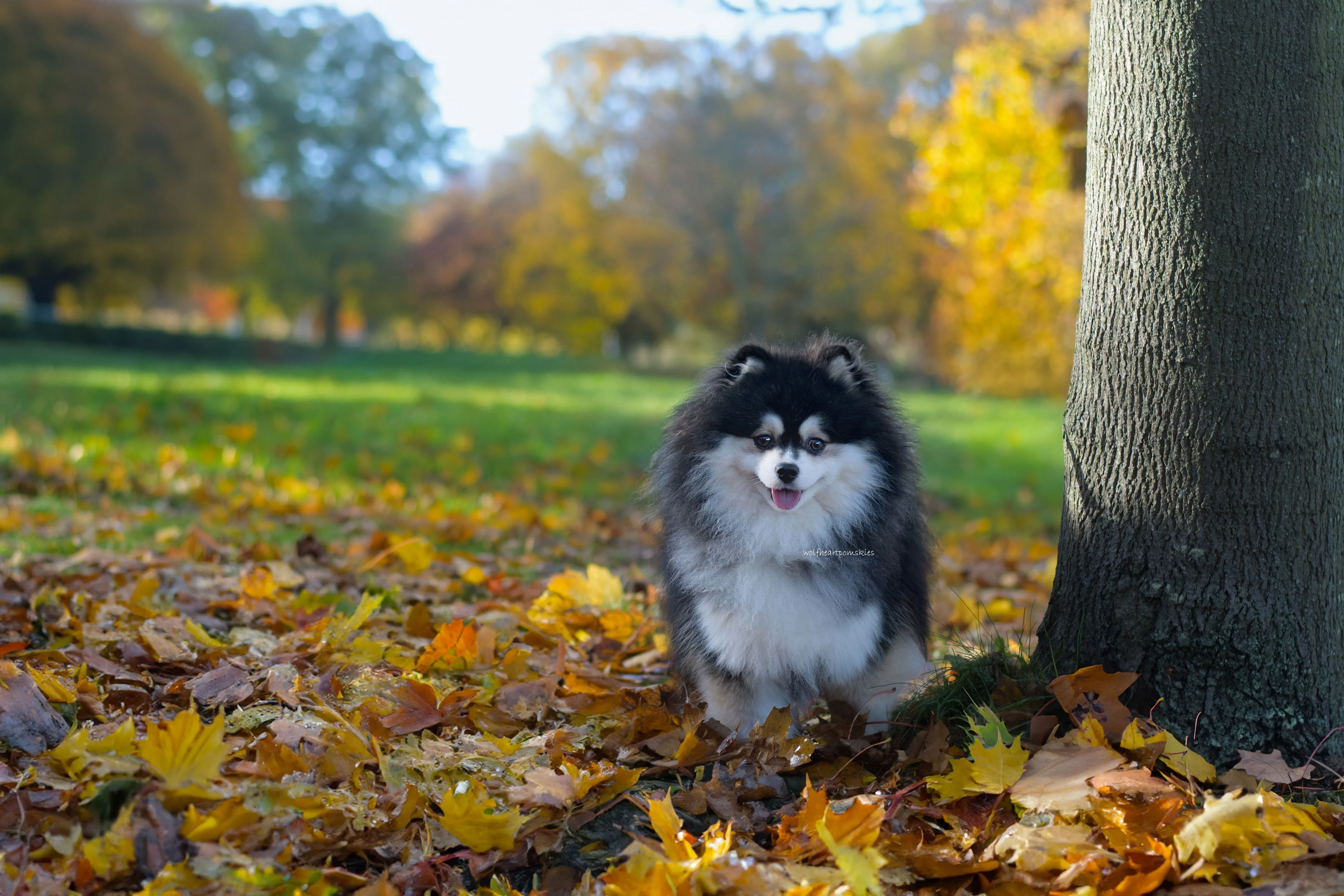 Hendrix, a small toy-sized Pomsky, posing on a patterned blanket, representing the smaller end of the Pomsky size spectrum.
- Companion Dog Traits: Most small and toy-sized dogs were originally bred as companions, leading to a strong desire to be with their humans. This can, however, manifest as separation anxiety, heightened stranger awareness, territorial behavior, or guarding. Hendrix, for example, initially tried to growl at other dogs approaching me. It’s crucial to address these behaviors by moving the dog away, ensuring they understand their role as a dog, not a human baby. Allowing such guarding behavior can lead to extreme issues, even rehoming or euthanasia in severe cases.
- “Small Dog Syndrome” and Socialization: Small dog syndrome is a real phenomenon. Everything looms over them, which can be scary! High-quality socialization from a young age is paramount. Meeting large breeds can be terrifying for small dogs, and picking them up often reinforces fear, teaching them other dogs are dangerous and their human needs protecting. If a large dog’s temperament is known, safe interactions are invaluable for small dogs. Hendrix, well-socialized before he came to me, confidently interacts with large breeds like Dobermans and Rottweilers. His confidence can even surprise larger dogs.
- Crucial Socialization with Dogs: Due to an innate fear of larger dogs, early and consistent socialization is vital for small Pomskies. This helps them learn to read canine body language from their small vantage point and interact appropriately.
- Human Socialization: Small dogs can develop fear-based aggression and distrust strangers. Regular exposure to different people in varied environments (parks, high streets) helps them build confidence. Be mindful of busy settings and don’t hesitate to ask people not to approach if you’re actively training your dog.
- Ease of Handling: Their lighter weight makes them easy to pick up for vet visits, bathing, or placing on grooming tables.
- Lower Feeding Costs: Small dogs eat significantly less, making feeding costs much cheaper than for their larger counterparts.
- Lighter Pull on Leash: While lead training is always necessary, a small dog is far less likely to pull you over if they tug.
- Grooming Challenges: Despite their size, small dogs can have harder-to-reach areas (inner thighs, lower waist), requiring smaller grooming tools to properly brush their stomachs and sides.
- Energy Management: They can tire more easily. I constantly monitor Hendrix’s energy levels. He tries to keep up with the larger dogs, but subtle signs tell me when he’s becoming over-tired or overstimulated, which can lead to grumpiness. For similar-sized dogs with different coat needs, explore good family dogs that dont shed a lot.
- Fear of Heights: If not socialized to different heights, grooming and vet tables can be terrifying for small dogs due to the perceived distance from the ground.
- Escape Risk: Their small size means they can fit through tiny gaps. While Hendrix hasn’t escaped, his tiny body under all that fluff could easily slip through a small opening in a fence.
- Heightened Alertness: Smaller dogs often seem more alert. They understand their vulnerability and will react defensively if threatened. Larger dogs, often experiencing people naturally backing away, feel less threatened and may be less acutely alert.
- Public Attention: Their cute, compact size attracts a lot of attention. It’s important to teach both the dog and the public how to interact safely, as a giant human suddenly lowering themselves to a tiny dog can be frightening, potentially leading to fear-based aggression.
The Balance of Medium-Sized Pomskies
Medium-sized dogs often seem to offer the best of both worlds, striking a balance between the robustness of larger breeds and the manageability of smaller ones. However, they still require comprehensive training and socialization to ensure they develop into well-adjusted companions.
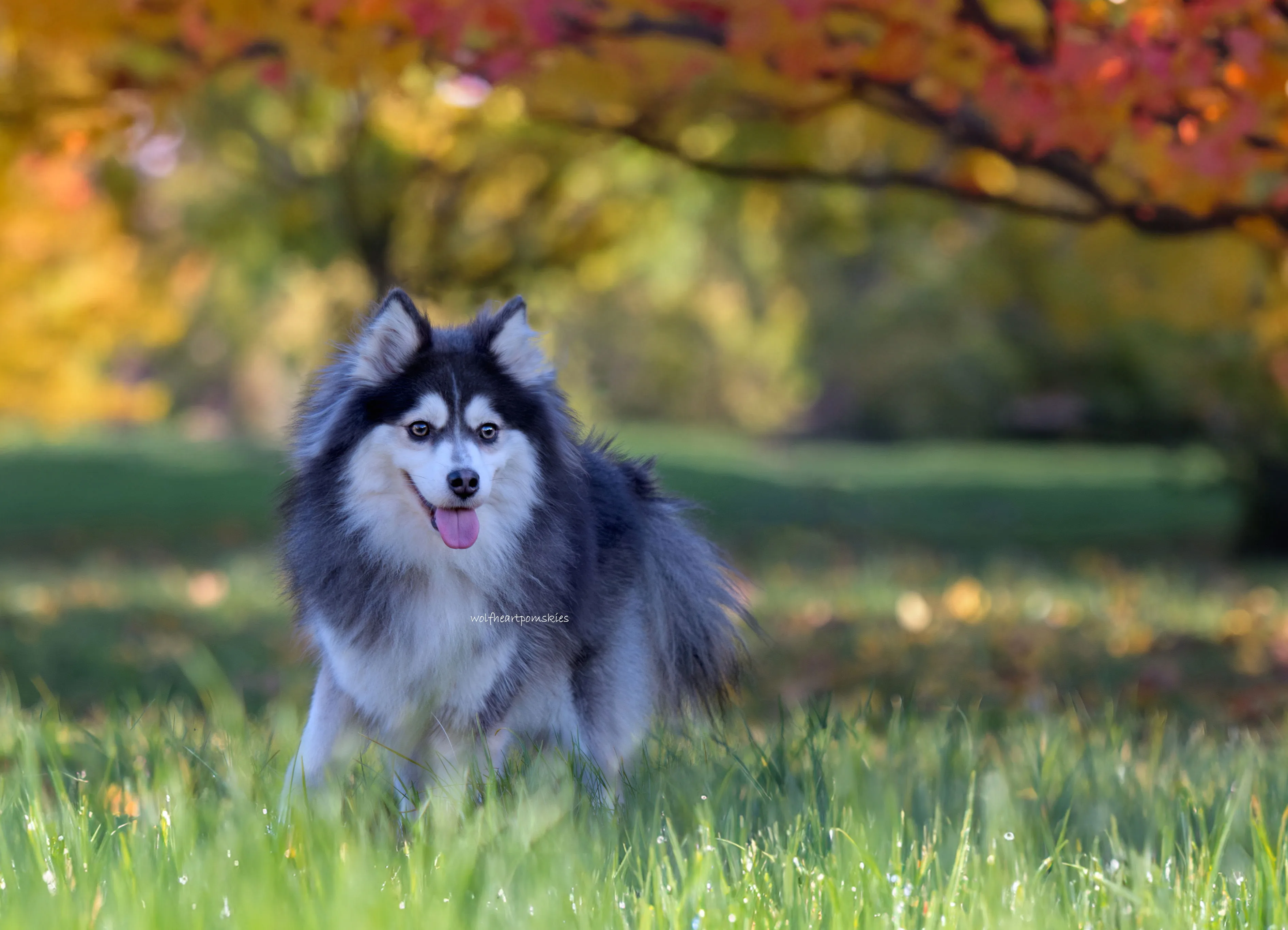 A medium-sized Pomsky looking directly at the camera, exemplifying the balanced physical characteristics of a mid-range Pomsky.
- Surprising Strength: Don’t underestimate them! Some medium Pomskies can be stronger than they appear, displaying a surprising amount of power when they pull on the leash. Consistent lead training remains essential.
- Manageable Handling: Their weights and size generally make them easy to pick up and handle when necessary, whether for vet visits, baths, or getting into the car.
- Endurance for Walks: With proper stamina building, medium-sized Pomskies can manage long walks and enjoy extended outdoor adventures, making them suitable for active families. If a medium dog with low-shedding qualities is of interest, consider these [medium sized dogs that don t shed too much](https://dogcarestory.com/medium-sized-dogs-that-don-t-shed too-much/).
- Training for Specific Traits: Depending on their specific genetic makeup, medium Pomskies may exhibit certain traits inherited from their parent breeds that need consistent work, such as a strong prey drive, excitability, confidence issues, recall challenges, or jumping up on people. Mental stimulation is incredibly powerful for calming them, providing focus, strengthening your bond, and using concept training to improve weaker areas of their behavior. Many people seek dogs that are both manageable in size and easy to maintain. Further research into medium sized dog that don t shed might provide additional insights for potential owners.
The Universal Importance of Socialization and Training
Regardless of whether you end up with a small, medium, or large Pomsky, one truth remains constant: all dogs need consistent socialization and training to reach their full potential as happy, well-behaved family members. Some sizes may require more specific attention in certain areas. For example, smaller dogs often need more diverse dog socialization (with various sizes and shapes) and human socialization to prevent fear of strangers. Larger dogs, on the other hand, might benefit from more boundary training to prevent behaviors like counter surfing or taking items they can reach.
It’s also vital to educate ourselves and others on how to appropriately approach unfamiliar dogs. Many people, despite good intentions, don’t understand canine body language or personal space. While most of my pack would tolerate a stranger suddenly entering their space, a few would react with a yip, bark, or jump back. Never be afraid to advocate for your dog: ask a stranger to step back, to approach more slowly, or simply walk on by. Protecting our dogs from stressful situations helps foster positive behavior and a better understanding of the world around them.
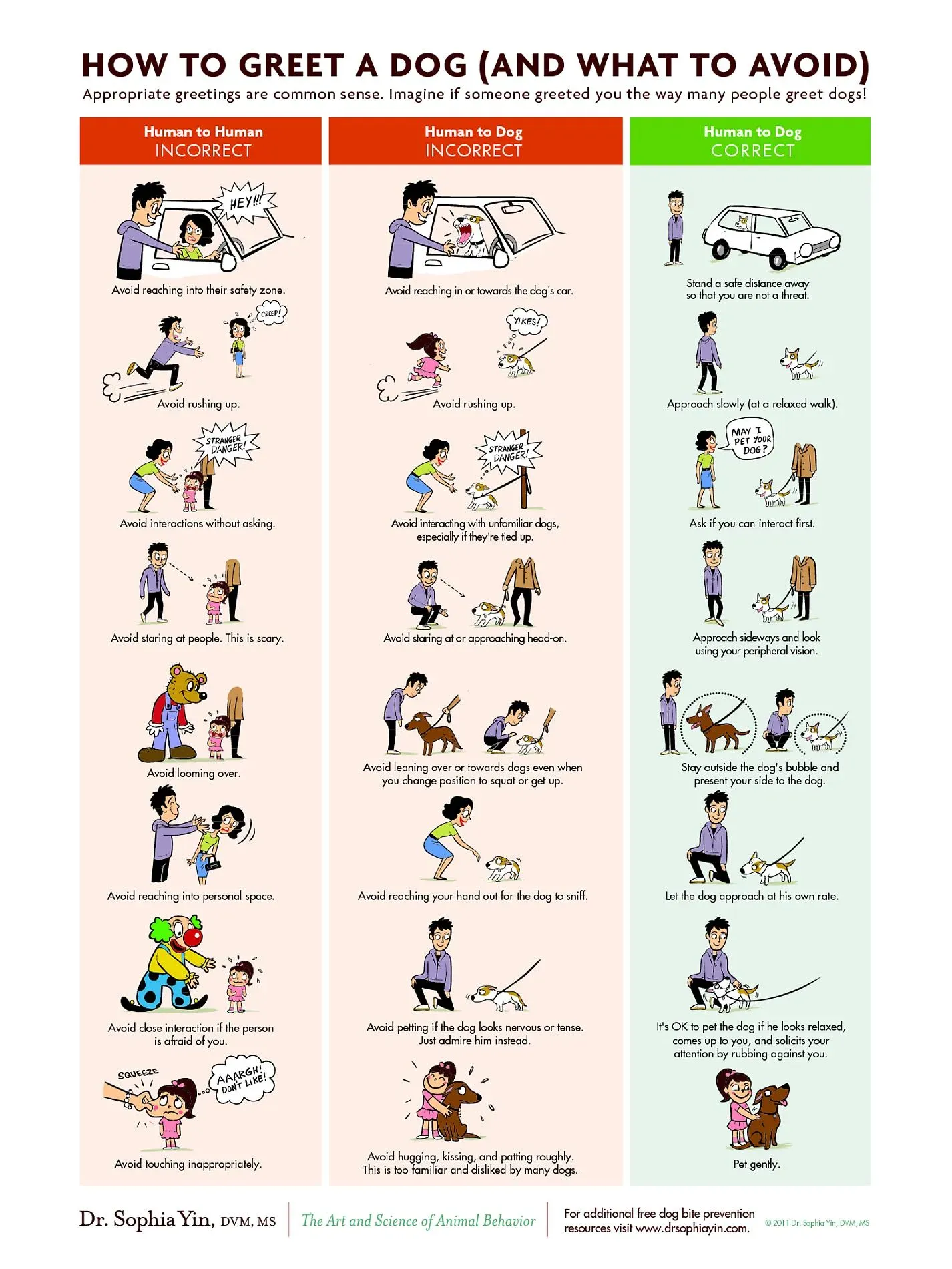 Illustration showing correct and incorrect ways to approach an unfamiliar dog, emphasizing the importance of respecting a dog's personal space and body language.
Conclusion
The journey of welcoming a Pomsky into your home is filled with joy, and understanding their potential size and the implications that come with it is a crucial first step. From the smallest toy to the most robust standard, each Pomsky is an individual with a unique personality. While their physical dimensions may influence aspects like exercise needs, living space, and daily costs, it is ultimately their temperament and the quality of their training and socialization that will define their role as a beloved family member. There’s no single “perfect” size, only the perfect Pomsky for you and your lifestyle. Embrace the diversity, commit to responsible ownership, and you’ll find an incredible companion in any Pomsky size. For more insights into canine care and training, explore other valuable resources on Dog Care Story.
