
The Shih Tzu, with its flowing locks, endearing underbite, and irresistibly charming personality, often looks more like a living teddy bear than a dog. Bred for centuries to be the cherished companions of Chinese royalty, these little “lion dogs” have perfected the art of winning hearts. But beneath that glamorous exterior lies a sharp, intelligent mind and, let’s be honest, a notorious stubborn streak. This unique combination of brains and willfulness makes Shih Tzu Dog Training a journey of its own—one that requires patience, consistency, and a deep understanding of the breed’s unique character.
Effective training is not just about teaching commands; it’s about building a language of mutual respect and understanding with your furry friend. For a Shih Tzu, this bond is everything. They thrive on human connection and are eager to please the person they love, but only on their own terms. Without proper guidance, that independent spirit can lead to common behavioral issues like stubbornness, selective hearing, and house-soiling. By investing in proper training from the start, you can unlock your Shih Tzu’s full potential, transforming them from a delightful pet into a well-behaved, confident, and joyous companion for life. While some breeds are considered the easiest dogs to potty train, the Shih Tzu requires a special approach rooted in positive reinforcement.
Understanding the Shih Tzu Temperament
To effectively train a Shih Tzu, you first need to understand what makes them tick. Their history as palace lap dogs is deeply ingrained in their DNA. They weren’t bred to hunt, herd, or guard; they were bred to be adored. This legacy has shaped a temperament that is both affectionate and a little bit arrogant.
A Shih Tzu genuinely believes they are the most important person in the room. They are not naturally subservient and won’t respond well to harsh commands or domineering training methods. Instead, they see themselves as your equal. This is the root of their infamous stubbornness. It isn’t born from a desire to be difficult, but from a belief that they know best. Trying to force them into submission will only lead to a battle of wills that you are unlikely to win.
However, they are also incredibly intelligent and observant. They pick up on routines and human emotions with surprising speed. This intelligence is your greatest tool in training. They can learn a wide variety of commands and tricks, but you have to make them want to learn. The key is to frame training as a fun and rewarding game rather than a chore. Dr. Evelyn Reed, a renowned canine behaviorist, often says, “The Shih Tzu’s intelligence is a double-edged sword. They learn quickly, but they also learn what they can get away with. Consistency isn’t just key; it’s the entire kingdom with this breed.”
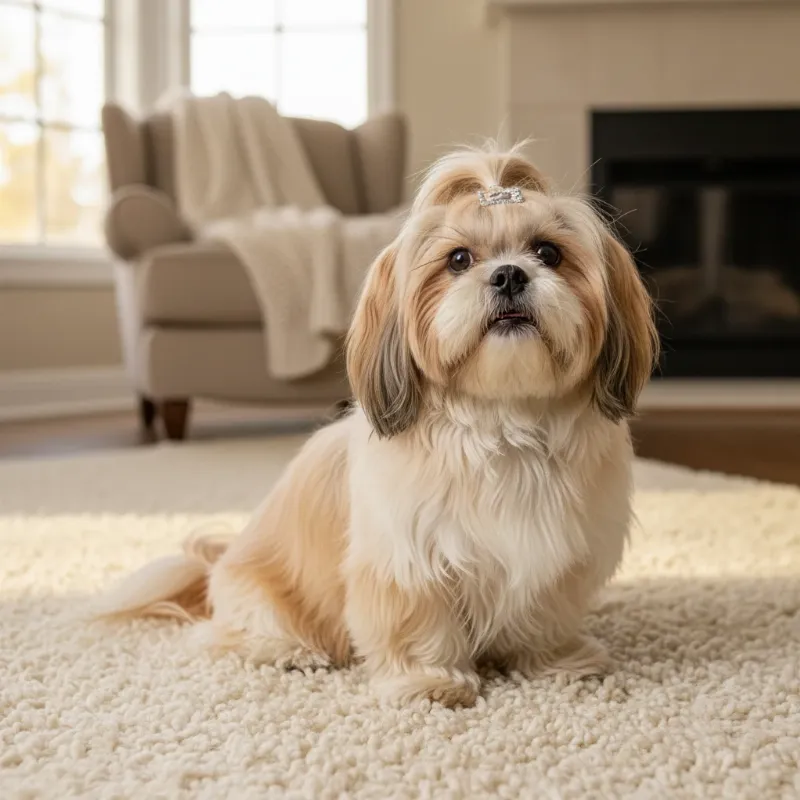 A close-up of a beautiful Shih Tzu with a thoughtful expression, highlighting its intelligent and charming personality, relevant for an article on Shih Tzu dog training.
Essential Shih Tzu Dog Training Principles
Given their unique personality, a one-size-fits-all training approach simply won’t work. The most successful shih tzu dog training strategies are built on a foundation of positivity, patience, and consistency.
Positive Reinforcement: The Best Approach
Positive reinforcement is the gold standard for training this sensitive breed. This method involves rewarding desired behaviors with something the dog values, such as a tasty treat, enthusiastic praise (“Good boy!”), or a favorite toy. When your Shih Tzu learns that doing what you ask results in a positive outcome, they are far more likely to repeat the behavior.
Here’s why it works so well for them:
- It Builds Trust: Harsh corrections or punishments can damage the bond with your Shih Tzu and create anxiety, making them less willing to learn. Positive reinforcement fosters a relationship built on trust and mutual respect.
- It Motivates Them: It turns training into a game they want to play. They become active participants, trying to figure out what you want them to do to earn their reward.
- It’s Effective: It teaches your dog what you want them to do, rather than just punishing them for what you don’t want. This is a much clearer and more effective way to communicate.
Keep training sessions short and sweet, especially for puppies. Five to ten minutes a couple of times a day is far more effective than one long, grueling session. Always end on a positive note with a command your dog has mastered to build their confidence.
The Importance of Early Socialization
Socialization is the process of exposing your puppy to various sights, sounds, people, and other animals in a positive and controlled way. For a Shih Tzu, this is a critical part of their training. A well-socialized Shih Tzu grows into a confident, well-adjusted adult, while a poorly socialized one can become fearful or snappy.
Begin socializing your puppy as soon as your veterinarian gives you the green light, typically after they’ve had their first round of vaccinations. Introduce them to:
- Different People: Men, women, children, people wearing hats or carrying umbrellas.
- Vaccinated, Friendly Dogs: Supervised play with other calm dogs teaches valuable social skills.
- New Environments: Take them on car rides, walk them on different surfaces (grass, pavement), and visit pet-friendly stores.
- Various Sounds: The vacuum cleaner, doorbell, and traffic noises should be introduced gradually so they don’t become sources of fear.
Proper socialization ensures your Shih Tzu won’t be overwhelmed by the world, making them a more pleasant and predictable companion wherever you go.
Step-by-Step Guide to House Training Your Shih Tzu
House training is often the biggest hurdle for Shih Tzu owners. Their small bladder size and stubborn nature can make it a challenging process. Success hinges on a strict routine, constant supervision, and endless patience.
- Establish a Potty Area: Choose a specific spot outside where you want your dog to eliminate. Always take them to this same spot to create a strong association.
- Create a Strict Schedule: Take your puppy out first thing in the morning, last thing at night, and after every meal, nap, and play session. For very young puppies, this might mean every 30-60 minutes.
- Use a Command: As your puppy is eliminating, use a consistent verbal cue like “Go potty.” This helps them learn to go on command later on.
- Reward Success Lavishly: When they successfully go potty in the designated spot, praise them enthusiastically and give them a high-value treat immediately. Make a huge deal out of it! This is the most crucial step.
- Supervise, Supervise, Supervise: When you cannot watch your puppy with 100% attention, they should be in a crate or a small, puppy-proofed area. This prevents them from sneaking off to have an accident.
- Handle Accidents Calmly: Accidents will happen. When they do, do not scold or punish your dog. This will only teach them to fear you. Simply clean the mess up thoroughly with an enzymatic cleaner to eliminate odors that might attract them back to the same spot. If you find that my dog was potty trained but now having accidents, it’s essential to calmly revisit these basic steps.
This stubbornness can make the process feel frustrating, and sometimes you may wonder if factors like gender play a role. While individual personality is more important, exploring topics like whether are female dogs harder to potty train can provide additional context for your training journey.
Basic Obedience Commands Every Shih Tzu Should Know
Teaching basic obedience is fundamental to your dog’s safety and your peace of mind. Use positive reinforcement and keep it fun!
“Sit”
This is one of the easiest commands to teach. Hold a treat near your dog’s nose and slowly move it backward over their head. As their head goes up, their bottom will naturally go down. The moment they sit, say “Sit,” and give them the treat and praise.
“Stay”
Once your dog has mastered “Sit,” you can introduce “Stay.” Ask them to sit, then hold your hand up like a stop sign and say “Stay.” Take one step back. If they stay, step forward and give them a treat. Gradually increase the distance and the duration you ask them to stay.
“Come”
This command can be a lifesaver. Start in a quiet room. With an excited, happy tone, say “Come!” and hold out a treat or their favorite toy. When they come to you, reward them generously. Never call your dog to punish them, as this will create a negative association with the command.
“Down”
Ask your dog to sit. Then, hold a treat in front of their nose and slowly lower it to the floor between their paws. As they follow it with their head, they should lie down. Once they are in the down position, say “Down” and give them the reward.
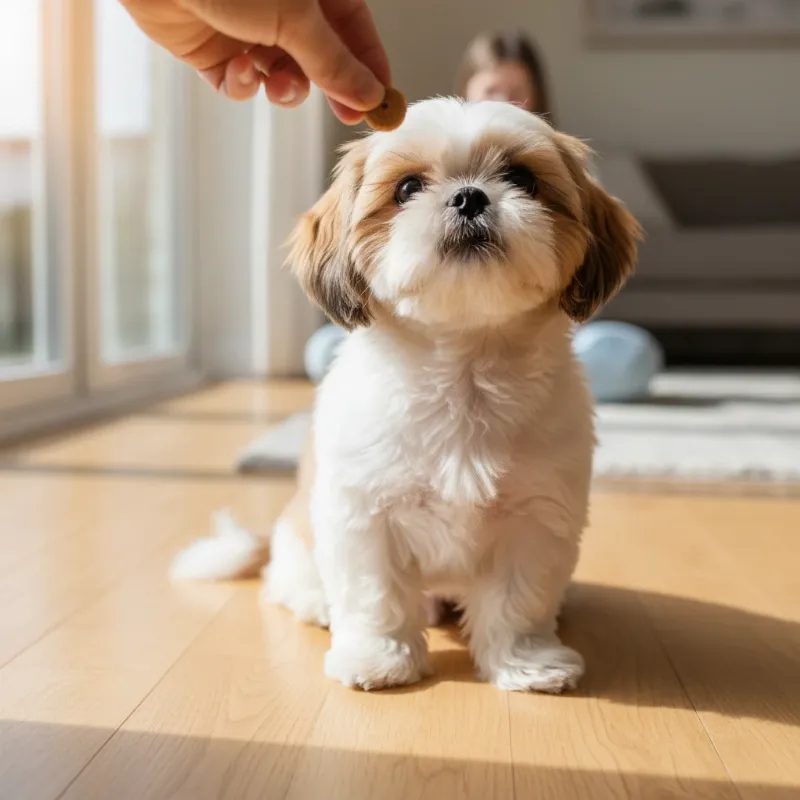 A Shih Tzu puppy successfully performing the 'sit' command for a treat during a positive reinforcement training session, illustrating Shih Tzu dog training in action.
Tackling Common Shih Tzu Behavior Problems
Every breed has its quirks, and the Shih Tzu is no exception. A solid foundation in shih tzu dog training can help you manage or prevent these common issues.
Dealing with Stubbornness
The best way to handle a Shih Tzu’s stubborn streak is not to fight it, but to outsmart it. Make them believe that what you want them to do was their idea all along. Keep training fun and engaging. If they seem bored or refuse to cooperate, end the session and try again later. Figure out what truly motivates them—is it a specific type of treat, a squeaky toy, or just your undivided attention? Use that as your ultimate reward for their cooperation.
Managing Separation Anxiety
Shih Tzus are bred for companionship and can become extremely attached to their owners, making them prone to separation anxiety. To prevent this, teach your dog from a young age that being alone is okay.
- Start by leaving them alone for very short periods (even just 30 seconds) and gradually increase the time.
- Provide them with a special puzzle toy or a long-lasting chew that they only get when you are leaving.
- Don’t make a big deal about your departures or arrivals. A calm and quiet exit and entrance teach them that your coming and going is normal.
Controlling Excessive Barking
Shih Tzus can be yappy dogs, often barking at strangers, doorbells, or passing cars. To manage this, teach a “Quiet” command. When your dog is barking, say “Quiet” in a calm but firm voice. The moment they stop barking, even for a second, reward them. Gradually extend the amount of time they must be quiet before receiving the treat. It’s also important to ensure they are getting enough physical exercise and mental stimulation, as boredom is a common cause of nuisance barking.
Frequently Asked Questions (FAQ)
1. Are Shih Tzus hard to train?
Shih Tzus are intelligent and can learn quickly, but their stubborn nature can make them a challenge. They are not “hard” to train in the traditional sense, but they require more patience and creativity than more eager-to-please breeds. Positive reinforcement is the key to success.
2. How long does it take to potty train a Shih Tzu?
It varies greatly, but you should be prepared for the process to take several months. Consistency is crucial. Some Shih Tzus may not be fully reliable until they are 6 to 8 months old, and occasional accidents can happen up to a year.
3. What is the biggest challenge in Shih Tzu dog training?
House training is almost universally cited as the biggest challenge by Shih Tzu owners. Their small size and stubbornness combine to make it a difficult task that requires a vigilant and consistent schedule.
4. At what age should I start training my Shih Tzu?
Training should begin the moment you bring your puppy home, typically around 8 weeks of age. Start with socialization, crate training, and basic house rules. Formal obedience training for commands like “Sit” and “Stay” can also start right away, using short, fun sessions.
5. How do I stop my Shih Tzu from biting or nipping?
Puppy nipping is normal, but it’s important to teach bite inhibition. If your puppy nips you, let out a high-pitched yelp as if you are hurt and briefly withdraw your attention. This mimics how their littermates would teach them that they are playing too rough. Provide plenty of appropriate chew toys to redirect their chewing instincts.
Your Journey to a Well-Trained Companion
Training a Shih Tzu is less about imposing your will and more about building a partnership. It’s a journey that will test your patience but reward you with a deep, unbreakable bond. By understanding their royal history, embracing their unique personality, and committing to positive, consistent methods, you can guide your little lion dog to become a well-mannered and delightful member of your family. The effort you invest in shih tzu dog training today will pay dividends for years to come, ensuring a happy and harmonious life with your charming, intelligent, and endlessly entertaining companion.
