
Embarking on the journey of acquiring a service dog is a life-altering decision. For residents of the Garden State, understanding the specifics of service dog training in New Jersey is the first crucial step. These remarkable animals are more than pets; they are highly trained partners that provide independence and support to individuals with disabilities. This guide will walk you through the entire process, from understanding their vital role to navigating state laws and finding the perfect training program for your needs.
The bond between a handler and their service dog is forged through hours of dedicated, specialized training. This isn’t just about basic commands; it’s about creating a seamless team capable of navigating the world together. Whether you are considering getting a fully trained dog from an organization or training a canine partner yourself, knowing the landscape of service dog training in New Jersey is essential for success. For many, this journey is transformative, opening up a world of possibilities that once seemed out of reach. An expertly trained service dog offers not just practical assistance but also unwavering companionship and confidence.
Understanding the Vital Role of a Service Dog
Before diving into the training process, it’s critical to grasp what a service dog truly is. Under the Americans with Disabilities Act (ADA), a service animal is defined as a dog that has been individually trained to do work or perform tasks for an individual with a disability. The tasks performed by the dog must be directly related to the person’s disability. This definition is the cornerstone of their legal rights and protections.
What Differentiates a Service Dog from an ESA?
It’s a common point of confusion, but the distinction is clear and legally significant. An Emotional Support Animal (ESA) provides comfort and therapeutic benefits to an individual with a mental or emotional disability simply by being present. They do not require specific task training. A service dog, conversely, must be trained to perform specific, tangible tasks. For instance, a psychiatric service dog might be trained to interrupt a panic attack by providing deep pressure therapy, a task that goes far beyond simple comfort. This task-oriented training is what grants service dogs public access rights that ESAs do not have.
Key Tasks Service Dogs Can Perform
The range of tasks service dogs can learn is vast and tailored to the handler’s specific needs. Their work empowers individuals to navigate daily life with greater freedom and safety.
- Mobility Assistance: Dogs can be trained to retrieve dropped items, open and close doors, turn lights on and off, and provide bracing support for individuals with balance issues.
- Medical Alert: Some dogs have the incredible ability to detect changes in blood sugar for diabetics or sense an impending seizure, alerting their handler to take necessary action.
- Psychiatric Support: For individuals with conditions like PTSD, anxiety, or depression, dogs can be trained to interrupt dissociative episodes, ground their handler in reality, create personal space in crowds, and retrieve medication.
- Hearing Assistance: Hearing dogs alert their deaf or hard-of-hearing handlers to important sounds, such as a smoke alarm, a doorbell, or a ringing phone.
- Guide and Navigation: Guide dogs for the visually impaired are perhaps the most recognized type of service animal, helping their handlers safely navigate their environment.
The Path to Getting a Service Dog in New Jersey
The process of getting a service dog involves several key stages, each requiring careful consideration. It’s a significant commitment of time, emotion, and finances, but one that yields incredible rewards.
Eligibility and Requirements
To be eligible for a service dog, an individual must have a disability as defined by the ADA. This can be a physical, sensory, psychiatric, intellectual, or other mental disability. A letter from a licensed medical professional is often required by training organizations to verify the need for a service animal. The key is that the dog must be trained to perform tasks that mitigate the effects of that specific disability.
Finding the Right Canine Partner
Not every dog has the temperament and aptitude for service work. The ideal candidate is calm, intelligent, eager to please, and unflappable in new and distracting environments. Breeds like Labrador Retrievers, Golden Retrievers, and Standard Poodles are popular choices for their biddable nature and work ethic. However, any breed can be a service dog, as long as the individual dog has the right disposition. Reputable organizations and trainers in New Jersey meticulously screen dogs for health and temperament before they even begin their specialized training.
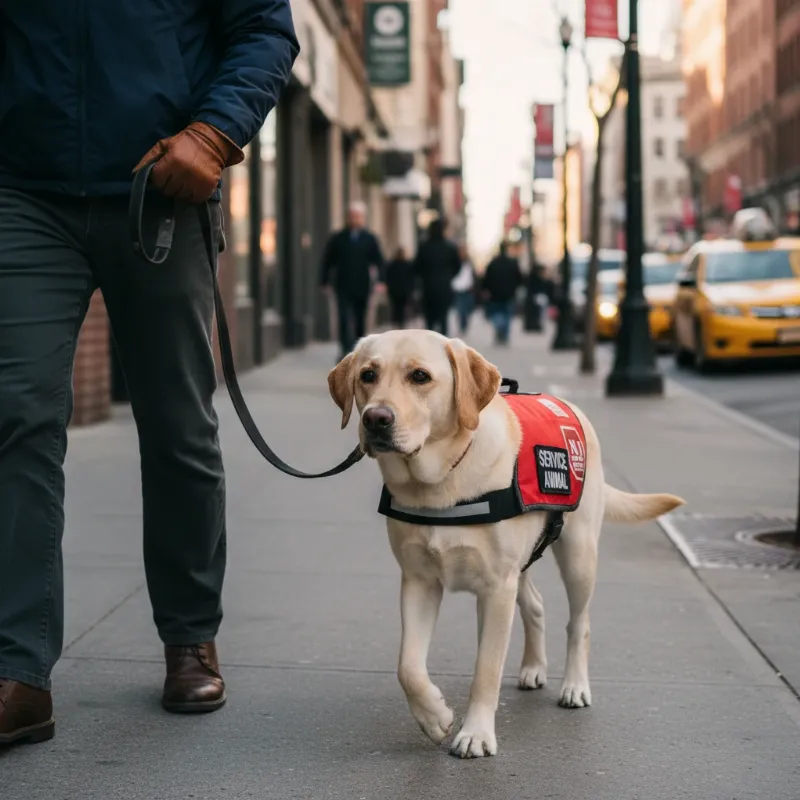 A focused yellow Labrador service dog wearing a red vest, calmly guiding its handler through a busy New Jersey street, showcasing the essence of service dog training new jersey.
Types of Service Dog Training New Jersey Offers
In New Jersey, individuals have a few different avenues they can pursue for service dog training, each with its own structure, timeline, and cost. Exploring options like private in-home dog training nj can be a great starting point for personalized instruction.
Program-Based Training
Many people choose to acquire a service dog from an established organization. These non-profits or businesses breed, raise, and train dogs specifically for service work. The dogs typically live with professional trainers or volunteer puppy raisers for the first 1-2 years of their lives before being matched with a handler. The benefit of this model is receiving a dog that is already expertly trained and certified by the organization. The downside can be long waiting lists and significant costs, sometimes upwards of $20,000, though many organizations have fundraising support.
The Owner-Trainer Model
The ADA allows individuals with disabilities to train their own service dogs. This can be a more affordable and accessible option, and it allows the handler to be involved in every step of the process, strengthening their bond from day one. However, it is an incredibly demanding path. The owner-handler is responsible for all aspects of training, from basic puppy socialization to advanced public access skills and specific task training. This often requires working closely with a professional trainer who specializes in service dogs to ensure the training is effective and meets the high standards required.
Specialized Training Programs
Different disabilities require different tasks. Many New Jersey trainers and organizations specialize in specific areas.
- PTSD Service Dogs: Training focuses on tasks like creating a buffer in public, waking a handler from nightmares, and providing tactile stimulation during anxiety attacks.
- Mobility Service Dogs: These dogs undergo training that builds their strength and teaches them tasks like pulling a wheelchair or providing support for standing and walking.
- Diabetic Alert Dogs: This highly specialized training hones a dog’s natural ability to smell the chemical changes in their handler’s breath or sweat that signal a dangerous drop or spike in blood sugar.
What to Expect During the Training Process
Service dog training is a rigorous and lengthy process that can be broken down into several distinct phases. It demands consistency, patience, and a deep understanding of canine behavior.
Foundational Obedience and Public Access Skills
Before any task-specific training can begin, the dog must have flawless obedience and manners. This goes far beyond the basics of “sit” and “stay.” A service dog must be able to walk calmly on a loose leash, ignore distractions like dropped food or other animals, and remain quietly tucked under a table in a restaurant. This level of control is non-negotiable for a dog that will be entering public spaces. The principles of solid obedience are universal, and understanding them is key, which is why resources on topics like dog obedience training nyc can provide valuable insights into these foundational skills.
According to Dr. Eleanor Vance, a certified applied animal behaviorist, “Public access training is the marathon of dog training. It’s not about flashy tricks; it’s about instilling a profound sense of calm and reliability in the dog, no matter the environment. This is where a dog proves they have the right temperament for the job.”
Task-Specific Training
Once the foundation is solid, the trainer introduces the specific tasks the dog will perform to mitigate the handler’s disability. This training uses positive reinforcement techniques to shape behaviors. For example, to teach a dog to retrieve medication, a trainer might start by rewarding the dog for simply touching the medicine bag, then for picking it up, and gradually building up to the full sequence of fetching it from a counter and bringing it to the handler.
The Public Access Test
While not legally required by the ADA, a Public Access Test is the industry standard for determining if a service dog team is ready to work in public. Reputable trainers and organizations will administer a test that evaluates the team’s ability to navigate various public scenarios safely and unobtrusively. This includes entering buildings, walking through crowds, reacting appropriately to loud noises, and maintaining focus on the handler. Passing this test is a crucial milestone that demonstrates the team is proficient and ready.
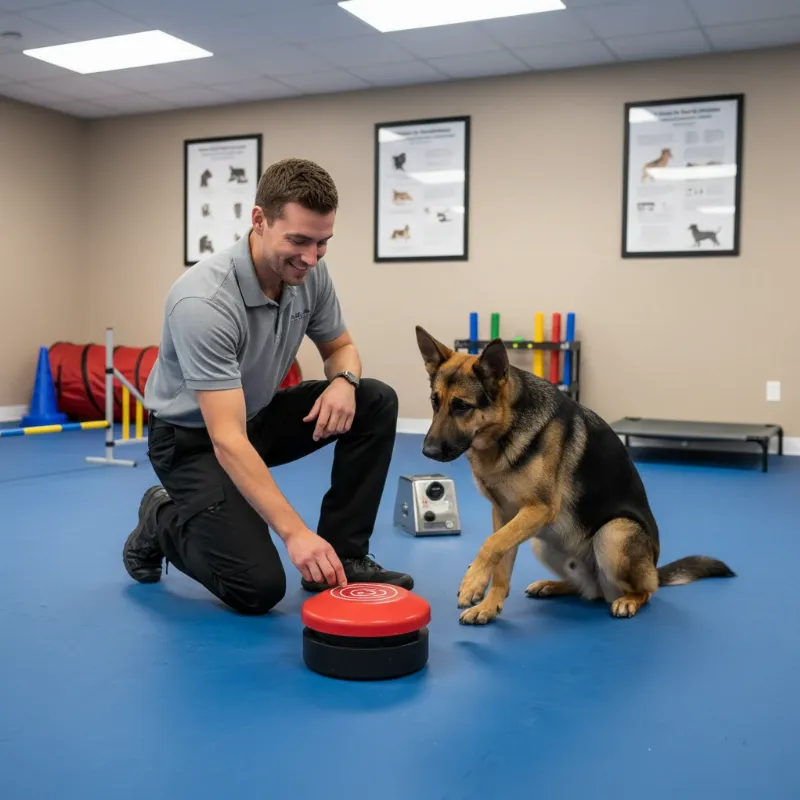 A patient and professional dog trainer working with a German Shepherd on a specific task in a controlled training facility in New Jersey, illustrating service dog training new jersey.
Navigating New Jersey Laws and ADA Regulations
Understanding your rights is a critical part of being a service dog handler. Both federal and state laws protect your right to be accompanied by your service animal in public places.
Public Access Rights
Under the ADA, service dogs are permitted to accompany their handlers anywhere the public is allowed to go. This includes restaurants, hotels, grocery stores, hospitals, and public transportation. Staff are only permitted to ask two questions: (1) Is the dog a service animal required because of a disability? and (2) What work or task has the dog been trained to perform? They cannot ask about the person’s disability, require medical documentation, or ask for a special identification card or training documentation for the dog.
Housing and Employment Protections
The Fair Housing Act (FHA) prevents landlords from discriminating against individuals with disabilities, requiring them to make reasonable accommodations, which includes allowing service animals even in “no pets” housing. Similarly, the ADA requires employers to provide reasonable accommodations for employees with disabilities, which can include allowing a service dog in the workplace.
Choosing the Right Training Program in NJ
Selecting the right trainer or organization is arguably the most important decision in your service dog journey. The quality of the training will directly impact the success of your partnership. It’s crucial to do thorough research, and programs like absolute dog training nj are examples of the professional options available.
Questions to Ask a Potential Trainer
When vetting a trainer, be prepared with a list of questions to gauge their expertise and methods.
- What is your experience with training dogs for my specific disability?
- What training methods do you use? (Look for a focus on positive reinforcement).
- Can I speak with past clients?
- How do you select and temperament-test your dogs?
- What kind of ongoing support do you provide after the dog is placed?
- Are you certified by any professional organizations?
Red Flags to Watch Out For
Be wary of trainers or programs that make unrealistic promises or exhibit questionable practices.
- Guarantees: No reputable trainer can guarantee a dog will be successful.
- Use of Aversive Methods: Avoid trainers who rely on punishment-based tools like prong collars or shock collars. Service dog training should be built on trust and positive reinforcement.
- Lack of Transparency: A good trainer will be open about their methods, pricing, and the training process.
- Selling Certifications: Be extremely cautious of any entity that offers to “certify” your dog or sell you a service dog vest for a fee without any training involved. These are often scams and hold no legal weight.
Frequently Asked Questions (FAQ)
How much does service dog training cost in NJ?
The cost can vary dramatically. Obtaining a fully trained dog from an organization can range from $15,000 to $50,000, though some non-profits provide them at a lower cost or free of charge to qualified individuals (often with long waitlists). The owner-training path can be less expensive upfront, but costs for a well-bred puppy, vet care, and sessions with a professional trainer can still add up to several thousand dollars.
How long does the training take?
On average, it takes 18 to 24 months to fully train a service dog. This includes puppy socialization, basic and advanced obedience, public access training, and specialized task training. The process is a marathon, not a sprint, and cannot be rushed.
Can I train my own pet dog to be a service dog?
While it is legally permissible, it is not always advisable. Most pet dogs do not have the specific temperament—the calmness, focus, and resilience—required for public access work. It’s crucial to have the dog evaluated by a professional service dog trainer to determine if they are a suitable candidate before you invest time and emotion into the process.
What breeds are best for service work?
Labrador Retrievers, Golden Retrievers, and Poodles are the most common due to their stable temperaments and high trainability. However, any dog, including mixed breeds, can be a service dog if they possess the right health, structure, and temperament for the demanding work.
Do service dogs in New Jersey need to be certified?
No. Under the ADA, there is no mandatory national or state-level certification or registration for service dogs. While some organizations provide their own certificates upon graduation, these are not required by law. The dog’s training in specific tasks is what legally qualifies it as a service animal.
Your Journey to Independence
The path of service dog training in New Jersey is a profound commitment that leads to an unparalleled partnership. A well-trained service dog is a key to independence, safety, and a richer quality of life for individuals with disabilities. By understanding the roles they play, the training they require, and the laws that protect them, you can confidently take the first step on this rewarding journey. The dedication you invest in the process will be returned tenfold by a loyal partner who is always ready to help you navigate the world.
