
Finding the right service dog training in Lansing, MI, can feel like a monumental task, but it’s the first step on a journey toward greater independence and partnership. Whether you’re considering a professionally trained service animal or exploring the path of training your own dog, understanding your options in the Greater Lansing area is key. This guide will walk you through the process, from defining what a service dog truly is to identifying the right training resources to fit your unique needs.
For many, a service dog is a lifeline. These aren’t pets, but highly skilled partners trained to perform specific tasks directly related to a person’s disability. The journey to a fully-fledged service dog team is one of dedication, specialized training, and a deep, unbreakable bond.
Understanding Service Dog Laws in Michigan
Before diving into training, it’s crucial to understand the legal landscape. Michigan’s laws align closely with the federal Americans with Disabilities Act (ADA), which provides clear definitions and protections for service animal teams.
What Qualifies as a Service Dog?
Under the ADA, a service animal is defined as a dog that has been individually trained to do work or perform tasks for an individual with a disability. The tasks performed by the dog must be directly related to the person’s disability. This is the key distinction between a service dog and an emotional support animal (ESA). While ESAs provide comfort, they are not trained to perform specific, disability-mitigating tasks and do not have the same public access rights.
In Michigan, only dogs (and in some specific cases, miniature horses) can be legally recognized as service animals.
Your Rights to Public Access
One of the most important aspects of service dog law is the right to public access. This means your service dog can accompany you to places where the public is allowed, including restaurants, grocery stores, hospitals, and hotels. When in a public place, staff are only legally allowed to ask two questions:
- Is the dog a service animal required because of a disability?
- What work or task has the dog been trained to perform?
They cannot ask about your specific disability, require documentation, or ask the dog to demonstrate its task. A new Michigan law enacted in 2023 also grants public access rights to service dogs that are actively in training, as long as they are accompanied by a trainer or raiser for the purpose of socialization and training.
“Public access is a privilege earned through rigorous training,” states Dr. Emily Carter, a certified animal behaviorist. “It’s not just about the dog’s tasks, but about its impeccable behavior, ensuring it is unobtrusive and under the handler’s control at all times.”
It is also worth noting that the Michigan Department of Civil Rights (MDCR) offers a voluntary identification program, providing a patch and ID card. While this is not required and does not grant any additional legal rights, some handlers find it helpful for smoother public interactions.
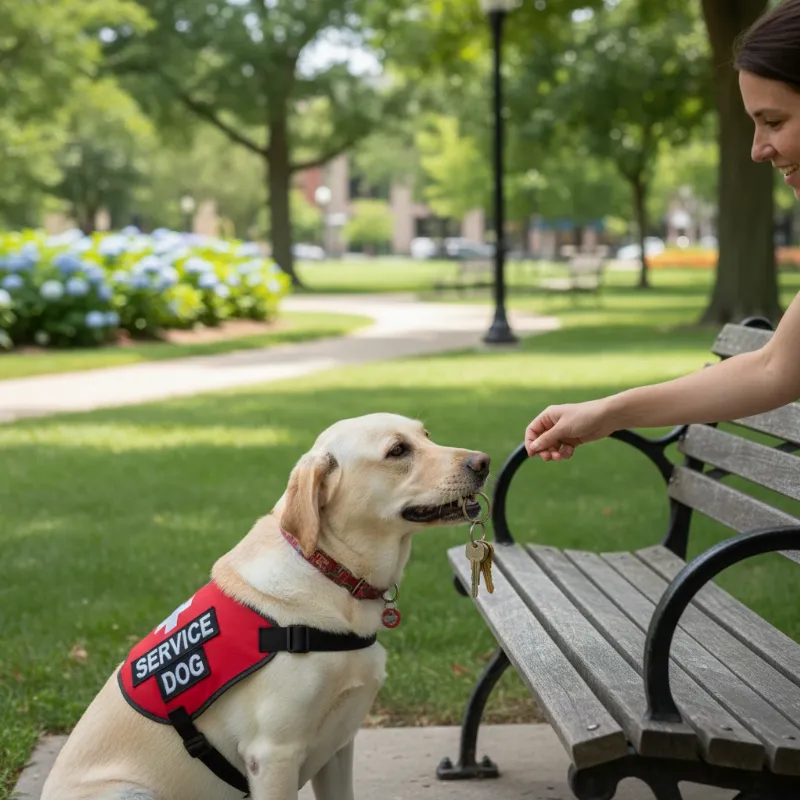 A focused Labrador retriever service dog in a vest practices retrieving a specific item for its handler in a Lansing park setting, showcasing advanced task training.
Choosing Your Service Dog Training Path
There are two primary paths to obtaining a service dog: acquiring a fully trained dog from an organization or training a dog yourself with professional guidance. Both have their own benefits and considerations.
Professional Programs vs. Owner-Training
Professional Programs: Organizations that provide fully trained service dogs invest years and tens of thousands of dollars into preparing an animal. These dogs are often purpose-bred and have undergone extensive health and temperament screening. The cost for a fully trained service dog can range from $20,000 to $50,000 or more, and waitlists can be long.
Owner-Training: The ADA permits individuals with disabilities to train their own service dogs. This path offers more control over the process and the ability to train a dog you may already have a bond with. However, it requires an immense amount of time, consistency, and expertise. Many owner-trainers partner with professional trainers to ensure success. The cost for this path is more spread out but can still be significant, with professional consultation fees ranging from $150 to $250 per hour.
What to Look for in a Lansing Dog Trainer
When searching for professional service dog training in Lansing, MI, it’s vital to find a trainer who uses positive, force-free methods and has verifiable experience with service animals. Look for:
- Experience: They should have a deep understanding of public access training and task-specific skills.
- Methodology: Look for trainers who use positive reinforcement, which builds a strong, trust-based relationship.
- Support: A good trainer acts as a coach and a partner. Local Lansing-area trainers like Click! Pawsitive Family Pet Center offer robust support for owner-trainers, providing guidance on everything from dog selection and socialization to advanced task work.
- Transparency: They should be clear about their process, costs, and what you can realistically expect.
The Stages of Service Dog Training
Training a service dog is a marathon, not a sprint. The process is comprehensive and can take anywhere from 18 to 24 months. It is generally broken down into three critical phases.
1. Foundational Skills and Socialization
This is where it all begins. A prospective service dog must have a rock-solid temperament and be bombproof in various environments.
- Basic Obedience: Mastering commands like sit, stay, down, and a reliable recall is non-negotiable.
- Advanced Obedience: This includes skills like a perfect heel, ignoring distractions (dropped food, other dogs), and settling quietly for long periods.
- Socialization: The dog must be exposed to a wide variety of sights, sounds, smells, and situations from a young age to build a confident, neutral worldview.
2. Public Access Training
This phase is about proofing foundational skills in the real world. The dog learns to navigate busy public spaces calmly and unobtrusively. This includes:
- Walking politely through store aisles.
- Tucking under tables at restaurants.
- Ignoring strangers who may try to pet them.
- Remaining focused on the handler despite overwhelming distractions.
3. Task-Specific Training
This is the most customized part of the training, where the dog learns the specific tasks that will mitigate the handler’s disability. These tasks are as unique as the individuals they help. Examples include:
- Mobility Assistance: Retrieving dropped items, opening doors, or providing balance support.
- Psychiatric Support: Performing deep pressure therapy during an anxiety attack, interrupting repetitive behaviors, or creating space in a crowd.
- Medical Alert: Alerting to changes in blood sugar, the onset of a seizure, or the presence of an allergen.
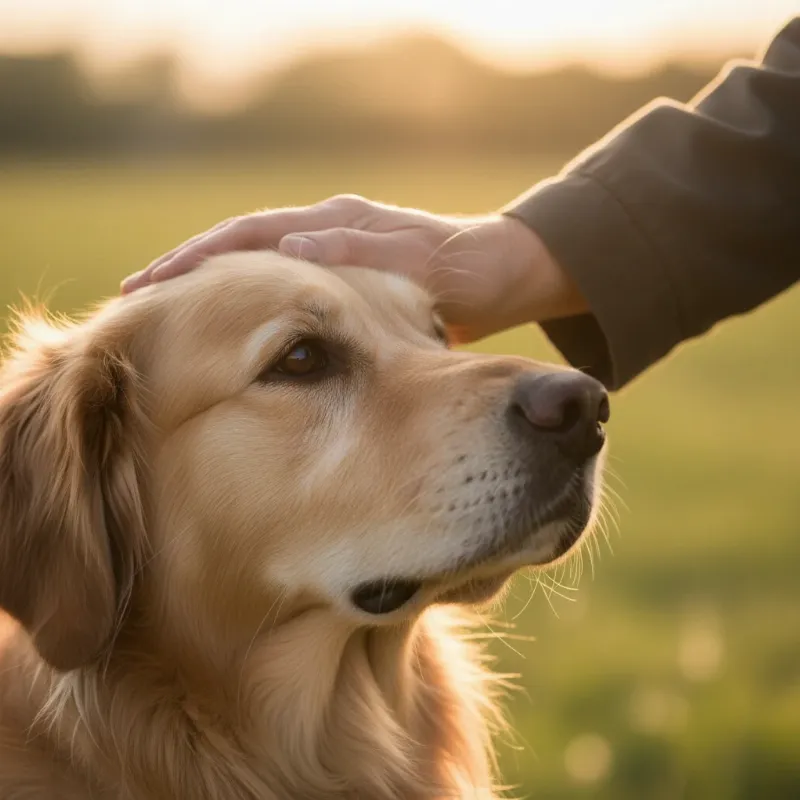 A close-up, heartwarming image of a person's hand resting gently on their service dog's head, symbolizing the deep bond and trust essential for a service dog team in Lansing.
Is Your Dog a Good Candidate for Service Work?
Not every dog is cut out to be a service dog, and that’s okay. The demands of the job are incredibly high. A good candidate typically has:
- A Calm Temperament: They are not easily frightened, reactive, or aggressive.
- A Strong Work Ethic: They are eager to please and enjoy having a job to do.
- High Trainability: They pick up on new skills quickly and have a good attention span.
- Physical Soundness: They must be healthy and of an appropriate size and build to perform their required tasks.
Before embarking on the training journey, a professional evaluation is highly recommended to assess a dog’s suitability for the demanding role of a service animal.
Final Thoughts: A Journey of Partnership
Embarking on the path of service dog training in Lansing, MI, is a significant commitment of time, energy, and resources. But for the right team, it is a transformative experience. It’s about building a partnership based on trust, communication, and mutual respect. This journey culminates in a working relationship that not only mitigates a disability but also opens up a world of independence and possibility.
Frequently Asked Questions (FAQ)
How do I know if I qualify for a service dog in Michigan?
To qualify for a service dog under the ADA, you must have a disability that substantially limits one or more major life activities. A healthcare provider can help you determine if your condition meets this definition and if a service dog could be a beneficial part of your treatment plan.
Can I train my puppy to be my service dog?
Yes, you can start training a puppy, but it’s a long and intensive process. It involves careful socialization from a very young age, ongoing obedience training, and eventually, public access and task training. Partnering with a professional trainer from the start is highly advisable to guide you through the critical developmental stages.
What is the difference between a service dog and a therapy dog?
A service dog is trained to perform specific tasks for one person with a disability and has legal public access rights. A therapy dog is trained to provide comfort and affection to many people in settings like hospitals, nursing homes, and schools, but they do not have the same public access rights as service dogs.
Do I need to have my service dog certified in Lansing, MI?
No, the ADA does not require certification or registration for service dogs. While some organizations offer these, they are not legally recognized. The legitimacy of a service dog is based on its individual training to perform specific tasks for a person with a disability.
How much does it cost to train your own service dog?
While it avoids the large up-front cost of a program dog, owner-training is not free. You should budget for the cost of the dog, high-quality food, regular veterinary care, training equipment, and professional trainer consultation fees, which can accumulate to several thousand dollars over the 1-2 year training period.
What breeds are best for service work?
Labrador Retrievers, Golden Retrievers, and Standard Poodles are commonly chosen for their temperament, intelligence, and work ethic. However, any dog of any breed can be a service dog, as long as it has the right temperament and can be trained to perform the necessary tasks.
What should I do if a business denies me access with my service dog?
If a business illegally denies you entry, try to calmly and politely educate the staff on your rights under the ADA and Michigan law. You can explain that your dog is a service animal required for your disability. If they still refuse access, do not escalate the situation. You can contact the Michigan Department of Civil Rights or the Department of Justice to report the incident.
