
Embarking on the journey of acquiring a service animal is a life-changing decision, and understanding the nuances of Service Dog Training In North Carolina is the first crucial step. For individuals with disabilities, a service dog is not just a companion but a vital partner that provides independence and support. This guide will walk you through the entire process, from understanding the laws that protect you to finding a qualified trainer who can shape a puppy into a proficient and reliable partner.
The path involves dedication, specialized knowledge, and a deep understanding of both canine behavior and the legal landscape. Whether you are considering training a dog yourself or seeking a professional program, knowing your rights and the responsibilities involved is paramount. For many, this journey starts with finding local experts, and resources for service dog training greensboro nc can be a great starting point for those in the Triad region. Let’s delve into what it truly means to train a service dog in the Tar Heel State.
Understanding the Different Types of Assistance Animals
Before diving into the specifics of training, it’s essential to distinguish between the different types of assistance animals. This distinction is critical because federal and state laws grant different rights to each category. Misrepresenting a pet as a service animal can undermine the legitimacy of real working teams.
Service Dogs
According to the Americans with Disabilities Act (ADA), a service animal is a dog that is individually trained to do work or perform tasks for a person with a disability. The tasks performed by the dog must be directly related to the person’s disability. This can include a wide range of duties, such as guiding a person who is blind, alerting a person who is deaf, pulling a wheelchair, or calming a person with Post Traumatic Stress Disorder (PTSD) during an anxiety attack.
Emotional Support Animals (ESAs)
Emotional Support Animals provide comfort and companionship to individuals with a psychological or emotional condition. Unlike service dogs, ESAs are not required to perform specific tasks. Their presence alone helps to mitigate symptoms. While they have certain housing rights under the Fair Housing Act, they do not have the same public access rights as service dogs in North Carolina.
Therapy Dogs
Therapy dogs are trained to provide comfort and affection to people in various facilities, such as hospitals, nursing homes, and schools. They are not assistance animals for their handlers but rather work with their owners to help others. They do not have public access rights under the ADA.
Navigating Service Dog Laws in North Carolina
Your rights as a service dog handler are protected under both federal and state laws. Understanding these regulations empowers you to navigate public spaces with confidence.
Federal Laws: The Americans with Disabilities Act (ADA)
The ADA is the primary federal law governing service animals. It mandates that state and local governments, businesses, and nonprofit organizations that serve the public must allow service animals to accompany people with disabilities in all areas where the public is normally allowed to go.
Under the ADA:
- Staff can only ask two questions: (1) is the dog a service animal required because of a disability, and (2) what work or task has the dog been trained to perform?
- They cannot ask about the person’s disability, require medical documentation, or ask that the dog demonstrate its task.
- Allergies and fear of dogs are not valid reasons for denying access or refusing service to people using service animals.
- A service animal must be harnessed, leashed, or tethered unless these devices interfere with the service animal’s work or the individual’s disability prevents using these devices.
North Carolina State Laws
North Carolina law aligns with the ADA but also provides some specific protections. The state law clarifies that a “service animal” includes dogs being trained and extends access rights to trainers accompanied by the animal. This is crucial for the public access portion of training, allowing trainers to expose dogs to real-world environments. When seeking professional help, it’s wise to find a reputable [dog trainer in charlotte nc](https://dogcarestory.com/dog-trainer-in-charlotte-nc/) who is well-versed in both state and federal regulations.
What Does Service Dog Training Involve?
Service dog training in North Carolina is a long and intensive process that goes far beyond basic obedience. It is typically divided into several key phases, each building upon the last to create a reliable and well-behaved working partner. The entire process can take up to two years to complete.
Foundational Obedience and Manners
This is the bedrock of all training. Before a dog can learn complex tasks, it must have impeccable manners. This includes mastering commands like sit, stay, come, down, and heel, both on and off-leash and in distracting environments. It also involves crucial socialization to ensure the dog is calm and confident around new people, sounds, and places. A dog that is easily startled or reactive is not a suitable candidate for service work.
Public Access Training
Public access is what distinguishes a service dog from a pet. This phase involves systematically exposing the dog to various public environments to ensure it remains focused on its handler regardless of distractions. This includes:
- Navigating busy sidewalks and crossing streets safely.
- Riding public transportation like buses and trains.
- Settling quietly under tables in restaurants and theaters.
- Ignoring other people, food on the floor, and other animals.
- Remaining calm in crowded places like shopping malls and grocery stores.
The goal is for the dog to be “invisible” in public, performing its duties without disrupting the environment.
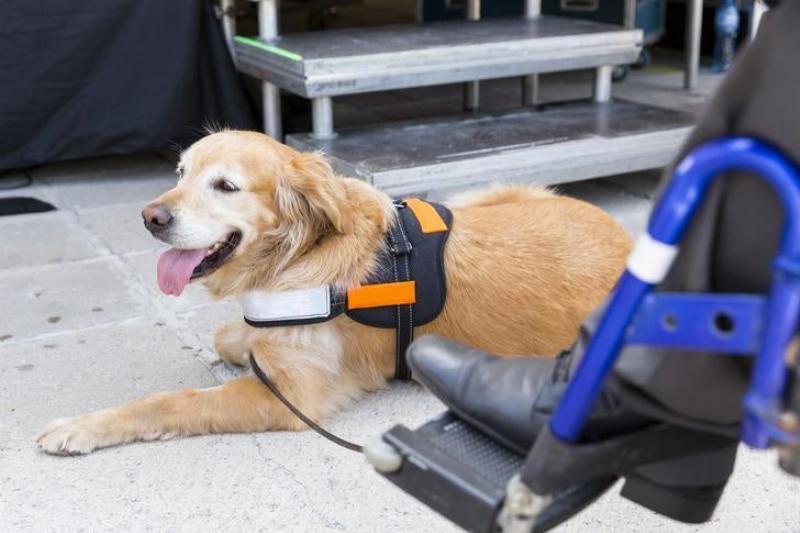 A focused Labrador Retriever performing a task during a service dog training in North Carolina session.
Disability-Specific Task Training
This is the most customized part of the training. The tasks taught are directly related to mitigating the handler’s disability. The possibilities are vast and tailored to individual needs.
According to Dr. Elizabeth Foster, a veterinary behaviorist, “Task training must be methodical and positive. We are teaching the dog to recognize specific cues, some of which may be subconscious signals from the handler, and respond with a precise, life-assisting action. It’s a remarkable partnership built on trust and clear communication.”
Examples of tasks include:
- For Mobility Assistance: Retrieving dropped items, opening and closing doors, turning lights on and off, or providing balance support.
- For Diabetic Alert: Detecting and alerting to dangerous changes in blood sugar levels.
- For Psychiatric Support: Performing deep pressure therapy to calm an anxiety attack, interrupting repetitive behaviors, or creating a physical barrier in crowded spaces.
- For Hearing Alert: Alerting a deaf or hard-of-hearing person to sounds like a doorbell, smoke alarm, or a crying baby.
Some dogs may require specialized training to handle challenging behaviors, and finding a professional who understands [aggressive dog training charlotte](https://dogcarestory.com/aggressive-dog-training-charlotte/) can be essential if foundational issues arise during the process.
How to Get a Service Dog in North Carolina
There are generally two paths to getting a service dog: acquiring a fully trained dog from an organization or training a dog yourself, often with the guidance of a professional trainer.
Program-Trained Dogs
Many non-profit organizations breed, raise, and train service dogs for specific disabilities. The benefits are significant: the dogs are often purpose-bred for temperament and health, and they undergo years of professional training. However, the waitlists for these programs can be several years long, and the cost, while often subsidized, can still be substantial.
Owner-Training
The ADA allows individuals with disabilities to train their own service dogs. This option offers more control over the process and the ability to form a bond from puppyhood. However, it is a massive undertaking that requires significant time, patience, resources, and knowledge. Most owner-trainers partner with a professional trainer to guide them through the complexities of public access and task training. This is where finding a local program like [dog training elite charlotte](https://dogcarestory.com/dog-training-elite-charlotte/) can be invaluable.
If the training process seems too daunting, another option is to look for [trained dogs for sale nc](https://dogcarestory.com/trained-dogs-for-sale-nc/) from reputable breeders or trainers who specialize in starting dogs on a service work path.
The Cost of Service Dog Training
The financial investment in a service dog is significant. A fully trained dog from an organization can cost anywhere from $20,000 to $50,000, though many non-profits fundraise to place dogs at a lower cost to the individual.
For owner-trainers, costs include the price of the dog, vet care, food, gear, and professional training fees, which can easily accumulate to over $10,000 over two years. It’s essential to budget for these expenses before beginning the journey.
Frequently Asked Questions (FAQ)
What breeds are best for service work?
Labrador Retrievers, Golden Retrievers, and German Shepherds are common choices due to their temperament, intelligence, and work ethic. However, any dog of any breed can be a service dog as long as it has the right temperament and can be trained to perform its tasks.
Do I need to register my service dog in North Carolina?
No. There is no official government registry for service animals in the United States. Certificates, registrations, or vests purchased online do not confer any legal rights and are not required by the ADA.
Can my service dog be denied access?
Yes, but only under specific circumstances. A business can ask you to remove your service animal if it is out of control and you do not take effective action to control it, or if it is not housebroken.
Can I train my current pet to be a service dog?
It’s possible, but often difficult. A service dog needs a specific temperament: calm, focused, non-reactive, and eager to please. Many wonderful pets do not have this specific combination of traits necessary for the high-stress demands of public access work. A professional evaluation is highly recommended.
How long does it take to train a service dog?
On average, it takes 18 to 24 months to fully train a service dog from puppyhood. This includes socialization, obedience, public access skills, and task training.
Your Partner for Life
The journey of service dog training in North Carolina is a profound commitment that culminates in a partnership unlike any other. A well-trained service dog provides not just functional assistance but also unwavering support, opening up a world of independence and confidence for its handler. By understanding the laws, the process, and the dedication required, you can take the first step toward finding and training a true partner for life.
