
Embarking on the journey of acquiring a service animal is a significant, life-changing decision. For residents in the Pikes Peak region, finding the right service dog training in Colorado Springs is the first step toward gaining independence and a better quality of life. This guide will walk you through the essential aspects of training, from understanding the laws to selecting a qualified trainer, ensuring you and your canine partner are set up for success.
Navigating the world of service animals can feel complex, but it doesn’t have to be. The most critical element is the specialized training that enables a dog to perform specific tasks for an individual with a disability. For those ready to begin this transformative process, finding the right professional guidance is key. A reputable dog trainer in colorado springs can provide the foundational skills necessary for this important work.
Understanding Service Dogs: More Than Just a Pet
Before diving into training, it’s crucial to understand what a service dog is, especially according to the law. The Americans with Disabilities Act (ADA) defines a service animal as a dog that is individually trained to do work or perform tasks for a person with a disability. This is a critical distinction that sets them apart from other support animals.
- Service Dogs: These are working animals, not pets. The tasks they perform must be directly related to their handler’s disability. For example, a dog that guides a visually impaired person or alerts a deaf person to a sound is a service dog.
- Emotional Support Animals (ESAs): While ESAs provide comfort and therapeutic benefit, they are not trained to perform specific tasks. Therefore, they do not have the same public access rights as service dogs.
- Therapy Dogs: These dogs are trained to provide comfort and affection to people in facilities like hospitals, nursing homes, and schools. They are not service dogs and do not have public access rights.
In Colorado, the law aligns with the ADA but adds an important protection: service dogs in training are granted the same public access rights as fully trained service animals. This allows handlers to train their dogs in real-world environments, which is essential for their development.
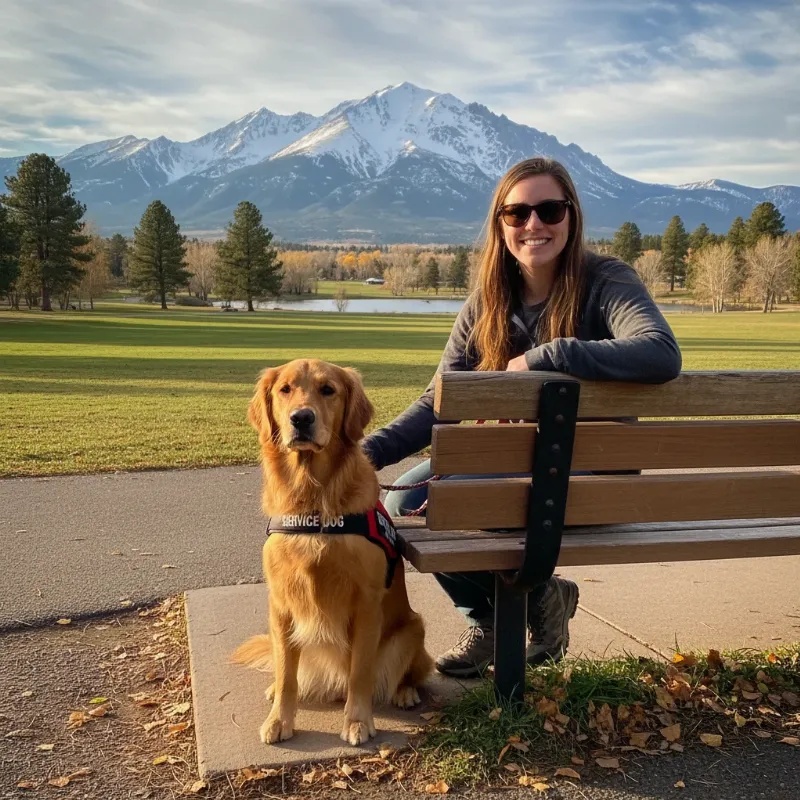 A focused golden retriever wearing a service dog vest during a training session in a Colorado Springs park, showcasing the importance of service dog training colorado springs.
The Journey of Service Dog Training
There are generally two paths to training a service dog: you can work with a professional organization from the start, or you can undertake the training yourself (owner-training), often with the guidance of a professional trainer.
Key Stages of Training
Regardless of the path you choose, the training process is intensive and multi-faceted. It builds from a solid foundation of obedience to highly specialized skills.
- Basic Obedience and Manners: The dog must be completely under the handler’s control. This includes flawless responses to commands like sit, stay, come, and heel. They must be housebroken, well-groomed, and not exhibit disruptive behaviors like barking, jumping on people, or being aggressive.
- Public Access Skills: A service dog must be able to accompany its handler anywhere the public is allowed. This requires extensive socialization and training to ensure the dog remains calm and focused in distracting environments like busy stores, restaurants, and public transportation. They must learn to ignore people, other animals, and dropped food.
- Specific Task Training: This is the core of what makes a dog a service animal. The tasks are customized to mitigate the handler’s specific disability. This phase can be the longest and most complex part of the training.
What Tasks Can a Service Dog Be Trained to Perform?
The work a service dog does is tailored to its handler’s unique needs. The possibilities are vast and can make a profound difference in a person’s ability to navigate daily life.
- For Mobility Impairments: Dogs can be trained to retrieve dropped items, open and close doors, turn lights on and off, and provide balance and support for a handler who is unsteady.
- For Psychiatric Disabilities (PTSD, Anxiety): A psychiatric service dog can be trained to interrupt anxious behaviors, perform deep pressure therapy to calm a panic attack, create space around its handler in crowded areas, and conduct room searches to alleviate hyper-vigilance.
- For Medical Alerts: These dogs use their incredible sense of smell or intuition to detect changes in their handler’s body. They can be trained to alert to low blood sugar for a diabetic, an impending seizure for an epileptic, or a dangerous allergen.
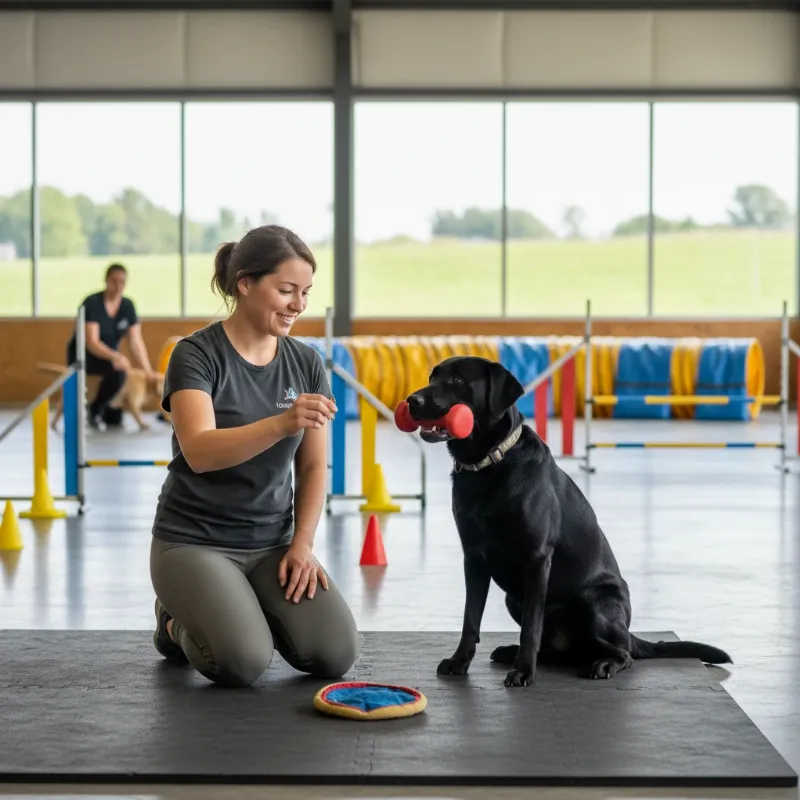 A professional dog trainer guiding a labrador through a specific task in an indoor training facility, demonstrating a key aspect of service dog training colorado springs.
How to Choose the Right Trainer in Colorado Springs
Finding a qualified and ethical trainer is crucial. While Colorado does not require service dogs to be professionally trained, expert guidance is invaluable. The goal is to find the [best dog training colorado springs](https://dogcarestory.com/best-dog-training-colorado-springs/) to match your specific situation.
What to Look For:
- Experience with Service Dogs: Ask about their specific experience training service dogs for disabilities similar to yours. General dog obedience is not enough.
- Positive Reinforcement Philosophy: Modern, ethical training focuses on rewarding desired behaviors rather than punishing unwanted ones. This builds a strong, trusting bond between you and your dog.
- Transparency: A reputable trainer should be open about their methods, costs, and the likely timeline for training. They should be willing to provide references from past clients.
- Credentials and Certifications: Look for trainers certified by professional organizations like the Certification Council for Professional Dog Trainers (CCPDT).
- Focus on the Team: The best trainers understand they are training both the dog and the handler. You should be heavily involved in the process to ensure you can confidently lead your canine partner.
According to fictional service dog expert Dr. Miles Bennett, “The success of a service dog team isn’t just about the dog’s skills; it’s about the symbiotic relationship and seamless communication between the dog and its handler. The trainer’s job is to build that bridge.”
Navigating Public Access and the Law
Understanding your rights is empowering. Under the ADA, in places of public accommodation, staff are only allowed to ask two questions:
- Is the dog a service animal required because of a disability?
- What work or task has the dog been trained to perform?
They cannot ask about your disability, require medical documentation, or demand a special identification card or demonstration of the dog’s tasks. It is also important to know that while vests and registration are not legally required, they can be helpful in signaling to the public that your dog is a working animal.
Frequently Asked Questions (FAQ)
How long does service dog training take?
On average, it takes 18 to 24 months to fully train a service dog. The timeline depends on the dog’s age and temperament, as well as the complexity of the tasks it needs to learn.
What is the cost of service dog training in Colorado Springs?
The cost can vary significantly, from a few thousand dollars for owner-training with professional guidance to upwards of $25,000 or more for a fully trained dog from a specialized organization.
Can my own dog become a service dog?
Yes, it is possible to train your own dog for service work. However, the dog must have the right temperament—calm, confident, friendly, and eager to please. A professional trainer can help evaluate your dog’s suitability.
What breeds are best for service work?
Labrador Retrievers, Golden Retrievers, and German Shepherds are common choices due to their intelligence and stable temperaments. However, any dog of any breed can be a service dog, as long as it has the right disposition and can perform its tasks.
Do I need to register my service dog in Colorado?
No. There is no official, legally-recognized registry for service animals in Colorado or at the federal level. Websites offering “certification” or “registration” are not affiliated with the government and are not required.
Your Path to Independence
The journey of service dog training in Colorado Springs is a significant commitment of time, effort, and resources. However, the result is a partnership that provides not only practical assistance but also unwavering companionship and a renewed sense of freedom. By understanding the process, knowing your rights, and finding the right support, you can successfully build an incredible bond with a dog that will truly change your life.
