
Navigating life with an anxiety disorder can feel like a constant uphill battle. The racing thoughts, the sudden panic, the overwhelming sense of dread—it can be isolating and debilitating. But what if a loyal, four-legged friend could do more than just offer a comforting cuddle? This is where the dedicated process of service dog training for anxiety comes in, transforming a canine companion into a life-changing partner that provides tangible support to mitigate the symptoms of anxiety and related conditions. It’s a journey that builds an incredible bond and empowers individuals to reclaim their independence. Understanding the nuances of this specialized training is the first step toward unlocking a new level of support, a journey that many are now exploring. For a deeper dive into specific training techniques, you can explore guides on how to train service dog for anxiety to get a foundational understanding.
What Exactly is a Psychiatric Service Dog?
Before diving into the training itself, it’s crucial to understand what sets a psychiatric service dog apart from other support animals. Under the Americans with Disabilities Act (ADA), a service animal is a dog that is individually trained to do work or perform tasks for a person with a disability. For anxiety, this disability can include conditions like Post-Traumatic Stress Disorder (PTSD), panic disorder, or severe generalized anxiety.
Unlike emotional support animals (ESAs), whose presence alone provides comfort, service dogs are trained to perform specific, active tasks that directly help manage their handler’s disability. They are not pets; they are working animals with specific jobs to do.
“The distinction is all about the tasks,” states Dr. Marcus Thorne, a specialist in canine behavioral science. “An ESA provides comfort by being there. A psychiatric service dog is trained to take specific action when it senses a change in its handler’s state, effectively intervening to de-escalate an anxiety or panic attack.”
This distinction is what grants them legal access to public places where pets and ESAs are typically not allowed, such as restaurants, grocery stores, and airplanes.
Key Tasks for an Anxiety Service Dog
The core of service dog training for anxiety revolves around teaching the dog to perform tasks that interrupt, alert, or assist during moments of high stress. The specific tasks are tailored to the individual’s needs, but some of the most common and effective ones include:
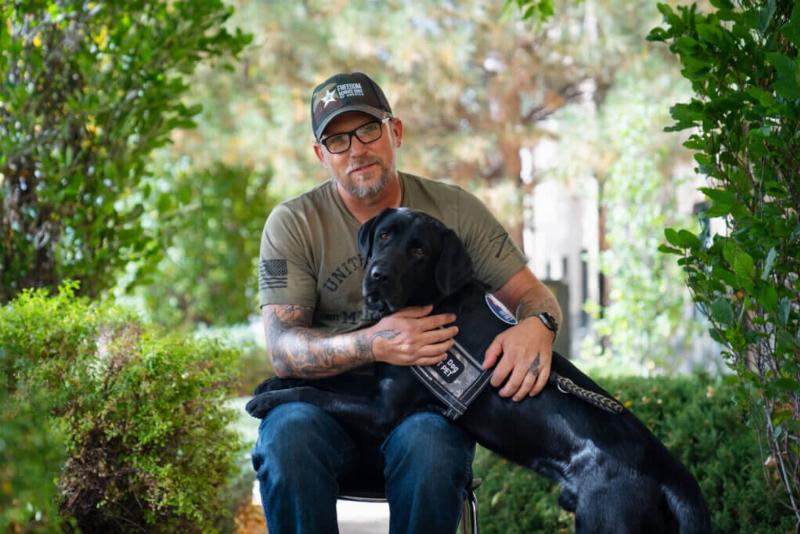
- Deep Pressure Therapy (DPT): The dog is trained to use its body weight to apply gentle, calming pressure on the handler’s lap or chest. This tactile grounding technique can help stop the flood of cortisol during a panic attack and promote a sense of security.
- Tactile Interruption and Grounding: When a handler begins to exhibit anxious behaviors like leg-bouncing, skin-picking, or scratching, the dog is trained to interrupt the behavior by nudging, pawing, or licking their hand. This brings the handler back to the present moment and helps them break the cycle of anxiety.
- Panic and Anxiety Alerts: Many dogs can be trained to recognize the subtle physiological changes that precede an anxiety attack, such as an increase in heart rate or changes in breathing. The dog can then alert the handler by pawing, nudging, or whining, giving them time to find a safe space or use other coping mechanisms.
- Creating Personal Space: In crowded environments that can be triggering, a service dog can be trained to stand in front of or behind their handler, creating a physical buffer that prevents people from getting too close and adding to the sensory overload.
- Medication Reminders: For individuals who require medication at specific times to manage their anxiety, a dog can be trained to bring them their medication pouch or persistently nudge them until they take it.
- Finding an Exit or Person: During a dissociative episode or a severe panic attack in public, a dog can be trained to lead their handler to an exit or to find a trusted friend or family member in a crowd.
 A calm yellow Labrador retriever wearing a service dog vest, gently placing its head on a person's lap in a comforting manner as part of service dog training for anxiety.
The Path to a Fully Trained Service Dog
The journey of service dog training for anxiety is intensive and can take anywhere from one to two years to complete. It involves much more than just basic obedience; it encompasses public access skills, desensitization, and specialized task work. There are two primary routes one can take: program training or owner-training.
Professional Training Programs
Organizations and professional trainers offer fully or partially trained service dogs. These programs handle the entire process, from puppy selection and socialization to advanced task training. While this is often the most reliable route, it can be very expensive, and waitlists can be long. The financial commitment is significant, raising the question of how much does service dog training cost for anxiety, with costs varying widely based on the provider.
Owner-Training: A Hands-On Approach
The ADA allows individuals with disabilities to train their own service dogs. This path offers more flexibility and a potentially lower cost, but it requires an immense amount of dedication, consistency, and knowledge. Owner-trainers are responsible for every aspect of the dog’s learning, from basic potty training to mastering complex anxiety-mitigating tasks. It is highly recommended that owner-trainers work closely with a professional trainer who has experience in service dog work to ensure they are on the right track. This partnership is crucial for success, especially when navigating the complexities of public access training.
What Makes a Good Candidate for Anxiety Service Work?
Not every dog is cut out to be a service animal. The job is demanding and requires a specific temperament. While breeds like Labradors, Golden Retrievers, and Poodles are common choices due to their intelligence and eager-to-please nature, the individual dog’s personality is far more important than its breed.
Key traits of a successful service dog candidate include:
- Calm and Confident Demeanor: The dog must be able to remain composed in a variety of loud, crowded, and unpredictable environments.
- Strong Bond with Handler: A deep connection is essential for the dog to be attuned to its handler’s emotional and physiological changes.
- High Trainability: The dog should be intelligent, food-motivated, and eager to learn new commands and tasks.
- Non-Reactive Nature: It must not be easily distracted by other people, animals, sounds, or smells while working.
Public Access: The Final Frontier
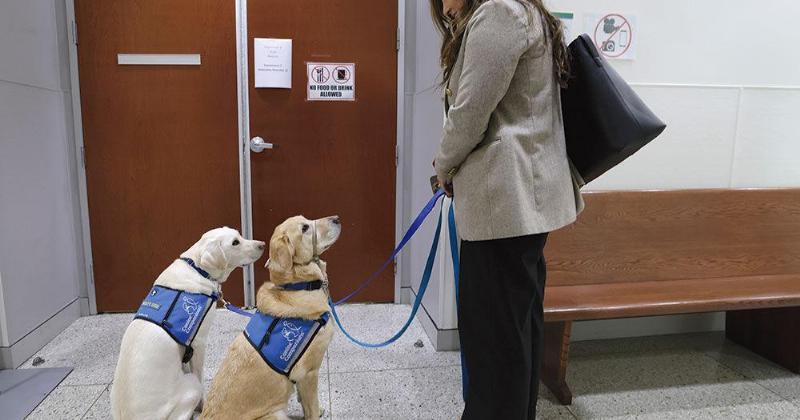
A critical component of service dog training for anxiety is public access training. This ensures the dog can behave appropriately and remain focused on its handler in any public setting. This includes mastering commands like a solid “leave it,” ignoring dropped food, walking calmly on a leash without pulling, and tucking neatly under tables in restaurants.
A dog that cannot maintain this standard of behavior is not ready to be a full-fledged service animal. A poorly behaved dog in public not only reflects badly on the handler but can also pose a risk to the public and damage the reputation of all service dog teams. For those looking at specific programs, facilities like the reynolds dog resort & training center might offer foundational skills that could be built upon for service work.
 A person experiencing anxiety sitting on the floor while their golden retriever service dog performs Deep Pressure Therapy by laying across their lap.
Frequently Asked Questions (FAQ)
How long does service dog training for anxiety take?
The process is comprehensive and typically takes 18 to 24 months. This includes basic puppy manners, advanced obedience, extensive public access training, and the specialized tasks needed to mitigate anxiety symptoms.
Do I need a doctor’s note to have a service dog for anxiety?
While you are not required to carry documentation for a service dog under the ADA, you will need a diagnosis from a licensed mental health professional that confirms your anxiety qualifies as a disability. This is what legally entitles you to a service animal.
Can any dog breed be a service dog for anxiety?
Yes, any breed can be a service dog. The success of a service dog depends on its individual temperament, health, and trainability, not its breed. The dog must be calm, intelligent, and eager to work.
Are there official certifications or registrations for service dogs?
No. Under the ADA, there is no official government registration or certification for service dogs. Websites that offer to “register” your dog for a fee are scams. The legitimacy of a service dog is based on its training to perform tasks for a person with a disability.
What is the difference between an emotional support dog and a psychiatric service dog?
A psychiatric service dog is trained to perform specific tasks to help with a person’s disability (e.g., applying deep pressure during a panic attack). An emotional support animal (ESA) is not trained to perform specific tasks but provides comfort and companionship through its presence. Because of this, ESAs do not have the same public access rights as service dogs.
The Journey is a Partnership
Embarking on the path of service dog training for anxiety is more than just a series of commands and rewards. It is about building an unbreakable bond of trust and communication between a person and their dog. This canine partner can provide a sense of safety and confidence that allows an individual to engage with the world in ways they may not have thought possible. It’s a commitment to a shared life of mutual support, where a wagging tail and a gentle nudge can be the anchor in the storm of anxiety, proving that sometimes, the most powerful medicine comes with four paws and a wet nose. The journey can be complex, and exploring specific training modules for anxiety service dog training can provide valuable, structured insight.
