
Arthritis, also known as degenerative joint disease or osteoarthritis, is a chronic and painful condition that affects a cat’s joints. It is commonly associated with aging, and it’s estimated that between 70% and 90% of cats over the age of 12 suffer from it. This progressive disease develops over years, leading to the breakdown of cartilage that cushions the joints. As the cartilage wears away, bones can rub against each other, causing inflammation, swelling, and pain. The most commonly affected joints include the spine, hips, knees, and elbows, but arthritis can impact any joint in a cat’s body. While there’s no specific breed or sex predilection, it’s primarily considered an age-related ailment.
Recognizing the Signs of Feline Arthritis
Cats are masters at hiding pain, which can make recognizing arthritis challenging for owners. While some cats may exhibit obvious signs like limping, swollen joints, and muscle loss, others display more subtle changes. These can include a reluctance to jump or play, decreased energy levels, and apparent agility issues when navigating heights. Difficulty in grooming due to pain can also lead to a less well-kept appearance. Owners might also observe changes in a cat’s posture or how they sit and sleep. In some cases, arthritis-related pain during litter box use can cause cats to associate the box with discomfort, leading to inappropriate elimination. It’s important to remember that these changes typically occur gradually over time.
What Causes Arthritis in Cats?
In many instances, arthritis in cats develops without a clear cause, though genetics may play a role, particularly in age-related cases. However, arthritis can also arise from joint injuries. These injuries don’t have to be severe and can stem from various sources:
- Ligament injuries: Such as a tear in the anterior cruciate ligament (ACL).
- Immune-mediated diseases: Conditions like immune-mediated non-erosive polyarthritis.
- Tick-borne diseases: Including Lyme disease.
- Direct trauma: Resulting from accidents like car collisions or falls.
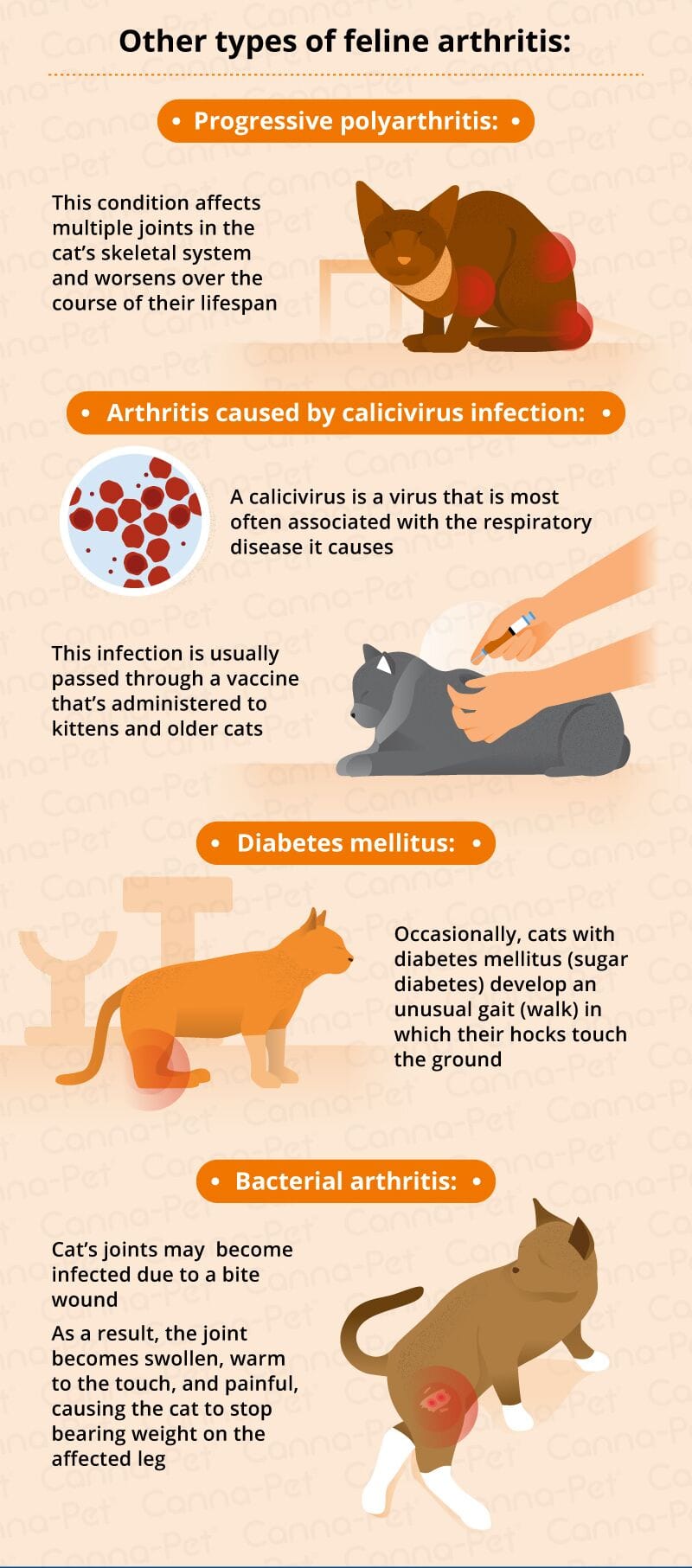
- Infections: Such as septic arthritis.
- Congenital defects: Pre-existing abnormalities in joint development.
Once an injury occurs, the joint releases enzymes that further degrade cartilage and collagen, exacerbating inflammation and perpetuating the cycle of arthritis.
Diagnosing Arthritis in Feline Patients
Veterinarians often suspect arthritis based on a physical examination, but definitive diagnosis requires further diagnostic steps. Some cats, due to their stoic nature, may not show obvious symptoms and are often diagnosed incidentally when abnormalities are detected during a routine exam or via X-rays. During a physical exam, a veterinarian might observe:
- Lameness or changes in gait.
- Altered posture or difficulty rising.
- Swollen or thickened joints.
- Crepitus (a clicking sound in the joints).
- Pain when joints are palpated.
- Reduced range of motion in the joints.
To confirm the diagnosis, X-rays are crucial for visualizing bone and joint changes. Common radiographic findings include joint distention, bony outgrowths, soft-tissue thickening, narrowed joint spaces, and calcified fragments within the joint, often referred to as “joint mice.” A trial with pain medication may also be used to assess the level of discomfort.
Comprehensive Treatment Strategies for Feline Arthritis
While arthritis is common in cats, various management options can significantly improve their comfort and activity levels, helping to slow the disease’s progression and allow them to live fulfilling lives. A multi-modal approach, combining several therapies, often yields the best results.
Weight Management: Obesity is a major contributing factor to arthritis severity. Overweight cats place additional strain on their joints. Initiating a weight loss program, guided by your veterinarian, is a critical first step. Discussing the right food and caloric intake is essential for effective weight management.
Medications:
- Non-steroidal anti-inflammatories (NSAIDs): Medications like meloxicam and Onsior can effectively reduce pain and inflammation. However, they can impact internal organ function and may have limitations on treatment duration.
- Gabapentin: This medication is frequently used for pain relief in arthritic cats.
- Opioids: Can be used for severe pain but require careful administration due to potential sedation.
- Polysulfated glycosaminoglycan (Adequan): This injectable medication helps inhibit destructive enzymes within the joint. While not specifically labeled for cats, veterinarians may consider off-label use.
- Amantadine: May offer pain relief for some cats.
- Frunevetmab (Solensia): A newer treatment utilizing monoclonal antibodies specifically developed for feline arthritis, showing promising results.
Supplements:
- Glucosamine/Chondroitin: Over-the-counter supplements that support cartilage health. Veterinarians often recommend brands like Dasuquin or Cosequin due to their established safety and efficacy.
- Omega-3 fatty acids : These can help reduce inflammation in the joints.
- CBD (Cannabidiol): While gaining attention for pain relief, scientific data on its effectiveness and safety in pets is limited. Consult your veterinarian before considering CBD products.
Therapeutic Interventions:
- Laser Therapy: Also known as cold laser therapy, it can significantly reduce inflammation and pain. Initial treatments are frequent, tapering off as needed.
- Acupuncture: May provide relief for some cats, though not all cats tolerate the procedure.
- Stem Cell Therapy: Shows potential, but more research is needed for feline applications.
- Warm/Cold Compresses: Offer temporary pain relief by increasing blood flow or reducing inflammation.
- Physical Therapy: Aids in weight loss and improves joint mobility.
- Surgery: While not always the first option, surgical interventions like joint fusion, replacement, or amputation can alleviate pain in specific cases, though they don’t guarantee arthritis recurrence.
Managing Arthritis and Preventing its Onset
Arthritis is a progressive condition, meaning cats won’t fully recover. However, effective management can significantly slow its progression and enhance their quality of life. Consistent monitoring is crucial, especially since many cats show minimal clinical signs. While most diagnoses occur in cats over 10 years old, studies indicate arthritis signs can appear in cats as young as six. As your cat ages, watch for reduced mobility in jumping, playing, and grooming, and consult your veterinarian if you notice pain-related litter box issues. Early intervention with appropriate treatments and supplements can help protect joint cartilage and preserve your cat’s comfort and mobility for longer. Keeping your cat at a healthy weight is paramount in preventing or managing arthritis, so discuss a weight management plan with your vet if your cat is overweight.
Frequently Asked Questions About Feline Arthritis
Q: What are the common signs of arthritis in cats?
A: Many cats exhibit subtle signs, but common indicators include decreased grooming, reduced mobility, and lameness.
Q: At what age does arthritis typically begin in cats?
A: While most diagnoses occur in cats over 10, arthritis can begin developing much earlier, with some studies showing signs in cats as young as six years old.
Q: How can I best support an elderly cat with arthritis?
A: Consult your veterinarian to determine your cat’s ideal weight and discuss strategies to slow arthritis progression, including pain management and supportive therapies.
References
- Tilley L, Smith F. The 5-Minute Veterinary Consult: Canine and Feline. Lippincott Williams & Wilkins; 2005.
- Harasen G. Veterinary Information Network. Degenerative Joint Disease (Feline). October 2016.
- Harari J. Merck Veterinary Manual. Osteoarthritis (Degenerative Joint Disease). March 2018.
