
The bond between a human and a dog is powerful, but for some, it’s a partnership forged in the crucible of service. Search and rescue (SAR) teams are a testament to this, where handlers and their canine partners work tirelessly to find the lost and bring them home. If you’ve ever watched these heroes in action and wondered, “How can I find Search And Rescue Dog Training Near Me?” you’ve come to the right place. This journey is demanding, requiring immense dedication from both you and your dog, but it is one of the most rewarding paths you can choose.
This guide will walk you through the essential requirements, the different types of training available, and the concrete steps to locate a program in your area. While it’s a serious commitment, the foundational principles aren’t entirely different from other advanced disciplines; understanding the basics of something like training for a service dog can provide a helpful starting point for the dedication required. Let’s explore what it takes to join the ranks of these elite teams.
What Makes a Great Search and Rescue Dog?
Not every dog is cut out for the high-stakes world of search and rescue. While certain breeds are more common, the right temperament and physical ability are far more important than pedigree.
Key Traits and Temperament
A successful SAR dog must be confident, intelligent, and driven. They need to be comfortable navigating treacherous terrain, working long hours, and staying focused amidst chaos. Key characteristics include:
- High Drive: Especially a strong “toy drive” or “play drive,” as this is the primary reward during training and operations. The dog must be obsessed with their reward.
- Excellent Sociability: They must be friendly and non-aggressive towards strangers and other animals. A SAR dog will be encountering stressed victims and other rescue workers. This is different from a dog that needs aggressive dog behavior training near me, which would disqualify a candidate.
- Physical Stamina and Agility: The work is physically grueling. Dogs need to have the endurance to work for hours and the agility to handle unstable surfaces, steep inclines, and tight spaces.
- Strong Nerves: A SAR dog cannot be easily frightened by loud noises, strange environments, or high-stress situations.
Common Breeds in SAR
You’ll often see specific breeds in this line of work due to their innate abilities and work ethic. German Shepherds, Belgian Malinois, Labrador Retrievers, Golden Retrievers, and Border Collies are popular choices. However, many mixed-breed dogs have proven to be exceptional SAR partners. The focus is always on the individual dog’s capabilities, not just its breed.
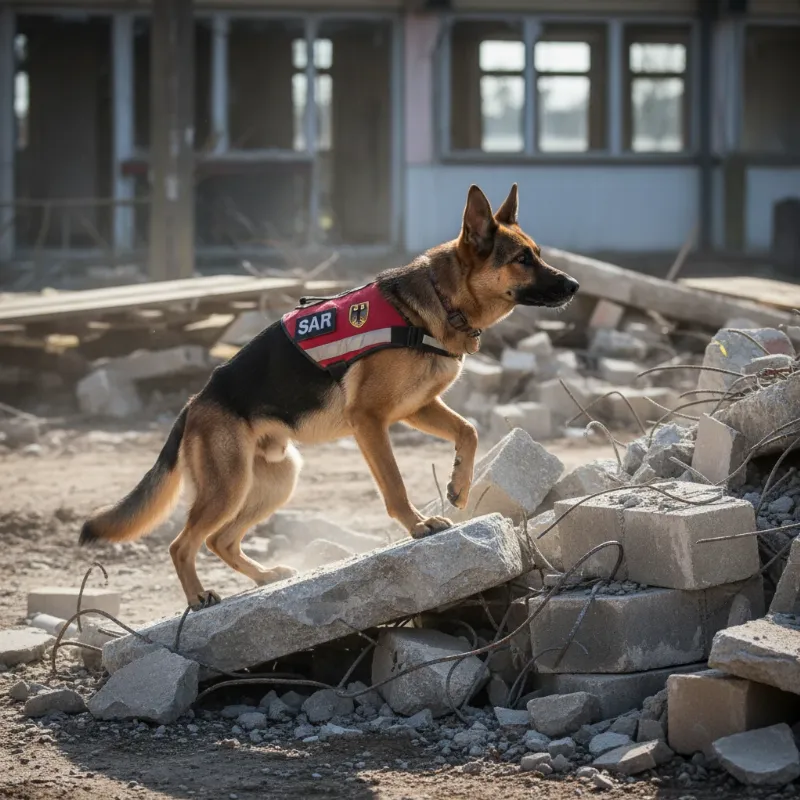 A German Shepherd wearing a search and rescue vest navigates a simulated disaster area during a training exercise.
The Handler’s Commitment: Are You Prepared?
The dog is only half of the equation. As a handler, you are the team leader, navigator, strategist, and medic. The commitment is significant and extends far beyond a weekend hobby.
Time and Financial Investment
Training a SAR dog is a multi-year process. You should expect to dedicate 15-20 hours per week to training sessions, physical conditioning, and coursework. This doesn’t slow down after certification; ongoing training is essential to maintain skills.
Financially, the costs can be substantial. While some volunteer teams cover certain expenses, you are typically responsible for:
- Gear: For both you and your dog (GPS, radio, specialized harnesses, first aid).
- Veterinary Care: Keeping a canine athlete in peak condition requires proactive care.
- Travel: Getting to training sites and potential deployments can involve significant travel.
- Training Fees: Seminars, workshops, and certification tests all come with costs.
Physical and Mental Demands
You need to be physically fit enough to keep up with your dog in challenging environments, often carrying a heavy pack. Mentally, you must be resilient, capable of making critical decisions under pressure, and prepared for emotionally taxing situations. Dr. Marcus Thorne, a specialist in canine working partnerships, notes, “The psychological synergy between a handler and their SAR dog is critical. The handler’s calm and confident demeanor directly translates to the dog’s effectiveness in the field.”
How to Find Search and Rescue Dog Training Near Me
Finding a legitimate training program is the most critical step. It requires research and reaching out to the right organizations. Here’s a practical guide to begin your search.
Step 1: Start with National Organizations
National SAR organizations are the best starting point. They accredit local teams and can provide a list of contacts in your state or region. Key organizations in the United States include:
- National Association for Search and Rescue (NASAR): A great resource for standards, certifications, and finding local groups.
- Search and Rescue Dogs of the United States (SARDUS): Focuses specifically on canine SAR and offers standards and testing.
- FEMA Urban Search and Rescue Task Forces: These elite teams are deployed to major disasters. While joining is highly competitive, their websites offer insight into the required standards.
Step 2: Contact Local Emergency Services
Your local Sheriff’s office, fire department, or emergency management agency is often affiliated with or manages local SAR teams. Call their non-emergency line and inquire about volunteer SAR units in the county. They can direct you to the team leaders who manage recruitment and training. This local approach is often more direct than national searches, much like finding a specific service like dog training in Bellingham WA.
Step 3: Search for Volunteer Teams Directly
Use search engines with specific, local queries. Try phrases like “[Your State] volunteer search and rescue,” “[Your County] K9 SAR team,” or “mountain rescue [Nearest Mountain Range].” Many teams have websites or social media pages with contact information and details about their application process. Be aware that most teams recruit new members periodically, so you may need to wait for an intake period.
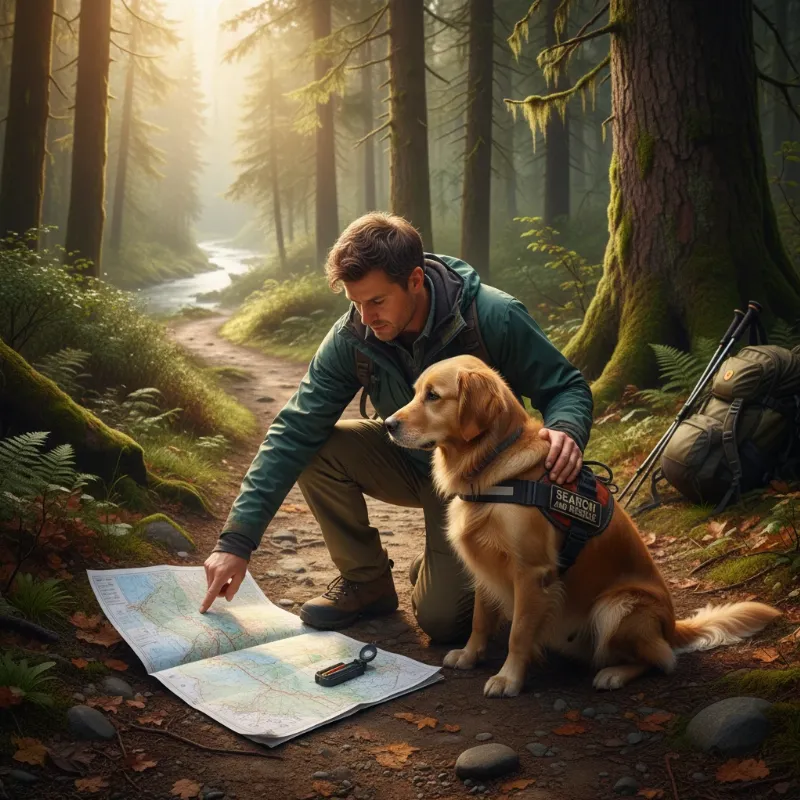 A SAR dog handler and their dog look at a map in a wilderness setting, planning their search route.
What to Expect in a SAR Dog Training Program
Once you connect with a team, you’ll begin a rigorous training and evaluation process. You typically join as a probationary member without your dog at first. You’ll learn essential ground skills like navigation, wilderness first aid, survival techniques, and radio communications.
Foundational Skills
Your dog’s training will start with the basics and build from there. This includes:
- Advanced Obedience: Flawless off-leash control is non-negotiable.
- Direction and Control: The ability to guide your dog to a specific area from a distance.
- Agility: Confidently and safely navigating various obstacles and terrains.
- The “Runaway”: A foundational exercise where the dog learns to find a “hidden” person (starting with their handler) and is rewarded with play.
Specialization and Certification
After mastering the fundamentals, teams specialize in different disciplines based on their location and needs. These include:
- Air Scent (Wilderness): The dog works off-leash to find any human scent in a large area.
- Trailing (Urban/Wilderness): The dog follows a specific human’s scent trail.
- Human Remains Detection (Cadaver): The dog is trained to locate the scent of human remains.
- Disaster/Urban Search: Dogs are trained to search for survivors in collapsed structures.
The final step is certification. You and your dog will be tested as a team by a recognized national or state organization. This grueling test simulates a real-world scenario and evaluates your ability to work together effectively and safely to locate the “victim.” Passing this test is the gateway to becoming a deployable SAR team. Some teams may offer guidance on tools that can assist in training, but it is important to choose proven methods over untested gadgets like the smart dog trainer petsafe.
Frequently Asked Questions (FAQ)
How long does it take to train a SAR dog?
On average, it takes 18 to 24 months of consistent training to get a dog and handler team certified and mission-ready.
What is the best age to start training a dog for SAR?
While you can start foundational obedience and socialization early, most formal SAR training begins when the dog is between 1 and 2 years old. The dog needs to be mature enough physically and mentally for the demands of the work.
Can I get paid for being a SAR handler?
The vast majority of search and rescue teams are 100% volunteer. Handlers dedicate their own time and money to train and deploy. Some highly specialized FEMA or law enforcement handlers are career professionals, but this is the exception, not the rule.
Do I need a purebred dog?
No. While certain breeds are common, any healthy, driven, and confident dog with the right temperament can be successful. Many incredible SAR dogs are rescues from local shelters.
What if there are no teams near me?
If you live in a very remote area, you may need to travel to train with the nearest team. In some rare cases, dedicated individuals have worked with emergency services to establish a new team, but this is a monumental undertaking. For those just starting out, even looking for free dog training near me can help build the basic obedience skills necessary before approaching a SAR group.
Your Journey Begins Now
Embarking on the path to become a search and rescue K9 team is not a decision to be taken lightly. It requires a profound commitment of time, energy, and heart. You will face challenges, frustrations, and moments of doubt. But the opportunity to build an unbreakable bond with your canine partner and serve your community in its moments of greatest need is an unparalleled reward. By starting with diligent research to find search and rescue dog training near me, you are taking the first step on an extraordinary adventure—one that saves lives.
