
Selecting an effective and safe flea treatment for your canine companion is a crucial responsibility for every pet owner. This guide provides comprehensive insights into choosing the best flea protection for your dog, considering various factors and treatment types.
Key Considerations for Flea Treatment Selection
When selecting the right flea treatment for your dog, it’s essential to recognize that each pet is unique. A product considered safe for one dog might not be suitable for another. Several factors play a significant role in this decision:
- Age: Flea treatments must be age-appropriate. Many products are not recommended for puppies younger than 8 to 12 weeks. Always check the product label for age restrictions.
- Breed and Coat Type: The dog’s breed and coat type can influence the choice of treatment. While topical treatments can be used on all coat types, they must be applied directly to the skin to be effective. Thick coats can make this challenging, and medication applied only to the fur may not work correctly.
- Health History: Your dog’s existing health conditions, concurrent medications or supplements, and any previous adverse reactions to flea and tick preventatives are vital considerations. For instance, if your dog has a history of seizures, certain flea preventions may pose a higher risk.
- Lifestyle: Factors such as the presence of other pets (especially cats) or young children in the household, as well as your dog’s daily activities and exposure to the outdoors, should be taken into account.
- Geographic Location: Understanding which parasites are prevalent in your area and whether resistance to certain preventatives is a concern is important for effective treatment.
It is highly recommended to consult your veterinarian, as they can assess these details and help you choose the most suitable flea and tick preventative. Often, the safest and most effective options are prescription-based, making a veterinary discussion essential.
Types of Safe Flea Treatments for Dogs
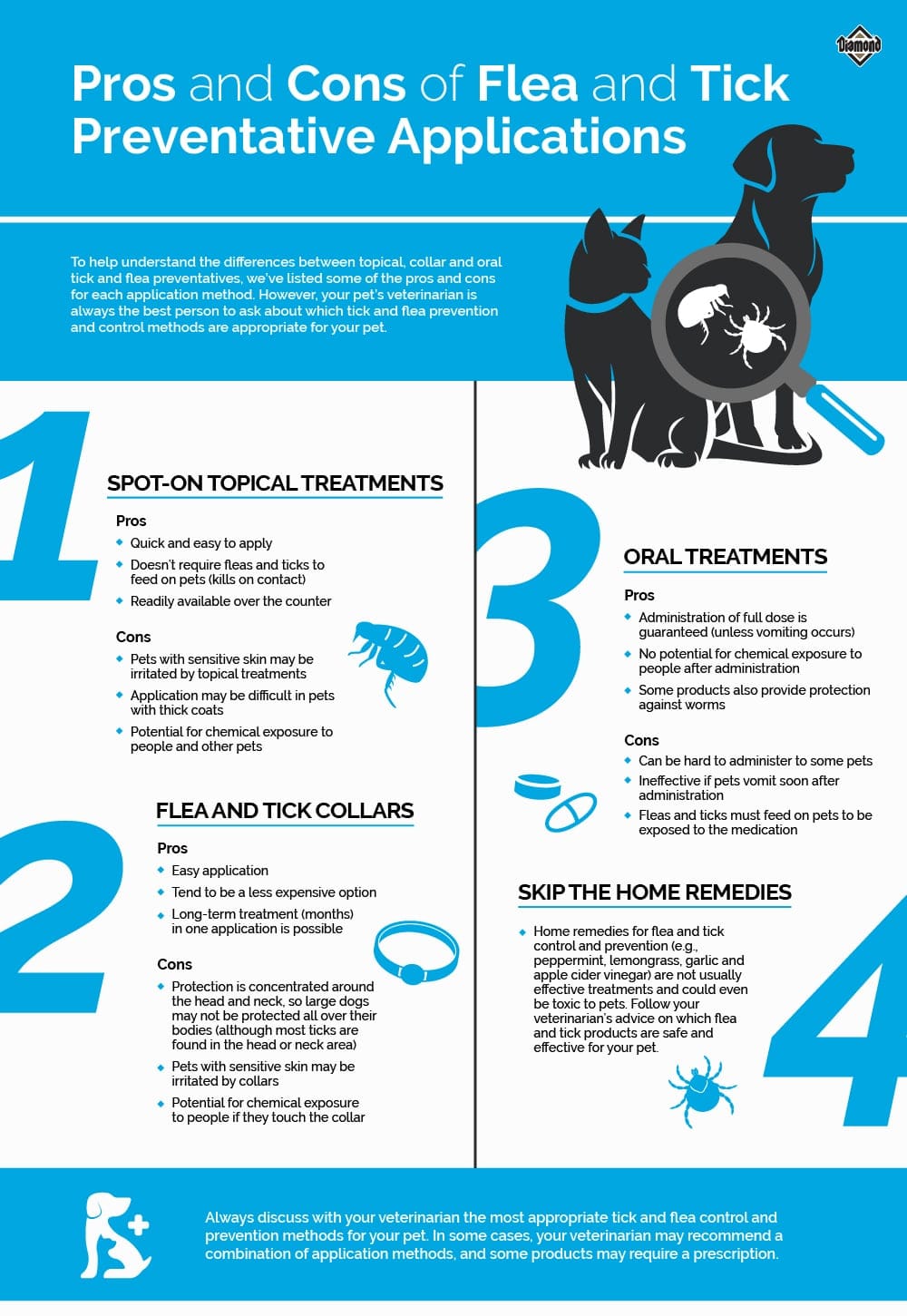
Veterinarians generally recommend three main categories of flea and tick treatments for dogs: oral medications, flea collars, and topical treatments. Some products may offer combined protection against other parasites.
Oral Flea and Tick Medications
These preventatives are available in chewable or pill forms and are a safe option for many dogs.
- Credelio Quattro: This prescription monthly chew offers broad-spectrum protection against fleas, ticks, heartworms, and three types of intestinal worms (tapeworms, roundworms, and hookworms). It contains four active ingredients: lotilaner, moxidectin, praziquantel, and pyrantel. However, it should not be prescribed to dogs with a history of seizures.
- Trifexis: This prescription chewable tablet protects against fleas, heartworms, and intestinal worms (hookworms, roundworms, and whipworms) but does not guard against ticks. It uses spinosad and milbemycin oxime. Caution is advised when using Trifexis in dogs with epilepsy.
- Bravecto: Available as a chew or topical treatment, Bravecto provides long-lasting protection against fleas and ticks for up to 12 weeks per dose. It kills adult fleas and ticks and is effective against specific tick species for extended periods. Bravecto also requires a veterinary prescription and should not be given to dogs with a history of seizures.
Oral medications are often ideal for households with young children or other pets who might be sensitive to the residue from collars or topical treatments. Vomiting is a commonly reported side effect.
Dog Flea and Tick Collars
Modern flea and tick collars can be safe and effective options, unlike older formulations.
- Seresto Collar: This popular collar uses flumethrin and imidacloprid to repel and kill fleas and ticks, thereby preventing bites and controlling flea egg-laying. It also eliminates lice and remains effective for up to eight months, provided its exposure to water is minimized.
If you have young children, supervise them to prevent them from playing with the collar. Flea collars can leave chemical traces, which might be a concern for young children. Some dogs may experience localized skin reactions; if this occurs, the collar should be removed. Always consult your veterinarian before using any flea and tick product, including Seresto.
Topical Flea and Tick Treatments
Topical, or spot-on, treatments are applied directly to the dog’s skin and often provide protection against a range of parasites.
- Advantage Multi: This prescription treatment contains imidacloprid and moxidectin, killing heartworms, hookworms, whipworms, roundworms, sarcoptic mange mites, and fleas. However, it does not protect against ticks. To prevent potential side effects, ensure your dog does not lick the application site for at least 30 minutes after application.
- Frontline Plus: An over-the-counter product containing fipronil and (S)-methoprene, Frontline Plus targets fleas and ticks, and also eliminates lice and helps control sarcoptic mange. While ingestion should be avoided, minor licking is unlikely to cause significant issues.
Topical treatments may not be suitable if you cannot keep your pet separated from other animals or young children until the product dries. If you have cats, consult a veterinarian before using topical treatments on your dog, as some ingredients, like permethrin, are highly toxic to felines. It’s advisable to follow the product’s guidelines regarding bathing after application. Using a soap-free shampoo can help maintain the effectiveness of topical treatments. These treatments generally require monthly application.
Leaving parasites untreated poses a greater danger, as your pet could contract flea-related or tick-borne diseases. Your veterinarian is the best resource for selecting the safest and most effective flea and tick treatment tailored to your dog’s specific needs.
