
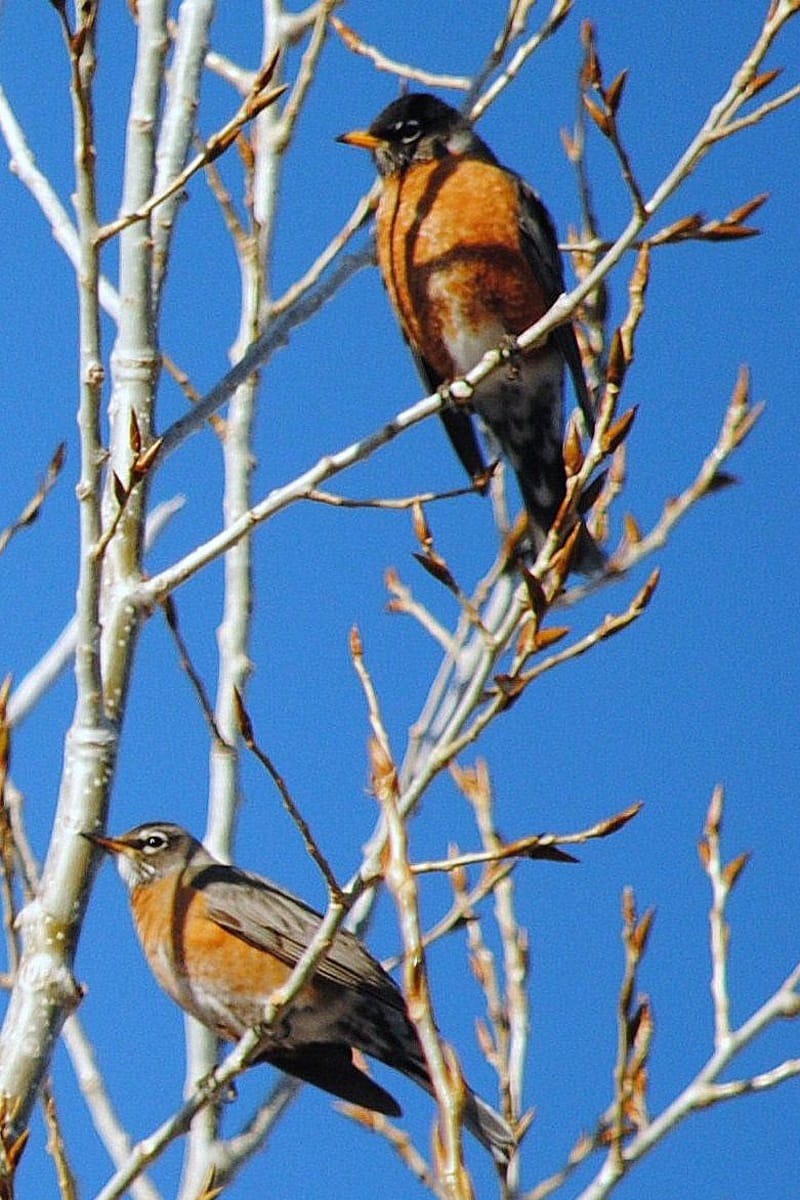
The American Robin is a familiar sight across North America, known for its cheerful song and presence in gardens and lawns. Understanding their life cycle, nesting habits, migratory patterns, and behaviors provides valuable insight into the natural world around us. This exploration delves into the key aspects of the American Robin, from their delicate eggs to their complex social interactions.
Robin Eggs and Incubation
A typical robin brood consists of 3 to 5 strikingly blue eggs. The incubation period is relatively short, lasting approximately 12 to 14 days. American Robins are prolific breeders and can successfully raise up to three broods within a single breeding season. Both the male and female robin share the responsibilities of feeding, raising, and protecting their young until the chicks are developed enough to forage for themselves. It’s also worth noting that female brown-headed cowbirds sometimes exhibit brood parasitism, laying their eggs in robin nests. This survival strategy allows cowbirds to thrive while the unsuspecting robins provide all the care for the foreign young.
Nesting Habits of American Robins
Robin nests are meticulously constructed and typically found in trees and shrubs, with a preference for coniferous species, usually positioned at a height of 10 to 25 feet. However, they are also adaptable and will occasionally build nests on sheltered porches, windowsills, and even under the eaves of buildings. Due to their sturdy construction and relatively large size, robin nests are often easier to spot after the nesting season has concluded.
The construction of a robin’s nest is a dedicated process undertaken by the female. She begins by using her body and wings to shape a compact cup from a foundation of dead grass and twigs. Mud is then incorporated to provide reinforcement, and the interior of the cup is meticulously lined with fine, dry grass. The entire construction can take anywhere from 2 to 6 days, with the duration influenced by prevailing weather conditions.
Robin Migration Patterns
The migratory behavior of American Robins is a fascinating aspect of their life cycle. Generally, their summer range extends from the tree line in northern North America all the way down to southern Mexico. Correspondingly, their wintering grounds cover a vast area from southern Canada to Guatemala. While many robins migrate south with the arrival of colder weather, it’s important to note that not all robins leave their northern breeding grounds. Some individuals may remain in areas like Massachusetts even during the winter.
Wintering Robins
The robins observed in northern areas during winter are not necessarily the same birds that bred there during the summer. It is more common for robins overwintering in regions like Massachusetts to have migrated from areas further north, such as northern New England or Canada. The number of robins that choose to winter in a particular area is heavily influenced by two key factors: the severity of the winter weather and the availability of food resources. Robins that regularly winter in New England are remarkably well-adapted to cold temperatures, often growing additional feathers for increased insulation as fall approaches.
American Robin Behavior
American Robins primarily engage in feeding and foraging activities on the ground. Their characteristic behavior involves running or hopping for short distances, followed by periods of standing erect in an alert posture, constantly scanning for potential dangers. During the winter months and especially during migration, robins tend to congregate in flocks. It is not uncommon to observe a dozen or more robins foraging together on the same lawn or perching collectively in a single tree, indicating a degree of social interaction and communal foraging.
Defensive Behavior and Nest Protection
Like most bird species, American Robins will exhibit aggressive behavior when they perceive a threat to their nest or young. Robins, which often nest in close proximity to human habitation, are particularly known for frequently harassing people, domestic animals, and other birds that venture too near their nesting sites. This defensive behavior can manifest in various ways, including loud vocalizations, feigning injury to distract predators, or even direct pursuit and attack. The peak period of aggression towards humans typically occurs during the nestling phase, which spans approximately two weeks from hatching until the young birds are ready to leave the nest. If you encounter an American Robin displaying aggressive behavior, patience and understanding are crucial. Remember that this protective behavior is temporary and will subside once the young have left the nest. Whenever possible, it is advisable to avoid the immediate vicinity of the nest during this vulnerable period.
The Distinctive Song of the American Robin
The territorial song of the American Robin is a prominent feature of spring and early summer. It is a loud, continuous, and rich caroling, characterized by its rising and falling pitch, often described phonetically as cheerily-cheerily-cheerily-cheerrio. This distinctive melody is typically first heard on warm mornings in late March and early April. The dawn and dusk choruses reach their zenith in late April but gradually diminish in intensity through the middle of July. Beyond their melodic song, robins also possess familiar call notes, frequently rendered as kwee-kwee-kuk-kuk-kuk or sometimes puck-kuk-kuk-kuk. These calls are often accompanied by emphatic jerks of the tail and can vary in speed and intensity, reflecting the bird’s emotional state. Additionally, a thin see-lip call note may be heard throughout the year, serving as a flight call.
