
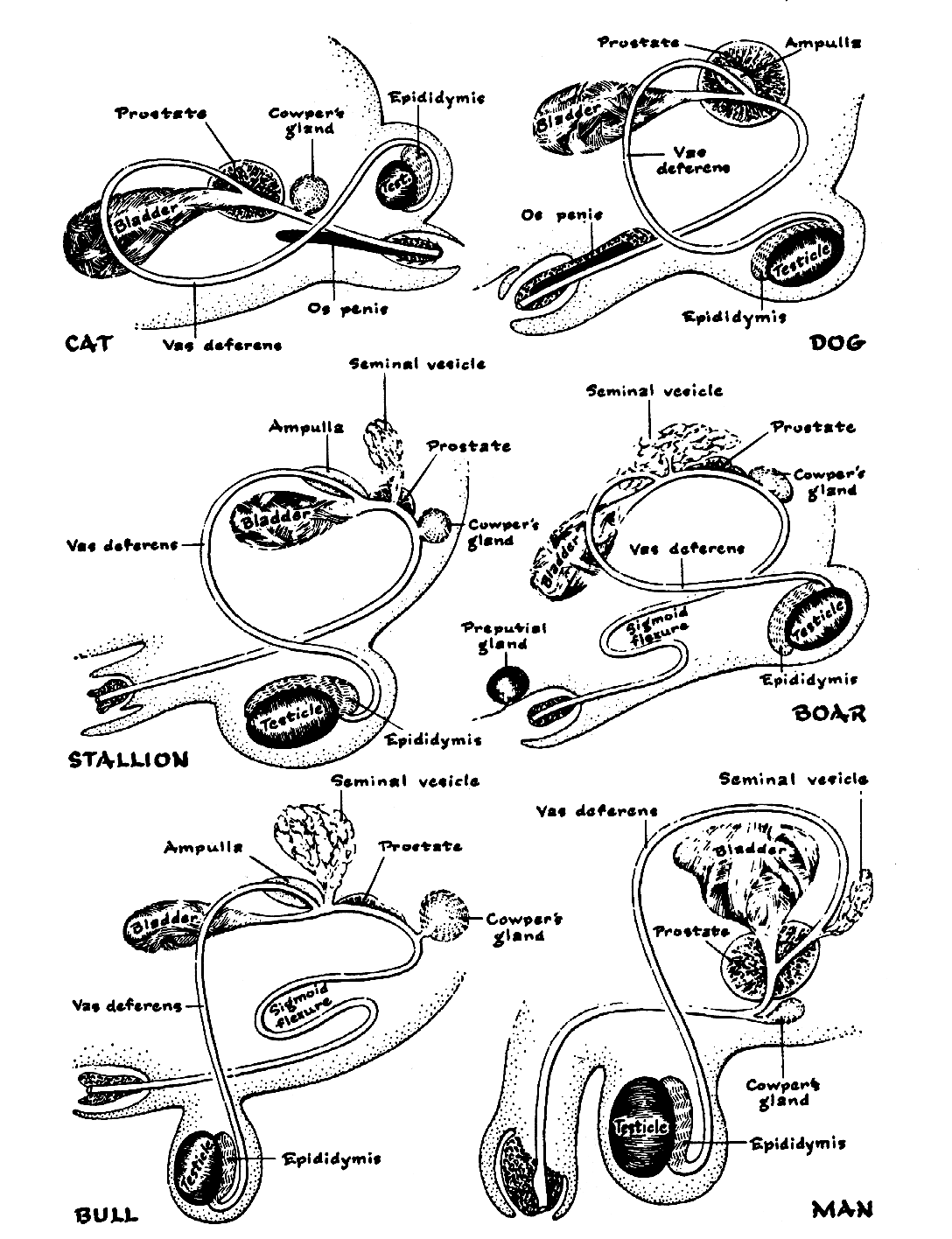
The male reproductive system in both dogs and tomcats is a complex network of organs designed for reproduction,Play a crucial role in the production of sperm, the secretion of fluids essential for sperm survival and transport, and the production of testosterone, the hormone responsible for male characteristics and behavior. While the fundamental functions are similar, there are notable anatomical differences between the two species that influence their reproductive processes.
Anatomy and Function of the Male Reproductive System
The primary functions of the male reproductive system include:
- Spermatogenesis: The production of spermatozoa (sperm) capable of fertilizing the female ova. This process occurs optimally at temperatures below 40°C.
- Secretion of Fluids: Producing seminal fluid that aids sperm survival and facilitates their transport into the female reproductive tract during coitus.
- Hormone Production: Secreting testosterone, which drives the development of secondary sexual characteristics and influences male behavior.
The Testis and Scrotum
A pair of testes are responsible for sperm production. In adult animals, the testes are located outside the body cavity within the scrotum, a pouch of pigmented, sparsely furred skin.
- In dogs, the scrotum is positioned between the upper thighs.
- In tomcats, it is located ventrally to the anus, near the ischial arch.
The scrotum contains the Dartos muscle, which contracts in cold weather to pull the testes closer to the body for warmth and relaxes in warm weather, allowing the testes to descend and maintain a cooler temperature crucial for spermatogenesis.
The testicular tissue is primarily composed of seminiferous tubules lined with spermatogenic cells that form sperm, and Sertoli cells that provide nutrients and secrete small amounts of estrogen. Interstitial cells, or Leydig cells, located between the tubules, are responsible for secreting testosterone.
The seminiferous tubules converge to form the epididymis, a long, coiled tube that lies along the dorso-lateral border of the testis. At the caudal extremity, known as the cauda epididymis, sperm undergo final maturation and are stored. The epididymis then continues as the deferent duct (vas deferens), which ascends from the scrotum into the peritoneal cavity via the inguinal ring.
Within the scrotum, the testis is enveloped by the tunica vaginalis, an extension of the peritoneum. The spermatic cord, containing the testicular artery, vein, nerve, and deferent duct, also passes through the scrotum. The testicular artery forms the pampiniform plexus, a network of arterioles that cools the blood before it reaches the testicular tissue. The cremaster muscle, located within the spermatic cord, works with the Dartos muscle to regulate scrotal temperature for optimal spermatogenesis.
The Deferent Duct and Urethra
The deferent duct, or vas deferens, is a continuation of the cauda epididymis. It travels within the spermatic cord and enters the peritoneal cavity through the inguinal ring, an opening in the abdominal muscles. The deferent ducts from each testis join the urethra within the prostate gland.
The urethra serves as a common passageway for both the urinary and reproductive systems, extending from the bladder’s neck to its external opening at the tip of the penis.
- In dogs, the urethra is divided into a pelvic part and a longer penile part, with its opening directed cranially.
- In tomcats, there is a short preprostatic urethra followed by a shorter penile urethra that does not extend beyond the ischial arch. Its opening points caudally, ventral to the anus, a position associated with their habit of scent marking.
Accessory Glands
Both dogs and cats possess a prostate gland located near the neck of the bladder. Cats also have bulbo-urethral glands situated near the tip of the penis. These glands secrete fluids that increase the volume of ejaculate, aid in propulsion, neutralize acidity from urine in the urethra, and create an optimal environment for sperm survival.
The Penis and Prepuce
The penis comprises the urethra surrounded by cavernous erectile tissue (corpus cavernosum penis). During sexual arousal, this tissue engorges with blood, causing erection and enabling intromission into the female vagina.
Differences in Penile Anatomy:
- Dog: The dog’s penis has a corpus cavernosum penis attached to the ischial arch by muscular crura. It curves cranio-ventrally and includes the glans penis at its free end. The glans contains the os penis, a small bone that aids in rigidity during initial intromission. The urethra runs through a bony tunnel within the os penis, which can be a site for urethral blockages.
- Tomcat: The tomcat’s penile urethra is shorter, and the bulbo-urethral glands open here. It also possesses an os penis, but the urethra within this region is narrow, making it prone to blockages, particularly by struvite crystals. The glans penis is covered in barbs that cause pain upon withdrawal, inducing ovulation in the female cat, classifying them as induced ovulators.
When relaxed, the penis is housed within a protective prepuce, a sheath of hairy skin externally and mucous membrane internally. Infection of the prepuce, known as balanoprosthitis, results in an unpleasant discharge.
