
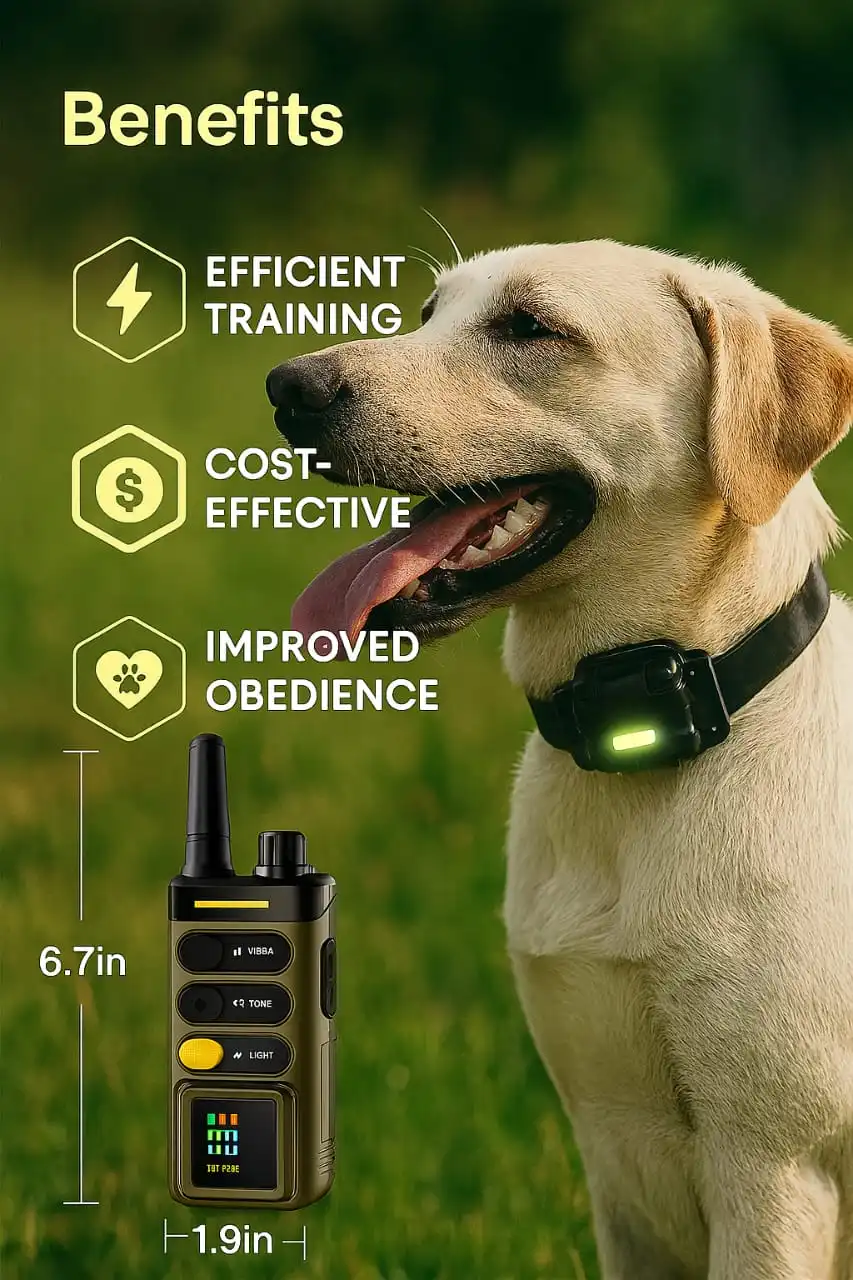
Understanding and managing your dog’s behavior is a cornerstone of responsible pet ownership. While positive reinforcement methods are widely encouraged, sometimes a more direct approach is needed for specific training challenges. This is where a Remote Shock Dog Training Collar can become a valuable tool in a well-rounded training program. These devices, when used correctly and ethically, offer a way to communicate boundaries and desired behaviors to your dog from a distance, fostering a better understanding and a stronger bond.
The Role of Remote Training Collars in Modern Dog Training
The landscape of dog training has evolved significantly, moving beyond purely punitive methods. Modern training philosophies often integrate a spectrum of tools, recognizing that different dogs and situations may require varied approaches. A remote shock training collar, often referred to as an e-collar or static collar, falls into this category. It’s crucial to understand that the “shock” is typically a mild static stimulation, akin to a mild buzz, designed to get your dog’s attention and discourage unwanted behaviors. This stimulation is delivered remotely via a handheld transmitter, allowing you to correct your dog’s actions instantly, even when you’re not right beside them.
How Does a Remote Shock Dog Training Collar Work?
At its core, a remote shock collar system consists of a collar with electronic contact points worn by the dog and a handheld transmitter operated by the owner. When you press a button on the transmitter, it sends a signal to the collar, which then delivers a mild static stimulation to the dog’s neck. The intensity of this stimulation is adjustable, allowing you to find a level that is noticeable but not painful for your dog.
The effectiveness of this tool relies on its association with your command or the unwanted behavior. For instance, if your dog is prone to jumping on guests, you can have the collar on low stimulation and, as they begin to jump, press the button. The mild discomfort distracts them from the action. When they stop jumping, you immediately praise them. Over time, the dog learns to associate the sensation with the specific behavior and, by extension, with your command to stop. This process requires consistency and careful application to be successful.
When to Consider a Remote Training Collar
Remote training collars are not a one-size-fits-all solution and are best employed for specific training objectives, particularly those involving distance or immediate correction of persistent, problematic behaviors.
- Recall Training: For dogs that have a tendency to ignore recall commands, especially in distracting environments, a remote collar can provide the necessary reinforcement to ensure they return to you.
- Boundary Training: If your dog frequently runs off-property or into dangerous areas, a remote collar can help reinforce boundaries and keep them safe.
- Addressing Persistent Nuisance Behaviors: For issues like excessive barking, chasing livestock, or digging, where direct intervention might be difficult, a remote collar can be effective in discouraging these actions.
- Off-Leash Training at a Distance: For owners who want to provide their dogs with more freedom off-leash in safe, designated areas, a remote collar can be a crucial tool for maintaining control and ensuring safety.
It’s important to note that these collars are most effective when introduced as part of a comprehensive training plan that also includes positive reinforcement and clear communication. They are not a substitute for consistent training and bonding with your dog.
The Importance of Proper Usage and Ethical Considerations
The effectiveness and ethical use of a remote dog training collar are heavily dependent on the owner’s understanding and application. Misuse can lead to anxiety, fear, and a breakdown of trust between you and your dog. Therefore, adhering to best practices is paramount.
Getting Started: A Gradual Approach
- Introduction: Begin by introducing the collar to your dog in a neutral environment, allowing them to get used to wearing it without any stimulation.
- Low Stimulation Levels: Always start with the lowest possible stimulation level. The goal is to gain your dog’s attention, not to cause pain. You should barely feel the sensation yourself.
- Association with Commands: Introduce the stimulation only when your dog is engaged in the unwanted behavior or when you give a command they are not obeying.
- Immediate Praise: The moment your dog complies with the command or ceases the unwanted behavior, immediately praise them enthusiastically and remove the stimulation. This positive reinforcement is critical for them to understand what you want.
- Consistency is Key: Apply the collar consistently for the specific behaviors you are trying to modify. Inconsistency can confuse your dog and hinder progress.
When NOT to Use a Remote Training Collar
There are situations where a remote shock collar is inappropriate or could be detrimental:
- Fearful or Anxious Dogs: If your dog already exhibits fear or anxiety, the added stress of a shock collar can exacerbate these issues.
- Aggressive Dogs: Using a shock collar on an aggressive dog without professional guidance can increase their aggression and create a dangerous situation.
- Puppies Under Six Months: Puppies are still developing and learning. Their physical and emotional responses to stimulation can be unpredictable. It’s generally advised to wait until they are older and have a better understanding of basic commands.
- As a Sole Training Method: These collars should complement, not replace, other training techniques like positive reinforcement, clicker training, and obedience classes.
Seeking Professional Guidance
If you are unsure about using a remote shock dog training collar or are struggling with a specific training issue, consulting a certified professional dog trainer or a veterinary behaviorist is highly recommended. They can assess your dog’s temperament, discuss your training goals, and guide you on the safest and most effective use of such tools. They can also help you understand if are training collars bad for dogs in your specific scenario and offer alternative solutions if necessary.
Exploring Different Types of Remote Training Collars
The market offers a variety of remote training collars, each with features designed to suit different needs and budgets. Understanding these options can help you choose the most appropriate 2 dog training collar or single-dog system for your situation.
Key Features to Consider:
- Range: Consider how far away you typically train your dog. Collars offer different ranges, from a few hundred yards to over a mile.
- Levels of Stimulation: Look for collars with multiple levels of static stimulation, as well as options for vibration or tone, allowing for more nuanced training.
- Waterproofing: If you train in wet conditions or your dog enjoys swimming, a waterproof collar is essential.
- Rechargeable Batteries: Many modern collars feature rechargeable batteries, offering convenience and long-term cost savings.
- Number of Collars: Some systems allow you to control multiple collars from a single transmitter, which is ideal for households with more than one dog.
Popular Brands and Models
While specific recommendations can change rapidly with technological advancements, brands like PetSpy dog training collar systems are often recognized for their reliability and range of features. When researching, look for reviews that focus on ease of use, durability, and the responsiveness of the remote.
For those looking for effective solutions, a dog training shock collar with remote offers a direct line of communication. However, the term “shock” can be intimidating. It’s important to remember that modern e-collars are designed with varying levels of intensity, and the “shock” is often more akin to a static tingle that effectively captures a dog’s attention without causing harm.
Building a Stronger Bond Through Effective Training
Ultimately, the goal of any training tool, including a remote shock dog training collar, is to build a clearer line of communication with your dog and strengthen your relationship. When used responsibly, ethically, and as part of a balanced training approach, these collars can help resolve challenging behaviors, enhance safety, and allow your dog to enjoy more freedom. Remember that consistent training, patience, and a deep understanding of your dog’s needs are the most important elements in creating a well-behaved and happy canine companion.
Frequently Asked Questions about Remote Shock Dog Training Collars
Q1: Are remote shock training collars cruel?
A1: When used correctly and ethically, with appropriate stimulation levels and positive reinforcement, remote shock collars are not inherently cruel. They are tools designed to aid communication and behavior modification. Misuse or overuse, however, can be detrimental.
Q2: How do I know what stimulation level to use?
A2: Always start at the lowest setting and gradually increase only if your dog does not respond. The correct level is one that gets your dog’s attention (e.g., a head tilt, a flick of the ear) without causing distress or pain. Professional guidance is recommended to determine the appropriate level.
Q3: Can I use a remote shock collar on any dog?
A3: While these collars can be used on many dogs, they are not suitable for all. Dogs that are very fearful, anxious, or aggressive may not be good candidates, and puppies under six months old should typically not use them. Always consider your individual dog’s temperament.
Q4: How long does it take to train a dog with a remote collar?
A4: Training duration varies greatly depending on the dog, the behavior being addressed, and the consistency of training. Some issues might be resolved in weeks, while others may take months. It’s a process that requires patience and dedication.
Q5: Can a remote shock collar be used for basic obedience like sit or stay?
A5: While possible, remote shock collars are generally not recommended for basic obedience commands that can be effectively taught with positive reinforcement alone. They are typically reserved for addressing more persistent or difficult behaviors where distance or immediate correction is needed.
Q6: What are the alternatives to remote shock collars?
A6: Alternatives include traditional positive reinforcement methods, clicker training, prong collars (used cautiously and with professional guidance), head halters, and various harnesses designed for better leash control. For severe behavioral issues, professional intervention is crucial.
Q7: Where can I find reliable information on using these collars?
A7: Reputable sources include certified professional dog trainers, veterinary behaviorists, established dog training organizations, and well-researched books on dog behavior and training. Always cross-reference information and prioritize ethical, science-based training methods.
