
The term “Remote Dog Training Shock Collar” often conjures up a host of conflicting images and strong opinions. For some, it’s a controversial tool shrouded in myths, while for others, it’s an effective means of communication for off-leash training and correcting persistent unwanted behaviors. The truth, as it often does, lies somewhere in the middle and depends heavily on the user’s knowledge, timing, and intent. This guide is designed to navigate the complexities of these devices, offering a clear-eyed view of how they work, the debates surrounding them, and how to use them safely and humanely, should you choose to do so.
Understanding this tool begins with moving past the often-misleading name. Many modern devices, often called e-collars or remote training collars, are not simply about delivering a “shock.” They are sophisticated tools that can provide various forms of stimulation, including auditory beeps, vibrations, and a range of static sensations, from a mild tickle to a more significant pulse. The central idea behind a dog training shock collar with remote is to provide an immediate, clear signal to your dog from a distance, interrupting a behavior and redirecting their attention back to you.
How Does a Remote Dog Training Shock Collar Work?
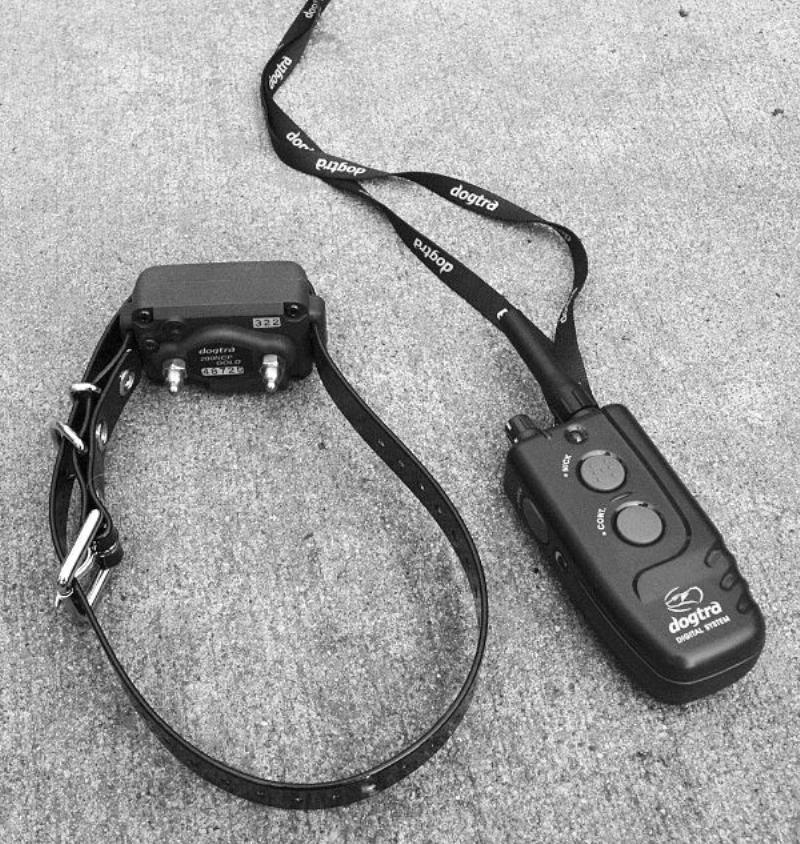
To use a remote training collar effectively, it’s essential to understand its basic components and functions. The system is straightforward, consisting of two main parts that work in tandem to create a line of communication between you and your dog, even when separated by a significant distance.
The Components: Remote and Collar
The system is comprised of a handheld remote transmitter and a receiver collar worn by the dog. The remote allows the handler to send a signal to the collar, which then delivers a pre-selected form of stimulation. High-quality models offer a variety of settings and a considerable range, enabling communication even when a dog is far away in a field or park. This “invisible leash” function is a primary reason trainers use them for off-leash reliability.
The Stimulation: Vibration, Sound, and Static
Modern e-collars are far more advanced than their predecessors. Most offer multiple modes of communication to suit the dog’s temperament and the training situation:
- Sound/Tone: A simple beep that can be used as a warning cue or a marker for a desired behavior, much like a clicker.
- Vibration: An attention-grabbing vibration, similar to a cell phone’s buzz. This mode is often effective for sensitive dogs or for hearing-impaired dogs.
- Static Stimulation: This is the most controversial aspect. It’s a mild electrical sensation delivered through two contact points on the collar. Reputable collars offer a wide range of levels (often 1-100), allowing the handler to find the lowest possible level their dog can perceive—often just an ear flick or a turn of the head—rather than causing pain. The goal is to create a surprising sensation that interrupts the dog’s current action, not to punish.
 A person holding a remote transmitter for a remote dog training shock collar, with a focused Golden Retriever wearing the collar in a park setting.
The Great Debate: Are Shock Collars Effective and Humane?
The use of remote training collars is one of the most polarized topics in the dog training world. Both sides present passionate arguments, and understanding these perspectives is crucial for any dog owner considering this tool. It’s not just a simple training device; it’s a tool that carries significant responsibility.
The Argument For: When Used Correctly
Proponents argue that when used correctly and ethically, a remote collar is a powerful communication tool, not a punishment device. They contend it can save a dog’s life by preventing them from chasing into traffic or ignoring a recall command in a dangerous situation. Trainers who use these tools emphasize a “low and slow” approach, starting with the absolute lowest level of stimulation the dog can feel. This sensation is used to overlay commands the dog already knows, acting as a subtle tap on the shoulder to say, “Hey, I’m talking to you.” They argue that the tool’s effectiveness in achieving 100% off-leash reliability provides a level of freedom and safety that is otherwise unattainable for many dogs. This perspective is reinforced by the idea that a properly used remote shock dog training collar can resolve behavioral issues that might otherwise lead to a dog being surrendered or euthanized.
The Argument Against: Potential for Misuse and Harm
Opponents raise significant welfare concerns, arguing that e-collars rely on aversive stimulation that can cause pain, stress, fear, and anxiety. Research has shown that dogs trained with punishment-based methods can exhibit more stress-related behaviors like lip licking and lowered body posture. There is a real risk that an inexperienced user could apply the stimulation at too high a level, with poor timing, or out of frustration, leading to a negative association with the owner, the environment, or the collar itself. Critics also point out that positive reinforcement methods are proven to be highly effective and do not carry the same risks of psychological fallout. They believe that any training tool that has the potential to cause pain is unnecessary and inhumane, advocating for a focus on building a bond of trust through reward-based techniques instead.
A Guide to Using a Remote Shock Collar Safely
If, after careful consideration, you decide a remote training collar is the right tool for your specific situation, using it safely and humanely is paramount. It should be viewed as a tool of last resort and introduced with caution, patience, and a deep understanding of dog behavior. Misuse can damage your relationship with your dog and create new problems.
Finding the Lowest Effective Level
The golden rule of modern e-collar training is to use the lowest level of stimulation that your dog will respond to. This is not a pain threshold, but a perception level. Start at level zero and, in a distraction-free environment, tap the button while watching your dog closely. Increase the level one click at a time until you see a very subtle reaction—an ear twitch, a turn of the head, a slight change in expression. This is your dog’s “working level,” and for most dogs, it’s a sensation they can barely feel, more of a novel distraction than a painful shock.
The Importance of Positive Reinforcement
A remote collar should never be the primary method of teaching. It is most effective when used to reinforce commands your dog already knows. The process should always be paired with positive reinforcement. For instance, when teaching a recall (“come”), you would say the command, apply the low-level continuous stimulation, and guide the dog toward you with a leash. The moment the dog starts moving toward you, the stimulation stops, and they are showered with praise, treats, or toys upon arrival. This teaches the dog that they have control—they can “turn off” the sensation by complying with the command.
What Not to Do: Common Mistakes to Avoid
- Never use the collar out of anger or frustration. This is the fastest way to create fear and anxiety in your dog.
- Don’t use it to punish fear or anxiety-based behaviors. This will only make the underlying emotional issue worse.
- Avoid slapping the collar on and immediately starting training. Let your dog wear the collar (turned off) for several days to associate it with normal, everyday activities.
- Don’t rely on it as a shortcut. The collar is a tool to enhance communication, not replace the hard work of consistent training and bond-building.
Key Features to Look for When Choosing a Collar
The market is flooded with options, but not all remote training collars are created equal. Investing in a high-quality product is crucial for both safety and effectiveness. Cheap, poorly made collars can malfunction, delivering inconsistent or random shocks that will confuse and frighten your dog.
Adjustable Intensity Levels
Look for a collar with a wide range of stimulation levels, typically from 0 to 100. This fine-tuning capability is essential for finding your dog’s specific working level. A model with only a few settings is likely to have large jumps between levels, increasing the risk of the stimulation being too high.
Range and Battery Life
Consider your training needs. For off-leash work in large, open areas, a collar with a long range (half a mile or more) is necessary. For basic yard work, a shorter range will suffice. Also, check for rechargeable, long-lasting batteries in both the remote and the collar to ensure the device is always ready when you need it.
Waterproofing and Durability
Dogs will be dogs, which means they’ll run through puddles, swim in lakes, and roll in the mud. The best waterproof dog training collar will be fully submersible, not just water-resistant. Durability is also key, as the collar needs to withstand the rigors of active use without failing. Should you need them, it’s also good to know if you can find bousnic dog training collar replacement parts or spares for your chosen model.
Are There Alternatives to Shock Collars?
Absolutely. For the vast majority of training scenarios, positive reinforcement-based methods are not only effective but are also widely considered the most humane approach. Before turning to an aversive tool like a remote collar, it’s crucial to explore these alternatives, which focus on building a strong, positive relationship with your dog.
Positive Reinforcement Training
This is the gold standard in modern dog training. It involves rewarding desired behaviors with treats, praise, or toys. By making training a fun and rewarding game, you encourage your dog to want to work with you. This method builds confidence, strengthens your bond, and is effective for teaching everything from basic obedience to complex tricks without the risk of creating fear or anxiety.
Clicker Training
A form of positive reinforcement, clicker training uses a small device that makes a distinct “click” sound. The click is used to “mark” the exact moment a dog performs a desired behavior, and it is immediately followed by a reward. The clicker becomes a powerful and precise communication tool, telling the dog, “Yes, that’s exactly what I wanted!”
Harnesses and Head Halters
For issues like pulling on the leash, management tools like front-clip harnesses or head halters can be incredibly effective alternatives to aversive collars. These tools work by redirecting the dog’s momentum without causing pain or discomfort, making walks more pleasant for both dog and owner while you work on loose-leash walking skills through positive reinforcement.
Frequently Asked Questions (FAQ)
1. Is a remote dog training shock collar the same as a shock collar?
While often used interchangeably, many modern devices are referred to as e-collars or remote training collars because they offer multiple stimulation types, including tone and vibration, not just static shock. The term “shock collar” often refers to older, less sophisticated models.
2. Will a remote training collar hurt my dog?
When used correctly at the lowest effective level, the sensation should be surprising or annoying, not painful. However, if misused at a high level or with improper timing, it absolutely has the potential to cause pain, fear, and psychological harm.
3. At what age can I start using a remote training collar?
Most professional trainers recommend that a dog be at least six months old and have a solid foundation in basic obedience commands taught through positive reinforcement before a remote collar is even considered.
4. Can I use a remote collar to stop barking?
While some collars are designed for this, it’s a risky approach. Barking is often a symptom of an underlying issue like boredom, fear, or anxiety. Using a collar to suppress the bark without addressing the root cause can make the underlying problem worse.
5. How long should my dog wear the e-collar?
The collar should only be worn during active training sessions or when off-leash. It should be removed when the dog is crated or unsupervised. It’s also crucial to rotate the collar’s position on the neck every couple of hours to prevent skin irritation from the contact points.
Conclusion
The remote dog training shock collar remains a tool of significant debate. It is not a magic wand for fixing behavior problems, nor is it an instrument of torture when used by a knowledgeable and humane handler. The reality is that its impact—positive or negative—lies almost entirely in the hands of the person holding the remote. For most dog owners, a journey built on positive reinforcement, patience, and understanding will be the most successful and rewarding path. However, in specific situations and after all other methods have been exhausted, a remote collar may serve as a valuable communication tool. If you choose this path, prioritize education, invest in quality equipment, and commit to using the tool with the fairness, consistency, and respect that your canine companion deserves. A deep understanding of the principles behind the remote dog training shock collar is not just recommended; it’s an ethical obligation.
