
Living with a reactive dog in a vibrant, dog-friendly city like Portland can feel overwhelming. The dream of strolling through Forest Park or grabbing a coffee with your furry friend in the Pearl District can quickly turn into a stressful, lunging, barking nightmare. You’re not alone, and more importantly, there is hope. Understanding the core of the issue is the first step, and finding the right Reactive Dog Training Portland has to offer is the path toward peaceful coexistence. This guide will walk you through understanding your dog’s behavior and finding effective, humane solutions right here in Rose City.
Reactivity is often misunderstood as aggression, but they are not the same. A reactive dog is one that overreacts to certain stimuli or triggers, such as other dogs, strangers, skateboards, or even strollers. This overreaction—barking, lunging, and growling—is typically rooted in fear, anxiety, or frustration. They aren’t being “bad”; they are having big feelings they don’t know how to manage. Recognizing this is crucial because it shifts the training focus from punishment to building confidence and providing your dog with better coping mechanisms. Effective training involves changing your dog’s emotional response, not just suppressing the outward behavior. For some dogs, this reactivity can escalate, presenting similarities to issues that require aggressive small dog training to manage safely.
Why Portland Presents Unique Challenges for Reactive Dogs
Portland is a dog lover’s paradise, but its very nature can create a challenging environment for a reactive dog. The high density of dogs, bustling farmers’ markets, off-leash parks, and bike-heavy streets mean triggers are virtually everywhere.
Common Triggers in the Urban Environment
- High Dog Traffic: From the waterfront to residential neighborhoods, encountering other dogs on walks is unavoidable. For a leash-reactive dog, this can mean constant trigger stacking, where multiple stressful events occur without enough time to decompress in between.
- Novelty and Noise: The sounds of the MAX light rail, the sight of skateboarders, and the general unpredictability of city life can be overwhelming for a sensitive dog.
- Tight Spaces: Navigating narrow sidewalks or crowded cafe patios forces close proximity to triggers, removing the dog’s ability to create distance, which is a key coping strategy.
Understanding these local challenges is vital for creating a management and training plan that works. It’s not just about training in a sterile environment; it’s about preparing your dog for the realities of life in Portland.
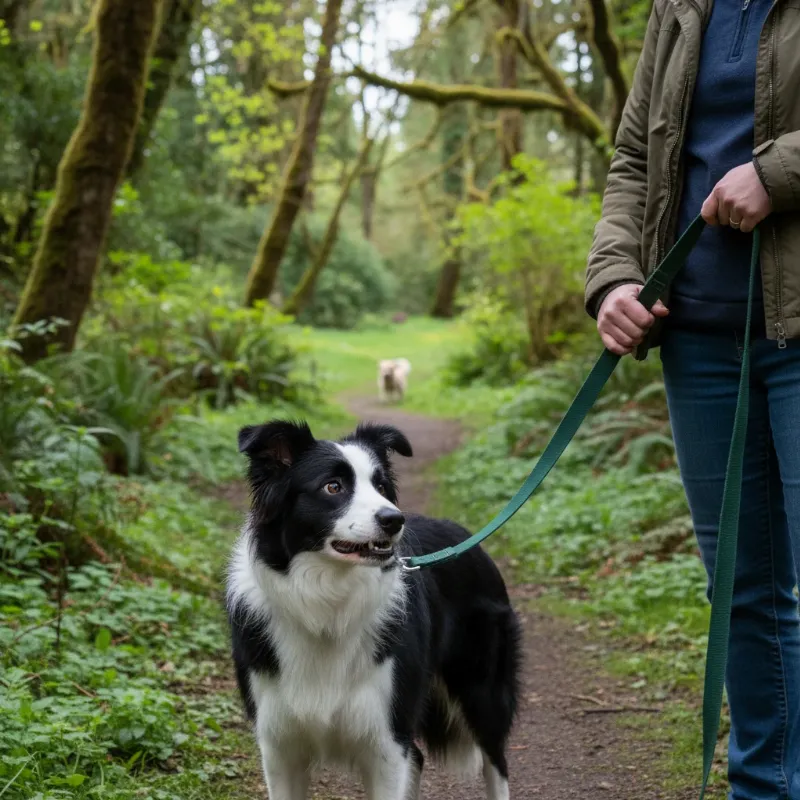 A dog wearing a harness looking stressed as another dog walks by in a Portland park, with the owner holding the leash tightly, illustrating a common reactive dog scenario.
Finding the Right Trainer: What to Look For
Choosing a professional for reactive dog training Portland is the most critical decision you’ll make. The wrong methods can worsen fear and anxiety, while the right approach can be transformative.
Credentials and Certifications
Look for trainers with recognized certifications that indicate a commitment to professional standards and continuing education. Key credentials include:
- CPDT-KA/KSA: Certified Professional Dog Trainer – Knowledge Assessed/Skills Assessed
- KPA CTP: Karen Pryor Academy Certified Training Partner
- CTC: Certificate in Training and Counseling from The Academy for Dog Trainers
- IAABC: International Association of Animal Behavior Consultants
These certifications ensure the trainer has a solid understanding of learning theory, behavior modification, and humane practices.
Training Philosophy: Positive Reinforcement is Key
The gold standard for managing reactivity is a force-free, positive reinforcement-based methodology. This approach focuses on rewarding desired behaviors and changing the dog’s underlying emotional response to a trigger.
“You cannot punish the fear out of a dog,” explains Dr. Evelyn Reed, a Certified Applied Animal Behaviorist. “Reactivity is an emotional problem, not a disobedience problem. Our goal is to make the dog feel safe and confident around their triggers, not to intimidate them into silence. We do this through systematic desensitization and counter-conditioning.”
Avoid any trainer who recommends using prong collars, choke chains, or shock collars (e-collars) for reactivity. These tools can increase fear and anxiety, leading to a potential shutdown or an escalation of aggressive behavior.
Core Techniques Used in Reactive Dog Training
A skilled trainer in Portland will create a customized plan for your dog, but it will likely be built on a foundation of several key techniques.
Management and Prevention
The first step is always management. This means actively avoiding triggers to prevent your dog from practicing the reactive behavior and to lower their overall stress levels. This might involve:
- Walking at off-peak hours (early morning or late at night).
- Driving to less crowded locations for walks.
- Using visual barriers (like a parked car) to block sight of a trigger.
- Learning to read your dog’s body language to recognize stress signals before an outburst.
Desensitization and Counter-Conditioning (DSCC)
This is the heart of changing your dog’s emotional response.
- Desensitization: Gradually exposing your dog to a trigger at a distance or intensity where they do not react. This “sub-threshold” exposure helps them become comfortable with the trigger’s presence.
- Counter-Conditioning: Changing the association with the trigger from something scary to something wonderful. This is usually done by pairing the sight of the trigger (at a safe distance) with high-value treats, like chicken or cheese.
For example, a trainer might have you stand 100 feet away from another dog (the trigger). The moment your dog sees the other dog, you feed them treats. The other dog leaves, the treats stop. Over time, your dog learns: “Seeing another dog makes delicious things happen!” The proper leash handling is crucial here, and it’s important to understand how to train a dog on a leash effectively to avoid adding tension.
Managing Your Reactive Dog in Portland: Practical Tips
Beyond formal training sessions, how you live with your dog day-to-day makes a huge difference.
- Choose Your Parks Wisely: While Portland has amazing off-leash areas like Thousand Acres Park, these can be a nightmare for a reactive dog. Opt for quieter, on-leash parks, especially during less busy times. Try exploring parts of Powell Butte or the less-traveled trails in Forest Park.
- “Decompression Walks”: Give your dog a break from urban triggers. Take a trip to the coast or the gorge for a long-leash walk where they can sniff and just be a dog without the constant pressure of potential encounters.
- Advocate for Your Dog: It’s okay to be your dog’s advocate. If you see someone approaching with their off-leash dog, you can confidently say, “My dog is in training and needs space, please call your dog back.”
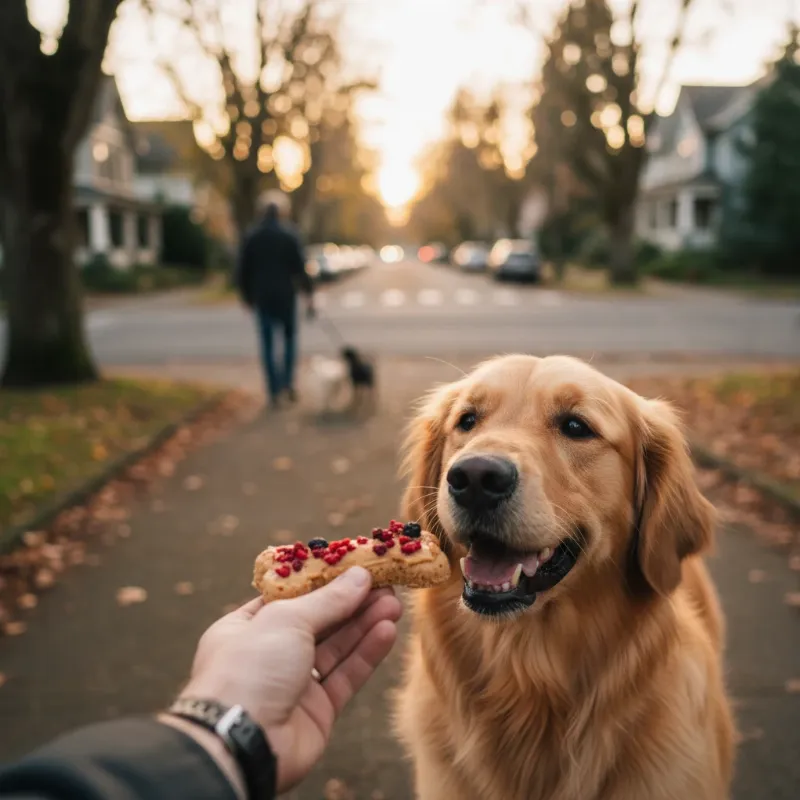 A dog owner giving a treat to their calm dog while another dog is visible in the far background in a Portland neighborhood, demonstrating counter-conditioning.
Frequently Asked Questions about Reactive Dog Training
How long does reactive dog training take?
There is no set timeline, as every dog is an individual. Progress depends on the severity of the reactivity, consistency in training, and management. It’s a marathon, not a sprint. Some dogs show improvement in a few weeks, while others may require months or even ongoing management for their entire lives.
Can a reactive dog be “cured”?
While many dogs can make incredible progress, the goal is management and improvement rather than a “cure.” The underlying personality and genetic predispositions don’t disappear. The aim is to reduce the frequency and intensity of reactions and give the dog better coping skills, making life more enjoyable for both of you.
Is my dog being dominant or aggressive?
Reactivity is rarely about dominance. It’s a fear-based response. The dog is trying to create distance because they feel threatened or overwhelmed. Labeling it as dominance often leads to using punishment-based training methods that can make the problem worse by confirming the dog’s fear that the trigger is indeed something to worry about.
What’s the difference between private training and group classes?
For most reactive dogs, starting with private, one-on-one training is essential. It allows a trainer to focus entirely on your dog’s specific triggers in a controlled environment. Once your dog has developed some foundational skills, a specialized “Reactive Rover” group class can be a great next step to practice around other dogs in a safe, structured setting.
How much does reactive dog training cost in Portland?
Costs can vary widely. Expect to pay anywhere from $150 to $300+ for an initial private consultation. Package deals for multiple sessions can sometimes reduce the per-session cost. Group classes for reactive dogs typically run from $250 to $500 for a multi-week course. Think of it as an investment in your dog’s well-being and your own peace of mind.
A Hopeful Path Forward
Embarking on the journey of reactive dog training Portland can feel daunting, but it is also incredibly rewarding. It strengthens the bond between you and your dog, built on a foundation of trust and mutual understanding. By learning their language, advocating for their needs, and using humane, effective training methods, you can help them navigate the world with more confidence. With patience and the right professional guidance, those peaceful walks through the beautiful city of Portland are an achievable goal.
